Google Photos Introduces AI Watermarking for Enhanced Transparency


13 Sources
[1]
Google Photos Will Now Watermark Images Edited by AI
If you look at a photo today, you likely won't know, at first glance, whether it's real or fake. Or whether it has been digitally altered in some way. Thankfully, companies involved with developing AI technologies aren't ignoring this problem... "Reimagined" Google Photos Will Have SynthID
[2]
Google Photos Will Now Add AI Watermarks to Magic Editor Enhanced Images
The About this Image section will show if SynthID watermark is present Google Photos is getting a new functionality that will allow people to check whether an image was enhanced using artificial intelligence (AI) or not. Images edited using Reimagine in Magic Editor will be labelled using SynthID,
[3]
Google is adding digital watermarks to images edited with Magic Editor AI | TechCrunch
Google on Thursday announced that effective this week, it will begin adding a digital watermark to images in Photos that are edited with generative AI. The watermark applies specifically to images that are altered using the Reimagine feature found in Magic Editor on Pixel 9 devices. Announced in
[4]
Google Photos adds SynthID to identify AI-edited images in Magic Editor
Google has announced that Google Photos will begin using SynthID to mark images edited with generative AI through the Reimagine feature in Magic Editor. SynthID is a digital watermarking technology that embeds an imperceptible identifier into AI-generated content, including images, audio, text,
[5]

Google Photos is putting a stamp on all the images you've 'reimagined'
Summary DeepMind's SynthID technology embeds imperceptible watermarks directly into AI-generated images, detectable by specialized AI algorithms. Google Photos will soon use SynthID to watermark images edited with AI, starting with those altered using the "Reimagine" feature. This watermarking
[6]

Google's Magic Editor will watermark its AI-tweaked photos
SynthID will create imperceptible digital watermarks on images made using the Reimagine feature. Spotting AI's work can be increasingly difficult as its capabilities and subtleties continue to improve. This continued shift makes labeling AI generated work all the more critical -- something that is
[7]

Google Photos will add a hidden watermark to your AI-edited images
Google's bet on AI is no secret, and it becomes evident the moment you launch any of its software products. The Google Photos app has been one of the earliest recipients of all this AI love. Now, it's time for some transparency. Remember Magic Editor, your gateway to AI-powered editing in the
[8]

Google: Photos Edited with Magic Editor to Feature Digital Watermarks - Phandroid
While Google's AI-powered Magic Editor feature is no doubt impressive, there's no doubt that any AI-based editing software still runs the risk of being used for more less-than-noble reasons, especially given how AI-related scams and misinformation are prevalent nowadays. With that in mind, Google
[9]

Google to Digitally Watermark AI-Adjusted Images in Magic Editor
Google is adding new digital watermarks to photos that have been edited using the company's Magic Editor. This generative AI feature debuted with the Google Pixel 8 series and is included in Google's other recent Pixel smartphones. Magic Editor enables photographers to tap on subjects or objects
[10]

Google Photos Adds Digital Watermark for Your Fake, AI-Generated...
We may earn a commission when you click links to retailers and purchase goods. More info. Big fans of using AI to generate fake realities, Google has some news for you. The Reimagine tool in Magic Editor will now embed an "imperceptible, digital watermark" directly into your images through Google
[11]

Pixel 9 'Reimagine' images adding AI watermark
Edits generated by the Pixel 9's Reimagine feature inside the Google Photos Magic Editor will now be watermarked with SynthID. SynthID (from Google DeepMind) adds a digital watermark to AI-generated content, including images, videos, music, and text, without compromising quality. It's not visible
[12]

Google is adding AI watermarks to photos manipulated by Magic Editor
SynthID is a watermarking system created by Google's DeepMind team that embeds a digital metadata tag directly into images, video, audio, and text to identify if they were created or altered using AI tools. The watermark is already being applied to images that are entirely AI-generated using
[13]

We're bringing SynthID to Reimagine in Magic Editor.
Starting this week, Google Photos will begin using SynthID (a technology that embeds an imperceptible, digital watermark directly into AI-generated images, audio, text or video) to mark images edited with generative AI using Reimagine in Magic Editor. You may have already seen SynthID used to
Share
Copy Link
Google is implementing SynthID, an invisible watermarking technology, to label AI-edited images in Google Photos, starting with the Reimagine feature in Magic Editor.

Google Introduces AI Watermarking in Photos
Google has announced a significant update to its Google Photos service, introducing AI watermarking technology to enhance transparency in image editing
1
. This move comes as part of a broader effort to address the growing concern over the authenticity of digital images in an era of advanced AI-powered editing tools.SynthID: The Invisible Watermark
At the heart of this initiative is SynthID, a technology developed by Google DeepMind. SynthID embeds an imperceptible digital watermark directly into AI-generated or AI-edited content, including images, audio, text, and video
2
. This watermark is designed to be invisible to the naked eye but detectable by specialized AI algorithms and tools.Implementation in Google Photos
Starting this week, Google Photos will begin applying SynthID watermarks to images edited using the Reimagine feature in Magic Editor, currently available on Pixel 9 devices and later models
3
. The Reimagine tool, which utilizes the Imagen 3 AI model, allows users to make significant alterations to their photos, such as adding, removing, or changing elements within an image.Detecting AI-Edited Images
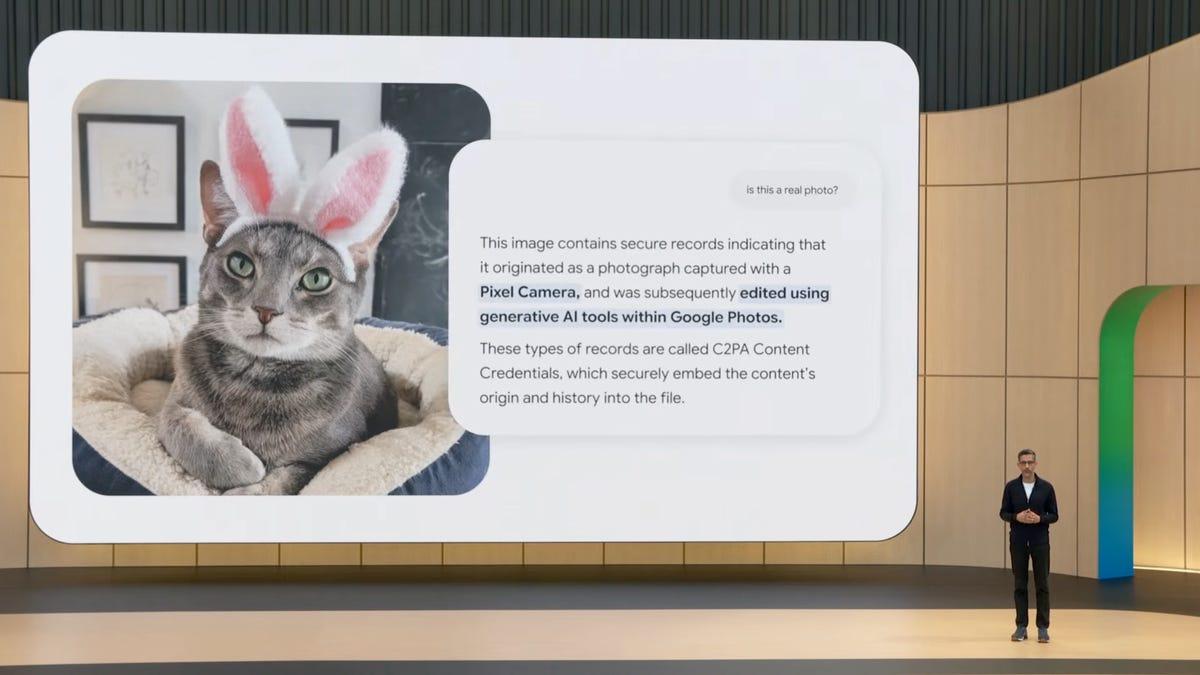
While the watermark itself is invisible, users can verify if an image has been AI-edited through several means:
- The "About this image" section in Google Photos will indicate the presence of a SynthID watermark
4
. - Google's "About this image" tool in Search and Chrome can detect and display information about AI-generated content
5
. - Specialized detection tools can identify the presence of SynthID watermarks.
Limitations and Considerations
Google has noted that very minor edits made using Reimagine may not trigger the SynthID watermarking process. For instance, changing the color of a small flower in the background might not be significant enough for SynthID to detect and label
1
.Related Stories



Broader Implications
This initiative is part of Google's commitment to its AI principles and represents a step towards greater transparency in AI-generated content. As deepfakes and highly realistic AI-generated images become more prevalent, tools like SynthID aim to help users distinguish between authentic and AI-manipulated content
3
.Future Developments
Google's implementation of SynthID in Photos is just the beginning. The technology is already being used in other Google products, such as Imagen 2 and 3, ImageFX, and Veo, Google's AI video-generation model
4
. As the technology evolves, it's likely to become a standard feature across various AI-powered creative tools.Industry Impact
Google's move could set a precedent for other tech companies and potentially influence industry standards for labeling AI-generated or AI-edited content. This development is crucial in the ongoing debate about digital authenticity and the responsible use of AI in content creation
5
.References
Summarized by

Navi
[1]
[3]
[5]
Related Stories
Recent Highlights
1
Meta Unveils Muse Wonder Frontier AI Models, Claims Performance Matching OpenAI and Anthropic
Technology

2
IMF Report Warns AI Market Correction Could Spark Global Financial Crisis With $1.4T at Risk
Business and Economy

3
Eight States Sue OpenAI Over ChatGPT Safety Concerns and Unlawful Collection of Children's Data
Policy and Regulation

Recent Highlights
Today's Top Stories











Don’t drown in AI news. We cut through the noise - filtering, ranking and summarizing the most important AI news, breakthroughs and research daily. Follow topics that matter to you and stay ahead.


