Google Expands SynthID AI Detection to Chrome and Search With OpenAI and Nvidia Support


12 Sources
[1]
Google Expands AI Identification Tool to Chrome and Search
Google is expanding its AI content detector beyond the Gemini app. It will now be able to detect watermarked AI-generated images, videos and audio in Google Chrome and Google Search, the tech giant said Tuesday during its annual Google I/O event. Google's SynthID invisible watermark system was
[2]
Google is trying to make deepfake detection more accessible for everyone
Google is expanding AI detection capabilities to Chrome and Search, with the aim of making it easier for people to identify deepfakes. The updates, announced at Google I/O today, cover not only SynthID -- the invisible watermarking technology developed by Google DeepMind -- but also content
[3]
Google's Circle to Search feature can tell you if an image was AI-generated - Engadget
As Google introduces new models and tools for generating AI content, it's also making it a little bit easier for people to answer the question "was this created with AI?" The company is expanding its AI detection system SynthID so features like Circle to Search and Lens will be able to identify
[4]
Google is adding AI detection for photos, videos, and audio to Search and Chrome
Thanks in part to tools like Nano Banana, AI-generated content is more unavoidable than ever. As announced at I/O, Google is doing its part to help curtail the situation it's played a part in, building on top of SynthID with some new AI verification checks. Google says its SynthID verification
[5]

Google Gemini's Verify AI might finally solve my online image trust issues -- especially with support from Nvidia and OpenAI
* Google announced Verify AI at Google I/O 2026 * It allows Gemini to identify if and how content was altered by AI * Verify AI is being supported by Nvidia, OpenAI, and others A year ago AI content was very easy to pick out from a lineup -- now it's approaching impossible. Thankfully, Google
[6]

Google, OpenAI announce big expansion of SynthID digital watermarks
We live in a world where people need the ability to quickly and accurately identify AI-generated content. And at Google I/O 2026, the company announced a massive expansion of its SynthID digital watermark initiative. At Google I/O 2026, the company announced that it is adding the Google DeepMind
[7]

Your Google Search could soon tell you if an image is AI-generated
Google's SynthID expansion could make AI-generated content easier to identify Google is expanding its SynthID AI watermarking system beyond AI labs and into products people use every day, including Google Search, Chrome, Circle to Search, and Pixel devices. The move, announced during Google I/O
[8]

Making it easier to understand how content was created and edited
As generative media becomes more advanced and accessible, it's helpful to know where content comes from, and whether it's been altered. Today, we're expanding our content transparency and verification tools in Search, Gemini, Chrome, Pixel and Cloud, and deepening our partnership with the broader
[9]

Google adds AI image detection to Circle to Search
Google is expanding its AI detection system, SynthID, making features like Circle to Search and Lens capable of identifying AI-generated and AI-edited images. SynthID is a watermarking system that appends invisible metadata to content created or modified using Google's AI tools, and the expansion
[10]

Google Brings C2PA to Gemini App as OpenAI Adopts SynthID for AI Images
OpenAI is currently adding SynthID to its AI-generated images The artificial intelligence (AI) industry is slowly adopting a multi-layered content verification system to help users understand when content is digitally created or altered, and when it is created organically. At Google I/O 2026, the
[11]

Google expands SynthID watermarking and C2PA content credentials across ecosystem
Google is expanding its content transparency and verification systems across its ecosystem to help users better understand how digital media is created, edited, or generated using AI. The update strengthens its core technologies -- SynthID watermarking and C2PA Content Credentials -- while
[12]

Google IO 2026: You will be able to detect AI generated or edited image using Search or Chrome, here is how
Google IO 2026: Fake images have taken over the internet since the inception of AI tools. Whether it be an image of Sundar Pichai eating a hamburger with Elon Musk and other tech leaders or an image of you attending the Google I/O event. However, Google on Tuesday announced a major update that
Share
Copy Link
Google announced at I/O 2026 that its SynthID AI detection system is expanding beyond Gemini to Chrome and Search, enabling users to identify AI-generated images through Circle to Search and Google Lens. The invisible watermarking technology now includes partnerships with OpenAI, Nvidia, and ElevenLabs, while also supporting C2PA content credentials for broader deepfake detection capabilities.
Google Brings AI Detection Tools to Everyday Browsing
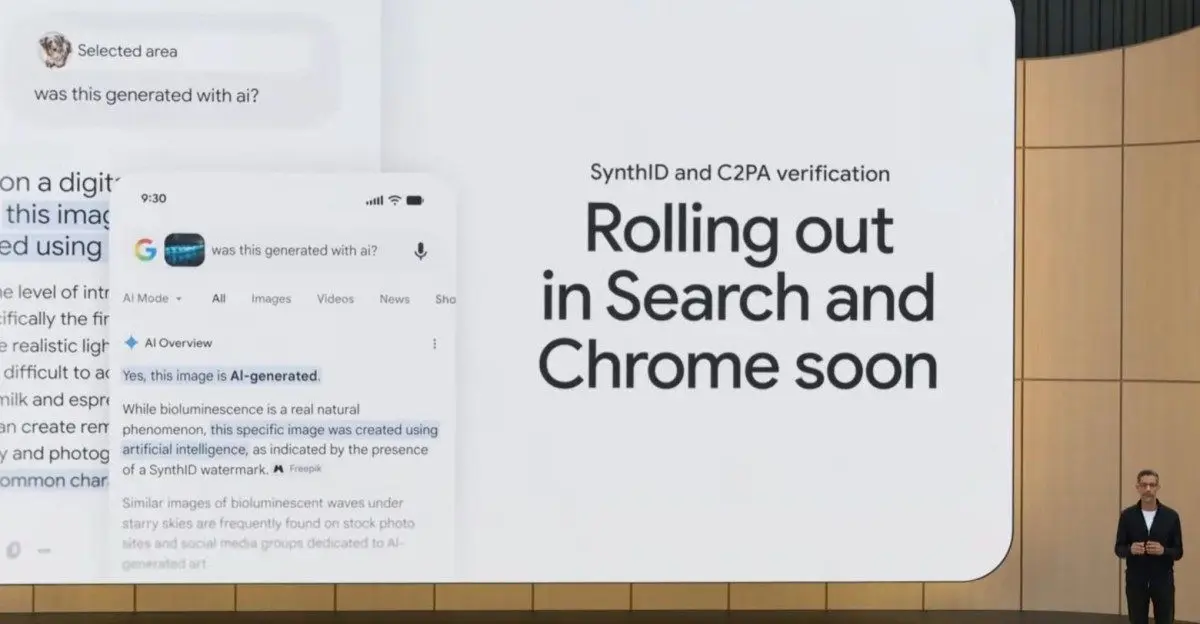
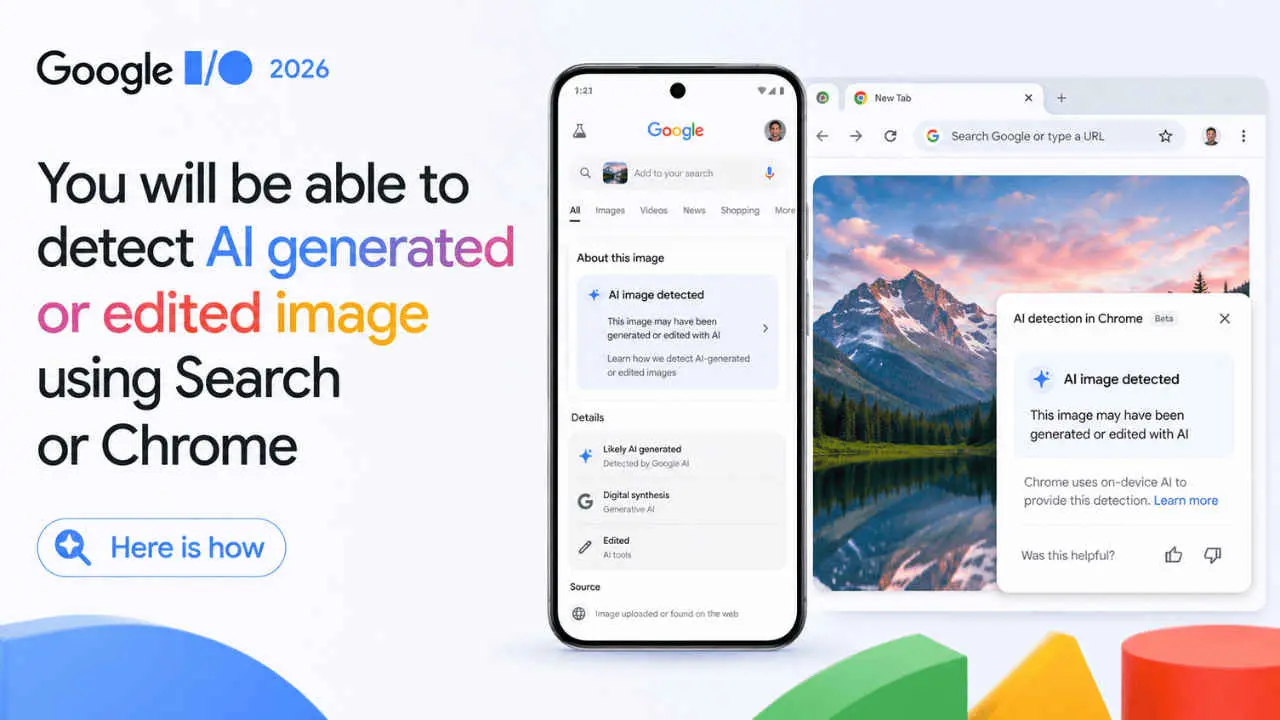
Google is expanding its AI detection capabilities to Chrome and Search, making it easier for users to identify AI-generated content they encounter online. Announced at Google I/O 2026, the expansion brings SynthID—the invisible watermarking technology developed by Google DeepMind—to features like Circle to Search, Google Lens, and AI Mode
1
2
. Users can now right-click on an image in Chrome or use Circle to Search on Android to ask "Is this made with AI?" and receive verification results through Gemini-powered analysis3
.
Source: The Verge
The AI content detection tool has already been used 50 million times globally since launching in the Gemini app, where it checks images, videos, and audio
4
. According to Alphabet CEO Sundar Pichai, the SynthID watermark has been applied to over 100 billion images and videos, plus "60,000 years of audio assets"1
. While the Chrome and Search expansion focuses on images initially, Google plans to extend support to other content types in the future.Cross-Industry Partnerships Strengthen Digital Content Transparency
Google is addressing previous criticism that SynthID could only identify Gemini-created content by forging partnerships with major AI companies. OpenAI, ElevenLabs, Kakao, and Nvidia have committed to implementing SynthID technology in their AI-generated content
1
3
. OpenAI specifically confirmed its integration will start with images created through ChatGPT, Codex, or the OpenAI API3
.Pichai emphasized the collaborative approach: "It's great to see the cross-industry collaboration. We are looking forward to expanding to more partners and setting the standard of transparency for the AI era"
1
. This expansion means Google's tools won't just recognize its own AI content, but images and videos created by various AI sources across the industry5
.C2PA Content Credentials Integration Streamlines Deepfake Detection
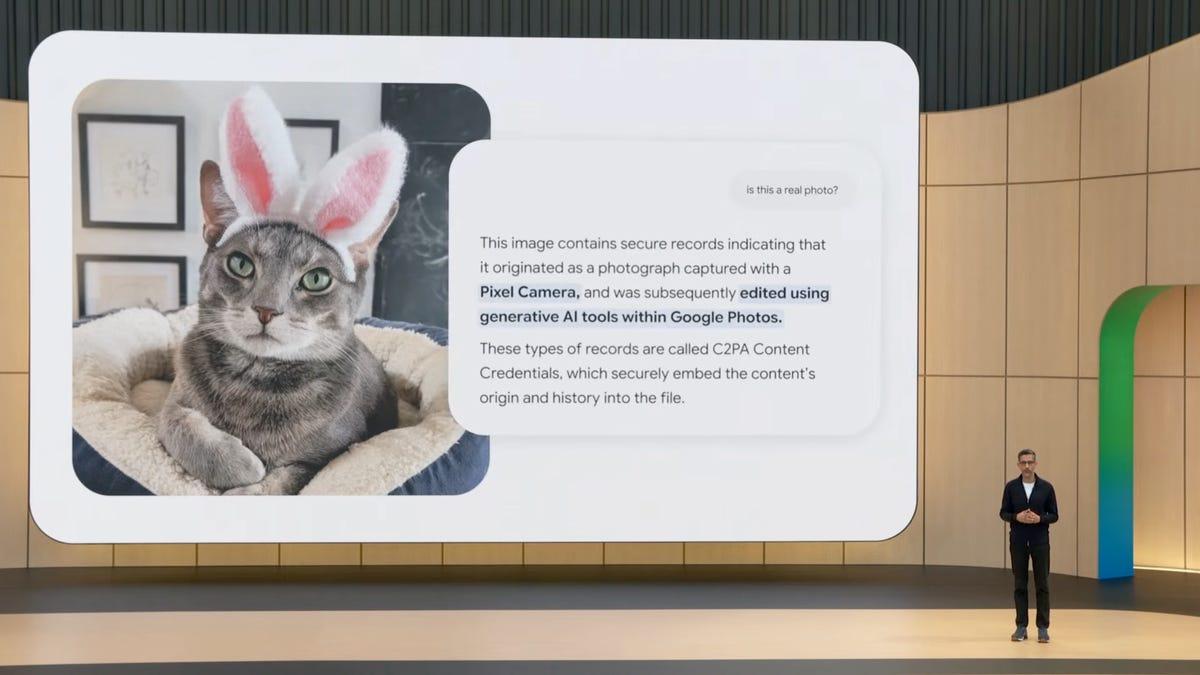
Beyond SynthID, Google is integrating C2PA content credentials—an industry-standard metadata system—into its verification interfaces
2
. This means users can now verify the authenticity of content using both provenance systems from a single interface instead of switching between Gemini and dedicated C2PA checker portals. C2PA verification rolled out to the Gemini app immediately, with Search and Chrome support following in coming months2
.
Source: CNET
Google refers to this combined approach as "quantum credentials verification," which provides granular detail about an image's origin
5
. For example, the system can specify that an image was originally captured from a Pixel phone and later edited with AI-enabled tools in Google Photos3
. Google is also expanding C2PA support to video files on Pixel 8, 9, and 10 phones in coming weeks2
.Related Stories



Enterprise Solutions Target Misinformation at Scale
Google Cloud's Gemini Enterprise Agent Platform is launching a new AI content detection API designed for organizations to identify AI-generated media across their platforms
2
. The capability is rolling out to trusted partners including Shutterstock, Avid, and Canva for testing and feedback4
. Google explains this "gives businesses a powerful way to spot AI content made by both Google and other popular models, helping them decide how to evaluate and manage media across their own platforms—whether that's for backend operations like sorting feeds and preventing insurance fraud, or for user-facing content like fact-checking and labeling synthetic media"2
.The Chrome expansion is particularly significant as it's the most-used browser globally, providing easier access to AI detection compared to manually uploading images to dedicated verification portals
2
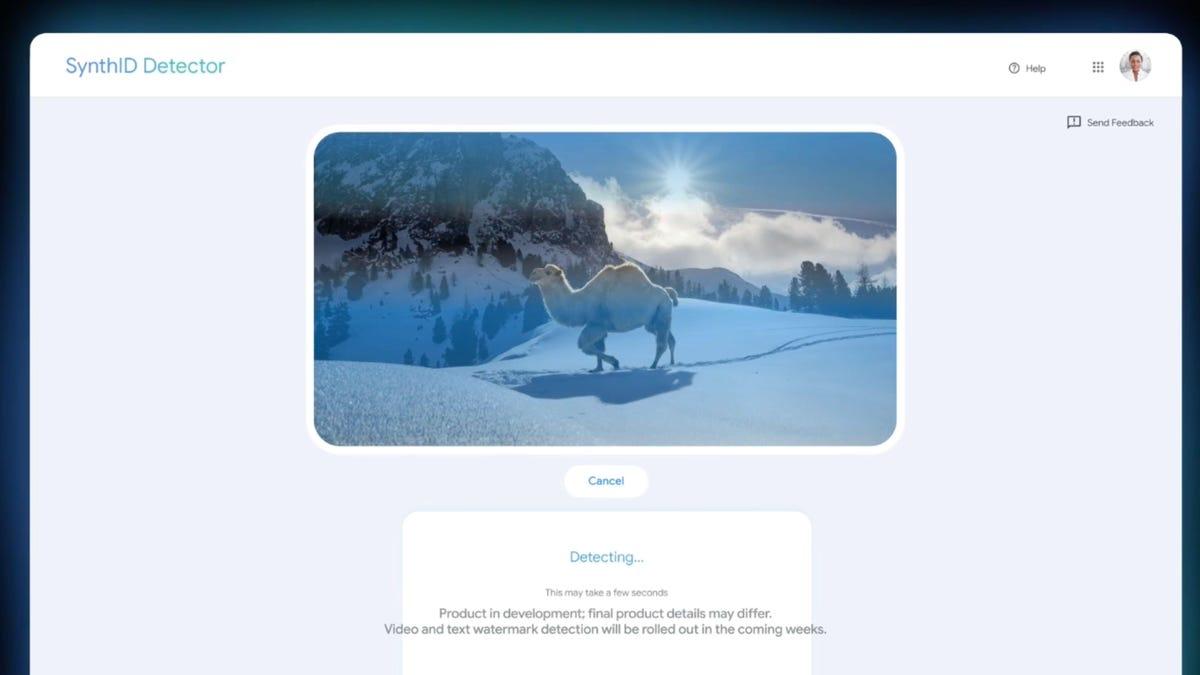
. However, Google DeepMind VP Pushmeet Kohli revealed that plans for a dedicated SynthID verification portal have been scrapped, meaning users must rely on Gemini-powered platforms to identify AI-generated content going forward2
.
Source: Digit
Addressing Online Image Trust Issues in the AI Era
As Pichai noted, "As generative AI gets better, so does the need for more transparency"
1
. The timing matters as AI-generated content becomes increasingly difficult to distinguish from authentic material, affecting everything from online shopping to public discourse5
. While no watermarking system is foolproof and bad actors can find ways to evade detection, making it easier for people to verify content represents a critical first step3
.References
Summarized by

Navi
Related Stories
Recent Highlights
1
Meta Unveils Muse Wonder Frontier AI Models, Claims Performance Matching OpenAI and Anthropic
Technology

2
IMF Report Warns AI Market Correction Could Spark Global Financial Crisis With $1.4T at Risk
Business and Economy

3
Eight States Sue OpenAI Over ChatGPT Safety Concerns and Unlawful Collection of Children's Data
Policy and Regulation
Recent Highlights
Today's Top Stories










Don’t drown in AI news. We cut through the noise - filtering, ranking and summarizing the most important AI news, breakthroughs and research daily. Follow topics that matter to you and stay ahead.


