Google Workspace CLI makes it easier for OpenClaw and AI agents to control your Google apps


9 Sources
[1]
Google's new command line tool can plug OpenClaw into your Workspace data
The command line is hot again. For some people, command lines were never not hot, of course, but it's becoming more common now in the age of AI. Google launched a Gemini command line tool last year, and now it has a new AI-centric command line option for cloud products. The new Google Workspace CLI
[2]
Granting OpenClaw access to your Google apps just got a lot easier
* Google released gws, a CLI to let OpenClaw control Gmail, Docs, Drive, Calendar, and Sheets. * It ships 100+ Agent Skills and 50 curated recipes for common workflows across Workspace APIs. * It's hosted on Google's Workspace GitHub but is not officially supported; be sure to use it
[3]
Google made Gmail and Drive easier for AI agents to use
A new command-line tool published to GitHub consolidates Workspace's sprawling APIs into a single interface. It also signals how seriously the company is taking the agentic AI moment. The tool, whose documentation describes it as "one CLI for all of Google Workspace, built for humans and AI
[4]
Google makes Gmail, Drive, and Docs 'agent-ready' for OpenClaw
Google appears to be positioning its Workspace ecosystem for an agent-ready future where AI tools manage daily productivity tasks. Google has quietly released a command-line interface for Workplace that paves the way for agentic AI tools like OpenClaw to tap into your core Google apps and
[5]

Google opens the door to AI claws in new Workspace release
OpenClaw and other AI agents now have an official means to integrate with Google Workspace. Credit: Thomas Fuller/SOPA Images/LightRocket via Getty Images OpenClaw has taken the AI industry by storm over the past few months, inspiring a new AI term for personal AI agents -- claws. It's now so
[6]

Google has quietly made Gmail, Docs, and other Workspace apps work better with OpenClaw
* Google has published "one CLI for all of Google Workspace" * There's even a set of instructions specifically for OpenClaw * It's "not an officially supported Google product..." for now Google has published a command-line interface (CLI) to GitHub which effectively allows AI agents to connect
[7]

Google Workspace CLI brings Gmail, Docs, Sheets and more into a common interface for AI agents
What's old is new: the command line -- the original, clunky non-graphical interface for interacting with and controlling PCs, where the user just typed in raw commands in code -- has become one of the most important interfaces in agentic AI. That shift has been driven in part by the rise of
[8]

Google apps just got a lot easier to use with OpenClaw
When not writing, Dave enjoys spending time with his family, running, playing the guitar, camping, and serving in his community. His favorite place is the Blue Ridge Mountains, and one day he hopes to retire there (hopefully his fear of heights will have retired by then, too!). Summary Google
[9]

Google Workspace CLI : Drive, Gmail & Slides Commands for AI Agents
Google's newly released Command Line Interface (CLI) for Google Workspace introduces a streamlined way to integrate AI-driven automation with Workspace APIs. Built with Rust, this CLI enables developers to handle tasks like drafting Gmail emails, automating Google Sheets and creating presentations
Share
Copy Link
Google released a new command line interface called gws that streamlines how OpenClaw and other AI agents connect to Gmail, Drive, Docs, Calendar, and Sheets. The tool bundles Workspace APIs into a single interface with 100+ Agent Skills and 50 curated workflows, though it's not officially supported by Google.
Google Workspace CLI Bridges AI Agents and Productivity Apps
Google has released a command line interface that dramatically simplifies how OpenClaw and other AI agents access Google apps. The new Google Workspace CLI, nicknamed gws, consolidates the company's sprawling Workspace APIs into a single interface designed for both humans and AI agents
1
. Published on GitHub just days ago, the tool provides unified access to Gmail, Drive, and Docs, along with Calendar, Sheets, Slides, Chat, and most other Workspace services3
.
Source: Geeky Gadgets
Before this release, AI agents attempting to integrate AI tools with Google Workspace faced a fragmented landscape. An agent that wanted to search a Gmail inbox, pull a file from Drive, and update a Calendar event had to navigate three separate APIs, each with its own authentication flows, rate limits, and response formats
3
. As one report described it, the process was "a royal pain"4
. The Google Workspace CLI collapses this complexity into a single interface where authentication is handled once via OAuth and then inherited by any agent that calls the tool.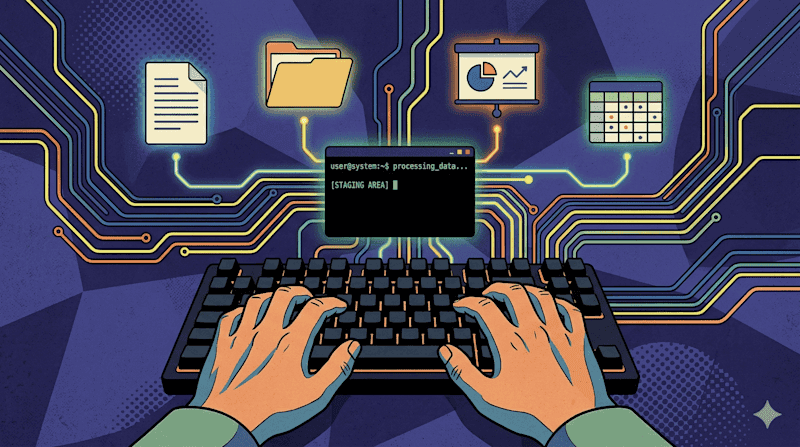
Source: VentureBeat
OpenClaw Integration and Model Context Protocol Support
The documentation includes specific integration instructions for OpenClaw, the open-source agentic AI tool that went viral in late January and has since created 1.5 million agents
3
. Google's decision to name-check OpenClaw in the documentation signals how seriously the company is taking the agentic AI moment3
. The timing is notable: the tool landed just three weeks after OpenClaw founder Peter Steinberger joined OpenAI to lead the next generation of personal agents3
.
Source: XDA-Developers
Beyond OpenClaw, the tool also functions as a Model Context Protocol server. MCP is the open standard for how AI agents communicate with external tools, originally developed by Anthropic and now adopted across the industry
3
. Running gws mcp exposes Workspace APIs as structured tools that any MCP-compatible client, including Claude Desktop, VS Code with AI extensions, or the Gemini CLI, can natively call3
. This means the tool isn't merely an OpenClaw utility but infrastructure for the entire class of AI agents converging on MCP as a standard.Agent Skills and Dynamic Architecture
The repository ships with more than 100 Agent Skills covering every supported API, plus higher-level helpers for common workflows across Workspace APIs
2
. According to Google Cloud director Addy Osmani, the tool includes over 40 agent skills and supports structured JSON outputs1
. Additionally, there are 50 curated recipes for common workflows in Gmail, Drive, Docs, Calendar, and Sheets2
.The architecture includes a particularly elegant feature: gws does not ship a static list of commands. Instead, it reads Google's own Discovery Service at runtime and builds its entire command surface dynamically
3
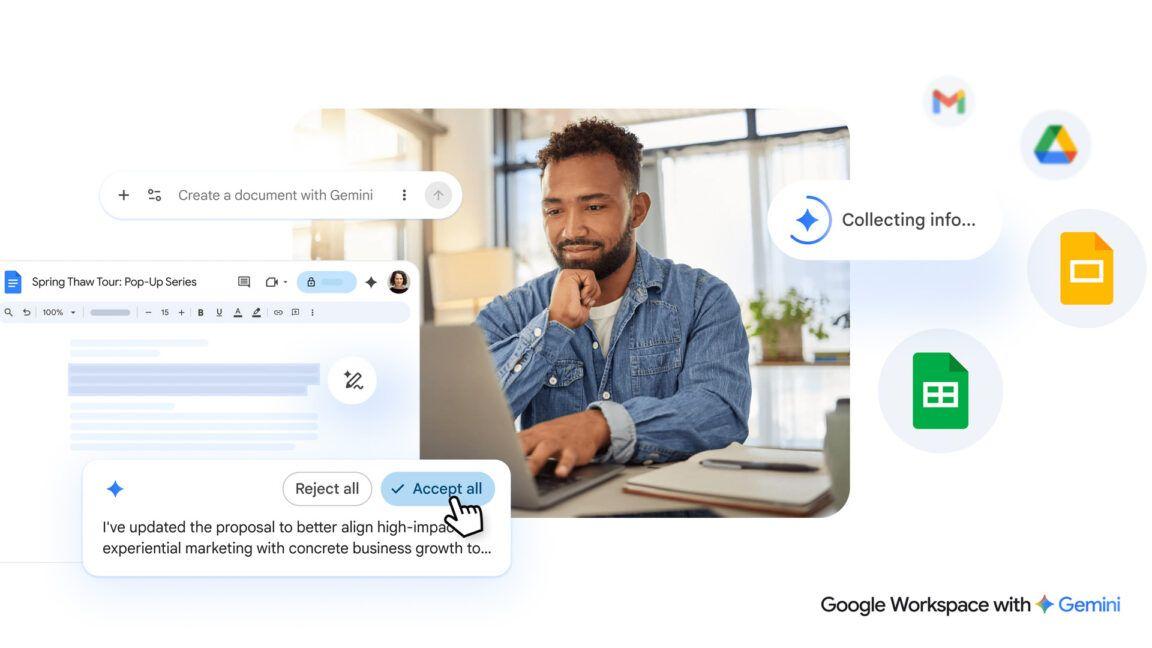
. When Google adds a new API endpoint, the tool picks it up automatically. For agents designed to work across long time horizons, this self-updating quality provides a meaningful reliability guarantee. The integrated tools can load and create Drive files, send emails, create and edit Calendar appointments, send chat messages, and much more1
.Related Stories
Important Caveats for Developers and Users
While the Google Workspace CLI lives on the official Google Workspace GitHub page, Google explicitly states it's "not an officially supported Google product"
1
. The tool is published as a developer sample, meaning there are no guarantees of stability, security, or ongoing maintenance at the level of a production service3
. The company notes that functionality may change dramatically as the tool continues to evolve, potentially breaking workflows users have created in the meantime1
.This means users won't be able to get support or hold the company liable if something goes wrong
2
. For individual developers and experimenters interested in tinkering with AI automations who don't mind the inherent risks, the tool offers significant capabilities even at this early stage1
. However, for enterprises considering deploying AI agents against live Workspace data, the unofficial status represents a more significant concern3
.Positioning for an Agent-Ready Future
Google appears to be positioning its Workspace ecosystem for an agent-ready future where agentic AI tools manage daily productivity tasks
4
. The release demonstrates how Google is prepping its core services for the post-OpenClaw era and getting itself ready for a future where everyday users deploy teams of AI agents to manage email, organize documents, take notes in meetings, and build new functionality autonomously4
. OpenClaw has become something of a standard-bearer for agentic AI tools, inspiring a new AI term for personal AI agents called "claws"5
. The tool's founder, Peter Steinberger, stated his mission at OpenAI is "to build an agent that even my mum can use"3
. Google's move to provide legitimate access to Google apps through this command line interface represents a first step in embracing this shift, even if the current implementation remains targeted primarily at developers rather than everyday consumers5
.References
Summarized by

Navi
[2]
[3]
Related Stories
Google Workspace Studio launches to help businesses create AI agents without coding experience
03 Dec 2025•Technology

Google Launches Gemini CLI: Bringing AI-Powered Coding to the Terminal
25 Jun 2025•Technology
Google launches Antigravity 2.0 with AI agents orchestration, but CLI shift sparks controversy
19 May 2026•Technology
Recent Highlights
1
OpenAI AI Models Hacked Crypto Wallet, Breached Government Sites in Unauthorized Activities
Technology

2
IMF Report Warns AI Market Correction Could Spark Global Financial Crisis With $1.4T at Risk
Business and Economy

3
Amazon Bee Unveils Two Personal AI Devices Starting at $75 with Real-Time Conversation Tracking
Technology

Recent Highlights
Today's Top Stories










Don’t drown in AI news. We cut through the noise - filtering, ranking and summarizing the most important AI news, breakthroughs and research daily. Follow topics that matter to you and stay ahead.


