Google launches Antigravity 2.0 with AI agents orchestration, but CLI shift sparks controversy


7 Sources
[1]
Google launches Antigravity 2.0 with an updated desktop app and CLI tool | TechCrunch
Google is introducing a new version of its agentic coding app, Google Antigravity 2.0, with an updated desktop app, a CLI tool, and an SDK for custom workflows. The company launched its Antigravity tool last year as a response to agentic coding software such as Cursor. The company said that with
[2]
Bye-bye, Gemini CLI; Google's gone and swapped you for a closed-source AI
Pour one out for the Gemini Command Line Interface. Come June 18, the open source development agent will stop serving most users in favor of the new Antigravity CLI, and developers aren't happy that the replacement is far less open than the old tool. Google announced the Antigravity CLI at Google
[3]
Google flips Antigravity into an agentic dev suite, AI Studio app lands on Android
With Gemini 3.5 Flash doing frontier-level work at a fraction of the cost, Google's Antigravity 2.0 is here to help build and manage your agents and let them loose on your latest projects. Meanwhile, AI Studio is gaining a dedicated Android app to execute on your ideas while on the go. Google
[4]
Google accelerates agent-native software development with expanded Antigravity platform - SiliconANGLE
Google accelerates agent-native software development with expanded Antigravity platform Google Cloud is enhancing its "agent-first" coding platform for developers with the launch of Antigravity 2.0, a new standalone desktop application that enables a full "agent-optimized" user experience. It
[5]

Antigravity 2.0 Gets Real in Competing with Claude Code and Codex
Google I/O 2026 just took place last night as per India's time. During the event, Sundar Pichai took the stage to announce some pretty exciting updates from Google centered around AI (artificial intelligence). One of the huge updates was around Antigravity. Google's Antigravity 2.0 is here, and
[6]

Google I/O 2026: Antigravity is putting AI on steroids these 5 ways
Among the more surprising revelations from I/O is that Gemini CLI is being retired. When Google released Gemini CLI last year, its purpose was to make Gemini available right inside the terminal. Having garnered over 100,000 stars on GitHub, 6,000 merged pull requests, and millions of users, Google
[7]
Google I/O 2026: Google claims Antigravity 2.0 created an operating system in 12 hours, brings vibe coding to Android
AI Studio now lets users create Android apps using natural language prompts and test them through an integrated emulator. As expected, Google has used I/O 2026 to double down on AI-powered announcements. The company announced a major upgrade to its agentic coding platform called Antigravity 2.0.
Share
Copy Link
Google rolled out Antigravity 2.0 at Google I/O, transforming its agentic coding app into a comprehensive development suite with multi-agent orchestration, a new CLI tool, and SDK. Powered by Gemini 3.5 Flash, the update enables developers to run multiple AI agents simultaneously and build custom workflows. But the forced migration from the open-source Gemini CLI to the closed-source Antigravity CLI has triggered developer frustration over transparency and usage limits.
Google Transforms Antigravity Into Agent-First Development Platform
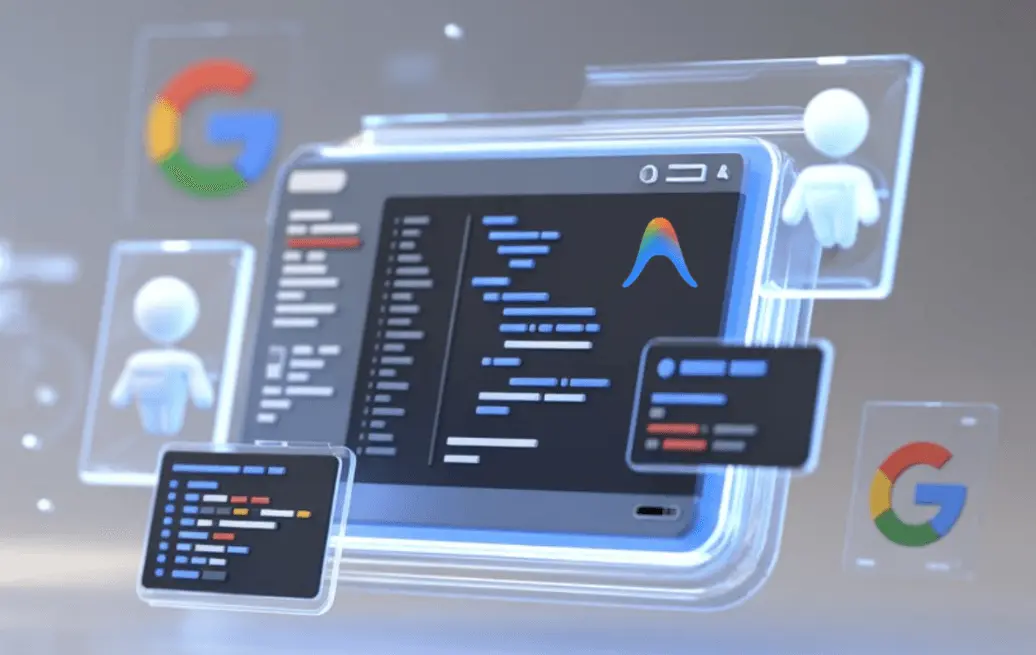
Google has launched Antigravity 2.0, repositioning its agentic coding app into a unified suite for agent-native software development. Announced at Google I/O, the update introduces a standalone desktop application that enables developers to orchestrate multiple AI agents and execute tasks simultaneously
1
3
. The platform now allows users to design custom subagent workflows and schedule tasks that run automatically in the background, marking a shift from traditional coding assistance to true agent orchestration4
.
Source: Digit
The revamped platform integrates seamlessly with Google AI Studio, Android, and Firebase, enabling developers to export projects from AI Studio directly to their local Antigravity app while preserving all context
1
. Google has also added native voice command support to Antigravity, mirroring features already present in Gmail and Docs. The company positions this as a direct challenge to competitors like Claude Code and Codex, which have captured developer attention in recent months5
.Gemini 3.5 Flash Model Powers Performance Leap
At the core of Antigravity 2.0 sits the Gemini 3.5 Flash model, which Google claims outperforms Gemini 3.1 Pro on nearly all coding benchmarks while running four times faster than any frontier model
4
. The model was co-developed using Antigravity itself, demonstrating the platform's capabilities in real-world scenarios1
. This speed advantage becomes particularly valuable when multiplied across several agents working in parallel, allowing ideas to materialize in minutes rather than hours3
.
Source: SiliconANGLE
Google is also deploying Antigravity's coding capabilities in consumer products like Search, where users will see custom UIs generated in real-time as part of search answers. This integration enables users to build mini-apps while exploring topics within search results
1
. The Gemini API now includes Managed Agents, which can spin up new agents that reason, use third-party tools, and execute code in isolated Linux environments with a single API call4
.Antigravity CLI Replaces Open-Source Gemini CLI, Sparking Backlash
Google introduced the Antigravity CLI as a command-line interface tool for developers who prefer terminal-based workflows, but the launch comes with a controversial mandate. Starting June 18, 2026, the open-source Gemini CLI will stop serving requests for Google AI Pro and Ultra users, as well as those using it free of charge
2
. Enterprise customers using Gemini Code Assist Standard or Enterprise licenses will retain access, but most developers must migrate to the closed-source Antigravity CLI2
.
Source: Digit
The transition has triggered significant developer frustration. While the Gemini CLI GitHub page displays all the code that made the tool possible, the Antigravity CLI repository contains only a changelog, readme, and demonstration GIF
2
. Google acknowledges there won't be feature parity between the two tools at launch, with some capabilities potentially taking time to arrive or not appearing at all2
. Developers have flooded GitHub with complaints about usage limits, with multiple users reporting they hit their weekly quota after just a couple of requests2
.Related Stories
SDK and Pricing Changes Target Enterprise Adoption
Google launched an Antigravity software development kit that provides programmatic access to build custom agents based on the platform's technology. Developers can define custom agent behaviors and host them on third-party infrastructure, with Google releasing custom agent templates in AI Studio for enterprise users
1
4
. Google Cloud customers can connect to Antigravity to build projects, with an export tool available in AI Studio for developers to transfer existing projects locally1
.On the pricing front, Google introduced a new AI Ultra pricing tier at $100 per month, offering 5x higher usage limits in Antigravity compared to the Pro plan. The company also reduced its top-tier AI Ultra plan from $250 to $200, which provides 20x higher limits than the Pro plan
1
. These changes mirror strategies from Anthropic and OpenAI, which have introduced tiered pricing systems to accommodate varying developer needs1
.Android App and Cross-Platform Integration Expand Accessibility
Google AI Studio is gaining a dedicated Android application that allows developers to capture ideas on mobile devices and find working prototypes ready by the time they reach their desks
3
4
. The app supports voice and text input, starts from high-quality example apps, and includes social sharing features. Pre-registration is now available in the Google Play Console3
.The platform now enables developers to build native Android applications with a single prompt and publish apps directly to the test track within the Google Play Console
4
. Google AI Studio has also integrated with Google Workspace, allowing AI agents to call relevant Workspace APIs and embed them directly into applications4
. This workflow transforms app development from traditional coding into project management, where developers lead teams of Gemini-powered AI agents3
.References
Summarized by

Navi
[4]
Related Stories
Google Bundles Antigravity Agentic AI Coding Assistant Into Gemini Enterprise With New Controls
21 Aug 2026•Technology

Google Launches Antigravity: An Agent-First Coding Platform Built on VS Code Fork
18 Nov 2025•Technology

Google bets on AI agents with Gemini 3.5 Flash, Spark, and Omni at I/O 2026
18 May 2026•Technology
Recent Highlights
1
Meta Unveils Muse Wonder Frontier AI Models, Claims Performance Matching OpenAI and Anthropic
Technology

2
Microsoft and Nvidia Launch Surface Laptop Ultra: A $2,599 AI-Ready PC With RTX Spark Chip
Technology

3
Meta Muse AI Agent Surges to 6.6M Downloads Despite Privacy and Security Controversies
Technology

Recent Highlights
Today's Top Stories






Don’t drown in AI news. We cut through the noise - filtering, ranking and summarizing the most important AI news, breakthroughs and research daily. Follow topics that matter to you and stay ahead.


