Google's AI Advancements Outpace Apple's Promises, Raising Questions About Apple's AI Strategy


5 Sources
[1]
Apple Intelligence hasn't lived up to my expectations, but these 3 upgrades could win me back
With WWDC 2025 around the corner, Apple has an opportunity to stage an AI comeback. Here's what it needs to show us. Apple finally entered the AI race at last year's Worldwide Developer Conference when it revealed Apple Intelligence. However, some of the biggest updates announced at WWDC 2024 --
[2]
After Google IO's big AI reveals, my iPhone has never felt dumber
As Apple breaks its Siri promises, Google boldly builds the future of AI. I can't believe I'm about to state this, but I'm considering switching from iOS to Android. Not right now, but what I once considered an absurd notion is rapidly becoming a realistic possibility. While Apple may have an
[3]
Apple has gotten in the way of its own AI rollout -- here's how it can get Apple Intelligence back on track
During the Android Show: I/O Edition, Google revealed plans to bring Gemini to even more devices in the coming months. This is great news for Gemini fans, and it means a wealth of new features are coming to WearOS, Google TV, and more. I have no doubt this will be a major boost for fans, but it
[4]
Google I/O showed off AI done right -- hopefully, Apple was paying attention
As Google CEO Sundar Pichai wrapped up the company's Google I/O 2025 keynote this past week, you could be forgiven if amid the sound of all those AI announcements made during the show, you thought you could hear the faint sound of Apple crying out "uncle." Apple, which has AI-fueled ambitions of
[5]
At I/O, Google Just Shipped Apple's AI Promises
It's a familiar idea: Apple promised something similar a year ago when it rolled out Apple Intelligence. And by all accounts, Apple should be leading in AI -- but has struggled to improve its Siri assistant, even without adding AI features. Meanwhile, Google seems closer than ever to delivering on
Share
Copy Link
Google's recent AI announcements at I/O 2025 have highlighted the growing gap between Google's AI capabilities and Apple's delayed Apple Intelligence rollout, prompting concerns about Apple's AI strategy and its ability to compete in the evolving tech landscape.
Google's AI Dominance at I/O 2025
Google's I/O 2025 conference has set a new benchmark in artificial intelligence (AI) development, showcasing a range of practical and innovative features across its product ecosystem. The event highlighted Google's commitment to AI integration, with nearly every moment of the two-hour keynote focused on AI initiatives
1
. This comprehensive approach stands in stark contrast to Apple's delayed and limited rollout of its Apple Intelligence features.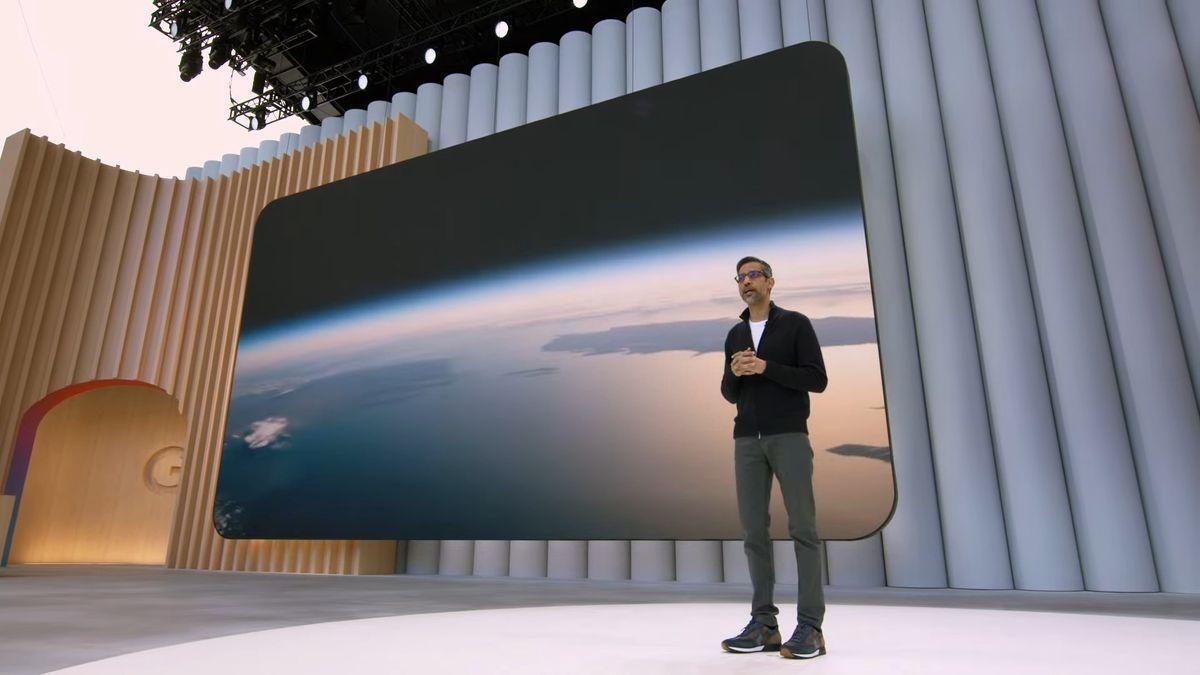
Source: Tom's Guide
Apple's AI Challenges
Apple's entry into the AI race with Apple Intelligence at WWDC 2024 has been met with disappointment as many promised features, including an improved Siri and context-aware AI, have yet to materialize
2
. The company's decision to prioritize on-device processing for privacy and security has inadvertently created obstacles for widespread AI implementation, particularly on older devices with limited RAM3
.Siri vs. Gemini: A Growing Gap
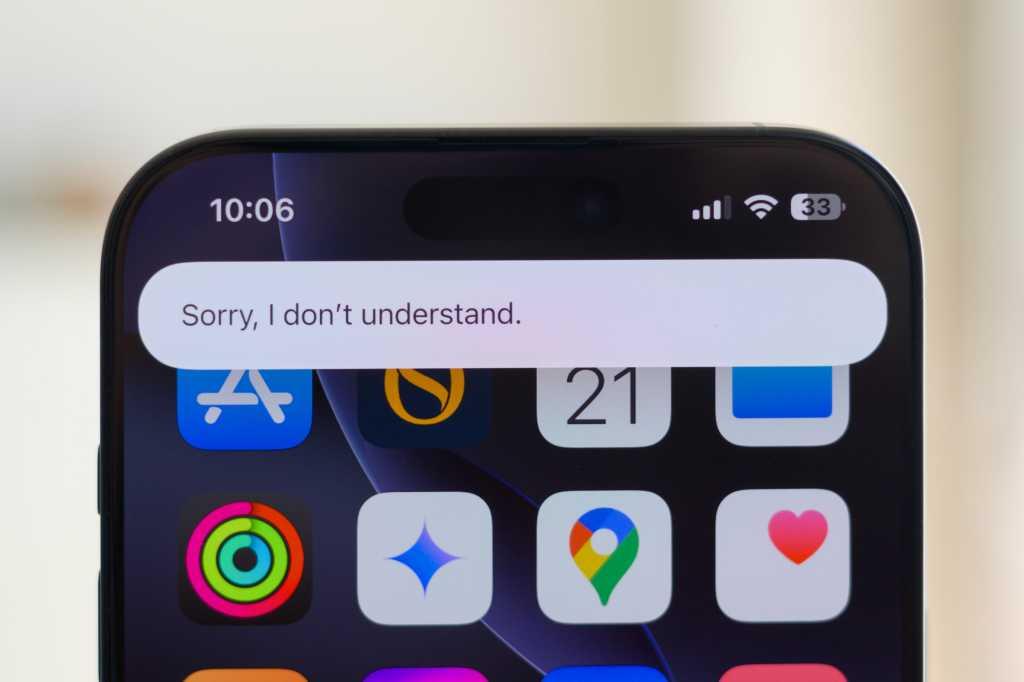
The disparity between Apple's Siri and Google's Gemini assistant is becoming increasingly apparent. While Siri struggles with basic tasks and relies on third-party applications like ChatGPT for more complex queries, Gemini is evolving into an integral part of Google's ecosystem
4
. Google's Project Astra demonstrates advanced agentic capabilities, allowing Gemini to control Android devices and perform complex tasks with minimal user intervention1
4
.
Source: Macworld
AI Integration Strategies
Google's approach to AI integration focuses on cloud-based processing, enabling compatibility with a wide range of devices and facilitating rapid feature deployment
3
. In contrast, Apple's commitment to on-device processing for enhanced privacy has limited the scope and speed of its AI rollout2
. This fundamental difference in strategy has allowed Google to push forward with more ambitious AI projects while Apple grapples with hardware limitations.Impact on User Experience
The advancements showcased at Google I/O 2025 promise to revolutionize user interactions with technology. Features like real-time translation in Google Meet, personalized email replies in Gmail, and the integration of Gemini with Google app activity demonstrate practical applications of AI that could significantly enhance productivity and user experience
5
. Apple's more cautious approach, while prioritizing privacy, may risk leaving users feeling that their devices are becoming comparatively less capable4
.Related Stories


Future Outlook and Challenges

Source: ZDNet
As Google continues to expand its AI capabilities, Apple faces mounting pressure to accelerate its AI development. Rumors suggest that Apple may be working on increasing RAM in future iPhone models and developing a Software Development Kit for app makers to integrate AI models
3
. However, the company's ability to catch up with Google's AI advancements remains uncertain, especially given the head start and momentum Google has gained.Implications for the Tech Industry
The contrasting approaches of Google and Apple in AI development are likely to shape the future of the tech industry. Google's aggressive push into AI across its product line may set new consumer expectations for AI-powered features and capabilities. Apple, known for its hardware prowess, may need to reevaluate its AI strategy to maintain its competitive edge in the rapidly evolving tech landscape
4
5
.As the AI race intensifies, both companies will face challenges in balancing innovation with user privacy and ethical considerations. The outcome of this competition could have far-reaching implications for how AI is integrated into our daily lives and the future direction of personal computing technology.
References
Summarized by

Navi
[1]
[3]
Related Stories
Recent Highlights
1
Meta Unveils Muse Wonder Frontier AI Models, Claims Performance Matching OpenAI and Anthropic
Technology

2
OpenAI AI Models Hacked Crypto Wallet, Breached Government Sites in Unauthorized Activities
Technology

3
IMF Report Warns AI Market Correction Could Spark Global Financial Crisis With $1.4T at Risk
Business and Economy

Recent Highlights
Today's Top Stories






Don’t drown in AI news. We cut through the noise - filtering, ranking and summarizing the most important AI news, breakthroughs and research daily. Follow topics that matter to you and stay ahead.


