34 Sources
[1]
Google reveals 2026 hardware lineup: Pixel 11, Pixel Watch 5, and Pixel Tag
Google has revealed its Pixel phone hardware for 2026, and you won't be surprised. The Pixel 11 series looks a lot like last year's lineup, featuring an evolution of the design Google adopted with the Pixel 9. There are some minor tweaks, a few new hardware goodies, and yes, even more Gemini-powered AI. The new phones are joined by an updated Pixel Watch 5 with much the same story, as well as Google's first in-house tracker device, the Pixel Tag. And you can place orders for all of Google's new hardware today. The Pixel 11 series is clearly the star of the show -- you might even call it the highlight... erm, sorry, HiLight. Just as the leaks predicted, Google's most notable hardware innovation for the 2026 Pixel phones is the return of the notification LED (sort of). HiLight is available on the Pro phones, so the base model Pixel will remain unilluminated. HiLight consists of a ring of RGB LEDs inside the flash assembly on the back of the phone. It lights up when you're talking to Gemini, so you don't have to look at the screen of your phone to know you've been heard or that the AI is working. Thus, it makes the most sense when the phone is lying face down. The multicolored LEDs can also alert you to an incoming call from specific contacts. This works for both standard phone calls and voice calls in WhatsApp. But it's only those apps. It sounds like you can't use HiLight for any other kind of notification for other apps -- not even for a text in Google Messages. Notification LEDs can be useful, but the ones we had years back were infinitely more configurable. HiLight is locked down in modern Google fashion, and I wouldn't be surprised if we see more HiLight features drip-fed in future Pixel Drops. Specs at a glance: Google Pixel 11 series Pixel 11 ($899) Pixel 11 Pro ($1,099) Pixel 11 Pro XL ($1,299) Pixel 11 Pro Fold ($1,899) SoC Google Tensor G6 Google Tensor G6 Google Tensor G6 Google Tensor G6 Memory 12 GB 12 / 16 GB 12 / 16 GB 16 GB Storage 256 GB / 512 GB 256 GB / 512 GB / 1 TB 256 GB / 512 GB / 1 TB 256 GB / 512 GB / 1 TB Display 6.3-inch 1080×2424 OLED, 60-120Hz, up to 3000 nits peak 6.3-inch 1280×2856 LTPO OLED, 1-120Hz, up to 3600 nits peak 6.8-inch 1344×2992 LTPO OLED, 1-120Hz, up to 3600 nits peak External: 6.5-inch 1080 x 2342 OLED, 1-120Hz, up to 3600 nits peak; Internal: 8-inch 2076×2152 OLED, 1-120Hz, up to 3600 nits peak Cameras 48 MP wide with Macro Focus, f/1.7; 13 MP ultrawide, f/2.2; 10.8 MP 5x telephoto, f/3.1; 10.5 MP selfie, f/2.2 50 MP wide, f/1.68; 48 MP ultrawide with Macro Focus, f/1.7; 48 MP 5x telephoto, f/2.8; 42 MP selfie, f/2.2 50 MP wide, f/1.68; 48 MP ultrawide with Macro Focus, f/1.7; 48 MP 5x telephoto, f/2.8; 42 MP selfie, f/2.2 48 MP wide, f/1.7; 10.5 MP ultrawide with Macro Focus, f/2.2; 10.8 MP 5x telephoto, f/3.1; 10 MP inner and outer selfie, f/2.2 Software Android 17 Android 17 Android 17 Android 17 Battery 4,985 mAh, up to 30W wired charging, Pixelsnap wireless charging up to 25W 4,850 mAh, up to 30W wired charging, Pixelsnap wireless charging up to 25W 5,115 mAh, up to 45W wired charging, Pixelsnap wireless charging up to 25W 4,806 mAh, up to 30W wired charging, Pixelsnap wireless charging up to 25W Connectivity Wi-Fi 6E, NFC, Bluetooth v6, sub-6 GHz and mmWave 5G, USB-C 3.2 Wi-Fi 7, NFC, Bluetooth v6, Ultra-Wideband, sub-6 GHz and mmWave 5G, USB-C 3.2 Wi-Fi 7, NFC, Bluetooth v6, Ultra-Wideband, sub-6 GHz and mmWave 5G, USB-C 3.2 Wi-Fi 7, NFC, Bluetooth v6, Ultra-Wideband, sub-6 GHz and mmWave 5G, USB-C 3.2 Measurements 152.4 mm height×71.1 mm width×7.6 mm depth, 195.6 g 152.4 mm height×71.1 mm width×7.6 mm depth, 204.1 g 162.6 mm height×76.2 mm width×7.6 mm depth, 226.8 g Folded: 155.2 mm height×76.0 mm width×10.1 mm depth; Unfolded: 155.2 mm height×150.4 mm width×5.0 mm depth; 239 g Colors Frost, Pistachio, Hibiscus, Obsidian Canyon, Olive, Fog, Obsidian (matte) Canyon, Olive, Fog, Obsidian (matte) Olive, Obsidian You may also notice the camera bars are a bit different this year. Google is keeping this distinctive design element, but the bar has shrunk considerably on the base model. The Pixel 11's bar now rises just a couple of millimeters above the back of the phone, making it a bit less awkward to drop in your pocket. All the bars now have edge-to-edge glass, dropping the metal inlay that previously housed the flash and thermometer. The latter, unsurprisingly, is gone this year. The displays on this year's Pixel phones are brighter. While the base model remains at 3,000 nits, the Pro phones have all risen to 3,600 nits. Google also says it has new glass on the phones that is twice as resistant to scratching. It's not all upgrades, though. For the past few years, Google's battery capacity has been inching upward, but the Pixel 11 series bizarrely reverses that trend. The three flat phones all have slightly lower capacity. It's not a huge difference -- under 100 mAh for each -- but that's still moving in the wrong direction when one of the primary complaints about Pixel phones is the middling battery life. The Pixel 11 Pro Fold is even stranger, dropping a full 200 mAh of capacity to land at 4,806 mAh. However, it is a little lighter and thinner. For what it's worth, Google is claiming the same "24+ hours" of total battery life on the new phones. There is at least a new "Extreme Charging Mode" that keeps charging wattage higher for longer. This generates more heat, but the chipset will slow down to compensate so you don't overheat. Google probably figured it could get away with smaller batteries because the new Tensor G6 uses less juice. The company claims a 20 percent boost in power efficiency, along with 25 percent faster browsing and 15 percent faster app loading. However, this is really all Google is saying about Tensor G6 -- there are no official chip specs. Based on leaks, Tensor G6 is most likely a custom seven-core Arm chip, which has one fewer CPU core than the Tensor G5 had. Google's Pro phones continue to have an ultra-wideband radio, and Google finally has a product that can take advantage of it with the $29 Pixel Tag. It's a location tracker like the Apple AirTag or any number of similar but less popular products on the Android side. This Bluetooth beacon uses the Find Hub network of Android phones to report its location, which has been slow to improve compared to Apple's network. Devices with ultra-wideband, like the Pro Pixels, can use that signal for more precise finding when the tag is nearby. The new Google phones will run Android 17 with the customary seven years of updates (not that Google likes to talk about versions much anymore) -- it's much more interested in talking about all the things Gemini can do on Android. Google has expanded the slate of apps that support automation, allowing you to task Gemini with things like ordering a ride or shopping. Gemini can also place calls to businesses on the Pixel 11, and you'll get a transcript of the conversation to keep tabs on the robot. Rambler, which Google announced a few months ago, will be front and center on the Pixel 11. This voice-to-text feature is steeped in generative AI. It doesn't directly transcribe your words, but rather will summarize to clean up repetitions, streamline corrections, and remove the occasional "um" or "uh." The camera experience is where Pixels really shine, and Google has paid some attention to that with the 2026 lineup. The Pixel 11 and the Pixel 11 Pro Fold have a new primary sensor. It's the same resolution at 48 MP, but it's slightly larger to collect more light. Google also expanded digital zoom on those phones to 30x. The Pro versions have been boosted to 120x digital zoom. There are some new software camera features, too. Magic Capture takes the guesswork out of when to press the shutter button. When activated, this mode will automatically take a video and a high-quality still photo at the right moment, leveraging the phone's image processing to crop and remove blur. The Pro phones also lean on the Tensor G6's enhanced AI processing to power Instant Night Sight. It's not clear how "instant" it will be, but the gist is that low-light photos will be faster. Camera Looks is probably the most interesting addition to the Pixel camera. Google's HDR+ processing is generally great, but Pixels don't include many customization options. Camera Looks will allow you to create styles that change the aesthetics of your photos. There will be some pre-crafted looks on the phone, and you can create your own. These aren't just filters applied to the photos after processing -- Camera Looks are implemented in the HDR+ processing pipeline. Google also notes that Camera Looks still support Real Tone, so no one's skin will look out of whack even with highly stylized looks. You'll pay a little more for the new Google phones, but that's par for the course in 2026. The prices are up $100 across the board, starting at $899 for the Pixel 11 and going up to $1,899 for the Pixel 11 Pro Fold. You can preorder now, and phones will ship on August 20. The Pixel Tag won't launch until November 11. Pixel Watch 5: More AI and health tracking Google's new wearable isn't reinventing the wheel, either. It looks identical, and the battery capacity is just a smidge larger. The dimensions are identical, the charger is unchanged (thankfully), and it still comes in both 41 mm and 45 mm sizes with domed "Actual 360" OLED screens. The watches run the Qualcomm Snapdragon W5 Gen 2 Accelerated, which is similar to the non-accelerated version from last year's watches. Google says the new watches are about 20 percent faster, and, unsurprisingly, it's using that extra speed to do more on-device AI processing. Google is leaning into proactive insights with the Pixel Watch 5, which can suggest actions or content based on the notifications that arrive. The watch might suggest locations or reminders based on messages. Some of the new watch faces can also display Gemini-powered content, like flight info or arrival times based on your data. You can also use Gemini offline to manage basics like timers and workout tracking by voice. Google also promises a big improvement to health and fitness tracking with the Pixel Watch 5. The wearable can track more than 50 types of exercise, and it can provide audio and visual cues to help you through a planned routine. GPS is also improved for better reliability in dense urban environments. There aren't any new health sensors on the watches, but Google says it has found new ways to use them to offer wellness insights. Google has developed an AI model that uses pulse and movement data to estimate your blood pressure. While noting that this is not a replacement for real medical equipment, the company claims this can reveal important trends in your blood pressure. Similarly, the watch can estimate your insulin sensitivity on a monthly basis using pulse, movement, and sleep data. These features aren't exclusive to the new watches, though. Insulin resistance and blood pressure trends will be rolled out to the Pixel Watch 3, Pixel Watch 4, and Fitbit Air this fall. Pixel Watch 5 pricing starts at $399 for the 41 mm and $429 for the 45 mm, which is $50 and $30 higher than last year, respectively. If you want LTE, add $100 to those prices. It ships on August 20 as well.
[2]
Google unveils Pixel 11 lineup, new AirTag rival, and Gemini features at Made by Google 2026
Google held its Made by Google 2026 event on Wednesday, unveiling the Pixel 11 series, the Pixel Watch 5, and even a competitor to Apple's AirTag. The tech giant also used the event to show off new Gemini-powered features across its devices. Gemini gets more useful on Pixel Google spent a good portion of the event talking about Gemini and other AI features coming to its devices. One of the more notable accessibility updates is an expansion of "Live Transcribe" to support American Sign Language. Using the Pixel Camera, users can have sign language translated into text, giving people another way to communicate without relying on typing. Google also introduced "Rambler," a new voice-input feature designed to better understand the way people actually talk. Rather than requiring carefully phrased sentences, Rambler is designed to handle run-on sentences, filler words, and less structured speech while still figuring out what the user is trying to say. There are a few smaller additions, too. "Circle to Search" can now be accessed more directly from the Pixel Camera, allowing users to identify objects, search for things in the distance, translate text, or ask questions about what's around them without leaving the camera experience. Pixel 11 The standard Pixel 11 gets a redesigned camera bar that is thinner than the one on the previous generation. Google says the new camera bar is more than 40% thinner and now uses an all-glass surface that stretches across the width of the phone. Google is also increasing the base storage to 256GB, doubling the previous starting capacity. The starting price for the new model is set at $899, reflecting a $100 increase compared to the Pixel 10. This price hike comes with the decision to drop the 128GB storage option. Plus, the ongoing RAM supply shortage plays a part in this increase. The Pixel 11 will be available in Frost, Hibiscus, Pistachio, and Obsidian. Pixel 11 Pro and Pro XL Google is making durability a bigger part of the Pro lineup. The company says the Pixel 11 Pro and Pixel 11 Pro XL have improved drop resistance and a new anti-scratch display coating that provides more than twice the scratch resistance of the Pixel 10 Pro models. The Pixel 11 Pro starts at $1,099, compared to $999 for the Pixel 10 Pro. The phones are available in Canyon, Fog, Olive, and Obsidian. Notably, this year's Obsidian option gets an all-matte finish. Pixel 11 Pro Fold Google says the new foldable is nearly 10% lighter and almost 1mm thinner than the Pixel 10 Pro Fold. It also has slimmer bezels, a 48-megapixel main camera, and 30x Super Zoom. The company is also building on the IP68 water and dust resistance introduced with the Pixel 10 Pro Fold. The Pixel 11 Pro Fold uses a glass-fiber composite back cover designed to better withstand cracking, while a redesigned hinge offers additional protection for the inner display. Google says the changes make the model three times more durable than its predecessor. The Pixel 11 Pro Fold comes in Olive and Obsidian. Google takes aim at Apple's AirTag Google finally has its own tracking tag. Called Pixel Tag, the small device is designed to help people keep tabs on things such as keys, wallets and luggage. It connects to Android's Find Hub network, allowing users to see the tag's location through the Find Hub app (similar to Apple's Find My). The tag, priced at $29 (or $99 for a four-pack), can also be located from a Pixel Watch. Pixel Buds users can ask Gemini to find or ring a Pixel Tag, adding a voice-controlled option for tracking something down. Pixel Watch 5 The Pixel Watch 5 is getting several health-related updates. The Google Health app will provide monthly summaries of blood pressure trends, with the goal of helping users notice patterns over time. It will also provide monthly summaries of insulin resistance trends. The 41mm Pixel Watch 5 starts at $399, while the 45mm version starts at $429. Google is also offering a Stephen Curry edition for $579, with an exclusive design built for workouts. (This is featured in the image above.) Meanwhile, the Pixel Buds Pro is arriving in a new Olive color.
[3]
Google's Pixel 11 lineup offer fewer hardware changes, but much more Gemini
For the last few years, Google's Pixel has been a showcase of new AI features, with few hardware changes from the previous year's devices. Similarly, the Pixel 11 series isn't too different in design and internals from its predecessor. However, this year's devices have more Gemini features to complete tasks in the background, including a new Wispr Flow-like transcription feature, a live translation feature that works across content, and a new camera feature that captures the right frames. AI advances on the Pixel 11 With this year's Pixel 11 series launch, Google is thinking more agentic AI to complete your tasks. With Gemini, U.S.-based users will be able to order groceries, book rides, or get coffee, for instance. Plus, Gemini can call businesses on users' behalf for table reservations or appointments. Google said that users can take over or stop tasks at any point in time and also review transcripts for AI-operated calls. The company has also evolved the "Magic Cue" feature from last year to use Gemini, which proactively surfaces contextual information, to now display information from across your apps to help you find suggestions for things like a dinner spot or show. In May, Google announced a dictation product called Rambler to take on competitors like Wispr Flow and Aqua. Now, that product is making its way to the Pixel phones. The new Pixel series phones have some other helpful features that might be handy for daily usage, too. First, the device can translate videos, podcasts, and voice messages in the target language. The company is also making its "Circle to Search" gesture-based feature available directly in the camera, something that Apple also did in iOS 27 by making Siri available in the camera. What's more, Google is adding an accessibility feature to the camera, which uses Gemini to translate sign language into text to help people communicate with others who have hearing impairments. And the company has redesigned the live transcribe interface for improved communication. Camera features Google also added a few AI tricks embedded into its camera. One feature is called "Magic Capture," which picks the best frames out of hundreds of frames it captures between when users press start and end. The idea is to take a video and get photos as a byproduct. Google said that the feature also auto-crops and unblurs the frames to make them ready for sharing. The company has upgraded its super zoom from 100x to 120x for Pro phones, and from 20x to 30x for the base Pixel 11. With the new devices, users will be able to create custom looks for the camera, which are specialized filters that appear when users are snapping images. The Pro phones are also getting faster capture with a feature called "Instant Night Sight," which takes 4.5x less time than the previous-gen phone's Night Sight. Google enhanced video shooting, too, with support for 8K resolution with video boost and better stability. For creators, Google added a "creator suite" mode in video settings, which lets you use Pixel 11 devices as a teleprompter while shooting clips. When you are done shooting, the clip is saved in a dedicated folder, making it easier to find for editing. Hardware upgrades All the Pixel phones now run the latest Tensor G6 processor, which has 20% better power efficiency and allows for 25% faster browsing, as per Google. Plus, it lets users take faster low-light photos with Night Sight Instant. The new image signal processing on the chip also enables 120x magic zoom on the Pixel 11 Pro XL. The company said that the new processors run the latest models with lower latency, but didn't offer any specific metrics. The display size on all phones is the same, but the Pro models get a slightly brighter display, which could be helpful in the daylight. Google said Pro models get an updated main camera sensor that takes higher-quality photos than the previous generation without specifying any numbers. It also said the new telephoto sensor allows for 32% more light while capturing an image. London-based startup Nothing made its phones recognizable by Glyph bars and then a Glyph interface. Google is not that extravagant, but it has now placed an LED light on the back, which is built around the flashlight. This acts as an indicator for calls or messages from favorite contacts when Gemini is thinking or listening. All these devices are available to pre-order starting today and will start with a base storage of 256GB. The Pixel 11 starts at $899, the 11 Pro starts at $1,099, and the 11 Pro XL starts at $1,299. (The prices of the Pixel 11 and the Pixel 11 Pro are the same as last year's 256GB models, but you could buy a 128 GB model at that time with a $100 lower price tag.) With the rising prices of components, the company has bumped the price of the top model by $100 compared to the Pixel 10 XL. A new lineup of Pixel 11 accessories is also arriving alongside the phones, including new Pixelsnap cases (which now include clear) and Pixelsnap Ring Stand colors.
[4]
Pixel 11 vs. Pixel 11 Pro vs. Pixel 11 Pro XL: Google's Latest Phones Compared - CNET
I started my career with CNET all the way back in 2005, when the (original) Motorola Razrs were all the rage.... Read full bio Google unveiled a brand-new slate of handsets for 2026: the Pixel 11, 11 Pro, 11 Pro XL and 11 Pro Fold. The Pixel 11 series has a number of improvements over its predecessors, including more efficient Tensor G6 processors, camera advancements such as Magic Capture and overall spec upgrades. While there aren't many design differences compared with the Pixel 10, the Pixel 11 Pro devices in particular do have one notable addition: HiLight. Initially rumored as the "Pixel Glow," HiLight is essentially an array of ambient LED lights built around the camera's flash that provide visual cues depending on the type of notification you're getting. It hearkens back to the BlackBerry's notification LED. The Pixel 11 series also showcases many of Gemini Intelligence's latest features, such as voice-to-text capabilities that filter out filler words when sending a message, or the ability to communicate in ASL via the Pixel camera. The Pixel 11 series is now available to preorder. Wondering which new Pixel to buy? Here's how the Pixel 11, 11 Pro and 11 Pro XL compare against one another. Pixel 11 vs. 11 Pro/11 Pro XL: Design and display At first glance, the Pixel 11 series doesn't look too different from its predecessors. The Pixel 11 and 11 Pro still have a 6.3-inch OLED screen, and the 11 Pro XL has a 6.8-inch OLED display. The Pixel 11 has a peak brightness of 3,000 nits, but the Pixel 11 Pro and Pro XL both have peak brightness increased to 3,600 nits (up from 3,300 on the 10 Pro and 10 Pro XL). One major design change is that the Pixel's camera bar is now made of edge-to-edge glass, giving it a much more seamless look. This camera bar is also home to the new HiLight ambient LED feature, though it's exclusive to just the Pixel 11 Pro devices. The aim of the HiLight feature is to provide visual cues about who is calling you when the phone is face down. According to Google, the feature integrates with your contacts list, so your favorite contact's custom color will light up if they're trying to call you. Size-wise, the Pixel 11 and 11 Pro both measure 6 by 2.8 by 0.3 inches and the Pixel 11 Pro XL is 6.4 by 3 by 0.3 inches. Interestingly, however, they seem to weigh a tiny bit less than the Pixel 10 series. The Pixel 11 weighs in at 6.9 ounces (down from 7.2 ounces), the 11 Pro is 7.2 ounces (down from 7.3 ounces), and the Pixel 11 Pro XL is 8 ounces (down from 8.2 ounces). Let's not forget the color options. The Pixel 11 is available in frost, pistachio, hibiscus and obsidian, while the 11 Pro and 11 Pro XL are available in canyon, olive, fog and obsidian (matte finish). Pixel 11 vs. 11 Pro/11 Pro XL: Cameras For the most part, the Pixel 11 series has the same trio of rear cameras as its predecessors. Pixel 11 series cameras compared The big difference with the 11 series is that the 11 Pro cameras now have a Pro Zoom of up to 120x. The base Pixel 11 also has an upgraded 30x Super Zoom. Google also says that all three handsets have improved light sensitivity and larger sensors. The image sensors on the 11 Pro/11 Pro XL are larger than the ones on the Pixel 11's cameras. Many of the camera's biggest improvements are software-based. For example, there's a new Magic Capture mode that records a short video clip and then uses AI to select the best still frames from it. It definitely feels aimed at parents who want to take photos of their kids without worrying about getting the shot at the right time. Another feature called Camera Looks lets you take photos with unique color and analog film styles. It's similar to Photographic Styles on the iPhone. Pixel 11 vs. 11 Pro/11 Pro XL: Storage, battery and other specs One of the more notable shifts with the Pixel 11 series is that the 128GB model has been dropped from the lineup. Now, the lowest storage you can get is 256GB. That's not necessarily a bad thing, but it does raise the price of entry. The Pixel 11 ships with a 4,985-mAh battery, the 11 Pro has 4,850 mAh and the 11 Pro has a 5,115 mAh. On paper, that might seem like a smaller capacity than their Pixel 10 counterparts, but Google says the Adaptive Battery feature on the Pixel 11 series should deliver over 30 hours of battery life. We'll have to do some testing of our own to check those claims. All the new Pixel 11 handsets are powered by the new Google Tensor G6, which should result in better power efficiency, faster browsing and faster app loading. Google also says that Gemini Nano should run with higher quality and lower latency on the Pixel 11 series thanks to the Tensor G6. Here's how the rest of the phone's specs compare.
[5]
I Tried Pixel 11's New Gemini Features. One Made Me Sound Fluent in Spanish - CNET
Abrar's interests include phones, streaming, autonomous vehicles, internet trends, entertainment, pop culture and digital accessibility.... Read full bio In real life, my Spanish is a little rusty. I can understand most conversations, but speaking is another story, as if the words and verb tenses are sitting on some dusty shelf I haven't touched since high school. Right now, though, I'm hearing myself speak Spanish so rapidly and smoothly that I sound fluent. Except I'm not. It's Google's Live Translate feature, dubbing one of my YouTube reviews in real time. With the brand-new Pixel 11 Pro XL in my hand, I can tap on virtually any YouTube video and hear it translated on the fly, opening up a world of foreign-language content that I can have dubbed into English - or Spanish or Arabic, if I really want to put my language skills to the test. Live Translate for media is just one of a handful of new Gemini Intelligence features launching on Google's new Pixel 11 series, announced Wednesday. Along with instant translations, this suite of AI capabilities is designed to handle mundane tasks like adding something to your calendar, automatically filling out a form and sharing your flight details with loved ones. That way, you don't have to hop between apps to track down that information yourself. Some Gemini Intelligence features launched on Samsung's latest foldable phones, the Galaxy Z Fold 8, Z Fold 8 Ultra and Z Flip 8. But several new features I had the opportunity to try out last week at Google's Mountain View, California, headquarters are arriving on Pixel 11 phones first, and will later become available on additional premium Android phones. "We want to make sure that if you're getting a great Android device, you should get all the great AI experiences that we're building as well. It's not a Pixel-only thing," Seang Chau, vice president and general manager of Android Platform, told me. "Gemini Intelligence then becomes a brand statement that's essentially: 'What you have in your hand is the best that we have to offer.'" Magic Capture It wouldn't be a Pixel launch without some AI camera updates. A new feature called Magic Capture lives within the camera app, next to the photo and video controls. When tapped, Magic Capture will analyze the scene and then automatically find the best shots, so you don't have to tap the shutter button for each individual snapshot. Just hold your phone up, and your Pixel will record the scene and then pinpoint the best moments for a photo. I tested this out while kicking a soccer ball back and forth. I pointed the Pixel's camera at my passing partner and could focus more on playing rather than checking my framing or taking photos at the right moment. Magic Capture ended up choosing some pretty epic shots of him doing tricks, without me looking out for when to hit the shutter button. This can be helpful if you're trying to decide between taking a video or snapping photos, or if you just prefer to be in the moment as much as possible, rather than seeing the world through your smartphone's viewfinder. Rambler Rambler takes voice-to-text to the next level by removing filler words like "um" and "uh." You can also reverse course by saying something like, "actually, never mind," and I'll only take into account what it thinks you want to say. I tested out Rambler by arranging dinner plans and stumbling through whether I wanted sushi or pizza, and if I wanted to meet at 5 or 5:30. The final text was much more cohesive than what actually came out of my mouth: "Hey, let's get dinner today. Maybe we should get sushi. Should we meet up at 5:00?" I don't typically use voice-to-text because I don't like being called out for rambling, but it looks like Rambler is here to fix just that. Detailed visual cards Choosing where to eat is one of my least favorite activities because, as my Rambler example demonstrates, I am wildly indecisive. Now, with detailed visual cards through Gemini Intelligence, when someone texts you a restaurant suggestion, you'll see a prompt above the text bar to open an AI overview right in messages. That way, you can get more information about that spot without opening a new window. You can also tap to open Google Maps to determine if it's worth the trek. You can also use this feature to quickly share your flight information. If someone texts, "What is your flight number to New York?" Gemini will pull those details from Gmail, so that person can track your arrival, and you don't have to dig. Circle to Search in the viewfinder Circle to Search is one of my favorite features because it lets you quickly look up anything on your phone's screen by just circling an image, such as an outfit or accessory. I typically use this if I want to buy a product I spot online, like when I'm scrolling through Instagram. Now, you can use Circle to Search by just launching your Pixel 11's camera, holding down the navigation bar and circling what's in your viewfinder - no need to actually snap the photo. That means you can eliminate one step without cluttering your Photos app with random images you don't actually want to save. I tried this out by holding the Pixel 11 Pro XL's camera up to some fresh white kicks someone was wearing, and it showed me a handful of links to buy my own pair of Nike Air Force 1s. I also used Circle to Search to identify a plant, which is apparently called a California Glory Flannel Bush. I typically use Google Lens to do that, but I suppose I now have another option for quickly searching an image. Sign-language-to-text One of AI's most important contributions is arguably its ability to make certain features more accessible. That's the case with Google's new sign-language-to-text (SL2T) translation model, which allows people who are deaf to sign to their phone instead of typing. Starting with Pixel 11, people can use Gboard and Live Transcribe to translate American Sign Language to English. More devices will get this capability, and additional languages will be added soon, Google says. People who are deaf or hard of hearing can now sign to search the web, compose messages or draft documents, or ask Gemini to execute a task using ASL. They can also use Live Transcribe to sign responses in conversations instead of typing back and forth. That can make for a faster and more natural exchange. "Sign languages convey meaning through simultaneous movements of the hands, arms, torso, head and face," a Google blog post reads. "Accurately tracking these at high frame rates is a difficult and computationally demanding computer vision task." The SL2T model is trained on over 100,000 hours of sign language data across more than 50 languages, according to Google, with around a quarter of the data in ASL. To protect people's privacy, the company says an "on-device model tracks the location of points on the signer, and only these geometric coordinates are sent to the server for translation, allowing the original video to be discarded immediately." That sequence is then directly translated into text. "We spend a lot of time making sure our phones work for everybody," said Shenaz Zack, senior director of product management at Google. "We have to solve for all our users, because this phone is not for only one user." Zack says practicality is at the center of all the new Gemini Intelligence features launching on the Pixel 11 series. "How do we help our users get back to doing what they love and not worry about the cognitive load? That's what guides us across all of these areas," she said. "We want to make sure that we're solving the problems that users need solving." Even when those problems are relatively minor, like switching the language of a YouTube video. At least now I know what to work toward as I brush up on my Spanish.
[6]
Google's Pixel 11 has a 30-hour battery life and a slimmer camera bar - Engadget
Google has launched its next-gen Pixel phones, which are powered by its new custom Tensor G6 processors. The company says the CPU can deliver up to 20 percent better power efficiency than Tensor G5. On the Pixel 11, Tensor G6 and the model's Adaptive Battery feature, which reduces power to apps you rarely use, give the phone over 30 hours of battery life depending on your usage. Tensor G6 also enables the phone to run complex AI tasks, such as live translations, without massive lags. The Pixel 11 comes with a redesigned camera bar that's slimmer than any of the previous models. Apparently, if you put an official Pixel Case on the phone, it will appear "almost bumpless." That camera bar houses an upgraded 48-megapixel main lens with a larger sensor and better light sensitivity than older models and a 13-megapixel ultra-wide lens. It also has a 10.8-megapixel telephoto lens with up to 5x optical zoom, making it the second non-Pro phone in the line with a telephoto camera after the Pixel 10. The rear cameras can capture videos in 4K at 24, 30 or 60 fps. If you want to take photos of the subjects far beyond what the eye can see, Google's Super Res Zoom, an AI feature that combines multiple frames into one image, can give you an equivalent of 30x zoom. On the front of the phone is 10.5-megapixel selfie cam that can also take 4K videos. Like previous Pixels, the Pixel 11 has a satin finish spacecraft-grade aluminum frame. It has an 6.3-inch OLED display with a 1,080 x 2,424-pixel resolution with refresh rates from 60 to 120Hz. The display's 3,000-nit peak brightness level makes what's on your screen easy to see and read outdoors in daylight. Pre-orders for the Pixel 11 will open today, and it will start shipping on August 20. You can get the phone in Frost, Pistachio, Hibiscus or Obsidian, with a minimum storage capacity of 256GB -- a 512GB version is also available -- and 12GB of RAM. It will set you back at least $899 and will come with Google's promise that it will receive security upgrades for seven years. And in case you're also looking to get a pair of Pixel Buds to go with the phone, you will also be able to preorder the earbuds in a new color: Olive.
[7]
Google's new Pixel 11 puts Gemini at center of AI phone battle with Apple
He also said the memory shortage is forcing consumer electronics prices higher and that Google expects it will need to raise prices further. Alphabet on Wednesday unveiled its new Pixel 11 smartphone lineup, putting its most agentic version of Gemini yet at the center of the devices just weeks before Apple is expected to roll out a rebuilt Siri powered by Google's AI models. The new lineup includes the Pixel 11, Pixel 11 Pro, Pixel 11 Pro XL and Pixel 11 Pro Fold. But Google's hardware pitch leans just as heavily on Gemini Intelligence -- a suite of artificial intelligence features designed to understand what a user is doing on the phone and take action across different apps. For example, Gemini Intelligence can connect information from messages, calendars, maps and other Google services, then suggest or carry out next steps, such as checking availability, comparing travel options, or beginning a restaurant reservation. Google is also expanding AI features that work directly inside the phone's operating system, rather than requiring users to open a standalone chatbot. Rick Osterloh, Google's devices chief, told CNBC in an exclusive interview that the company believes AI could fundamentally change how people interact with smartphones. "For the last 10 to 15 years, not a lot has changed in how you use laptops and mobile phones," Osterloh said. "But we think that's about to change dramatically." He described Gemini Intelligence as "a totally new way to interact with a computer," using agentic capabilities that allow users "not only to find out information but to get things done." The launch also puts Google in the unusual position of competing directly with one of its biggest AI customers. Apple is rebuilding Siri around Google's Gemini models, with many of the same broad goals Google is now showcasing on Pixel: understanding personal information, recognizing what is happening on screen and taking actions across apps. Asked whether Pixel gives Google an early chance to showcase that model before it reaches iPhone users, Osterloh pushed back on the idea that the two experiences will be the same. "I think obviously Pixel and iPhone are going in very different directions," Osterloh said. "It's always been at the forefront of Pixel's product strategy to lead with new technologies, and in particular with Gemini and AI." Osterloh pointed to features like scam detection, its Rambler voice transcription technology and deeper integration of Gemini across Android as capabilities that distinguish Google's experience. "All these things are unique to Android and Gemini Intelligence," he said. "So I think these are things you're going to want to get a Pixel or an Android phone to try to experience." The question for both companies is whether increasingly capable AI is enough to convince consumers to buy new phones. Osterloh acknowledged that AI is not yet the top reason people upgrade their devices, though he said it has moved sharply higher among consumers in recent years. Counterpoint Research said AI currently ranks around sixth or seventh among consumers' reasons for upgrading a smartphone, but has climbed one to two spots in its latest surveys as Gemini and Apple Intelligence have become more capable. Tarun Pathak, research director at Counterpoint, said compelling use cases and greater consumer awareness will be critical to turning that growing interest into actual upgrades. He expects Apple Intelligence to be a catalyst for iPhone upgrades, noting that Apple has more generative AI-capable smartphones already in consumers' hands than any other brand. Google ultimately sees Gemini becoming far more central to how people use their devices. "We think that it's going to grow in importance and perhaps someday become the primary way that people use their phones, their laptops and other devices," Osterloh said. Google is also navigating another industrywide pressure as a shortage of memory components pushes hardware costs higher. "There's quite clearly a shortage of memory, both RAM memory and flash memory," Osterloh told CNBC. He said the squeeze is forcing consumer electronics companies to raise prices and indicated Google expects additional pressure on its own devices. "What's happening in the near term, I think, is everyone's needing to raise their prices," Osterloh said. "We've also discussed that we will need to raise ours, like all the other industry players." Google's new Pixel generation gives the company a first chance to test whether a more autonomous AI assistant can meaningfully change smartphone behavior. Apple will soon make a similar bet with a far larger installed base. According to Counterpoint, it will be the largest base of generative AI-capable smartphones already in consumers' hands. Choose CNBC as your preferred source on Google and never miss a moment from the most trusted name in business news.
[8]
Google unveils latest Pixel phones with slimmer cameras and more AI features
Google on Wednesday unveiled its latest lineup of Pixel phones, with slimmer cameras that include more a powerful zoom and artificial intelligence features designed to help users accomplish things with fewer taps and swipes. With the improvements, the search giant hopes to give users a reason to buy new models and expand the number of people using its AI tools. "Google continues to tout new software features, primarily around AI, as the reason to upgrade," said Forrester senior analyst Andrew Cornwall. He noted the company has added a way to extract photos from videos, a teleprompter, video stabilization, and an improved speech-to-text feature. While the Pixel phones are not as popular as Apple's iPhone, Google has been steadily increasing the amount of AI on its Pixel phones since 2023. Apple, meanwhile, has been lagging behind. It announced new AI advances in June, focusing on how the technology can help with people's day-to-day lives, with a focus on privacy and security -- using Google's Gemini AI model to do so. Google said in a presentation to reporters last week that the new phones will double the previous storage size, starting at 256 gigabytes, and feature 30 hours of battery life and faster wireless charging. The company has eliminated the 128 gigabyte Pixel 11, which had been its lowest-priced option at $800. Beginning Wednesday, U.S. customers can order the Pixel 11, Pixel 11 Pro and Pixel 11 Pro XL, starting at $900, $1,100 and $1,300, respectively. The Pixel Pro Fold, meanwhile, starts at $1,900. That's a $100 increase for each phone from last year's prices. New features include live translation for videos, podcasts and voice messages. In the Pro models, a tool called HiLight lets you assign a color to your favorite contacts and have the phone light up in that color when they call and your phone is placed face down. It complements Pixel's "Flip to Shhh" feature that puts the phone in "do not disturb" mode when it is placed face down. Google is also offering a free six-month subscription to its AI Pro plan to anyone who buys the more expensive Pixel 11 Pro or Pixel 11 Pro XL models. The company is hoping to hook more people on the AI Gemini tool kit, which it assembled to compete against OpenAI's ChatGPT. Camera upgrades include a new mode called Magic Capture, which automatically takes a series of photos and video with a single tap of the shutter button. Google said the cameras also feature improved light sensitivity and, for Pro models, Instant Night Sight captures shots in dark environments faster, so you don't have to hold your phone still while waiting for exposure. Google also introduced a tracking device for the first time. Called Pixel Tag, it will cost $30 for one or $100 for a four-pack and is compatible with phones running Android 9 or higher.
[9]
Google unveils Pixel 11 series featuring Tensor G6 SoC, Titan M3 security chip, and Android 17, starting at $899
Serving tech enthusiasts for over 25 years. TechSpot means tech analysis and advice you can trust. First look: Google's Pixel 11 series marks the company's most aggressive AI play yet, pairing a new 2nm Tensor G6 chip with deeper on-device Gemini integration across all four models - Pixel 11, Pixel 11 Pro, Pixel 11 Pro XL, and Pixel 11 Pro Fold. It's also the first Pixel generation to drop Samsung's Exynos modem in favor of MediaTek, a move aimed squarely at years of connectivity and heat complaints. Pricing starts at $899 for the base Pixel 11, climbing to $1,099 for the Pro and $1,299 for the Pro XL. The base Pixel 11 gets a 6.3-inch Full HD+ AMOLED display with up to 120Hz adaptive refresh, up to 3,000 nits of peak brightness, and Corning Gorilla Glass Victus 2 on top. Inside, it packs 12GB of LPDDR5X RAM, up to 512GB of storage, and a 4,985mAh battery with 30W wired and 25W Qi2.2 Pixelsnap wireless charging. On the imaging side, the Pixel 11 sticks with a triple rear camera, led by a 48MP primary sensor (f/1.7, OIS, LDAF), joined by a 13MP ultra-wide and a 10.8MP 5x telephoto. Up front, a punch-hole cutout houses a 10.5MP selfie camera at f/2.2. Step up to the Pro models and the displays grow more capable: the Pixel 11 Pro carries a 6.3-inch 1.5K LTPO AMOLED panel at 2856 x 1280, while the Pixel 11 Pro XL moves to a 6.8-inch QHD+ AMOLED panel at 1344 x 2992. Both hit up to 3,600 nits peak brightness, 120Hz adaptive refresh, and the same Gorilla Glass Victus 2 protection. The two Pro phones also share a camera system, built around a 50MP primary sensor (f/1.68, OIS, LDAF), backed by a 48MP ultra-wide and a 48MP 5x telephoto capable of 120x digital zoom. Selfies come from a shared 42MP front camera at f/2.2. Battery capacity is where the two split: the Pixel 11 Pro carries a 4,850mAh cell, while the larger Pro XL steps up to 5,115mAh. Charging speeds diverge too: the Pro tops out at 30W wired, while the Pro XL supports 45W, though both share 25W Qi2.2 Pixelsnap wireless charging. The standout new hardware feature on the Pro models is HiLight, a ring of ambient LEDs circling the camera flash. It glows in custom, user-set colors to signal when Gemini is active, and can flag calls from favorite contacts with color-coded alerts, a feature Google says will later extend to incoming messages as well. Every phone in the series ships with Android 17 out of the box and carries Google's promise of seven years of OS updates, security patches, and Pixel Drops. All four run on the Tensor G6, which brings a 7-core CPU, a 50% boost in TPU-driven on-device AI performance, and MediaTek's M90 5G modem, that's a a notable shift from Google's longtime use of Samsung Exynos modem. The Titan M3 security chip rounds out the platform. The Pixel 11, Pro, and Pro XL (though not the foldable) share an ultrasonic under-display fingerprint scanner and IP68 dust and water resistance. Connectivity across the lineup includes 5G, Wi-Fi, GLONASS, Galileo, BeiDou, NavIC, NFC, and USB-C 3.2. Pricing starts at $899 for the 256GB Pixel 11, with the Pixel 11 Pro and Pro XL starting at $1,099 and $1,299 respectively, also at 256GB. All three are available for preorder today.
[10]
Google launches Pixel 11 with Gemini at the centre
The Pixel 11 line puts agentic Gemini features at the centre, weeks before Apple ships a rebuilt Siri running on the same Google models Google has launched the Pixel 11, 11 Pro, 11 Pro XL and 11 Pro Fold with Gemini Intelligence acting across apps rather than sitting in a chatbot. It arrives weeks before Apple ships a Siri rebuilt on Google's own models, and devices chief Rick Osterloh confirmed the memory shortage will push Pixel prices up. Google has launched the Pixel 11 line with Gemini at the centre of it, weeks before Apple ships a rebuilt Siri running on Google's own models. The range covers the Pixel 11, 11 Pro, 11 Pro XL and 11 Pro Fold. The pitch is software rather than hardware. Gemini Intelligence is meant to read what a user is doing and connect messages, calendar, maps and other Google services, then suggest or carry out the next step, checking availability or starting a restaurant booking. Google is pushing those features into the operating system rather than a separate chatbot app. Which puts the company in an odd position. It is now selling directly against one of its largest AI customers, since Apple is rebuilding Siri on Gemini and chasing much the same goals, understanding personal context, reading what is on screen and acting across apps. Rick Osterloh, Google's devices chief, told CNBC the two will not end up in the same place. "I think obviously Pixel and iPhone are going in very different directions," he said, pointing to scam detection, Rambler voice transcription and Gemini's depth in Android as things "unique to Android and Gemini Intelligence." He went further on where all this leads. "For the last 10 to 15 years, not a lot has changed in how you use laptops and mobile phones," Osterloh said, describing Gemini Intelligence as "a totally new way to interact with a computer" that could "perhaps someday become the primary way that people use their phones, their laptops and other devices." Whether it sells phones is another matter. Counterpoint Research puts AI around sixth or seventh among reasons people upgrade, up one or two places as Gemini and Apple Intelligence have improved. Research director Tarun Pathak said awareness and concrete use cases will decide whether that interest converts. Pathak also expects Apple Intelligence to drive upgrades, because Apple already has more generative AI-capable phones in people's hands than any other brand. Google gets to show the model first. Apple gets to deploy it at scale. The launch also lands with costs moving the wrong way. Osterloh said there is "quite clearly a shortage of memory, both RAM memory and flash memory," and that "everyone's needing to raise their prices," Google included. It confirms what the company flagged in July, when RAM had gone from $2.80 a gigabyte to $12. The squeeze reaches well past phones. AI data centres are absorbing the supply, which has already killed the cheap smartphone and finished off the $599 Mac Mini.
[11]
Pixel 11, 11 Pro, and 11 Pro Fold Hands-On: Better Cameras and Gemini, Gemini, Gemini
Google's Pixel 11 series phones -- the Pixel 11, Pixel 11 Pro and 11 Pro XL, and the Pixel 11 Pro Fold -- are officially here. Weaved between the minor updates to the design, cameras, and performance is a whole lot of AI. The higher-end 11 Pro models have a new flash that can glow in multiple colors when Google's AI chatbot, Gemini, is talking or to indicate when it's "thinking." Shoving Gemini and AI (with more proactive suggestions) in more places until the Pixel phones become AI-first phones is Google's game -- one it's been playing for a few years at this point. It explains why the Pixel hardware design has mostly remained the same since the Pixel 9 series. That's not necessarily a bad thing; the Pixel 11 lineup looks distinct compared to the latest iPhones and Samsung Galaxy phones. I'll get to all the hardware and software improvements in a second, but first: price hikes... for some models. The Pixel 11 and 11 Pro start at $899 and $1,099, respectively. That sounds like a $100 price increase compared to the Pixel 10 and 10 Pro, but it's actually not, because the new phones start with 256GB of storage instead of 128GB. The Pixel 11 Pro XL, however, starts at $1,299 for 256GB of storage, which is $100 more than the Pixel 10 Pro Fold was, which wasn't offered with 128GB. The same goes for the Pixel 11 Pro Fold; it starts at $1,299 for 256GB of storage, $100 more than the previous version. And because RAMageddon has made the cost of RAM and storage prices skyrocket, 16GB of RAM is reserved only for the 512GB and 1TB storage options for the Pixel 11 Pro, 11 Pro XL, and 11 Pro Fold. All base 256GB Pixel 11 phones come with 12GB of RAM, regardless of storage size. Tech enthusiasts will surely grumble at the memory downgrade for the 11 Pro devices. All Pixel 11 phones are available for preorder starting today, Aug. 12, and will be on shelves on Aug. 20. Pixel 11 The basic Pixel 11 has the fewest new changes. You can tell it apart from the Pixel 11 Pros with its glossy glass back and matte aluminum frame. Google also says it shrank the camera bar, which now has a black "visor" that extends all the way across it, by 40%. It comes in four colors: Pistachio, Hibiscus, Frost, and Obsidian. The first two colors are fun; Pistachio is a muted pop, and Hibiscus is vibrant. Frost and Obsidian are the safe options. You get the same 6.3-inch 120Hz display with up to 3,000 nits of peak brightness and built-in Pixelsnap magnets for wireless charging and attaching accessories. All Pixel 11 phones have a faster Tensor G6 chip. Google says the CPU is up to 25% faster for web browsing and up to 15% faster for launching apps, and its TPU (Tensor Processing Unit) for AI tasks is up to 50% faster. On-device AI processing is up to 3.5x faster while consuming 3.5x less power, according to Google. The Pixel 11's upgrades are mostly to its cameras. You still get three rear cameras, but the main lens has a new 48-megapixel sensor that lets in 56% more light, and the 10.8-megapixel 5x telephoto now does 30x "Super Zoom" versus the 20x "Super Res Zoom" on the Pixel 10. The 13-megapixel ultrawide and 10.5-megapixel selfie cameras are unchanged. I saw a demo of the new 30x Super Zoom, and it did look like Google may have improved its upscaling/sharpening algorithms, though you still have to hold the Pixel 11 very still in order to focus properly at the highest zoom level. The other new camera features are all software-related. There's a "Magic Capture" feature that lets you record a video, and Gemini will pluck out several still photos based on what it thinks are the best moments. Google says the AI will look for stuff like smiles, laughs, and "dynamic action." These aren't just frames pulled from the video with video-quality resolution, but full-resolution still photos reconstructed with sharper details. Circle to Search, which lets you circle things in a photo or video and get Google results about them, now works right in the camera -- no need to capture a photo or video first. There's also a feature to translate videos in real-time with Live Translate. Google is also pushing a new "Camera Looks" feature, which are essentially preset styles that alter the look of an image. They're similar to Photographic Styles on iPhone. Google says the three new Camera Looks that can be set as a default (Natural, Shadows, and Vanilla) can make photos appear less processed. There are an additional six other Camera Looks that can be selected, some of which are a little film-like. Content creators will appreciate the "Creator Suite," which provides several ways to help make capturing social content easier. For example, you can load up a teleprompter that scrolls as you talk; turn on guidelines to frame vertical videos so they're in the "safe zone" away from the usual column of buttons on the right side of a social app like TikTok, YouTube, and Instagram; and even arrange your recorded clips on a storyboard timeline to make editing easier. Pixel 11 Pro and 11 Pro XL The Pixel 11 Pro and 11 Pro XL invert the Pixel 11's frame and glass back. Instead of a glossy rear, it's matte, and instead of a matte aluminum frame, it's polished. Only the Obsidian (black) is all matte -- frame and glass back. In addition to Obsidian, the Pixel 11 Pro and 11 Pro XL come in Canyon, Olive, and Fog. They're nice colors, especially the orange/coral-like Canyon, and better than another shade of blue for the millionth time. They also have the same 6.3- and 6.8-inch 120Hz displays as before, but they're up to 2x more scratch-resistant and can reach an even higher 3,600 nits of peak brightness. The two phones also have the same Tensor G6 chip as the regular Pixel 11. Performance should be the same for the 256GB models, since they have the same 12GB of RAM. Gemini and AI tasks may be more responsive on the 512GB and 1TB versions of the Pixel 11 Pros since you get 16GB of RAM. The most visible change is the new "HiLight" LED flash on the far right of the camera bar. This LED replaces the temperature sensor on previous Pixel phones. At launch it'll do two things: you can set it to light up in a color when a specific contact calls and it'll glow when Gemini is activated. A Google rep showed me how you could place your Pixel 11 Pro facedown on a table and activate Gemini by holding the power key. The HiLight then glows when Gemini is talking or "thinking." In the future, HiLight will also work with incoming notifications. Like the Pixel 11, the Pixel 11 Pros have all of the same new software features. The triple-lens rear cameras are better in several ways. The 50-megapixel main and 48-megapixel 5x telephoto cameras have all-new sensors that let in more light; the telephoto should take better low-capture photos and videos, according to Google. The telephoto also supports portrait mode shots at 5x zoom and the "Pro Zoom" has increased to 120x, up from the 100x on the Pixel 10 Pros. Additonally, Night Sight for night photography is up to 4.5x faster on the 11 Pros. Pixel 11 Pro Fold Finally, there's the Pixel 11 Pro Fold. Google's book-style foldable is still very expensive, but there are some upgrades that make it better than its predecessor. It comes in just two colors: Olive and Obsidian. Durability matters a lot for foldables, so Google made the back out of a new glass composite that it claims is nearly impossible to break. There's a new gearless hinge that protects the inner screen, which, by the way, also has a reduced crease (though maybe not as nearly invisible as on Samsung's Z Fold 8 and Z Fold 8 Ultra). Overall, Google says the Pixel 11 Pro Fold is 3x more durable compared to the Pixel 10 Pro Fold. The Pixel 11 Pro Fold also sheds some weight. It's 10% lighter than the Pixel 10 Pro Fold, 1mm thinner, and the bezels around the screen are thinner. Both displays are 20% brighter this time, too, and can reach the same 3,600 peak brightness as the Pixel 11 Pro and 11 Pro XL. You'll notice there's a tweaked camera visor on the rear camera bump. You get the same HiLight LED as on the 11 Pro and 11 Pro XL, but also a new 48-megapixel main and telephoto lens capable of 30x Super Zoom (up from 20x). The cameras also support all of the new camera software stuff, including Magic Capture, Camera Looks, and Creator Suite.
[12]
The Tensor G6's new TPU is secretly the best Pixel 11 upgrade no one's talking about
Scouring the new Pixel 11 series for significant hardware changes this year, the biggest standout is the Tensor G6's new and improved Tensor Processing Unit (TPU). Google says the Tensor G6's TPU delivers 50% more compute power and up to 3.5x faster performance in some workloads. Impressive numbers, sure -- but what does that actually mean when you pick up a Pixel 11? For starters, let's get to grips with what the TPU actually does. While Tensor's CPU handles your apps and its GPU mostly handles games, the TPU is primarily tasked with number-crunching for machine learning workloads, featuring dedicated dot-product matrix math units and high-speed memory access. In other words, it's the main AI processor inside Google's Pixel handsets. It's used for a wide variety of on-device tasks that don't require the cloud, such as speech recognition, voice transcription, and text suggestions. Google's TPU also covers a wider range of functions than just booting up Gemini Nano. The TPU is deeply integrated with the Tensor's image processing pipeline, allowing the Pixel to leverage it as part of a heterogeneous system for computational photography tools like Night Sight, Super Res Zoom, portrait segmentation, video processing, and more. This year's upgrade is one of the factors behind Google's ability to extend long-range zoom out to 120x, up from 100x last year. Bottom line: a more powerful TPU in this year's Pixel 11 series means more horsepower to run increasingly demanding AI tools without the costs, latency, and privacy issues associated with cloud computing. As you'd expect, the Pixel 11 series has a few new AI tricks up its sleeve, powered by its more powerful processor. For starters, Google claims that Gemini Nano delivers higher-quality, lower-latency performance on its newer phones, resulting in more accurate, faster responses to small queries. This is arguably where Pixel 11 owners will feel the TPU upgrade most, not necessarily in 50% faster responses, but in more capable, powerful use cases. The phones also introduce new voice-to-text capabilities that automatically remove filler words like "um," helping to form your spoken thoughts into more polished text. The Pixel Camera app now also supports automatic sign language to text translation. Furthermore, Magic Capture takes up to 500 pictures and uses Gemini to determine the best six suggestions -- five photos and one video -- for you to keep. Live Translate can translate videos, podcasts, and voice messages into your chosen languages as you watch and listen. Proactive Assistance is perhaps the most broadly useful new tool, surfacing contextual information from across some of your apps, such as your contacts or messages, when you might need them. The idea is to help you stay on top of your schedule and respond to messages and emails quickly. Because Proactive Assistance processes this information on-device, your data can stay in a private, encrypted space. This is in addition to existing on-device audio and text summaries and smart replies in Gboard. We'll just have to see how many of these features can be backported to older hardware, or if the new, faster TPU is a solid requirement. Since mid-2026, it's been possible for third-party developers to (finally) target the TPU inside Google's Tensor processors, using LiteRT and the Google Tensor SDK beta. LiteRT, formerly TensorFlow Lite, is Google's framework for deploying on-device ML and GenAI across various hardware platforms, while the Tensor SDK provides a way to target the TPU on Pixel devices. That latter point is worth highlighting, as the Tensor SDK is still in beta, so don't expect swathes of new fast AI tools running on the Tensor G6 just yet. Still, 50% more compute obviously means these developers have more power at their disposal to run their own neural workloads with full hardware acceleration. And the significance here isn't necessarily that every AI app will suddenly run 50% faster, but that developers have more headroom to run larger or more demanding models locally. That's potentially useful for everything from translation and transcription to image processing, object recognition, and generative AI. More importantly, it gives developers another reason to take Tensor's TPU and other Android hardware acceleration in general more seriously than in recent years, when support was vendor-centric. For Google in particular, a more powerful AI accelerator available to third-party developers is important, as it offsets Tensor's comparatively modest GPU performance compared to rival silicon -- GPUs are often a "backup" option for running some machine learning workloads when dedicated AI accelerators aren't available. The important word is eventually. The tools are still maturing, but giving third-party developers access to more capable AI hardware makes our smartphones considerably more interesting as on-device AI evolves. If Google's developer tools mature and adoption follows, the Tensor G6's faster TPU could become useful for far more than Google's own AI features. You can test out some of the possibilities by checking out the Google AI Edge Gallery app. While Google's on-device AI improvements are potentially powerful, the fact remains that a significant portion of Android's and Pixel's most prominent AI features still rely on the cloud. Gemini Intelligence, for example, not only pulls information from your online Google documents but also runs some of its processing in the cloud. In fact, you'll want a Google AI Pro subscription to make the most of a lot of Google's best AI features and to avoid restrictive rate limits. Likewise, Google's "Banana" image generator remains cloud-only, as do Video Boost processing features for improving low-light, high-resolution video capture. Point being, while on-device AI is very useful and important, a 50% TPU boost doesn't suddenly mean that your phone has anywhere near the processing power available from high-performance cloud services. Our phones can't do it all. The Pixel 11's 50% TPU boost doesn't necessarily mean it's bringing swathes of groundbreaking features right out of the gate. But it gives Google more headroom for increasingly demanding on-device features, while allowing developers to better leverage Tensor's AI hardware. Combined with Google's continued investment in local AI and its expanding developer tools, that's a meaningful step toward making smartphones more capable AI devices without relying on the cloud for everything. For users, that means faster, more capable AI that can work without an internet connection, with lower latency and better privacy. It won't replace the cloud for Google's most demanding AI workloads, but that's not really the point. The Tensor G6's TPU is another step toward shifting more AI processing from data centers onto our phones -- and that could ultimately matter more than any individual AI feature launching with the Pixel 11.
[13]
Google's Pixel 11 phones have new cameras that do the photo work for you -- at a higher price
Google has finally introduced the Pixel 11 phone series, along with the Pixel Watch 5 and Pixel Tag. The emphasis this year isn't just on AI features like Gemini Intelligence -- it's on cameras that can do everything short of pressing the shutter button. The Pixel 11, 11 Pro, 11 Pro XL, and 11 Pro Fold all introduce a "Magic Capture" mode that automatically crops photos, records video, and removes blur when you tap the shutter. If you're at a lively party, you might not have to worry about a poorly-framed or poorly-timed shot -- the AI ideally gets it right the first time. "Camera Looks," meanwhile, parallels Apple and Samsung features that let you adjust photo styles to match your tastes, so you can get a new tone or muted colors if the stock output doesn't suit your tastes. The base Pixel 11 and foldable Pixel 11 Pro Fold both have upgraded 48-megapixel main cameras as well as a familiar 10.8MP telephoto sensor with 5X optical and 30X software zoom, while the Pixel 11 Pro and Pixel 11 Pro XL have new 50MP main cams with larger 1/1.3-inch sensors as well as a "redesigned" 48MP, 5X telephoto sensor that now delivers up to 120X Pro Zoom. You should see practical improvements no matter which phone you use. The Pixel 11 and Pixel 11 Pro Fold have 56 percent higher light sensitivity to help with night shots. The Pro and Pro XL promise extra detail up to 3X zoom, while the new telephoto sensor brings in 32 percent more light. They're also better for movies with 8K recording and a Pro Stable Video mode for action shots. While you'll still need Video Boost cloud processing, you won't envy your Galaxy- and iPhone-toting friends quite as much. Pixel 11 & Fold features: Tensor G6 and HiLight Faster, but with tradeoffs Close As with most (but not all) Pixel phone releases, a new processor is at the heart of the upgrade. The Tensor G6 provides the expected general improvements to speed (such as 25 percent faster browsing) and efficiency (20 percent), but its 50 percent "more powerful" Tensor Processing Unit (TPU) helps with AI and camera processing. Gemini Intelligence's AI agents get a lift while booking rides or even calling businesses, but standard Gemini Nano models should be more accurate and responsive. Titan M3 provides "quantum-safe" security. Notably, there are steps forward and back. While all Pixel phones now start with 256GB of storage versus the modest 128GB of before, only 11 Pro and Pro XL configurations with at least 512GB of space have 16GB of RAM, where that was previously the default. You can likely blame that on cost-cutting related to the ongoing memory crisis, but it's a rare step backward. There are minor design updates that include brighter (up to 3,600 nits) and more scratch-resistant screens, as well as an Extreme Charging Mode that accelerates battery top-ups. The conspicuous change is the previously-teased HiLight notification LED on the Pixel 11 Pro, Pro XL, and Pixel 11 Pro Fold. Ambient lights around the camera flash let you know your favorite contacts (both in Google's phone app and WhatsApp) are getting in touch, complete with custom colors. The lighting also lets you know when Gemini is working. This isn't the most advanced LED system we've seen, but it should help reduce distractions. Pixel 11 price and release date Higher prices are the rule Google is raising prices by $100 to cover the soaring component costs that also affect other brands. The regular Pixel 11 is available to preorder now, starting at $899, while the 11 Pro and Pro XL, respectively, begin at $1,099 and $1,299. The Pixel 11 Pro Fold matches Samsung's Galaxy Z Fold 8 at $1,899. The higher baseline storage could help soften the blow, as you're less likely to be forced into a capacity upgrade. However, this also pushes the Pixel 11 series more firmly into high-end phone territory. The days of Google undercutting the competition are largely over. These are flagships, and the best upgrades are reserved for the premium Pro models.
[14]
Google's Pixel 11 Pro and Pro XL are the toughest Pixel phones yet - Engadget
Google has introduced its latest flagships, the Pixel 11 Pro and the Pro XL, which it says are the most durable models in the lineup so far. The phones have a spacecraft-grade aluminum frame, with a display protected by Corning's Gorilla Glass Victus 2 cover and a coating that makes it twice as scratch-resistant as previous models. Victus 2 was designed to be able to withstand drops on rough surfaces like concrete. Similar to the base Pixel 11, these flagship devices are equipped with the company's custom Tensor G6 chip that has 20 percent better power efficiency than the G5. The processor was also designed to power complex AI tasks, such as live translate, with little lag or latency. In addition, both phones, like the Pixel 11, have a redesigned camera bar with edge-to-edge glass. On the Pixel 11 Pro and Pro XL, the bar comes with an array of ambient LED lights built around the flash called HiLight. It functions like the Nothing glyph bar in that it gives you visual cues for alerts. The Pixel phones have a feature you can switch on called Flip to Shhh that automatically puts your phone on Do Not Disturb when you place it face down on a surface. If you're waiting for an important call, however, HiLight can still let you know that someone is calling without cancelling DND mode. It glows for incoming calls from your Favorite Contacts -- you can even customize the LED colors for each of them -- and it works for both standard calls and WhatsApp. HiLight also pulses with visual cues when Gemini is listening, thinking or responding to your inquiries. Both Pixel 11 Pro and Pro XL devices come with a 50-megapixel wide main camera with a new 1/1.3-inch sensor that can bring out more details in zoomed photos. They have a 48-megapixel ultra-wide camera with autofocus and a larger 48-megapixel telephoto lens, which has has 5x optical zoom and lets in 32 percent more light than the previous version. Google's Pro Zoom AI feature can give you images equivalent to having 120x zoom by extrapolating details the sensor couldn't physically capture due the subject's distance. The rear cameras can capture videos in 8K at 24 or 30 fps. For selfies, the phones have a 48-megapixel front-facing camera that can take 4K videos. Underneath Corning's Victus 2 cover glass is a 6.3-inch display for the Pro model and a 6.8-inch panel for the Pro XL. The Pro has a resolution of 1,280 x 2,856 pixels, while the Pro XL has a 1,344 x 2,992-pixel resolution. They both have refresh rates between 1 to 120Hz and a peak brightness level of 3,600 nits that makes the screen look clear even under direct sunlight. Google is bundling the devices with six months of Google AI Pro for free, down six months from the full year it gave away with the Pixel 10 Pro and Pro XL. An AI Pro subscription costs $20 a month and gives you access to the most advanced Gemini models with 2TB of cloud storage. You can pre-order the phones starting today in Canyon, Olive (metallic sage), Fog (grey) and Matte Obsidian, with shipments going out on August 20. The Pixel 11 Pro will cost you at least $1,099, while the Pro XL's lowest price is $1,299. Both entry-level configurations come with 256GB of storage and 12GB of RAM -- smaller than the Pixel 10 Pro's 16GB base RAM -- but if you need more storage, you can get them with 512GB and 1TB capacities as well.
[15]
Pixel Watch 5 gets Gemini Intelligence, At a Glance, and more
Gemini Intelligence comes to Wear OS with the Pixel Watch 5, and there are a number of interesting AI and on-device features. Part of the Made by Google 2026 announcements, Gemini Intelligence starts with what are now called Proactive Suggestions. This was known as Magic Cue last year, with Google giving it a new "Proactive" name across all platforms. In the Google Messages app, you'll get one-tap actions. If someone asks you for a new phone number or location, that information will appear as a reply you can immediately send. It can also be used to set reminders and check your schedule. Your Pixel 11 is responsible for generating these insights, which are then bridged to the watch. Proactive Suggestions also appear in Google Messages notifications, with Google looking into supporting more apps in the future. Meanwhile, on-device smart replies now show three responses instead of one, with a Gemini Nano model upgrade making things 50% faster. Gemini Intelligence continues with task automation on your watch face. This lets you start a task, such as food ordering, on your phone and get updates on your watch. You'll be notified when it's time to confirm the actual order on your Pixel 11. Offline Gemini commands on the Pixel Watch 5 leverage another on-device model when you don't have your phone or internet. You can accomplish quick actions setting timers/alarms, adjust brightness and modes, control music, open apps, and initiate workouts. The Gemini app gets a Neural Expressive visual update, as well as access to Personal Intelligence and past chats for more in-depth responses. Like on other platforms, Gemini can tap into Gmail, Calendar, Keep, and other connected apps to answer questions. Gemini's raise-to-talk gesture is also no longer limited to the watch face. Outside of the AI push, the Pixel Watch 5 introduces a new "At a Glance" space at the bottom of watch faces. It's a bit different from the identically named feature on Pixel phones, and much richer than the lone icon used before. This area shows active, ongoing content like timers, alarms, workouts, music, flight details, and navigation updates. * Pixel 11: Google Store | Amazon | Best Buy * Pixel 11 Pro: Google Store | Amazon | Best Buy * Pixel 11 Pro XL: Google Store | Amazon | Best Buy * Pixel 11 Pro Fold: Google Store | Amazon | Best Buy * Pixel Watch 5: Google Store | Amazon | Best Buy More from Made by Google 2026
[16]
Google Kicks Off Fall Hardware Season With New Pixel 11 Smartphones
Google today announced new products that compete with Apple devices like the iPhone and the Apple Watch. There are new Pixel smartphones with AI capabilities, a new foldable, and new wearable devices. Pixel 11 Pro Fold The Pixel 11 Pro Fold is thinner and lighter than the prior-generation Pixel Fold. It has a 6.5-inch OLED display when closed, and an 8-inch OLED display when open. When unfolded, it's 5.1mm thick, and when closed, it's 10.2mm thick. The Pixel 11 Pro Fold and other new Pixel models have a "HiLight" feature with LED lights around the flash. HiLight glows in different colors for incoming calls or when talking to Gemini. Other features: * Thinner bezels * Up to 2,000 nits brightness for HDR and 3,600 nits peak brightness for the inner display, 120Hz refresh rate * Obsidian and olive colors * Glass fiber composite back cover that Google says is "nearly impossible to crack" * Gearless hinge with larger bend radius and thicker glass layer for better durability * Improved crease performance * Faster charging speeds and 4,806mAh battery * 2nm Tensor G6 chip with 16GB RAM * 48-megapixel main camera with larger sensor, 10.5-megapixel ultrawide camera, and 10.8-megapixel telephoto camera with up to 30x zoom Pricing on the Pixel 11 Pro Fold starts at $1,899, and it can be pre-ordered from the Google Store. Pixel 11 Pro and Pro XL * 6.3 or 6.8-inch display * 3,600 nits peak brightness * Anti-scratch Gorilla Glass Victus 2 cover glass * HiLight LED feature * Matte glass back * 50-megapixel wide camera, 48-megapixel ultrawide camera, 48-megapixel telephoto camera with up to 120x zoom * 42-megapixel front-facing camera * 8K video recording * 2nm Google Tensor G6 chip with up to 16GB RAM Pricing on the Pixel 11 Pro starts at $1,099, and pricing on the Pixel 11 Pro XL starts at $1,299. Pre-orders are live now. Pixel 11 * 6.3-inch display * 3,000 nits peak brightness * Gorilla Glass Victus 2 cover glass * 40 percent thinner camera bar * 48-megapixel wide camera, 13-megapixel ultrawide camera, 10.8-megapixel telephoto camera with up to 30x zoom * 2nm Google Tensor G6 chip with 12GB RAM The Pixel 11 is priced starting at $899 and it can be pre-ordered now. Pixel Watch 5 The Pixel Watch 5 uses the same round display Google's smartwatches are known for, with an improved 3,000-nit brightness level. There are new watch faces and complications, including new generative watch faces. The device has more accurate GPS route tracking, more accurate sleep tracking, new Gemini integrations, and personalized strength coaching. It has context-aware updates on the watch face, surfacing info when it's needed. Raise to Talk engages Gemini, with core actions done on-device. There are new one-handed gestures for confirming, selecting, and sending content, which are similar to some of the gestures available on the Apple Watch. Google says the Pixel Watch 5 can detect when the wearer stops breathing and can summon help with a new breathing emergency detection feature. The Pixel Watch 5 is priced starting at $399. New Software Features * Gemini Intelligence - Google says Gemini Intelligence can do more multistep tasks across apps. There's a new Rambler voice input feature that removes filler words and corrects run-on sentences, and a sign-to-text feature that supports American Sign Language. There are new location-based insights that show you info based on where you are, and contextually relevant suggestions in text conversations. * Magic Capture - One tap records video that the Pixel edits, crops, and unblurs into a collection of images and video. * Camera Looks - Mirrors the iPhone's Photographic Styles feature, letting users choose an aesthetic (Natural, Shadows, or Vanilla) at the point of capture. * Circle to Search - Circle to Search works in the Camera viewfinder, so you can circle something and get AI info on it. * Live Translate - Google's new devices translate videos and audio in real time. * Health Guardian - An AI Health Guardian monitors insulin resistance trends, blood pressure patterns, and sleep breathing quality trends. Pixel Tag Google also debuted a $29 Pixel Tag that competes with the AirTag. It links to the Google item tracking network that leverages Android devices to find items. It has much of the same feature set as the AirTag, with details available in our full article. More Info Google's new product lineup will launch on August 20, just a few weeks ahead of when Apple will unveil its latest smartphone models. We're expecting Apple to announce the iPhone 18 Pro, iPhone 18 Pro Max, foldable iPhone Ultra, and new Apple Watch models. More on the new announcements can be found on Google's website.
[17]
The Pixel 11 series is getting its own taste of Gemini Intelligence
Other Pixel AI features are getting smarter, too, with upgrades to At a Glance, Circle to Search translations, and real-time dubbing through Live Translate. It wouldn't really be a Made by Google event without Gemini getting some stage time. This year, though, Google is putting Gemini Intelligence front and center on the new Pixel 11 series. We've already seen these features make their way to Samsung's latest Galaxy Z Fold phones. Google wants Gemini Intelligence to understand what you're doing and step in when it can save you a little work. We got an early taste of that idea at Google I/O 2026 with Rambler, a feature that lets you spill out your thoughts however they come to you and have Gemini turn them into polished text. So, if you're walking to work and need to send a long message, you could ramble and let Gemini clean it up into something another human can actually understand. Google Messages is where things start getting even more interesting. Say, for instance, a friend texts you asking what time your flight lands. Usually, you'd leave Messages, hunt down the booking in your email or airline app, check whether the flight is delayed, and then jump back into the conversation with an answer. Gemini Intelligence can cut out much of that back-and-forth by surfacing relevant flight information for you, including its live status and a shareable flight-tracking link. The same idea applies to much more ordinary conversations. If someone suggests a restaurant for dinner, Gemini Intelligence can bring up its Google Maps listing. If a friend asks whether you're free next Friday, it can surface a Calendar prompt. So, having your phone take some of those tasks off your plate could make Gemini feel considerably more useful. Of course, a phone understanding this much context also brings up the obvious privacy question. Google says Gemini Intelligence is being built around three main principles: giving users explicit control, protecting their data, and being transparent about how the technology works. Those promises are particularly important here, considering how much personal context Gemini Intelligence may need to be helpful. Google has a few more AI upgrades up its sleeve, with At a Glance, Circle to Search, and Live Translate all getting smarter. At a restaurant, for instance, your Pixel can surface a Google Maps shortcut with useful details like popular dishes or quieter seating. That could save you from scrolling through a mountain of reviews while everyone at the table waits for you to pick something. Circle to Search is getting a handy upgrade, too. You can now use Translate directly from the Pixel Camera app, so pointing your camera at an unfamiliar menu, street sign, or product label and holding the home bar can quickly bring up a translation. It's a small change, but one I can see being incredibly useful while traveling.
[18]
Pixel 11 launch: Every Made by Google announcement
Even though Google still has its Made by Google event scheduled for later in the evening, the company still went ahead and announced what it has in store for its Pixel 11 launch. The livestream itself will serve as a more hands-on, celebrity-sponsored event, mostly as a showcase of what Gemini AI can bring to the hardware itself. In the meantime, if you're curious about exactly what you'll see tonight, we've compiled all the announcements Google revealed at its Pixel 11 launch event. Headlined by a new chip, a reworked camera bar with an ambient light feature, and a heavier-than-usual push into AI-driven "do it for me" tools. Here's a full rundown of what Google announced: The Pixel 11 Lineup, Overall Google introduced four new phones -- the Pixel 11, Pixel 11 Pro, Pixel 11 Pro XL, and Pixel 11 Pro Fold -- all built around a redesigned camera bar that now uses edge-to-edge glass flowing into a metal frame, according to Google's own product materials. Google says the new phones are meant to visually and materially match the rest of its hardware ecosystem, from Pixel Snap chargers to cases to the Pixel Watch. Google also credits Tensor G6 with a 50 percent increase in TPU compute, which the company ties directly to faster computational photography, quicker Night Sight captures, and more responsive on-device AI. A new Titan M3 security coprocessor ships alongside it, which Google says uses post-quantum cryptography and meets the same certification standard used for SIM and bank cards. The displays for the lineup get brightness bumps. The standard Pixel 11 uses a 3,000-nit Actua panel, the Pro and Pro XL step up to a 3,600-nit Super Actua display that Google describes as 9 percent brighter and over twice as scratch-resistant as the previous generation, and the Pro Fold's internal screen is rated 20 percent brighter than its predecessor. Every phone in the series launches with 256GB as the base storage tier -- Google confirms this directly, ending the 128GB option that shipped on last year's entry-level models. All four phones also come with 7 years of OS, security, and Pixel Drop updates, matching the support window Google has offered on recent generations. Features are split along fairly predictable lines. HiLight, the new ambient light built into the camera flash, is exclusive to the Pro models -- the Pixel 11 and Pro Fold don't get it. Zoom capability is similarly tiered: the Pro and Pro XL offer Pro Zoom up to 120x, while the Pixel 11 and Pro Fold top out at 30x Super Zoom. That said, several new software features are shared across the whole lineup, including Magic Capture (a one-swipe mode that captures both a share-ready photo and video at once), Camera Looks for custom film-style presets, and full support for Gemini Intelligence, which Google is positioning as one of the defining features of this generation. The company says that Gemini can now proactively surface information from a person's apps, draft and clean up messages, and, in the US, handle routine tasks like ordering groceries or booking a ride. The big caveat is that there is a price increase across the board: * Pixel 11 -- $899 * Pixel 11 Pro -- $1,099 * Pixel 11 Pro XL -- $1,299 * Pixel 11 Pro Fold -- $1,899 Pixel 11 The Pixel 11 is the entry point to the series, featuring a 6.3-inch Actua display and Google's standard triple rear-camera system. Pixel 11 Colors * Frost * Pistachio * Hibiscus * Obsidian Pixel 11 Specs * 6.3-inch Actua display * 1080 x 2424, 60-120Hz, up to 3,000 nits peak brightness * Gorilla Glass Victus 2; 12GB RAM; 256GB/512GB storage * Tensor G6 with Titan M3 security chip * 30+ hour battery (4,985mAh typical); up to 55% wired charge in 30 minutes Pixel 11 Camera * 48MP wide (Æ’/1.70) * 13MP ultrawide (Æ’/2.2) * 10.8MP 5x telephoto (Æ’/3.1) * Super Zoom up to 30x * 10.5MP front camera Pixel 11 Pro The Pro trades up to a brighter Super Actua display and a meaningfully stronger camera setup, headlined by 120x Pro Zoom and the new HiLight ambient light on the camera bar -- features the standard Pixel 11 doesn't get. Pixel 11 Pro Colors * Canyon * Olive * Fog * Matte Obsidian Pixel 11 Pro Specs * 6.3-inch Super Actua display * 1280 x 2856 LTPO OLED, 1-120Hz, up to 3,600 nits peak brightness * 12GB/16GB RAM; 256GB/512GB/1TB storage * Tensor G6 with Titan M3 * 30+ hour battery (4,850mAh typical); up to 55% wired charge in 30 minutes Pixel 11 Pro Camera * 50MP wide (Æ’/1.68) * 48MP ultrawide (Æ’/1.7) * 48MP 5x telephoto (Æ’/2.8) * Pro Zoom up to 120x * 8K video via Video Boost * 42MP front camera Pixel 11 Pro XL The Pixel 11 Pro XL is essentially just a larger Pixel 11 Pro. It has the same camera system and color options, but a larger display, a larger battery, and faster wired charging. Pro XL Colors * Canyon * Olive * Fog * Matte Obsidian Pro XL Specs * 6.8-inch Super Actua display * 1344 x 2992 LTPO OLED, 1-120Hz, up to 3,600 nits peak brightness * 12GB/16GB RAM; 256GB/512GB/1TB storage * Tensor G6 with Titan M3 * 30+ hour battery (5,115mAh typical); up to 75% wired charge in 30 minutes (45W) Pro XL Camera * 50MP wide (Æ’/1.68) * 48MP ultrawide (Æ’/1.7) * 48MP 5x telephoto (Æ’/2.8) * Pro Zoom up to 120x * 8K video via Video Boost * 42MP front camera Pixel 11 Pro Fold The Pixel 11 Pro Fold is the outlier of the group, trading some camera firepower for the folding form factor and shipping in a narrower color selection than the rest of the line. Pro Fold Colors * Olive * Obsidian (Malaysia and Singapore only) Pro Fold Specs * 6.5-inch Super Actua external display (up to 3,600 nits peak) * 8-inch Super Actua Flex internal display (up to 3,600 nits peak) * 16GB RAM; 256GB/512GB/1TB storage (availability varies by region) * Tensor G6 with Titan M3 * 24+ hour battery (4,806mAh typical); up to 50% wired charge in 30 minutes Pro Fold Camera * 48MP wide (Æ’/1.70) * 10.5MP ultrawide (Æ’/2.2) * 10.8MP 5x telephoto (Æ’/3.1) * Super Zoom up to 30x * 10MP front camera and 10MP inner camera * Fold-specific modes: Dual Screen Preview, Rear Camera Selfie The Pixel Watch 5 Google's smartwatch update leans heavily into health tracking. According to Google's announcement, the Pixel Watch 5 can track blood pressure patterns and insulin resistance trends over time alongside continued AFib detection, stress tracking, and SpO2/breathing-rate monitoring, all viewable in the Google Health app. Fitness gets what Google calls its biggest upgrade yet, built around a pre-workout Readiness Score, support for building custom strength and HIIT circuits in the Google Health app, real-time audio and visual coaching cues during workouts, and dual-frequency GPS to maintain a better lock in dense urban environments. A new Key Metrics view is included for post-workout review. Sleep tracking also expands with a new Sleep Breathing Quality metric that analyzes overnight blood oxygen saturation variability, alongside the existing sleep-stage tracking, Smart Wake Alarms, and a redesigned Morning Brief that summarizes readiness, sleep, and weather in a single view. Google is also introducing the Google Health Coach, a Gemini-powered coaching feature available through Google Health Premium that builds adaptive fitness plans and provides ongoing feedback based on a person's sleep, fitness, and cycle health data. Buyers get three months of Google Health Premium at no cost. It's also automatically bundled with Google AI Pro and Google AI Ultra subscriptions. On the hardware side, the Pixel Watch 5 uses a Qualcomm Snapdragon W5 Gen 2 "Accelerated" chip that Google says is 20% faster than the previous generation, an Actua 360 display with scratch-resistant Gorilla Glass, and a rated battery life of up to 30 hours (41mm) or 40 hours (45mm). A new Quick Charge Dock is said to deliver 15 hours of use from a 15-minute charge. Google also confirmed a Special Edition made with Stephen Curry, featuring an exclusive band and custom watch face. Pixel Watch 5 Colors * Obsidian * Fog * Olive (new Satin Pyrite casing) * Canyon (41mm band option) Pixel Watch 5 Specs * Actua 360 display with scratch-resistant Gorilla Glass * Qualcomm Snapdragon W5 Gen 2 "Accelerated" chip (20% faster than Pixel Watch 4, per Google) * Up to 30-hour (41mm) or 40-hour (45mm) battery life * 15 hours of use from a 15-minute Quick Charge Dock session * IP68 and 5 ATM water resistance Gemini Intelligence Google is positioning Gemini Intelligence as one of the defining features of this generation of Pixels. According to Google, the phones are more "agentic" than ever and can proactively surface information from a person's apps, such as calendar availability when a friend texts asking if they're free. In addition, as a U.S.-only feature, you can hand off routine errands like ordering groceries or booking a ride to Gemini directly. Google also describes a feature that lets Gemini place phone calls to businesses on a user's behalf, with a live transcript the person can watch and take over at any time. On the input side, Google says new voice-to-text tools can clean up spoken messages in real time and that writing assistance tools can read what's on screen to help draft or rewrite replies in a person's own style. Google also highlighted an accessibility-focused use of the same underlying technology: a new sign-language translation tool built into the Pixel Camera and Gboard, which converts sign language into text in real time so deaf and hard-of-hearing users can communicate with people who don't know sign language, alongside a redesigned Live Transcribe interface. Buyers of any Pro or Fold model get six months of Google AI Pro at no cost (a $119 value, according to Google), which includes expanded Gemini usage, 5TB of cloud storage, and Google Health Premium. Pixel Tag Google also confirmed its long-rumored item tracker, the Pixel Tag. It works through the Find Hub network on Android 9 and up -- pair it, give it a name, and share access with up to 10 people. Lost items show up on a map in the Find Hub app, and if the tag is nearby, you can trigger its built-in speaker to help track it down. Google says it also uses Ultra-Wideband with Bluetooth Channel Sounding for more precise location data, so a tag tucked into a bag or under furniture is still findable. If it wanders out of Bluetooth range entirely, Find Hub can lean on Google's broader network of Android devices -- over a billion of them, per Google -- to help locate it, and the tag will also alert you if you leave an item behind or if an unfamiliar tag turns up traveling with you. The hardware itself is stainless steel, under two inches long, and rated for about a year of battery life. It's priced at $29 individually or $99 for a four-pack, with a Nov. 11 release date.
[19]
Google's new Tensor G6 brings serious performance, efficiency, and security upgrades to the Pixel 11 series
It also powers some of the new features exclusive to the Pro models, like 120x Pro Zoom and Instant Night Sight. On the surface, the new Pixel 11 series may seem like an iterative refresh, but the devices bring one big change under the hood. All four models pack Google's new Tensor G6 chip, which is designed to make the latest generation of Pixels faster, more efficient, and better at handling the AI features that define the lineup. Faster, smarter, and more efficient Google says the Tensor G6 delivers up to 25% faster browsing and 15% faster app loads compared to last year's Tensor G5. The chip pairs an upgraded Image Signal Processor with a new TPU that Google says is 50% more powerful than the previous generation, enabling features like the 120x Pro Zoom and Instant Night Sight on the Pro models. The latter, Google says, allows users to capture low-light shots up to 4.5 times faster. That same TPU also drives Gemini Nano, Google's on-device AI model, which the company says now runs with higher quality and lower latency. Google has not yet confirmed the chip's manufacturing process and core configuration. We'll update this post once those architecture details become available. More secure and future-ready The Tensor G6 works alongside a new Titan M3 security coprocessor built for post-quantum cryptography, which Google describes as protection against "emerging, highly advanced digital attacks." The company adds that Titan M3 has earned Common Criteria certification at the same level that's used for SIM and bank cards. The chip also handles quantum-safe secure boot and runs Trusty, Google's Trusted Execution Environment, on all four phones. Recommended Videos These upgrades make the Tensor G6 Google's most capable custom silicon so far. While it still may not dominate benchmarks against the latest chips from Qualcomm or Apple, the performance and efficiency gains should translate into a smoother Pixel experience. How that plays out in real-world use remains to be seen.
[20]
Google's Pixel 11 phones offer more proactive AI notifications and help - Engadget
Google is upgrading Gemini Intelligence for its latest hardware release. With the cost of memory skyrocketing over the last year, the story of the new Pixel line is mostly one about software. Google is touting the ability of its Pixel 11 devices to deliver timely, proactive assistance to users. Many of the features Google has built to deliver on that promise expand on Gemini Intelligence, the computer-use agent the company debuted ahead of I/O 2026 earlier this year. One of those features will see the Pixel 11 family generate glance-able cards inside apps you're using as you go about your day. For instance, say a friend messages you about a trip that's coming up. You'll see a card appear with your flight details, indicating if it's on time or delayed. In other contexts, the phones will attempt to deliver contextual help. Google suggests a scenario where you're texting about dinner and your Pixel 11 offers to secure a reservation on your behalf. "You'll see this type of proactive help in many more places across your phone -- like suggestions to save events to your Calendar, locations to Maps or relevant information to Google Wallet, like membership numbers on airline or hotel apps," Google says. The new Pixels will also launch with a preview of a feature that will deliver proactive suggestions based on your location. For example, say you're waiting for a seat at a new restaurant. You'll see a lock screen notification with insights related to the spot, including information about the menu and where to sit to get the best view. For all the features mentioned above, Google notes you may need a subscription "for higher usage." Google is also expanding how you can interact with its phones. The company's DeepMind lab has created a sign-language-to-text model that will debut first on the Pixel 11 line before coming to other devices. The model, SL2T, allows deaf and hard of hearing users to sign at their phone to search the web, write messages and converse with Gemini. Of course, it wouldn't be a Pixel launch without at least one new AI-related camera feature. The phones will offer a new tool called Magic Capture, which Google says uses a combination of models to ensure you snap life's fleeting moments. When you go to photograph a subject like a smiling baby, or a fast-moving scene like a buzzer-beating three pointer, you'll just need to do tap a single button on your phone. Behind the scenes, Google's models will analyze around 400 frames to deliver the perfect 12-megapixel snap. Magic Capture can automatically apply edits for you, and you can even get a video without switching modes. For more about the Pixel 11 launch, be sure to check out Engadget's hands on with the new devices.
[21]
Pixel 11 debuts Gboard Rambler, location-aware At a Glance, and more Gemini Intelligence
Gemini Intelligence is a key aspect of Google's new phones and many new features, as well as expansions, are debuting on the Pixel 11 series. Task automation on the Pixel 11 series works in over 40 apps to let you offload orders and bookings. Gboard Rambler goes beyond literal speech-to-text by filtering run-on sentences and filler words, like "umm" or "ah." It captures your intent for a clean voice transcription in a short amount of time. When active, Rambler takes over Gboard's suggestion strip with a new waveform animation. You have to tap the checkmark once you're done talking, with no live preview given the prompt-based nature where you issue commands. To add to or edit the previous output, tap the microphone icon (which is now badged with a spark) again. You can ask Google to change the style, expand, and even add emoji. Google provides the option in Gboard settings to use the previous speech-to-text system. Magic Cue is now called Proactive Assistance. These proactive and contextual suggestions work in more scenarios and with a richer interface. When you tap these chips, a new bottom sheet slides up. For example: * If someone in Google Messages asks what time your flight lands, a Proactive Assistance chip will note the flight number and arrival time. Tapping slides up a flight tracker with live status and gate details. This sheet gives you one-tap options for your response, like just the time or more details with a Google Search link. * When a friend suggests a restaurant, the sheet will show you a Google Maps summary with links to open the full app. * If someone wants to schedule a meeting and offers a time/date, the Proactive Assistance sheet will show your Calendar inline. A more subtle integration is checking a Google Maps listing and then immediately opening a ride sharing app. When you tap the destination text field, Gboard will offer the address as a one-tap suggestion without you having to manually copy it from Maps. Gemini Intelligence will offer to handle complex tasks like restaurant booking and product/location comparisons. Additionally, if you click on an event in an app, Gemini will suggest you save it to your schedule. On the privacy front, Gemini Intelligence is designed to require explicit user control, protect data with Private AI Compute, and provide clear status updates. Google is previewing a new At a Glance capability that uses your location to surface loyalty cards at stores and Google Maps listings when you're at restaurants. Last year's Live Translate in phone calls is now being extended to podcasts and videos in YouTube and other supported apps for real-time audio dubbing thanks to Tensor G6. Circle to Search is now accessible in the Pixel Camera view for quick translations and other information. Additionally, the Camera app can now translate sign language, with this experience integrated into Gboard. More from Made by Google 2026
[22]
Google unveils finder tag, new AI smartphone features
New York (AFP) - Introducing a finder tag, an upgraded watch that checks for respiratory problems and the latest artificial intelligence superpowers in smartphones, Google on Wednesday will unveil its newest Pixel offerings. The tech giant has organized a press launch event in New York to present the Pixel Tag, a rival to the AirTag, a tracking device commercialized by Apple since 2021. The tracking device, which sells for $29.99 (34.99 euros) can be connected to Android devices and used to locate valuables such as a wallet or luggage. The new gadget can detect, for example, if keys fall behind a sofa. "Yeah, it has that level of accuracy," Google product manager Spencer Boone said of such a scenario. The tech giant is also unveiling Pixel Watch 5, whose functions include monitoring the number of subway stops remaining to destination and pausing an audiobook or podcast at the exact moment when a listener dozes off. Earlier Pixel Watch versions could call an ambulance after detecting signs of cardiac trouble. The new version extends this capacity to respiratory problems if someone isn't getting enough oxygen. The new Pixel 11 incorporates AI advances from Google Gemini and has been "purpose-built to do more for you with less from you," said Google product leader Justin Savich. The system could automatically respond to a text message asking about when your flight arrives, or place a restaurant reservation based on a conversation. Another function is to translate a jumble of oral commands into a clear and concise text message. The devices can be ordered starting Wednesday and will be in stores from August 20. The Pixel 11 smartphone begins at $899 (999 euros) and is priced up to $1,899 (1,999 euros). The pixel watch begins at $399 (419 euros). Having been upstaged by the arrival of ChatGPT in late 2022, Google has emerged as a pacesetter in generative AI since spring 2024 following recent advances.
[23]
Google announces Tensor G6, bringing 4K Portrait Video and more to the Pixel 11 series
The Tensor G6 on the Pixel 11 Pro Fold lacks features like 4K Portrait Video and Instant Night Sight due to hardware constraints. Google has officially launched the Pixel 11 series and the Pixel 11 Pro Fold. Like generations before them, these new Pixel 11 flagships are all powered by a Google-made custom Tensor SoC, the new Google Tensor G6 in this case. And like every year before this, Google isn't chasing benchmark or raw spec sheet numbers, instead focusing on the holistic experiences enabled by the SoC, with a keen focus on on-device AI features. Under the hood, the Tensor G6 addresses some of the lingering critiques of previous generations by prioritizing power efficiency. The upgraded CPU boasts up to a 20% improvement in power efficiency compared to the Tensor G5. With the new CPU, you can get up to 25% faster web browsing and 15% faster app loading times in everyday use, if Google's testing on pre-production hardware is to be believed. Furthermore, Google says it has specifically optimized the chip to handle demanding mobile titles like Asphalt Legends, Disney Speedstorm, and Squad Busters, which is a surprising move given gaming has never really been Tensor's forte. This is paired with a new custom modem that is designed to deliver higher throughput and lower power draw, though Google has remained tight-lipped about the specific vendor details. What we could figure out from our brief hands-on with the new Pixel 11 series, the Tensor G6 sports a seven-core configuration, with one prime "C1 Ultra" core clocked at 4.1GHz, four performance "C1 Pro" cores clocked at 3.4GHz, and two efficiency "C1 Pro" cores clocked at 2.65GHz. The GPU appears to be a PowerVR C-series variant with six compute units clocked at 1.3GHz. For reference, the Tensor G5 came with one ARM Cortex-X4 (3.78GHz) cores, five ARM Cortex-A725 (3.05GHz) cores, and two ARM Cortex-A520 (2.25GHz) cores. The GPU was a PowerVR DXT-48-1536. The real star of the Tensor G6 silicon is the upgraded Tensor Processing Unit (TPU). Google co-designed the Tensor G6's silicon architecture directly alongside Google DeepMind's latest AI models. Armed with 50% more compute power and higher memory bandwidth, the TPU allows the on-device Gemini Nano model to run with substantially lower latency and higher quality. For everyday background tasks like notification summaries and voice transcripts, the G6 runs local workloads up to 3.5x faster while consuming up to 3.5x less energy. This hardware efficiency enables the phone to handle certain AI-heavy tasks, like Gboard's new sign-to-text translations, entirely on-device. On the camera front, the Tensor G6 introduces an upgraded Imaging Signal Processor (ISP) equipped with a dedicated hardware accelerator designed specifically for video portraits. This unlocks 4K Portrait Video on a Pixel for the very first time. Low-light photography also gets a massive boost with Instant Night Sight, allowing the new Pixels to capture night shots up to 4.5x faster than previous Pixel generations, without a drop in quality. Additionally, the beefier TPU and ISP are claimed to enable spectacular detail at extreme distances, driving up to 120x Pro Zoom on the Pixel 11 Pro models (but not the Fold) and 30x Super Zoom on the standard Pixel 11 and Pixel 11 Pro Fold. If you are eyeing the foldable form factor, you might have noticed that there is a catch. While the Pixel 11 Pro Fold carries the upgraded Tensor G6 ISP, Google confirmed that the foldable will not support 4K Portrait Video or Instant Night Sight due to the phone's unique physical layout and sensor constraints. It does, however, retain the 30x Super Zoom and hardware-accelerated AV1 encoding, which are supported across the rest of the Pro lineup. Finally, security gets its first major hardware-level refresh in half a decade. Working in tandem with the brand-new Titan M3 security chip -- marking Titan's first major update in roughly five years -- the Tensor G6 enables a quantum-safe boot. By leveraging post-quantum cryptography, Google aims to shield user data against emerging, highly advanced digital threats, making the Pixel 11 series one of the first consumer smartphone lineups to feature this level of forward-looking defense. As always, if you care about nitty-gritty specifications, Google is leaving you high and dry. We hope to dive deeper into the Tensor G6 when we spend more time with the new Pixel 11 series. Until then, you will have to take Google's word on how good the new processor is.
[24]
Google Pixel 11 Pro announced: Price, specs, HiLight revealed
In an age when annual phone upgrades seem increasingly iterative, Google has brought at least one interesting new hardware feature to the table with the Pixel 11 Pro. Announced as part of its Made by Google event on Wednesday, the Pixel 11 Pro builds on the Pixel 10 Pro from a year ago by upgrading a few key components and adding a new element to the camera bar called HiLight. Before we get to that, though, let's talk price. The Pixel 11 Pro starts at $1,099, which is $100 higher than the starting price for the Pixel 10 Pro. An important bit of context, though, is that the 10 Pro's $999 model had 128GB of storage, which is not available on the 11 Pro. Google Pixel 11 Pro: Colors and specs Pixel 11 Pro comes in four colors: Canyon, Obsidian, Fog, and Olive. Here are the specs: * Display: 6.3-inch display with 1280x2856 resolution and 1-120Hz refresh rate * Processor: Google Tensor G6 * Storage: 256/512GB/1TB * Memory: 12/16GB RAM * Battery: 4,850mAh battery * Rear cameras: 50MP wide, 48MP ultra-wide, 48MP telephoto with 5x optical zoom * Front camera: 42MP There are some meaningful changes to discuss here. First, Google upped the peak brightness from 3,300 nits to 3,600 nits, so it should be easier to use outdoors. Beyond that, the removal of a 128GB storage option also coincides with the addition of a 12GB RAM option. Before this, Pixel Pro devices only came with 16GB RAM. It seems that 16GB RAM is tied to higher storage options this year, with 12GB being associated with the 256GB storage variant. The new Tensor G6 processor should improve performance and unlock new AI features like Magic Capture, which will seemingly find "perfect" frames in your videos to turn into images, with automatic cropping and unblurring when necessary. Google Pixel 11 Pro: Introducing HiLight All of that is within the realm of expectations for a new Pixel Pro device, but HiLight is not. This new feature, which rumors had called "Pixel Glow" before the unveiling on Wednesday, is a small multicolored light that lives in the camera bar on Pixel 11 Pro and Pixel Fold devices. Sorry, the base model is excluded here. HiLight will light up and change colors when you have your phone turned over to notify you if someone in your contacts is calling, or to signify that Gemini is being used. You can go into your contacts and even set custom colors for different people, if you'd like. We'll have full reviews for these new Pixel phones in the near future, so watch this space for further analysis of things like HiLight.
[25]
Google launches five new Pixel devices, array of Gemini Intelligence features
Google LLC today expanded its Pixel consumer hardware line with a foldable handset, three smartphones and a smartwatch. The devices will ship with an upgraded version of the company's Gemini Intelligence software. It's a set of artificial intelligence features for the mobile market that Google introduced earlier this year. The new device family is headlined by the Pixel 11 Pro Fold. It's an 8-inch handset that can be folded like a book thanks to a hinge in the middle of the display. When folded, the Pro Fold activates a 6.5-inch external screen made of what Google describes as "ultra-strong ceramic cover glass." "Pixel 11 Pro Fold has improved crease performance, thanks to the new hinge's larger bend radius and thicker glass layer on the inner display," Google product manager Justin Savich wrote in a blog post. "And both displays are 20% brighter than last year at 3600 nits." The Pro Fold will ship alongside three new smartphones. The smartphone lineup includes two 6.3-inch devices, the Pixel 11 and Pixel 11 Pro, that differ in their resolution and frame rate. There's also a 6.8-inch device called the Pixel 11 Pro XL. All four handsets in the Pixel 11 series feature a custom system-on-chip called the Tensor G6. According to Google, it includes an integrated AI accelerator with 50% more computing power than its previous-generation silicon. The built-in central processing unit has been upgraded as well. As a result, the Tensor G6 can run on-device AI models up to 3.5 times faster than its predecessor while using less energy. Google is using the chip's increased processing capacity to power an array of new AI features. The handsets all include a primary camera and a telephoto lens optimized for recording distant objects. According to Google, the Tensor G6 runs imaging models that enable the Pixel 11 and Fold Pro to provide a 30-fold zoom. The Pixel 11 Pro and Pixel Pro XL, which have a more advanced telephoto lens, offer a 120-fold zoom. Another AI capability called Magic Capture can record two-minute videos and automatically save the best frames as photos. Additionally, the Tensor G6 includes an image signal processor that increases the quality of footage taken in low-light conditions. Not all of the new AI features in the Pixel lineup focus on photography. The entry-level Pixel 11 ships with a heavily upgraded version of Gboard, Google's keyboard app. The new release uses an AI model called SL2T to transcribe sign language into text. Google says that Pixel 11 owners can use sign language to interact with Gemini, search the web and perform other tasks. The company plans to bring the feature to additional devices in the future. "SL2T is the most capable sign language translation model to date according to key benchmarks like FLEURS-ASL," researchers at Google DeepMind wrote in a blog post. "SL2T achieves a remarkable zero-shot score of 70 BLEURT, which is significantly higher than any previously reported score." Another new AI feature will display "glanceable cards" inside some apps at opportune moments. If a user is researching a restaurant, the AI might generate a card that makes it possible to book a reservation with one tap. Cards can also speed up other tasks such as saving information to an app. The standalone Gemini app is receiving a location-specific information retrieval feature. The capability, which is currently in preview, displays data points relevant to the user's current location on the lock screen. For example, it might highlight the most popular menu items at a restaurant where a Pixel owner is dining. The three new Pixel 11 smartphones start with 12 gigabytes of memory and 256 gigabytes of flash storage. The Fold Pro, in turn, includes the same amount of storage and 16 gigabytes of RAM. Google will offer higher-priced configurations with more capacity. The handsets will go on sale alongside Pixel Watch 5, the latest iteration of the company's smartwatch. The device features 50% more memory than its predecessor and a CPU with a 12% performance boost. An AI feature called Gemini Intelligence Proactive Suggestions can retrieve information from apps and show it on the Watch 5's display. The Pixel 11, Pixel 11 Pro and Pixel 11 Pro XL range from $899 to $1,299 while the Pro Fold is set to retail for $1,899. The Pixel Watch 5 will be available from $399.
[26]
Pixel 11 finally makes voice typing understand how people actually talk
Gemini cleans up filler words and messy speech before you hit send Pixel 11 voice typing is getting better at dealing with the way people actually speak. Gemini Intelligence can remove filler words from your dictation and format your thoughts into cleaner text before you send them. The feature works through Gboard across the Pixel 11 series. Instead of carefully constructing every sentence before you tap the microphone, you can speak naturally, read over what Gemini produces, and send it. It sounds like a small change, but anyone who regularly fixes messy voice transcripts will probably understand the appeal immediately. How the new dictation works Traditional dictation puts most of the editing work back on you. Pixel 11 adds an AI layer that can recognize verbal clutter and tidy up the resulting text before it lands in your message. Recommended Videos Google specifically highlights filler words such as "um," but the broader goal is to make spoken thoughts easier to read without requiring you to dictate like you're reading from a script. You still get to review the result before sending anything, which is probably for the best. Google warns that results can vary, so Gemini isn't removing the need to proofread. It's simply trying to make that proofreading job shorter. Why this feels different from normal dictation The voice-to-text upgrade also sits alongside broader writing assistance on the Pixel 11 series. Gemini can understand what's already on your screen and adapt replies to your writing style, helping you draft or polish a message. That gives voice typing a more useful role than simply turning sound into words. Dictation gets your thoughts onto the screen, while Gemini can help turn them into something closer to the message you intended to send. Who gets the smarter voice typing Google says the new Gboard capabilities will initially be available in select countries and languages for users 18 and older. Availability can vary, and higher usage of some Gemini Intelligence features may require a subscription. Those caveats are worth checking before buying a Pixel 11 specifically for the feature. If it's available where you live, though, this is exactly the sort of AI upgrade that could quietly save time every day. Just give the finished message one last read before hitting send.
[27]
Google's New Pixel 11 Comes with Upgrades, but not the One that You Were Probably Hoping For
Another year, another new Pixel phone -- it's a bit surprising to think that we've now gotten eleven different Pixel flagship models since the original's debut back in 2016, but here we are. And while many would argue that Google's premiere smartphone line has somewhat stagnated over the years, it's safe to say that the Pixel 11 comes with some handy upgrades here and there. With that in mind, the Pixel 11 comes with faster Qi 2.2 charging at 25W, a more generous 256GB of internal storage (finally), Google's new Titan M3 security chip, and a slightly downsized camera bar that's supposedly 40% smaller than its predecessor, which honestly isn't too bad. The phone does come with the same overall design however, and at first glance you might even mistake it for the Pixel 10, although Google has added new colours to the lineup by way of Frost, Hibiscus, Pistachio, and Obsidian. As for its processor, the Pixel 11 runs on the Tensor G6 platform, which according to Google delivers performance gains such as boosting CPU speeds by 25% for web browsing and 15% for app launches while cutting overall power consumption by 20%. Of course whether or not this translates to better heavy-duty gaming performance remains to be seen, although we're not exactly expecting it to go head-to-head with the likes of Qualcomm's Snapdragon flagship chips. On the back, you'll find a trio of cameras which features an upgraded 48MP main sensor that can has 56% better light sensitivity, alongside a 5x telephoto lens that's capable of 30x super zoom. As with its predecessors, the Pixel 11 comes with several AI-powered camera features, which include "Magic Capture" which automatically straightens, focuses, and crops photos, 8K Video Boost, and Pro Stable Video. Unsurprisingly, the rest of the phone is packed to the brim with AI features courtesy of Gemini. There's a new feature called Gemini Rambler which cleans up voice dictation on the fly, and tools like Contextual Intelligence scans incoming messages to surface details like flight times or calendar events without leaving chat windows. Smart Prompts now go a step further, automatically opening your calendar when asked about availability or offering to book dinner reservations on the spot, for example. In terms of pricing and availability, the Pixel 11 is priced at $899 with pre-orders open starting today.
[28]
Google Unveils Latest Pixel Phones With Slimmer Cameras and More AI Features
This image provided by Google in August 2026 shows its lineup of Pixel 11 phones, the Pixel Watch 5 and ear buds. (Google via AP) Google on Wednesday unveiled its latest lineup of Pixel phones, with slimmer cameras that include more a powerful zoom and artificial intelligence features designed to help users accomplish things with fewer taps and swipes. With the improvements, the search giant hopes to give users a reason to buy new models and expand the number of people using its AI tools. "Google continues to tout new software features, primarily around AI, as the reason to upgrade," said Forrester senior analyst Andrew Cornwall. He noted the company has added a way to extract photos from videos, a teleprompter, video stabilization, and an improved speech-to-text feature. While the Pixel phones are not as popular as Apple's iPhone, Google has been steadily increasing the amount of AI on its Pixel phones since 2023. Apple, meanwhile, has been lagging behind. It announced new AI advances in June, focusing on how the technology can help with people's day-to-day lives, with a focus on privacy and security -- using Google's Gemini AI model to do so. Google said in a presentation to reporters last week that the new phones will double the previous storage size, starting at 256 gigabytes, and feature 30 hours of battery life and faster wireless charging. The company has eliminated the 128 gigabyte Pixel 11, which had been its lowest-priced option at $800. Beginning Wednesday, U.S. customers can order the Pixel 11, Pixel 11 Pro and Pixel 11 Pro XL, starting at $900, $1,100 and $1,300, respectively. The Pixel Pro Fold, meanwhile, starts at $1,900. That's a $100 increase for each phone from last year's prices. New features include live translation for videos, podcasts and voice messages. In the Pro models, a tool called HiLight lets you assign a color to your favorite contacts and have the phone light up in that color when they call and your phone is placed face down. It complements Pixel's "Flip to Shhh" feature that puts the phone in "do not disturb" mode when it is placed face down. Google is also offering a free six-month subscription to its AI Pro plan to anyone who buys the more expensive Pixel 11 Pro or Pixel 11 Pro XL models. The company is hoping to hook more people on the AI Gemini tool kit, which it assembled to compete against OpenAI's ChatGPT. Camera upgrades include a new mode called Magic Capture, which automatically takes a series of photos and video with a single tap of the shutter button. Google said the cameras also feature improved light sensitivity and, for Pro models, Instant Night Sight captures shots in dark environments faster, so you don't have to hold your phone still while waiting for exposure. Google also introduced a tracking device for the first time. Called Pixel Tag, it will cost $30 for one or $100 for a four-pack and is compatible with phones running Android 9 or higher.
[29]
The Pixel 11 Pro's HiLight feature will only please Google Gemini die-hards. Here's why I'm sceptical
Google is really courting fans of its Gemini voice assistant with the new Pixel 11 Pro. The latest iteration of the firm's flagship phone (which arrives in two sizes and is joined by a Pixel 11 baby brother) marks the debut of HiLight, a more visual way to let you know your phone's AI brain is listening or thinking when you're not actually holding the thing. It repurposes the LED flash inside the Pixel 11 Pro and Pixel 11 Pro XL's rear camera bar, glowing blue while Gemini is responding and purple while it's processing a request. You'll also be able to assign specific colours to indicate calls from certain contacts, with Google aiming to bring the same functionality for messages at a later date. Attention-grabbing LEDs used to be the norm for phones a decade or so back, but have become something of a speciality for upstart British brand Nothing in recent years. Google's implementation sounds a lot more subtle - but arguably less useful too. If HiLight doesn't sound particularly thrilling, you're probably not a regular Gemini user. Don't worry, though - the Pixel 11 and Pixel 11 Pro also bring some welcome hardware upgrades. Once again available in your choice of 6.3in and 6.8in sizes, it's only battery life where the Pixel 11 Pro and Pixel 11 Pro XL differ. Both have what Google reckons is the brightest display of any phone in its class - though the fine print will show the firm is only talking about North America - and get edge-to-edge glass that's apparently twice as scratch resistant as the last-gen models. You'll be able to snag one in Canyon, Fog, Olive or Obsidian colours, with the latter ditching the polished (but fingerprint prone) metal frame for a matte finish. Both phones are powered by Google's latest-gen Tensor G6 chipset, which the firm says brings 25% faster web browsing and 15% app loading versus last year's phones. 50% more compute performance should speed up on-device AI. They get 16GB of RAM and include 256GB of storage for the base model, with 512GB and 1TB variants also on offer. Battery capacity measures in at 5115mAh for the Pro XL and 4850mAh for the Pro, or roughy similar to last year's efforts. Google claims "30+ hours" of life between charges for both models. It's also great to see faster 25W Qi2.2 wireless charging here, complete with integrated Pixelsnap magnets. It's one area Android rivals still have yet to really get on board with. The Pixel 11 series arrives with Android 17. While not a big departure from last year's effort in either design or features, it has seen some updates to how Gemini deals with ums and ahs - now even a jumbled voice request should be understood. It's photography that sees the biggest change, with the 5x zoom telephoto lens upgraded to a much larger 1/1.95in sensor. The 48MP pixel count remains unchanged but it should handle low light a lot better now. Google is also claiming 'lossless' 10x zoom using sensor cropping, and a whopping 120x Pro Zoom if you don't mind generative AI being brought into the mix. Otherwise you're looking at a familiar 50MP main snapper and 48MP ultrawide at the rear, along with a 42MP selfie cam up front. An all-new ISP and a year of software improvements bring Night Sight low light shooting that's 4.5x faster than the previous generation, while a Creator suite adds social media-friendly guidelines to your viewfinder when shooting video. There's even a teleprompter inside the camera app and your footage is organised into project folders automatically. Camera Looks are more for stills shooters, giving drastically different vibes at the push of a button - think film simulations on Fujifilm digital cameras, or the analogue-inspired colour modes many smartphone rivals are already rocking. Magic Capture could be the standout. It analyses hundreds of frames from a short video clip and automatically saves the best results as stills, with automatic cropping and unblurring thrown in for good measure. The Google Pixel 11 Pro starts at £1079/€1199, while the Pixel 11 Pro XL climbs to £1279/E1399. Both will be up for pre-order straight away and start shipping on August 20. The vanilla Pixel 11, meanwhile, launches in Frost, Hibiscus, Pistachio and Obsidian colours. It keeps the fingerprint-resistant matt finish of the outgoing phone, but its rear camera bar is now an all-glass affair that's 40% thinner than before. Slap the phone into one of Google's official cases and the bump disappears entirely. HiLight doesn't make the grade here. It keeps the same 6.3in OLED display as the Pixel 10, complete with 120Hz refresh rate, 3000 nits peak brightness and Gorilla Glass Victus 2 protection. The 48MP main camera, 10.8MP telephoto with 5x optical zoom and 13MP ultrawide also return unchanged, as does the 10.5MP selfie cam. A Tensor G6 provides the performance, along with 12GB RAM and 256GB of starting storage. Battery life is a promised 30 hours, with up to 45W wired charging speeds and 25W Qi2.2 wireless refuels. It goes on sale for £879/€999 and will also hit stores on August 20.
[30]
Google Pixel 11 Series Launched in India: Price Starts at ₹89,999
The much-anticipated Google Pixel 11 smartphone series has officially made its debut in India, showcasing four models: Pixel 11, Pro, Pro XL, and Pro Fold. Powered by the innovative Tensor G6 processor, these smartphones boast cutting-edge AI capabilities. With a strong emphasis on camera excellence and durability, the Pixel 11 series starts at a price of ₹89,999. Google has launched the Pixel 11 series in India, comprising the Pixel 11, Pixel 11 Pro, Pixel 11 Pro XL and Pixel 11 Pro Fold. The lineup starts at ₹89,999 for the Pixel 11, while the Pixel 11 Pro starts at ₹1,19,999 and the Pixel 11 Pro XL starts at ₹1,34,999. At the top of the range, the Pixel 11 Pro Fold starts at ₹1,86,999. Google launches Pixel 11 series in IndiaThe Pixel 11, Pixel 11 Pro and Pixel 11 Pro XL are powered by Google's new Tensor G6 processor. The Pixel 11 comes with 12GB RAM and 256GB or 512GB storage, while the Pro and Pro XL offer 12GB RAM with 256GB storage and 16GB RAM with 512GB storage. Google is also using its Titan M3 security coprocessor across the three phones, alongside a multi-layer hardware security architecture and quantum-safe secure boot. Google Pixel 11 specificationsCamera performance remains a major focus of the Pixel 11 series. The Pixel 11 Pro and Pro XL feature a triple rear-camera system with a 50MP wide camera, a 48MP ultrawide camera with Macro Focus and a 48MP 5x telephoto camera. The Pro models support Pro Zoom up to 120x, while the Pixel 11 gets a 48MP primary camera, a 10.5MP ultrawide and a 10.8MP 5x telephoto camera, with Super Zoom up to 30x. All three phones also feature optical and electronic image stabilisation on the wide and telephoto cameras. Google Pixel 11 camera setupFor selfies and video, the Pixel 11 Pro and Pro XL feature 42MP autofocus selfie cameras with a 103-degree ultrawide field of view, while the Pixel 11 gets a 10.5MP autofocus selfie camera with a 95-degree field of view. The three phones support 4K video recording at up to 60fps from the rear camera and 4K recording at 30/60fps from the front camera. The Pro models additionally get features including Video Boost, Pro Stable Video and Night Sight Video. Google Pixel 11 battery lifeBattery life is rated at 30+ hours across the Pixel 11, Pixel 11 Pro and Pixel 11 Pro XL. The Pixel 11 Pro has a typical 4,850mAh battery, the Pro XL gets a larger 5,115mAh battery and the Pixel 11 has a 4,985mAh battery. The Pro and Pixel 11 support up to 55% charging in around 30 minutes with compatible chargers, while the Pro XL can reach up to 75% in around 30 minutes using a 45W USB-C PPS charger. All three support Pixelsnap wireless charging up to 25W. Google is also putting Gemini at the centre of the Pixel 11 experience. The phones support Gemini Nano, Gemini Live, Gemini Apps, Magic Cue and Circle to Search, along with features such as Live Translate and Call Assist. The Pixel 11 Pro and Pro XL also get HiLight, which is designed to help users stay present without constantly looking at their screens. The Pixel 11 series also brings a focus on durability, with all three phones carrying an IP68 dust and water resistance rating. The Pro models use Corning Gorilla Glass Victus 2 with a silky matte back and a spacecraft-grade aluminium frame, while the standard Pixel 11 uses a polished Gorilla Glass Victus 2 back with a satin-finish spacecraft-grade aluminium frame. The Pixel 11 Pro Fold sits at the top of the lineup at ₹1,86,999 and comes with 512GB storage and Google's Tensor G6 processor. It also gets the Titan M3 security coprocessor and Google's multi-layer hardware security architecture. Its camera system includes a 48MP wide camera, a 10.5MP ultrawide camera with Macro Focus and a 10.8MP 5x telephoto camera, with Super Zoom up to 30x. Overall, the Pixel 11 series is Google's latest attempt to compete in India's premium smartphone segment by combining its Tensor G6 platform with computational photography, Gemini-powered AI features and increasingly capable camera hardware. With the Pixel 11 starting at ₹89,999 and the Pixel 11 Pro Fold reaching ₹1,86,999, Google is covering a broad premium price range while keeping AI and photography at the centre of the lineup.
[31]
The Google Pixel 11 Pro Series is Official: What Does $1,099 Get You?
After weeks and rumours and tons of "will they-won't they" hardware speculation, Google has finally taken the wraps off the Pixel 11 Pro series, which feature some new tricks while keeping things mostly familiar. We say "familiar" because unless you're taking a closer look, the new 11 Pro and 11 Pro XL pretty much come with the same overall design as on last year's Pixel Pro models. Perhaps it's in this instance where the saying "it's what's on the inside that matters" counts. Instead of going for a radical visual redesign, Google has decided to focus on giving the Pixel 11 Pro phones internal upgrades. That's not to say that everything looks exactly the same on the outside though -- in addition to the new Canyon, Fog, and Olive color variants, the new Obsidian model of the phone comes in an all-matte look, although it's a shame that it's entirely exclusive in this particular color. Available in a 6.3-inch standard model (priced at $1,099) and a 6.8-inch XL version starting at $1,299, the 11 Pro also features a new built-in lighting feature known as "Highlight." Essentially an LED indicator on the back of the phone, Highlight glows to provide ambient, glanceable status updates for incoming calls, favorite contacts, and ongoing Gemini tasks. Regardless of which size you go with, each model comes with a bright screen that maxes out at 3,600 nits, in addition to Gorilla Glass Victus 2 protection. Like the regular Pixel 11, the Pros also start with 256GB of storage, although there's a bit more RAM at 16GB, which does set it apart from its standard sibling. Google's latest Titan M3 processor is also onboard, which provides better security for keeping your passwords and other crucial data safe and sound. It can charge faster now too, with a top charging speed of 45W, finally matching what Samsung and Apple offer on their flagship models, albeit not quite the same 80W speeds we're seeing from Chinese rival brands. More importantly however, the Pixel 11 Pro lineup runs on the Google's new Tensor G6 processor. Make no mistake though, as this chip -- much like its predecessors -- isn't designed for RAW performance benchmarks or high-end gaming. Instead, Google has designed the G6 to be able to run software and AI processes more efficiently, with 25% faster browsing, 15% faster app launches, and 20% higher power efficiency compared to its predecessor. For imaging, the Pixel 11 Pro models come with a rear camera array which packs a 50MP main sensor with a 48MP ultrawide lens featuring macro capabilities, and there's also support for up to 120x digital telephoto zoom. On the front, a 42MP sensor handles selfies and video calls. READ: Google's New Pixel 11 Comes with Upgrades, but not the One that You Were Probably Hoping For As with all things Google these days, AI is a key part of the Pixel experience (whether we like it or not), and as a result the phone features new AI-powered tools including "Magic Capture" for automatic straightening, focusing, and cropping during shots, support for sign language translation, "Gemini Rambler" which cleans up voice dictation on the fly, and "Contextual Intelligence" which scans incoming messages to surface details like flight times or calendar events without leaving chat windows. The Pixel 11 Pro and 11 are available for pre-order starting today.
[32]
Google unveils latest Pixel phones with slimmer cameras and more AI features
Google on Wednesday unveiled its latest lineup of Pixel phones, with slimmer cameras that include more a powerful zoom and artificial intelligence features designed to help users accomplish things with fewer taps and swipes. With the improvements, the search giant hopes to give users a reason to buy new models and expand the number of people using its AI tools. "Google continues to tout new software features, primarily around AI, as the reason to upgrade," said Forrester senior analyst Andrew Cornwall. He noted the company has added a way to extract photos from videos, a teleprompter, video stabilization, and an improved speech-to-text feature. While the Pixel phones are not as popular as Apple's iPhone, Google has been steadily increasing the amount of AI on its Pixel phones since 2023. Apple, meanwhile, has been lagging behind. It announced new AI advances in June, focusing on how the technology can help with people's day-to-day lives, with a focus on privacy and security -- using Google's Gemini AI model to do so. Google said in a presentation to reporters last week that the new phones will double the previous storage size, starting at 256 gigabytes, and feature 30 hours of battery life and faster wireless charging. The company has eliminated the 128 gigabyte Pixel 11, which had been its lowest-priced option at US$800. Beginning Wednesday, U.S. customers can order the Pixel 11, Pixel 11 Pro and Pixel 11 Pro XL, starting at US$900, US$1,100 and US$1,300, respectively. The Pixel Pro Fold, meanwhile, starts at US$1,900. That's a US$100 increase for each phone from last year's prices. New features include live translation for videos, podcasts and voice messages. In the Pro models, a tool called HiLight lets you assign a color to your favorite contacts and have the phone light up in that color when they call and your phone is placed face down. It complements Pixel's "Flip to Shhh" feature that puts the phone in "do not disturb" mode when it is placed face down. Google is also offering a free six-month subscription to its AI Pro plan to anyone who buys the more expensive Pixel 11 Pro or Pixel 11 Pro XL models. The company is hoping to hook more people on the AI Gemini tool kit, which it assembled to compete against OpenAI's ChatGPT. Camera upgrades include a new mode called Magic Capture, which automatically takes a series of photos and video with a single tap of the shutter button. Google said the cameras also feature improved light sensitivity and, for Pro models, Instant Night Sight captures shots in dark environments faster, so you don't have to hold your phone still while waiting for exposure. Google also introduced a tracking device for the first time. Called Pixel Tag, it will cost US$30 for one or US$100 for a four-pack and is compatible with phones running Android 9 or higher.
[33]
Google unveils latest Pixel phones with slimmer cameras, more AI: Here's how much they cost
Google on Wednesday unveiled its latest lineup of Pixel phones, with slimmer cameras that include more a powerful zoom and artificial intelligence features designed to help users accomplish things with fewer taps and swipes. With the improvements, the search giant hopes to give users a reason to buy new models and expand the number of people using its AI tools. "Google continues to tout new software features, primarily around AI, as the reason to upgrade," said Forrester senior analyst Andrew Cornwall. He noted the company has added a way to extract photos from videos, a teleprompter, video stabilization, and an improved speech-to-text feature. While the Pixel phones are not as popular as Apple's iPhone, Google has been steadily increasing the amount of AI on its Pixel phones since 2023. Apple, meanwhile, has been lagging behind. It announced new AI advances in June, focusing on how the technology can help with people's day-to-day lives, with a focus on privacy and security -- using Google's Gemini AI model to do so. Google said in a presentation to reporters last week that the new phones will double the previous storage size, starting at 256 gigabytes, and feature 30 hours of battery life and faster wireless charging. The company has eliminated the 128 gigabyte Pixel 11, which had been its lowest-priced option at $800. Beginning Wednesday, US customers can order the Pixel 11, Pixel 11 Pro and Pixel 11 Pro XL, starting at $900, $1,100 and $1,300, respectively. The Pixel Pro Fold, meanwhile, starts at $1,900. That's a $100 increase for each phone from last year's prices. New features include live translation for videos, podcasts and voice messages. In the Pro models, a tool called HiLight lets you assign a color to your favorite contacts and have the phone light up in that color when they call and your phone is placed face down. It complements Pixel's "Flip to Shhh" feature that puts the phone in "do not disturb" mode when it is placed face down. Google is also offering a free six-month subscription to its AI Pro plan to anyone who buys the more expensive Pixel 11 Pro or Pixel 11 Pro XL models. The company is hoping to hook more people on the AI Gemini tool kit, which it assembled to compete against OpenAI's ChatGPT. Camera upgrades include a new mode called Magic Capture, which automatically takes a series of photos and video with a single tap of the shutter button. Google said the cameras also feature improved light sensitivity and, for Pro models, Instant Night Sight captures shots in dark environments faster, so you don't have to hold your phone still while waiting for exposure. Google also introduced a tracking device for the first time. Called Pixel Tag, it will cost $30 for one or $100 for a four-pack and is compatible with phones running Android 9 or higher.
[34]
Google raises Pixel prices by $100 as memory costs climb By Investing.com
Investing.com -- Google unveiled its Pixel 11 smartphone lineup on Wednesday, raising starting prices by $100 as surging memory costs add pressure to device makers, while introducing upgraded cameras, a faster chip and new artificial-intelligence features. The Pixel 11 starts at $899, while the Pixel 11 Pro and Pixel 11 Pro XL start at $1,099 and $1,299, respectively. All three models now start with 256GB of storage, helping offset part of the increase for consumers. The new phones will go on sale Aug. 20. Google had previously warned that an unprecedented rise in memory costs would push up prices for its latest devices. The increase has been linked to a global memory supply squeeze as strong demand from AI data centers competes for semiconductor capacity, raising costs for smartphone makers. The new lineup is built around Google's Tensor G6 processor and the latest Gemini Nano model, with Google saying the chip can process on-device AI tasks up to 3.5 times faster while using up to 3.5 times less energy. It also improves web browsing by 25% and app launches by 15%. Camera upgrades are another major focus. The Pixel 11 gets a larger 48-megapixel main sensor with 56% greater light sensitivity and 30x Super Zoom. The Pro models feature new main sensors and upgraded 48-megapixel telephoto cameras with 30% more light sensitivity and up to 120x Pro Zoom. Google also introduced HiLight on the Pro models, using LEDs around the camera flash to provide glanceable notifications, including signals for Gemini activity and customized alerts for incoming calls. The Pixel 11 Pro and Pro XL feature displays reaching up to 3,600 nits, improved scratch resistance and faster charging. All three phones come with seven years of operating-system, security and Pixel Drop updates, while Pro buyers receive six months of Google AI Pro at no additional cost.
Share
Copy Link
Google unveiled its 2026 hardware lineup at Made by Google 2026, featuring the Pixel 11 series with enhanced Gemini Intelligence capabilities, HiLight notification LEDs on Pro models, and the Tensor G6 processor. The company also introduced Pixel Tag, a $29 tracking device competing with Apple's AirTag, and the Pixel Watch 5 with expanded health monitoring features.
Google announced its 2026 hardware lineup at Made by Google 2026, headlined by the Pixel 11 series alongside the Pixel Watch 5 and the company's first tracking device, Pixel Tag
1
2
. The Pixel 11 series maintains design continuity with the Pixel 9 generation while embedding deeper Gemini Intelligence features across the AI ecosystem. Preorders opened immediately following the announcement, with the standard Pixel 11 starting at $899, representing a $100 increase from the previous generation's 128GB model2
3
. The Pixel 11 Pro begins at $1,099 and the Pixel 11 Pro XL at $1,299, with all models now starting at 256GB base storage4
.
Source: Ars Technica
The Pixel 11 Pro and Pro XL introduce HiLight, a ring of RGB LEDs integrated into the camera flash assembly that serves as a visual notification system
1
4
. This HiLight notification system illuminates when users interact with Gemini and displays customizable colors for incoming calls from specific contacts, functioning for standard phone calls and WhatsApp voice calls1
. The feature works optimally when the phone rests face-down, though its functionality remains limited compared to traditional notification LEDs, with no support for text messages or third-party app notifications1
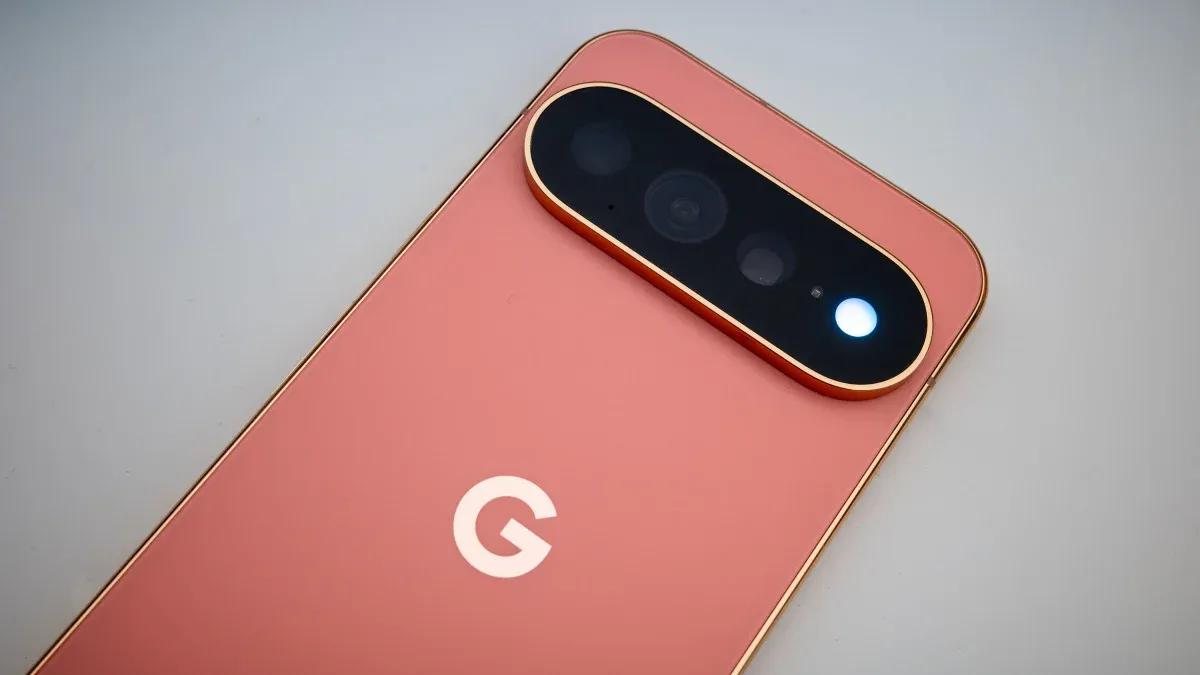
. The camera bar underwent redesign across the lineup, with the standard Pixel 11 featuring a bar more than 40% thinner than its predecessor and all models adopting edge-to-edge glass construction2
4
.
Source: Mashable
All Pixel 11 models run on the Tensor G6 processor, delivering 20% better power efficiency and 25% faster browsing compared to previous generations
3
4
. The chip enables agentic task automation through Gemini, allowing U.S.-based users to order groceries, book rides, or make restaurant reservations through AI interactions, with full transparency through call transcripts3
. The Tensor G6 processor also powers Instant Night Sight, capturing low-light photos 4.5 times faster than the Pixel 10 generation3
. Display brightness increased to 3,600 nits peak on Pro models, up from 3,300 nits on the Pixel 10 Pro series, while the standard Pixel 11 maintains 3,000 nits peak brightness1
4
.
Source: Digital Trends
Magic Capture represents the flagship camera innovation, recording video while automatically selecting optimal still frames using AI, eliminating the need to time shutter presses manually
3
4
. The feature auto-crops and unblurs selected frames for immediate sharing3
. Camera Looks introduces customizable filters and analog film styles similar to iPhone's Photographic Styles4
. Circle to Search now integrates directly into the camera viewfinder, enabling users to identify objects, translate text, or search without leaving the camera application2
5
. The Pro models upgraded to 120x Pro Zoom from 100x, while the base Pixel 11 improved to 30x Super Zoom from 20x3
4
. Video capabilities expanded to support 8K resolution with video boost and improved stabilization3
.Rambler, Google's voice-to-text feature, filters out filler words like "um" and "uh" while processing run-on sentences and unstructured speech to extract user intent
2
5
. Live Translate expands to support real-time dubbing of videos, podcasts, and voice messages, including YouTube content translated on-the-fly into multiple languages3
5
. For accessibility, Live Transcribe now supports American Sign Language translation through the Pixel Camera, converting sign language into text for improved communication2
3
. Gemini Intelligence also introduces detailed visual cards within messaging apps, automatically pulling flight information from Gmail or displaying restaurant details without switching applications5
.Related Stories
Pixel Tag launches at $29 individually or $99 for a four-pack, connecting to Android's Find Hub network for location tracking through the Find Hub app
2
. The device integrates with Pixel Watch for location viewing and supports voice-controlled tracking through Pixel Buds by asking Gemini to locate or ring the tag2
. This marks Google's first dedicated tracking hardware, positioning against Apple's AirTag ecosystem.The Pixel Watch 5 introduces monthly blood pressure tracking summaries and insulin resistance trend analysis through the Google Health app
2
. The 41mm model starts at $399 while the 45mm version begins at $429, with a Stephen Curry edition priced at $579 featuring workout-focused design elements2
. Battery capacity decreased slightly across the Pixel 11 lineup, with the standard model dropping to 4,985 mAh, the Pro to 4,850 mAh, and the Pro XL to 5,115 mAh, though Google claims Adaptive Battery will deliver over 30 hours of usage1
4
. The Pixel 11 Pro Fold arrives 10% lighter and nearly 1mm thinner than its predecessor with a 48-megapixel main camera and three times better durability2
.Summarized by
Navi
[2]
1
Science and Research

2
Technology

3
Technology