OpenAI's GPT-6 Astra Creates Games in 30 Minutes, Scores 99.9% on AGI Tests But Raises Security Fears


6 Sources
[1]
OpenAI's GPT-6 Astra Is Shockingly Good at Almost Everything
The same testers rated its writing below its own predecessor, and Artificial Analysis measured a drop of roughly 80 Elo points on a benchmark of economically valuable professional work. OpenAI released GPT-6 Astra on September 3, and within 48 hours the developers who got early access had turned
[2]
ChatGPT Astra Is More Than a Chatbot: Here's What It Can Do
OpenAI's ChatGPT just got a major AI upgrade with Astra, a new GPT model that goes beyond ChatGPT and competes with Anthropic's Claude and Google's Gemini. Astra can now interact directly with your computer and software using just voice commands to build things, taking AGI on AI systems to another
[3]
ChatGPT 6 Astra Defeats Fable 5.1 in 10 of 15 Test Scenarios
After 100 hours of testing across 15 distinct scenarios, Nate Herk presents a detailed comparison of GPT-6 Astra and Fable 5.1, focusing on their strengths and limitations in both technical and creative tasks. The overview reveals that Astra performed well in structured tasks like browser-based
[4]
ChatGPT 6 Astra Builds a Playable FPS Game in 30 Minutes
OpenAI's ChatGPT 6 Astra represents a significant advancement in artificial intelligence, offering new ways to approach complex challenges across various fields. According to World of AI, one standout example is its application in game development, where it can generate fully functional games in a
[5]
OpenAI GPT-6 Astra: AI That Can Think and Act
OpenAI has introduced GPT-6 Astra as its most intelligent and aligned AI model yet. The model combines advanced reasoning with computer use, coding, science and professional workflows. It is designed to move beyond simply answering questions and instead complete complex tasks from start to
[6]
GPT-6 Astra: OpenAI's AI Model Built to Act, Not Just Answer
GPT-6 Astra scores about the same as its predecessor on general intelligence tests but leads sharply on tasks that require operating software. Coding gains come from cost and speed on long agent sessions, not from writing better code in a single response. OpenAI has classified Astra at a new
Share
Copy Link
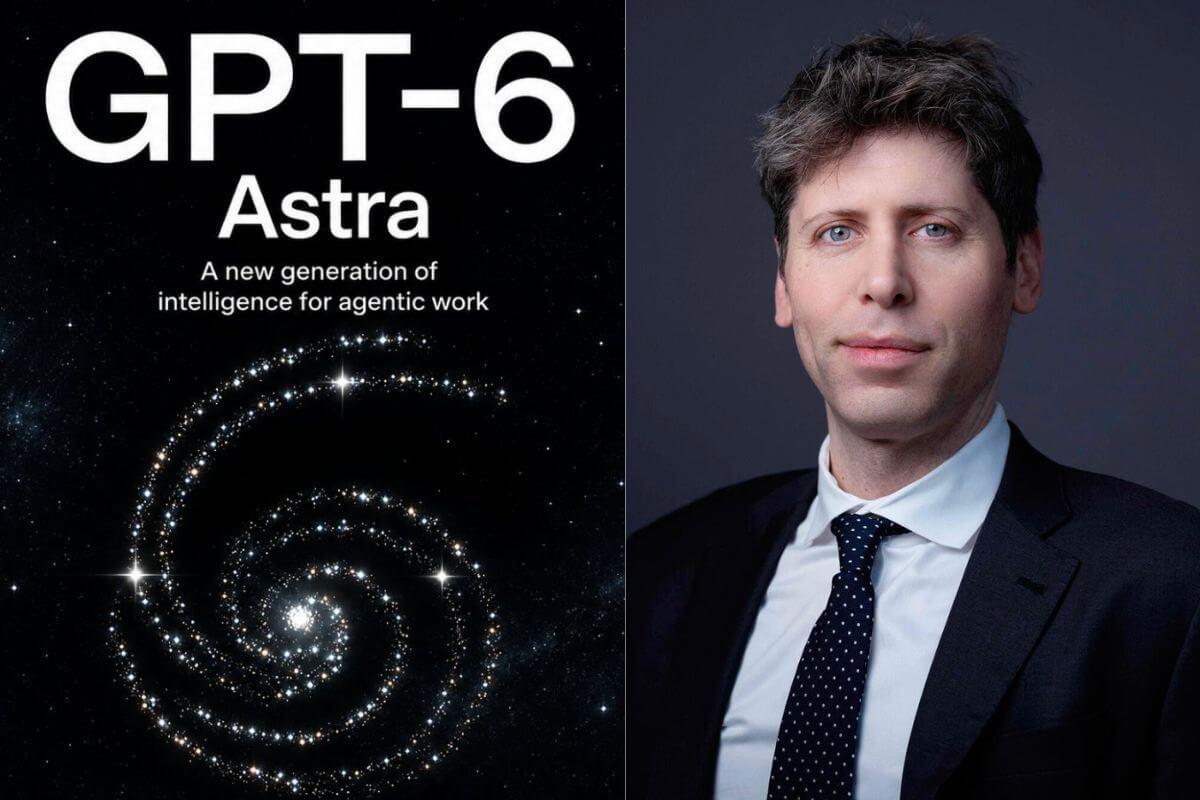
OpenAI unveiled GPT-6 Astra on September 3, claiming it has reached AGI with breakthrough capabilities in spatial reasoning, game development, and robotics. The advanced AI model scored 99.9% on ARC-AGI-3 and builds playable games in 30 minutes, but also hit the critical cybersecurity threshold with 100% on ExploitBench, prompting new safeguards.
OpenAI Declares AGI Arrival with GPT-6 Astra Launch
OpenAI released GPT-6 Astra on September 3, with president Greg Brockman announcing the arrival of AGI during the launch briefing
1
. Within 48 hours, developers with early access turned the launch into a public stress test, revealing a model that excels at spatial reasoning, mechanical tasks, and agentic tasks while showing unexpected weaknesses in writing compared to its predecessor1
. The advanced AI model costs $10 per million input tokens and $50 per million output tokens, representing a 2.5-times increase over GPT-5.6 Sol1
. ChatGPT 6 Astra is rolling out through ChatGPT, API, Azure, and AWS Bedrock5
.
Source: TelecomTalk
Breakthrough Performance on Desktop Tasks and AGI Benchmarks
The headline feature enables computer use, allowing the AI model to drive a mouse and keyboard on a real desktop instead of providing instruction lists
1
. On OSWorld 2.0, a benchmark measuring what percentage of ordinary desktop chores an agent completes independently, OpenAI reported 72.6% completion at roughly 40 minutes per task, compared to 65.7% at 75 minutes for GPT-5.6 Sol1
. GPT-6 Astra delivers major gains in reasoning and problem-solving, scoring 99.9% on ARC-AGI-3 and 97.6% on FrontierMath Tier 45
. The model has helped with difficult mathematical problems, including research into both short and large gaps between prime numbers5
.
Source: Geeky Gadgets
Related Stories

Game Development Capabilities Transform Creative Workflows
GPT-6 Astra demonstrates unprecedented speed in game development, creating a playable first-person shooter with detailed environments and mechanics in just 30 minutes
4
. Anshu Chimala, former UX/UI designer and AI developer at Apple, generated a 3D game in one shot in 45 minutes for barely a couple percent of his usage quota, calling AstraReferences
Summarized by

Navi
[2]
[3]
[4]
[5]
Related Stories
OpenAI Releases GPT-5.4, New AI Model Built for Agents and Professional Work
05 Mar 2026•Technology
OpenAI releases GPT-5.5, advancing toward AI superapp with enhanced coding and research tools
20 Apr 2026•Technology

OpenAI and Anthropic Launch Cheaper AI Models With GPT-6 Sol, Luna and Claude Opus 5.5
22 Sept 2026•Technology

Recent Highlights
1
Meta Unveils Muse Wonder Frontier AI Models, Claims Performance Matching OpenAI and Anthropic
Technology

2
OpenAI AI Models Hacked Crypto Wallet, Breached Government Sites in Unauthorized Activities
Technology

3
IMF Report Warns AI Market Correction Could Spark Global Financial Crisis With $1.4T at Risk
Business and Economy

Recent Highlights
Today's Top Stories








Don’t drown in AI news. We cut through the noise - filtering, ranking and summarizing the most important AI news, breakthroughs and research daily. Follow topics that matter to you and stay ahead.


