3 Sources
[1]
The UK's tax authority is turning to AI to help identify fraud - Engadget
HM Revenue & Customs (HMRC), the UK's tax authority, has announced a 10-year deal with British tech firm Quantexa to use AI for detecting fraud and tax return errors. The BBC has reported that the multi-year agreement will cost the UK government £175 million ($234 million). Under the partnership, Quantexa will combine data that the HMRC has collected with other sources to help it spot incidents of fraud, as well as to help it fix unintentional errors. It will also assist HMRC with its customer service needs and identify companies or individuals trying to hide fraudulent activities. In addition, the HMRC will use its technology to track down legitimate payments made by taxpayers under the wrong reference number. Quantexa, founded in London back in 2016, develops AI apps and tools for data analytics and decision-making. Aside from the UK tax authority, it's also working with the Switzerland-based Zurich Insurance Group Ltd. to enhance the company's fraud detection. While the HMRC will use its technology to detect irregularities in tax filings and payments, the company told the BBC that its findings will still be checked by people and that its technology was made to "support human decision-making, not replace it." Hopefully, that means taxpayers won't have to face false accusations of fraud based on the findings by the company's AI. "In government environments, AI cannot operate as a black box," Quantexa chief executive Vishal Marria told the BBC. "Decisions need to be transparent, auditable, and explainable, particularly in areas affecting citizens directly." Marria also said that Quantexa will "never take HMRC data away from the HMRC environment" to ensure the data would remain secure. Back in 2024, the US Treasury Department (home of the Internal Revenue Service) admitted that it had been using AI for fraud detection. It said back then that it prevented fraud and recovered payments worth over $4 billion from October 2023 to September 2024 using AI tech. It has since become more common for government agencies around the world to use AI -- the US, for instance, has signed multiple agreements with companies like Google, xAI, Anthropic and Microsoft to use thei technologies.
[2]
HMRC announces 10-year contract with British AI company Quantexa
HM Revenue and Customs has announced a 10-year, £175m deal with the British tech firm Quantexa to provide AI-powered technology to help improve its performance. Quantexa says its systems will combine data collected by HMRC with external sources to help the tax office identify incidents of fraud and fix unintentional errors more quickly. Its tasks will include helping HMRC to assist customer service staff, as well as to identify hidden networks of companies and individuals masking fraudulent activity. Public dissatisfaction with HMRC performance has crept up in recent years, according to government figures. A Freedom of Information request made by the campaigners at the Contentious Tax Group found there were more than 93,000 complaints made about the department in 2024-2025. This was an increase from just over 70,000 in 2020-21, with one of the main gripes about poor response times. Quantexa says automated decisions about tax payers made by AI will still need to be checked by people. Quantexa chief executive Vishal Marria told the BBC the new technology was designed to "support human decision-making, not replace it". "In government environments, AI cannot operate as a black box. Decisions need to be transparent, auditable, and explainable, particularly in areas affecting citizens directly," he said. He also said HMRC data would remain secure, and staff working with the government department would remain separate from the rest of the business. "We never take HMRC data away from the HMRC environment," he added. The company also said it will help in tracking down legitimate payments made to HMRC made under the wrong reference number. The UK-based firm has been valued at $2.6bn (£1.9bn) and its corporate customers include HSBC and Vodafone. The appointment of a British company is in line with the government's efforts to build what's known as "digital sovereignty". There are concerns about the UK's dependence on platforms and services provided by big tech companies based in the US, including the controversial £330m contract awarded to the AI data processing firm Palantir to build a platform for the NHS. Sign up for our Tech Decoded newsletter to follow the world's top tech stories and trends. Outside the UK? Sign up here.
[3]
HMRC awards £175 million AI contract to British firm Quantexa to close £46.8 billion tax gap
HM Revenue and Customs has awarded a 175 million pound, ten-year contract to Quantexa, a London-based AI company, to modernise the tax authority's data infrastructure and deploy artificial intelligence to detect fraud, fix errors, and close the tax gap. The contract is one of the largest AI deals in UK public sector history. It is also a sovereignty statement. The UK government has spent more than 900 million pounds on contracts with Palantir, the American data analytics firm, across at least ten departments including the NHS. The Quantexa deal is the opposite of a Palantir deal. The company is British. The data stays inside HMRC's environment. The decision was deliberate. The tax gap, the difference between what is owed to the exchequer and what is actually collected, reached 46.8 billion pounds in 2023-24. The government has committed to recovering an additional ten billion pounds per year by 2030. Quantexa's job is to help find it. Quantexa was founded in 2016 by Vishal Marria, who had been the youngest executive director at Ernst and Young, where he led anti-financial crime technology programmes for international banks. The company builds what it calls a Decision Intelligence platform, software that connects data from multiple sources, resolves entities across datasets, and uses graph analytics and machine learning to identify patterns that humans cannot see at scale. Its original use case was anti-money laundering in banking. HSBC was an early customer. The technology that helped a bank detect suspicious transactions between shell companies now helps a tax authority detect suspicious patterns across millions of tax returns. Quantexa reported revenue of 126 million pounds in the year ending March 2025, up 49 per cent year on year, with annual recurring revenue exceeding 100 million dollars. The company raised 175 million dollars in a Series F round in March 2025 at a valuation of 2.6 billion dollars, with investors including Warburg Pincus, HSBC, and Ontario Teachers' Pension Plan. Total funding stands at 546 million dollars. The company operates in more than 70 countries and serves customers across financial services, telecommunications, and the public sector, including Vodafone. Synthesia became the UK's most valuable generative AI company with a 2.1 billion dollar valuation, and Quantexa's 2.6 billion dollar valuation places it above that threshold. The two companies represent distinct British AI strengths: Synthesia in generative media, Quantexa in enterprise decision intelligence. Neither builds foundation models. Both build the application layer on top of them, precisely the strategy that has proved most commercially viable for European AI companies. The HMRC contract covers three capabilities. First, Quantexa will modernise the tax authority's core data infrastructure, creating a connected view across datasets that currently sit in separate systems. HMRC processes hundreds of millions of transactions annually across income tax, corporation tax, VAT, and customs duties. The data exists but it is fragmented. Quantexa's entity resolution technology links records that refer to the same individual, company, or transaction across databases, creating a unified picture that makes patterns visible. Second, the platform will deploy AI to identify tax fraud and evasion, including hidden networks of companies and individuals masking fraudulent activity. Graph analytics can trace relationships between entities across multiple layers of corporate ownership, a task that is effectively impossible for human auditors working with spreadsheets but routine for software designed to map complex networks. Third, the system will assist HMRC customer service operations, helping staff resolve queries faster. Public dissatisfaction with HMRC has risen sharply, with more than 93,000 complaints filed in 2024-25, up from 70,000 in 2020-21. Response times are a primary grievance. AI-assisted case management, including generative AI that can summarise case documents and answer queries from caseworkers, is part of the solution. Marria told the BBC that automated decisions about taxpayers would still require human oversight. "In government environments, AI cannot operate as a black box," he said. "Decisions need to be transparent, auditable, and explainable, particularly in areas affecting citizens directly." He also confirmed that HMRC data would remain inside HMRC's own environment and would never leave it. NHS England has given Palantir contractors broader access to identifiable patient data through the Federated Data Platform, a development that has drawn criticism from patient groups and Labour MPs. The 330 million pound contract, awarded by the previous Conservative government, placed an American surveillance technology company at the centre of the National Health Service's data infrastructure. Science minister Patrick Vallance has since said that future government deals would be done differently, emphasising investment in British technology companies and domestic procurement. The Quantexa contract is the done differently. A British company, founded in London, backed by British and allied capital, processing British tax data that never leaves the HMRC environment. The government launched a Sovereign AI Unit in 2025 with 500 million pounds in funding to support national champions in artificial intelligence. Quantexa is the kind of company the unit was created to champion, and the HMRC deal is the kind of contract that proves the strategy can work at scale. UK AI startups are collectively worth 256 billion dollars, making the country the third-largest AI ecosystem in the world after the United States and China. The question has never been whether the UK has the companies. It has been whether the government would buy from them. The Quantexa deal suggests the answer is shifting. The 46.8 billion pound tax gap represents 5.3 per cent of total tax liabilities. The government's compliance target for 2025-26 is 50.4 billion pounds in yield, and HMRC has delivered 24.2 billion in the year so far. Closing the gap is not merely a technology problem. It requires more compliance caseworkers, the government has committed to hiring an additional 5,500 over five years, better data integration, which is what Quantexa provides, and a digital infrastructure that can process the volume of information that modern tax evasion generates. From April 2026, digital record-keeping and quarterly online filing using compatible software became mandatory for sole traders and landlords with income over 50,000 pounds under the Making Tax Digital programme. The volume of digital data flowing into HMRC is increasing dramatically. The Quantexa platform is designed to process that volume and identify the patterns within it that human auditors would miss. The UK tech sector ranks first in Europe with a one trillion dollar valuation, but the value has historically been concentrated in consumer-facing companies and financial technology. Enterprise AI for the public sector, the category that Quantexa occupies, has been underrepresented in the UK's technology portfolio. The HMRC deal changes that calculation. A 175 million pound, decade-long contract is not a pilot. It is a commitment to building sovereign AI infrastructure for one of the government's most critical functions. Every government department that currently relies on American AI platforms will be watching the HMRC deployment. If Quantexa delivers, the case for British AI in British government strengthens across defence, policing, border control, and social services. If it struggles, the Palantir argument, that only American platforms have the scale and maturity to handle government-grade data problems, remains the default. Cambridge researchers have warned that UK plans to lead in generative AI are unrealistic without sufficient compute infrastructure and sustained investment. The criticism is fair at the frontier model layer, where the UK cannot compete with American capital. But Quantexa does not build frontier models. It builds the application layer that makes frontier models useful for specific, high-value government tasks. That is a different competition, and it is one the UK can win. Marria left Ernst and Young in 2016 because he saw that the technology consulting firms were advising banks on problems they could not solve with their existing tools. A decade later, the company he built to solve those problems has been hired by the British government to solve the largest data problem in UK public administration. The tax gap is 46.8 billion pounds. The contract is 175 million. The arithmetic, if the technology works, is straightforward.
Share
Copy Link
The UK tax authority HMRC has signed a 10-year, £175 million deal with London-based AI firm Quantexa to modernize data infrastructure and deploy AI for fraud detection. The contract aims to help close the £46.8 billion tax gap and represents a strategic shift toward digital sovereignty, keeping sensitive government data with a British company rather than US tech giants.
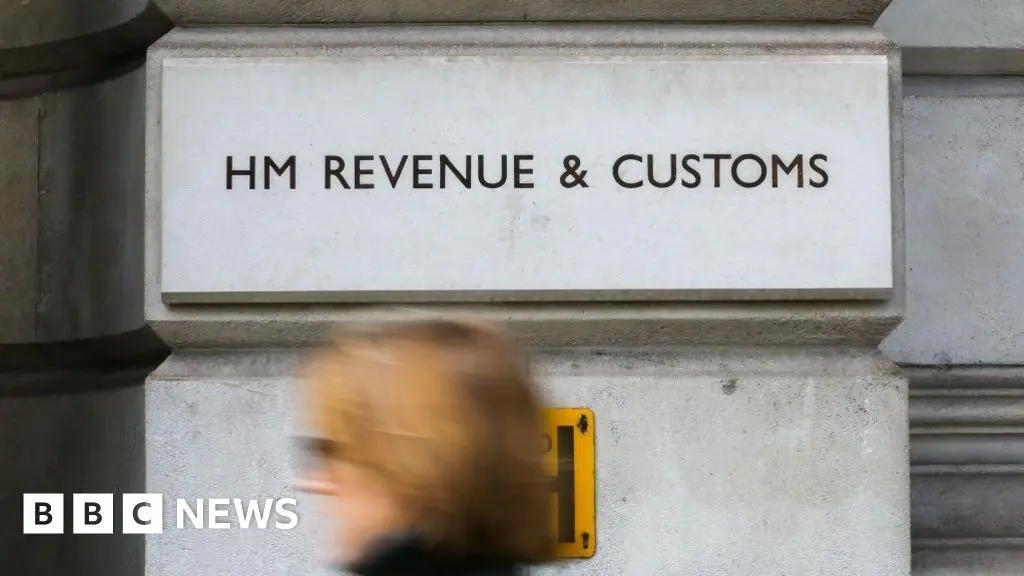
HMRC has announced a 10-year contract worth £175 million ($234 million) with Quantexa, a London-based British AI company Quantexa, marking one of the largest AI deals in public sector history
1
2
. The UK tax authority will deploy Quantexa's Decision Intelligence platform to modernize data infrastructure, detect tax fraud and tax evasion, and close the tax gap that reached £46.8 billion in 2023-243
. The government has committed to recovering an additional £10 billion per year by 2030, and Quantexa's technology will play a central role in achieving that target.
Source: BBC
Founded in 2016 by Vishal Marria, Quantexa builds software that connects data from multiple sources and uses graph analytics and machine learning to identify patterns invisible to human auditors at scale
3
. The company reported revenue of £126 million in the year ending March 2025, up 49% year-over-year, and raised $175 million in a Series F round at a $2.6 billion valuation. Its corporate customers include HSBC and Vodafone, demonstrating proven capabilities across financial services and telecommunications sectors.Under the AI contract, Quantexa will combine data collected by HMRC with external sources to help identify incidents of fraud and fix unintentional errors more quickly
1
. The platform will deploy AI to identify hidden networks of companies and individuals masking fraudulent activity, using graph analytics to trace relationships across multiple layers of corporate ownership3
. This capability addresses a task effectively impossible for human auditors working with spreadsheets but routine for software designed to map complex networks.The technology will also assist HMRC with customer service needs, helping staff resolve queries faster as public dissatisfaction has risen sharply
1
. Freedom of Information requests revealed more than 93,000 complaints were made about HMRC in 2024-25, up from just over 70,000 in 2020-21, with poor response times being a primary grievance2
. Additionally, the system will track down legitimate payments made under the wrong reference number, addressing mispayments that currently go unresolved.The appointment represents a deliberate move toward digital sovereignty, contrasting sharply with the UK government's £330 million contract with Palantir for NHS data infrastructure
3
. Quantexa CEO Vishal Marria emphasized that HMRC data would remain secure within HMRC's own environment and would never be taken away, with staff working on the government contract remaining separate from the rest of the business2
. This addresses growing concerns about the UK's dependence on platforms and services provided by US-based big tech companies.Marria told the BBC that automated decisions about taxpayers would still require human oversight, stating that the technology was designed to "support human decision-making, not replace it"
1
. "In government environments, AI cannot operate as a black box," he explained. "Decisions need to be transparent, auditable, and explainable, particularly in areas affecting citizens directly"2
. This approach aims to prevent taxpayers from facing false accusations based solely on AI findings.Related Stories
The HMRC deal follows similar moves by other governments to leverage AI for revenue collection. The US Treasury Department reported preventing fraud and recovering payments worth over $4 billion from October 2023 to September 2024 using AI technology
1
. As government agencies worldwide increasingly adopt AI, the Quantexa contract demonstrates how the public sector can balance technological advancement with data sovereignty concerns. The success of this 10-year contract will likely influence future government procurement decisions, particularly as Science minister Patrick Vallance has indicated that future deals would emphasize different priorities following criticism of the Palantir NHS contract3
.Summarized by
Navi
1
Technology

2
Technology

3
Technology