9 Sources
[1]
Honor Has Radically Reinvented the Phone for the Robot Age. I Played With It and It's Wild - CNET
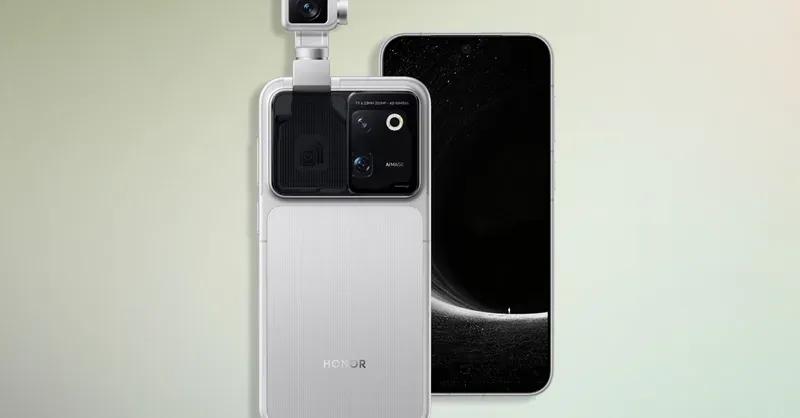
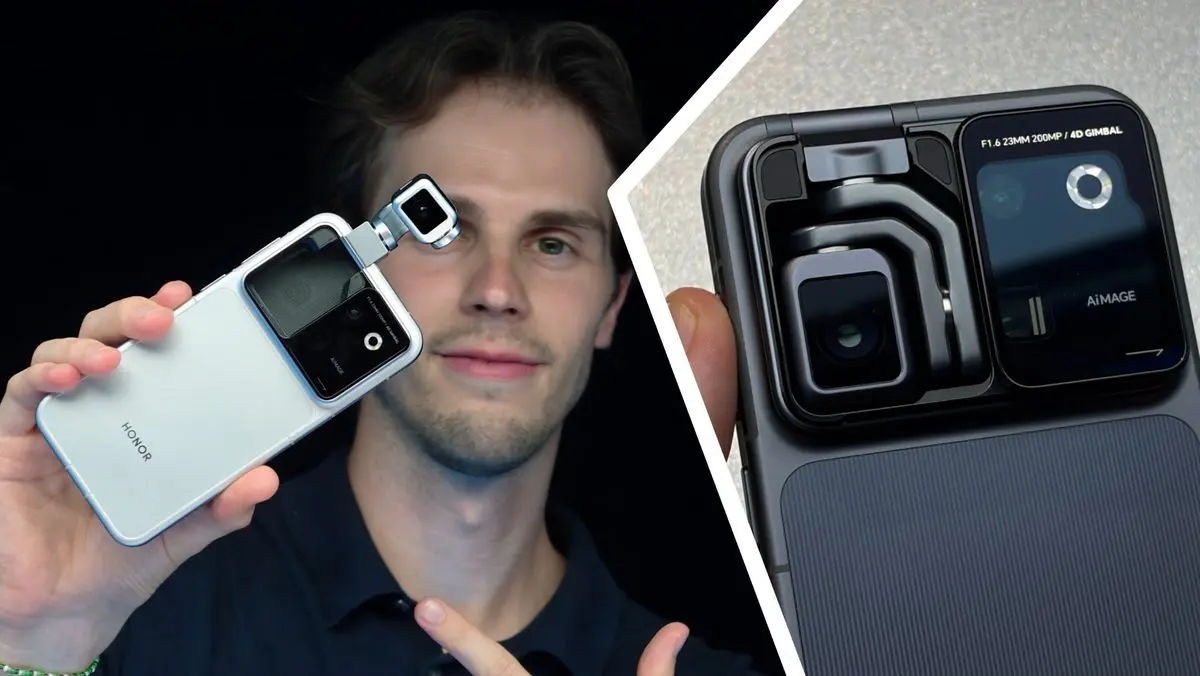
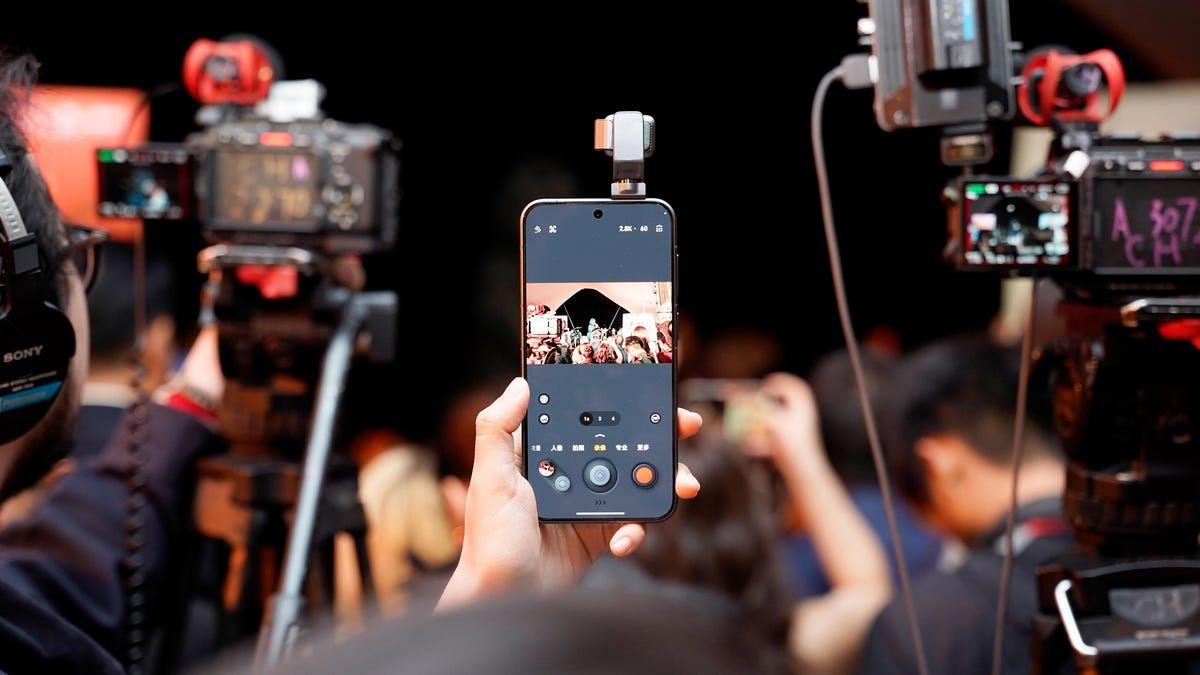
Katie is a UK-based news reporter and features writer.... Read full bio When Chinese phone brand Honor first teased the concept of its Robot Phone last year, I thought it sounded too outlandish to be real and too good to be true. The device it was proposing occupied a perfect center point in the Venn diagram of my interests in robotics and unconventional phone design. Even when I saw a mockup of the phone with its pop-out camera gimbal at CES in January and then an early working demo at MWC in February, I was skeptical that it would actually go on sale. In my decade-plus as a tech journalist, I've seen plenty of bright and interesting concepts fall at the last hurdle. I'm always the first to advocate for less boring tech, so I really hoped the Robot Phone wouldn't be one of them. On Wednesday, in the Chinese city of Guangzhou, I was thrilled that Honor proved me wrong once and for all. At the official launch event of the Robot Phone, I got to play with the final version of the phone, which will go on sale in China imminently. In the age of AI, not every phone should be just "another black slab," said Honor CEO James Li at the company's launch event. Given Honor's growing expertise in the world of robotics (it has also built a humanoid robot), it wanted to find a way to fuse its innovation in the fast-expanding field of embodied AI with its phones. From the front, you might not notice anything immediately unusual about the Robot Phone. Available in silver and grey and sporting a 6.3-inch OLED screen, it could just be another Android device. Flip it over, and that's where the fun begins. Unlike other phones with a camera bump on the back, the protruding module on the Robot Phone slides open to reveal a camera system on a three-axis gimbal that swings out on a robotic arm. It's a radical departure from any phone I've been allowed to handle before, and it packs the kind of tech that realistically requires more than just a few hours of experimentation to truly master. Still, I was determined to give it a go. The Robot Phone in action Ahead of the event, I used the phone's in-built Yoyo AI voice assistant to order a boba tea from a nearby shop to my hotel in Shenzhen. All I needed to do was tell Yoyo what I wanted, and it went into the app, placed my order and paid for me. Less than 20 minutes later, I was happily chugging my boba while still playing with the phone. Powered by Qualcomm's top-of-the-line Snapdragon 8 Elite Gen 5 chip, the Robot Phone should be highly capable of handling AI requests you throw at it. But it's also great to see Honor harness the chip's power to bring physical AI features to a phone - something no other phone-maker has yetattempted to do. The obvious standout feature of the Robot Phone is the robotic arm that swings out from the rear to bring up the camera. You can activate it two ways - either manually from within the camera app, or using gestures, which I tried out at MWC. If you choose the latter, the Yoyo app will open automatically, immediately turning your phone into your robotic personal assistant. In this mode, it has around ten gestures it can perform to express itself to you - including nodding, shaking its 'head' (the camera), curious peeking and dancing in sync with a musical beat. This is complemented by over 100 emoji options that can appear on the screen simultaneously. One feature that I especially liked was that when you switch apps with the gimbal open, a pop-up will give you the option to close it. Leaving it open in a moment of forgetfulness after using it is something I could easily imagine myself doing, and I would want to minimize the potential for damage. That said, the gimbal is made of tough stuff. Honor has used an all-titanium gimbal, into which it's packed over 100 micro-precision components. It's powered by a titanium alloy gimbal motor and a steel flip motor. Still, probably best not drop it. A cinematographer's dream phone The most obvious reason someone might be interested in buying the Robot Phone is that it packs the kind of handheld camera technology popular with creators, such as the DJI Osmo Pocket series and its rivals, into the body of a phone. This means carrying one device where once you might have had two, and being able to immediately edit and upload your footage without having to transfer files. The phone features three cameras: one 200-megapixel main camera, one 200-megapixel telephoto camera and one 50-megapixel ultra-wide camera. Co-developed with Hollywood cinematography darling ARRI, the main camera sits on top of the swing-out module. One slight disappointment was that when used in vertical mode, the camera cropped in rather than flipped, which caused a drop in resolution from its standard 4K. The three smart tracking modes allow you to choose between gimbal tracking, smart tracking and pre-composition framing. The phone also has six dynamic camera modes including AI SpinShot, default stabilization, tilt locked, super steady, FP and FPV vertical. I played with the AI SpinShot feature, which allows you to spin the gimbal either 90 or 180 degrees with the touch of a button while recording, creating some very cool shots. Honor's partnership with ARRI is a shrewd move when it comes to establishing the Robot Phone as a serious filmmaking device. The gold standard of cinematography equipment, footage captured by ARRI is often used as a benchmark for quality in video circles, and ARRI's cameras are the go-to for big-budget Hollywood productions. Quality isn't something I'm able to judge for myself at this stage, but when you enter cinematic mode within the camera app, the sheer number of manual control options are no joke. This might take some getting to grips with for most of us who aren't pro cinematographers, but it's great to have the opportunity to learn for enthusiastic amateurs. The inclusion of ARRI cinematic filters will also allow you to apply a range of classy filmic looks to your footage. A bold, radical reinvention of the smartphone In my early hands-on time with the Robot Phone, I was impressed with its features and versatility, but more so by Honor's boldness. It's the closest thing I can think of in the phone world to the avant-garde. Cutting-edge design for every other phone-maker right now means foldables - and Honor is doing that too. Its Magic V6 might be the most stunning foldable I've had the pleasure of holding in my hands. But the company isn't content to simply compete on the same playing field as all of its competitors. With the Robot Phone, it's blazing a new trail and going where no other phone-maker has dared. Is it a wise move to rip up the rulebook that dictates the parameters of conventional hardware design? It's obviously a big risk, but it shows daring on Honor's part. "They are showing the art of the possible with a highly differentiated product, which will get a lot of attention amongst technology enthusiasts," said Ben Wood, chief analyst at CCS Insight. The Robot Phone "represents the ambition that Honor has," he added. "This is not unique for Honor because let's bear in mind that they were the pioneers when it came to the thin foldables." The Robot Phone will be a China-only product for now, and the country makes an ideal testbed. DJI's products fly off the shelves here, and the nation is deeply familiar with Honor as a brand. Many Chinese phone brands struggle to distinguish themselves from one another - especially in the international market - and building a robot arm into a phone is certainly one way to cement your reputation as a pioneer. "You're going to see lots more of this from Honor in terms of them trying to push the envelope to relentlessly try and build the brand in the face of immense dominant competition," said Wood.
[2]
It's a Phone! It's a Gimbal! It's Honor's Robot Phone!
Just as Google reveals its decidedly regular Pixel 11 phone lineup, Honor comes out swinging with an entirely new product category. The new "species" is Honor's Robot Phone, a radical departure from the phones you're used to, mainly due to the camera gimbal on the back. Honor previewed the Robot Phone at MWC earlier this year, but now we've officially gotten our hands on it. This phone won't launch stateside, but it offers plenty of insight into what's happening with smartphone design overseas. It's a Phone With a Gimbal The Honor Robot Phone is, of course, a smartphone, but it's built with AI and physical mechanical capabilities that match what else Honor is attempting in the industry. The phone has a 6.31-inch OLED display and runs a Qualcomm Snapdragon 8 Elite Gen 5 processor, with a few of Honor's custom chips for power management and image processing. It comes standard with 12GB of RAM and 512GB of storage, though you can upgrade to 16GB of RAM and 1TB of storage. The Robot Phone runs Honor's own MagicOS, built on top of Android 16. There is also a 7,060mAh battery, plus support for 120W wired charging and 50W wireless charging. The Robot Phone uses a three-lens camera system: a 200MP primary camera (the gimbal), a 200MP periscopic telephoto camera, and a 50MP ultra-wide. The front holds a 50MP wide camera. Since the Robot Phone is all about facilitating camera use, Honor makes a big to-do about the up to 4K recording capability on both the front and rear camera systems. The main camera -- the one that's on the gimbal -- supports a variety of protocols currently used in the entertainment industry, including ARRI Cinema LogC3 recording and ARRI Wide Gamut 3. The Gimbal Is Always There What if you don't want to carry the Robot Phone's gimbal around all the time? Unfortunately, you don't have a choice. The gimbal is built into the phone and stows away in the back when you're not using it. The result is a particularly bulbous backside -- about 0.38 inches thick -- which I could see becoming a pain to drag out of a deep pocket or purse. For comparison, the Samsung Galaxy S26 Ultra is 0.31 inches. The Robot Phone weighs 8.75 ounces, making it significantly denser than the same phone, which weighs 7.55 ounces. You really have to want that gimbal for the real estate it takes up. Honor says its primary camera features the industry's smallest all-titanium 4-DoF (Degrees of Freedom) mechanical gimbal system. The three-axis gimbal is 65% smaller than traditional gimbal cameras and uses an ultra-lightweight titanium-alloy motor weighing just 0.09 ounces. The gimbal does more than point either way. Its mechanical system enables rapid head-turning movements that anthropomorphize the little camera. The camera can nod, shake, and appear curious, giving off major Wall-E vibes. There's even an option that makes it dance, keeping rhythm with the beat. The camera can be summoned by the tap of a button. It's not recommended that you pry it out yourself. You can also flip on the "Yoyo Pro" AI mode with a physical flip gesture, then direct the gimbal using your voice: ask it to turn left 30 degrees or point to the sky. The camera has a Bluetooth sensor for tracking that helps it orient itself. When it's docked and not in use, the rear camera stays in its space and works as if the gimbal isn't even there. Gimbal cameras are a popular category, and although Honor is proud of its cinematic connections, the point of the gimbal is to promote its AI. Honor would like you to see you talk and interact with the phone in ways you don't, like typing out a prompt to a chatbot or yelling at the phone while holding it sideways. It also subtly showcases the work Honor is doing in its robotics division. Honor isn't the first Android maker to integrate a mechanical element into its camera system. Vivo and Oppo phones have relied on various gimmicks, like smaller gimbals and pop-out lenses, to improve camera performance, though not to the extent of a physically retracting gimbal. Honor takes the cake for that one. Honor debuted the Robot Phone at a launch event in China. It's still unknown whether any other markets will see it.
[3]
Honor launches its long-awaited Robot Phone and yes it can wiggle at you - Engadget
The Honor Robot Phone has been on our radar for a while now and it's finally available to preorder, though just in China for now. The "robot" in the name refers primarily to the automated pop-up camera gimbal, which does seem like a boon for photographers and videographers. This gimbal is made from titanium and can move in various directions, including a full 360-degree rotation. This obviously allows people to get difficult shots that normal smartphones would struggle with. It supports a wide range of cinematic movement modes. These include a tilt lock, FPV view and a spinshot, among others. There's an integrated AI algorithm for subject tracking, in which the camera will automatically pan and tilt to follow someone. There's also hands-free gesture control, which can be used to deploy the camera arm and capture shots. The specs of the actual camera system are pretty impressive. The rear setup includes a dual 200MP camera system, with a 200MP main lens and a 200MP telephoto lens. Honor has also teamed up with a company called Arri, which is a manufacturer of professional cinema cameras. This partnership provides even more tools to budding videographers, like AI-assisted noise reduction and a larger dynamic range. Footage can also be previewed in real-time and can be output as RAW files. The phone runs on MagicOS and introduces something called the YOYO Robot Mode, which combines "multimodal perception, contextual understanding, gesture recognition and physical movement." In other words, the camera gimbal has been anthropomorphized a bit. We attended a hands-off demo back in March in which the cute little robo-cam danced to songs, wiggled its head in agreement and rotated on command. Honor promises that it's opening up the platform to third-party developers, so they will theoretically be able to capitalize on the multimodal capabilities of the phone. The company says third parties will likely "create new experiences using its gimbal, perception and embodied-interaction capabilities." Of course, this is also a smartphone and not just a cute little camera that wiggles every now and again. The specs are decent. The Robot Phone features a Snapdragon Elite Gen 5 chip with a custom-built cooling system and a beefy 7,060mAh battery. There's a 6.3-inch OLED display that supports adaptive refresh rates, with a peak brightness of 6,800 nits. It's available to preorder right now in two configurations. There's one with 12GB of RAM and 512GB of storage and another with 16GB of RAM and 1TB of storage. Shipments and official sales begin on August 18. As previously mentioned, the Honor Robot Phone is currently only available in China. In US dollars, the 12GB model costs around $1,480 and the 16GB version comes in at $2,075. Hey, robot gimbals aren't cheap.
[4]
HONOR Robot Phone hands-on: I can't believe it actually works this well!
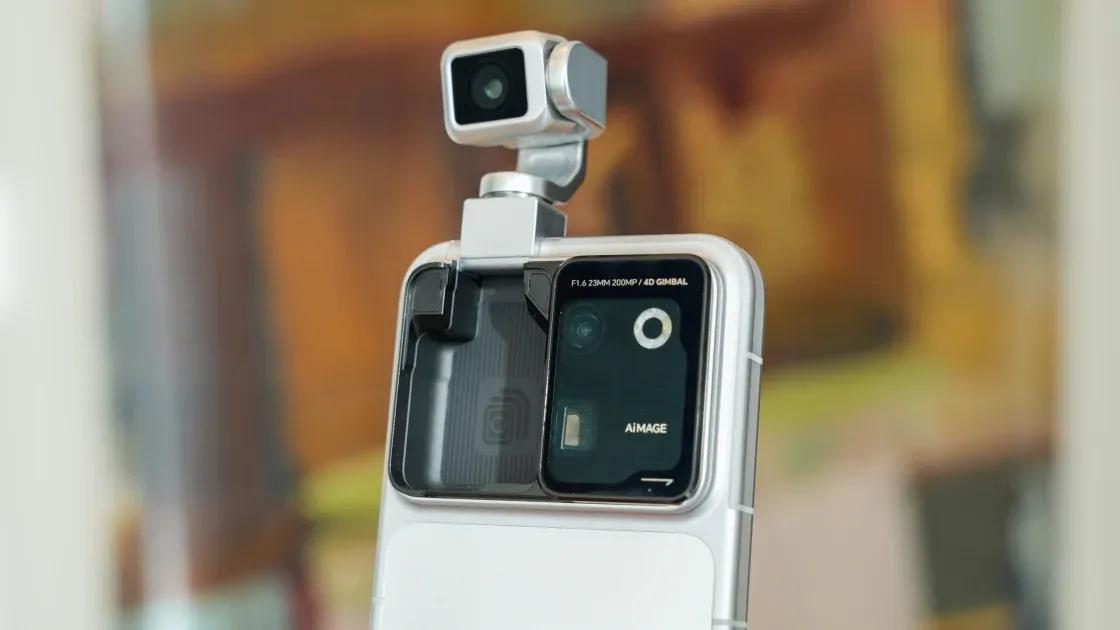
After ten months of teases, we're finally getting to experience a smartphone that's built unlike any other. It's one thing to be following along with the development of the latest smartphone in your favorite series -- maybe like one of the new Pixel 11 models debuting today. Rumors may go back and forth on specs over the months leading up to launch, but even just going into it, you probably have a solid idea of the sort of device to expect. But then there are the phones that really attempt to do something all-new, and the path these take to market can prove a whole lot more interesting. For the better part of a year now, going all the way back to last October, HONOR has been teasing a smartphone with a camera unlike any other: the Robot Phone. Instead of a camera fixed in place to the back of the handset like you'll see almost everywhere else, the Robot Phone's camera is on the end of an articulated gimbal arm, like you may be familiar with from cameras like DJI's Osmo Pocket series. Back at CES in January we got to see the Robot Phone in person for the first time, but it was still far from a finished product -- by the time MWC rolled around, we could finally check out the hardware in action. It's been a long journey, but it's one that's now finally coming to an end, as we get the chance to go hands-on with this fully functional, innovative hardware. First impressions with the Robot Phone are unavoidably going to be centered around the gimbal camera, and while that's absolutely the focus here, I was first struck by the overall heft of the hardware. Users with larger phones may not bat an eye, but its 248g mass is noticeably heavier than I'm used to. That said, there's also a 7,060mAh silicon-carbon battery present, so it's not exactly like the elaborate camera hardware is solely responsible for the weight. In order to pull this all off, HONOR needs to succeed on a few fronts here. The Robot Phone's gimbal shouldn't get in the way of normal operation. It needs to be fast and responsive, just like dedicated camera gimbals. And it needs to produce quality images. HONOR houses the gimbal within a protective nook. Before using the camera, you need to manually slide a shutter (pictured below) open in order to free it from its enclosure -- and if you neglect to do so, the camera app will deliver a helpful notice. It's admittedly a bit chunky, but is definitely a lot easier on your pocket than carrying around a whole Osmo cam. I do wish that HONOR had automated the shutter, though, as its manual operation feels a bit out of place with this otherwise highly motorized hardware. When you do hit the button, the gimbal swings out quite quickly, accompanied by a cute little X-ray style animation giving you a peek though the phone's screen at the unfolding hardware. HONOR engineered some exceptionally compact yet powerful motors for the gimbal arm, ones it says are 65% more compact than traditional components. You can manually control the camera's position by manipulating a touch-screen thumbstick, with the gimbal following your inputs. The hardware's capable of moving as fast as a full 360° rotation every second, but HONOR slows things down here to avoid us all getting motion sickness. In addition to manually tracking subjects, you can automatically keep them framed with AI-powered subject tracking. Honestly, it's all pretty slick. Even in just my short time trying things out, I was impressed with how well the whole package ultimately comes together. Having seen hardware that didn't feel too far removed from a mock-up back in January, this was a night and day change: smooth, responsive hardware paired with the software users will actually want. The camera software can even pull off some cinematic tricks, doing a barrel roll while you hold the phone still, and offers a number of dynamic movement modes for responding to your control. As far as image quality goes, I wasn't able to do a deep dive during my hands-on, but I did get to see some impressive software stemming from HONOR's collaboration with ARRI from the film industry, offering pro cinema controls and color grading, all from the convenience of your phone. I'm not fully sold on the whole AI side of things -- the company's YOYO assistant gets Robot Phone integration, with the gimbal arm bouncing along to music or offering you beauty advice. It's cute, but I really don't see this appealing to the sort of shoppers who want to drop serious money on this kind of tech. But just so far as controlling the gimbal goes, or doing subject tracking when you want to walk around the room while taking a video call, HONOR seems to be hitting all the right notes. At least one exception to the AI features is voice control, which makes a lot of sense -- just tell the gimbal where you'd like it to point, and the hardware responds. HONOR gives the phone a 6.31-inch 1216 x 2640 OLED panel with 6,800nit peak HDR brightness. It's all powered by a Snapdragon 8 Elite Gen 5 SoC, equipped with either 12GB or 16GB of RAM. And when that big 7,060mAh battery runs down, the phone supports 120W wired and 50W wireless charging to fill back up quickly. Because this is HONOR, the phone arrives running MagicOS 10, based on Android 16. And that also speaks to the elephant in the room here: This isn't coming to the States. Today's launch is squarely focused on the Chinese market, and while we'll probably see things expand internationally later, no details are available on that just yet. The Robot Phone will be available in either silver or gray -- and yes, the color extends to the robot arm itself. Even beyond the whole question of availability, I still have some big concern about issues like heat dissipation from the gimbal camera and overall hardware robustness -- much like early foldable phones, this idea is going to need to prove itself. But it is very, very exciting that HONOR is finally giving shoppers that chance.
[5]
Honor's AI-Powered, Gimbal-Equipped Robot Phone Just Launched in China and it Looks Wild
When Honor first announced that it was developing the gimbal-equipped Robot Phone last fall, it seemed like a far-fetched idea that might ultimately stay in the realm of a prototype. Companies are always coming up with wild ideas, only some of which ever reach market. Well, the Honor Robot Phone is very real, and it just launched in China. PetaPixel first got its eyes on the Robot Phone earlier this year. "Inside its booth, Honor also showcased comparisons and deeper dives into how the stabilization works. The most obvious discrepancy lay in the Robot Phone next to an iPhone, both mounted on a rig that constantly moved and rotated, with live views showing the massive difference in footage. The Robot Phone looked like it barely moved, if at all, whereas the iPhone was a shaky mess," wrote Ted Kritsonis for PetaPixel. "An Honor staffer walked on a treadmill while recording video with jittery results, while another did it with a Robot Phone, where the footage looked like she was standing still. In a hands-on space, two dancers at different times performed routines with the gimbal and camera following them the whole time. Interestingly, it also tilted at times to create a cinematic touch in following movement, similar to how a camera operator might." While PetaPixel has not yet gotten its hands on the Honor Robot phone, these initial impressions seem backed up by real-world experience. Dominic Preston of The Verge describes the Robot Phone's gimbal as "better than a gimbal in a phone has any right to be." Honor itself is leaning heavily into the stability of its Robot Phone's gimbal with its marketing materials. The Chinese technology company has put its phone into the hands of numerous filmmakers, including Oscar-winning Chilean cinematographer Claudio Miranda. While it is difficult to fully assess the Robot Phone's image quality based on YouTube videos alone, Miranda's video above and the others below all demonstrate the impressive effectiveness of the phone's gimbal technology and how the camera can use AI to track subjects and deliver dynamic camera movements. Regarding image quality, though, one known quantity is that the Robot Phone's color science and image processing are powered by legendary cinema company Arri. "Honor is pioneering a new era of mobile imaging, where technology exists to inspire creativity and storytelling," said James Li, Honor's CEO, in March. "Arri has defined the visual language of cinema for generations. Through this collaboration, we are bringing those cinematic standards and professional workflows into mobile imaging, enabling creators to craft stories with greater authenticity and emotional depth." The Honor Robot Phone includes a 200-megapixel main gimbal camera with a relatively large Type 1/1.28 image sensor and fast f/1.6 lens. It lives on a retractable, motorized 4DoF gimbal system, which Honor says is the smallest of its kind in the world. Thanks to the gimbal, the main camera can also automatically capture and stitch nine photos to create a large panoramic photo, which is an interesting feature. Users can also take advantage of various Arri-developed film profiles for both photos and video. While the gimbal camera is the star of the show, the Robot Phone has a pair of other rear cameras. There's a 200-megapixel periscope telephoto with a 62mm lens, large Type 1/1.4 sensor, and f/2.6 lens. There's also a 50-megapixel ultrawide camera with an unspecified sensor size and 122-degree field of view. The Honor Robot Phone records 4K video at up to 120p, or 60p with LogC3, and 1080p video at up to 240 frames per second. With its gimbal camera retracted, the device looks like a traditional slab phone. It has a 6.3-inch OLED screen with a ridiculously high 6,800 nits of peak HDR brightness. It runs un Android, has a Qualcomm Snapdragon 8 Elite Gen 5 chip, and comes in 512GB and 1TB variants. The Honor Robot Phone starts at 9,999 yuan in China, which is nearly $1,500 at current exchange rates. It's not clear when the Honor Robot Phone will launch outside China.
[6]
I spent two hours with the Honor Robot Phone, and this ridiculous, remarkable device made me feel like a kid again
First there was the phone. Then there was the iPhone. And now, according to Honor, there is the Robot Phone -- a "revolutionary, category-creating device that shatters the physical boundaries of traditional mobile technology." Now look, I love to call out marketing department hyperbole as much as the next journalist, but notwithstanding its description as the evolutionary successor to Apple's greatest-ever product -- sell 3 billion units, then we'll have that conversation -- the Chinese tech company is right to position the Robot Phone as something wholly different to what's come before. No smartphone I've ever come across features a fully motorized, three-axis mechanical gimbal built directly into its chassis, nor such a comprehensive suite of professional-grade camera features, some of which are autonomously controlled by a physically expressive AI agent (it even has a name: YOYO). We're in full The Hitchhiker's Guide to the Galaxy territory here, and while the Robot Phone may never become as mainstream as the iPhone, it most definitely is as revolutionary as Honor wants us to believe. First teased in October 2025, the Robot Phone appeared in prototype form at MWC 2026, before finding its way to the Cannes Film Festival and, more recently, the World Cup final (Spain's Eric Garcia was spotted filming with the device). Now, it's officially launched in China, and I was among the first group of journalists permitted to hold, capture, and critique the Robot Phone at its extravagant Shenzhen showcase. Gimme, gimme, gimme a gimbal Let's start on that gimbal, which marks the Robot Phone out as something entirely different from any of the best phones money can buy in 2026. It really is as if Honor has strapped a DJI Osmo Pocket to its flagship Magic 8 Pro, except the gimbal in question can tuck itself away into the phone's rear panel when not in use, almost like an S Pen slipping discreetly into a Samsung Galaxy S26 Ultra. Why would you want a gimbal attached to your phone? For several reasons. There's the improved video stabilization, which results in steadier footage; the manual 360-degree control of the gimbal camera itself; the AI-powered subject tracking; or even the many automatic shooting modes like AI SpinShot (a 90- or 180-degree camera roll) and Tilt Locked (which locks the phone's gimbal at your chosen angle). This is no knock-off gimbal, either. Honor says the Robot Phone's mechanical gimbal system -- which features more than 100 individual components -- is some 65% smaller than mainstream gimbal systems like the Osmo Pocket, and its structure is 200% stronger as a result. The gimbal motor itself weighs just 2.6g and facilitates movement speeds of up to 360 degrees per second, while a dedicated Flip Motor delivers a torque density of 120 Nm/L. Full disclosure: I did not know what the torque density meant before seeing the Robot Phone for myself, but I now know it's a measure of how much twisting force a motor can produce relative to its size. A figure of 120 N·m/L is, apparently, very good - it means the Robot Phone's motor is powerful enough to turn the gimbal with speed and precision, despite being small enough to fit snugly into the phone's rear camera module. And good news! This mechanical gimbal system works very well. I was skeptical about how effective a phone-mounted gimbal could possibly be, but after playing around with the Robot Phone's various shooting modes, it produces dynamic, professional-grade footage -- or at least footage that's comparable to what you can achieve with larger, dedicated gimbals like the DJI Osmo Pocket. The key distinction, of course, is that the Robot Phone doesn't ask you to walk around with (or purchase) a separate gimbal. The gimbal camera is a 200MP 1/1.28-inch sensor with an f/1.6 aperture, supporting up to 4K video with special recording formats like LogC3 and ARRI Cinema. The latter comes as a result of ARRI's partnership with Honor on the Robot Phone; the German brand -- known for producing motion picture film cameras -- lends its expertise to help bring Hollywood-grade color science to Honor's smartphone pipeline. Not to get too technical, but Honor says the Robot Phone performs noise reduction earlier in the RAW domain, processes data in 14-bit 4:4:4, and outputs 10-bit LogC3 and 4:2:2 video, preserving more usable image information for post-production. ARRI LogC3, meanwhile, preserves more highlight and shadow, while ARRI Wide Gamut 3 provides a broader color spectrum. If that sounds like a foreign language to you, that's because the Robot Phone is absolutely intended for video creators, rather than regular folk; its video stabilization capabilities are certainly useful for everyday shooting, but for me, they're not leagues ahead of what you'll get from software-based stabilization features in other phones, like Apple's Action Mode or Samsung's Super Steady with Horizontal Lock. The real juicy benefits are those post-production features, which were hard to capture and quantify in my short hands-on session, but were certainly present. Say 'hello' (again) to YOYO I did, however, get a taste of the Robot Phone's YOYO agent. This agentic assistant initially debuted on the Magic 8 Pro in China as a tool for carrying out cross-app smartphone tasks on your behalf -- it's not dissimilar to Google's Gemini Intelligence feature in that way -- but on the Robot Phone, YOYO uses the existence of a gimbal to express itself physically. At launch, YOYO can nod, shake its (gimbal) head, dance to music, and perform other motorized oddities, which are complemented by over 100 on-screen facial expressions. The desired effect is that YOYO feels like a physical companion in your pocket, unlike any other smartphone-based assistant on the market. The reality is that these physical gestures and on-screen expressions are the definition of gimmickry, though the ability to give YOYO gimbal-related commands using natural language -- "turn left 45 degrees" or "turn around for five seconds," for instance -- is genuinely useful, and worked well. Outside of its gimbal and YOYO agent, the Robot Phone is every bit a 2026 flagship. It's got a 6.3-inch display; it measures just 9.59mm thick (for context, that's less than 1mm thicker than an iPhone 17 Pro Max); there's a Snapdragon 8 Elite Gen 5 chipset, a sizeable 7,060mAh battery, and two additional flagship-grade cameras (a 200MP telephoto and 50MP ultra-wide). In the hand, the Robot Phone doesn't feel too dissimilar to existing 6.3-inch phones on the market, which is quite the feat given that there's a full-on gimbal on offer here. That said, I'm not sure how well that gimbal is going to hold up to real-world use -- I felt, for instance, like I could easily (or accidentally) snap off the plastic shield covering it. And that's to say nothing of its vulnerability to dust and debris when fully extended. But none of this really matters. The Robot Phone is not meant to be treated like a regular phone, because it is not a regular phone. Heck, almost nobody reading this can even buy it. It's a ridiculous, remarkable product that should be thought of more like the Samsung TriFold -- i.e., an example of what's technologically possible -- than as a genuine disruptor to an industry that foldable phones have barely managed to dent. The Robot Phone is essentially Honor saying, "Look at what we've been able to do with technology," and I don't think there's anything wrong with that. To have brought a fully functioning robotic phone to market is no mean feat, and it's exciting to see and touch a device that's so drastically different from the phones we've become used to. In many ways, the Robot Phone is like one of those outlandish gadgets from science fiction movies. And using it made me feel like a kid again. Follow TechRadar on Google News and add us as a preferred source to get our expert news, reviews, and opinion in your feeds.
[7]
Honor's Robot Phone is finally up for grabs, and it may be the most ambitious camera phone yet
It features a 200MP camera mounted on a motorized gimbal that can track subjects on its own. Honor first teased the Robot Phone in October last year with a video showing a robotic arm unfolding from the back of the phone. This January, we got an early look at a prototype at CES, although the gimbal arm wasn't functional and had to be unfolded manually. Honor gave us a full look at the phone in March at MWC Barcelona, where it also announced a new imaging partnership with cinema camera company ARRI. The company later demonstrated the Robot Phone's stabilized tracking shots at the Cannes Film Festival and the Shanghai International Film Festival. Now, almost a year after the first teaser, the Robot Phone is finally making its way to users. However, most of you won't be able to buy it. The Robot Phone is up for pre-order, but only in China Honor has launched the Robot Phone in China, and it's available in two configurations. The base model, with 12GB of RAM and 512GB of storage, costs RMB 9,999 (~$1,480). Stepping up to 16GB of RAM and a full terabyte of storage brings the price to RMB 12,999 (~$1,930). Pre-orders are already live, with retail availability set to begin on August 18. Honor hasn't announced pricing, availability, or a launch date for other regions, despite maintaining a global product page for the device. It's not clear if, or when, the company plans to bring the Robot Phone to more markets. What you get for that price While the pricing may seem steep, the Robot Phone more than makes up for it with flagship specs across the board. The device features a metal unibody design with a 6.31-inch LTPO OLED display that has a 1-120Hz refresh rate, 6,800 nits of peak brightness, 4,320Hz PWM dimming, and Honor NanoCrystal shield protection. On the inside, it packs Qualcomm's Snapdragon 8 Elite Gen 5 SoC, paired with a custom cooling system, up to 16GB of RAM, up to 1TB of storage, and a 7,060mAh battery with 120W wired and 50W wireless fast charging support. Recommended Videos On top of all that, the device features a 200MP f/1.6 main camera with a 1/1.28-inch sensor mounted on the robotic arm. The gimbal relies on a 2.6g motor capable of movement speeds up to 360 degrees per second, and Honor says the mechanism uses more than 100 patented components. The company claims the assembly is 65 percent smaller than a standard gimbal, yet 200 percent stronger structurally. Movement modes include Tilt Lock, First Person View, FPV Vertical, and AI SpinShot. The gimbal camera is paired with a second 200MP 2.7x optical zoom telephoto camera with a 1/1.4-inch sensor and a 50MP ultra-wide camera with a 122-degree field of view, both of which are housed within the rectangular camera island on the back. To handle image processing, Honor built a new H1 Image Chip in partnership with ARRI, which supports 10-bit ARRI LogC3 recording in ARRI CINEMA mode, along with ARRI Wide Gamut 3 color and real-time ARRI Looks previews. The Robot Phone also features AI Subject Tracking and voice source localization, which allows the camera to follow a speaker automatically during a vlog, livestream, or video call. And the device has gesture controls that let users deploy the gimbal hands-free. Whether the gimbal proves to be more than a gimmick will take real hands-on testing to answer, but the imaging work behind it isn't staying exclusive to this one device. Honor has confirmed the technology developed through its ARRI partnership will carry into its upcoming Magic 9 series, even if the robotic arm doesn't come along with it.
[8]
Honor Robot Phone Launched With 200-Megapixel Gimbal Camera
* Honor Robot Phone has a triple rear camera system * It has stereo speakers * Honor Robot Phone features a 6.31-inch OLED display Honor Robot Phone with pop-out camera gimbal has been launched in China. The handset features a rotating gimbal camera setup led by a 200-megapixel main sensor mounted on the top, which allows users to record hands-free without a tripod, and it uses AI to keep the subject in frame at all times. The Honor Robot Phone runs on a Snapdragon 8 Elite Gen 5 chipset paired with up to 16GB of RAM and 1TB of storage. It carries a 7,060mAh battery with 120W wired and 50W wireless charging. The Chinese tech brand first teased the concept of its Robot Phone last year. It was showcased at MWC 2026 earlier this year. Honor Robot Phone Price Honor Robot Phone is priced at CNY 9,999 (roughly Rs. 1,41,000) in China for the 12GB RAM + 512GB storage model. The top-end version featuring 16GB RAM and 1TB storage costs CNY 12,999 (roughly Rs. 1,83,000). It is available in Moon Shadow Grey and Star Trail Silver (translated from Chinese) colours. Honor Robot Phone Specifications The dual-SIM (nano) Honor Robot Phone runs on MagicOS 10 and features a 6.31-inch OLED display (1,216x2,640 pixels) with 460ppi pixel density and a 120Hz adaptive refresh rate. The display is touted to deliver peak HDR brightness of up to 6,800 nits. It runs on an octa-core Snapdragon 8 Elite Gen 5 chipset paired with an Adreno 840 GPU. It comes with 16GB of LPDDR5X RAM and 1TB of internal storage The Honor Robot Phone has a triple rear camera system comprising a 200-megapixel primary 1/1.28-inch CMOS sensor with an f/1.6 aperture and 23mm-equivalent gimbal stabilisation. The camera setup also includes a 200-megapixel periscope telephoto camera with 2.7x optical zoom and up to 200x digital zoom, and a 50-megapixel ultra-wide camera with a 122-degree field of view. Photo Credit: Honor On the front, the Honor Robot Phone has a 50-megapixel selfie camera with a 90-degree field of view. The camera system supports up to 4K video recording at 120fps on the rear. The front camera can capture 4K video at 60fps. It has a robotic gimbal camera mounted on top. This module rotates to track subjects when capturing videos. It has a three-axis mechanical gimbal stabilisation system and delivers AI-based intelligent subject tracking. Honor has partnered with ARRI to launch this device. Connectivity options in the Honor Robot Phone include 5G, Wi-Fi 7, Bluetooth 6.0, NFC, USB Type-C, GPS, NavIC, Galileo, GLONASS and infrared remote control. It has stereo speakers and four microphones with AI noise reduction. It has a 3D ultrasonic fingerprint sensor for authentication. Other sensors onboard are an accelerometer, gyroscope, compass, proximity and Hall sensors, and an X-axis linear motor. The Honor Robot Phone packs a 7,060mAh battery and supports up to 120W wired charging, 50W wireless charging and wireless reverse charging. It measures 151.43x72.86x9.59mm and weighs approximately 248 grams.
[9]
HONOR Robot Phone with Dual 200MP cameras, Titanium Gimbal, ARRI Log-C encoding announced
HONOR just introduced its latest flagship device, the Robot Phone at an event in China, as it had announced. It positions itself at the intersection of advanced camera hardware and proactive artificial intelligence. Design, Display, and Hardware Available in two finish options -- Star Trail Silver and Moon Shadow Gray -- the device measures 9.59mm in overall thickness and weighs 248 grams. The front of the device houses a 6.3-inch LTPO flat screen with a resolution of 2640×1216. The display reaches a peak brightness of 6,800 nits and is equipped with an anti-reflective (AR) film to optimize outdoor visibility. Under the hood, the Robot Phone is powered by Qualcomm's flagship Snapdragon 8 Elite Gen5 processor, supported by a 7,060mAh high-capacity battery. Industry-First Titanium Gimbal Imaging System The defining hardware feature of the device is its imaging pipeline. HONOR has introduced the industry's first titanium alloy gimbal architecture. Constructed with aerospace-grade titanium alloy, the assembly reduces volume by 65% compared to mainstream phone gimbals. It is paired with an industry-first titanium alloy gimbal motor capable of rotational speeds up to 360° per second. The primary camera on the gimbal features a 200MP 1/1.28-inch sensor with an f/1.6 aperture and a 23mm equivalent focal length. The rear camera system is rounded out by: * A 50MP ultra-wide-angle lens (122° field of view) * A 200MP periscope telephoto lens (1/1.4-inch large sensor, 2.7x optical zoom, f/2.6) Processing is driven by HONOR's self-developed "HONOR Driving Light H1" image chip. The camera interface introduces a "Master Cinema" shooting mode, making it the first mobile device to integrate ARRI Log-C encoding and LUT color grading files directly, with support for all C-Log and custom LUT formats. Professional controls include focus lock, white balance lock, Auto Exposure (AE) lock, and camera movement data lock. On the software side, the camera uses real-time sensing and motion compensation alongside AI object tracking, automated video editing, and intelligent framing tools to maintain stabilization during complex movement. YOYO Pro and AI Integration The Robot Phone debuts YOYO Pro mode, designed to handle complex multi-step workflows. According to HONOR, the AI assistant can interpret extended multi-part prompt chains and execute up to 100 consecutive automated rounds. Additionally, YOYO Pro includes emotional recognition systems intended to analyze user sentiment, habits, and environmental contexts to offer proactive prompts. Users can expand the system's capabilities by downloading specialized tasks via an integrated Skill Store. HONOR Robot Phone specifications * 6.31'' ( 1216 x 2640 pixels) 1.5K LTPO OLED display, 120Hz refresh rate, HDR, Peak brightness of 6800 nits, HBM brightness of 2000 nits, 4320Hz ultra-high frequency PWM dimming * Up to 4.6GHz Octa Core Snapdragon 8 Elite Gen 5 3nm Mobile Platform with Adreno 840 GPU * 12GB / 16GB RAM, 512GB / 1TB storage * MagicOS 10 based on Android 16 * 200MP wide (1/1.28'' sensor, f/1.6 aperture), OIS, 50MP 122° ultra-wide (f/2.2 aperture), 2.5cm macro, 200MP 2.7x periscope telephoto (1/1.4'' sensor, f/2.6 aperture), OIS, up to 200x digital zoom, up to 4K 120fps video recording * 50MP 90° front camera (f/2.0 aperture), up to 4K 60fps video recording * USB Type-C audio, stereo speakers * Dimensions: 151.43×72.86×9.59mm; Weight: 248g * 5G SA/NSA, Wi-Fi 7 802.11 be, Bluetooth 6.0, BeiDou (B1I+B1C+B2a+B2b quad-frequency), GPS (L1+L5 dual-frequency), GLONASS (G1), Galileo (E1+E5a+E5b tri-frequency), QZSS (L1+L5 dual-frequency), NavIC (L1+L5 dual-frequency), A-GNSS, NFC, USB Type-C USB 3.2 Gen1 * Dust and splash resistant (IP54 ratings) * 7060mAh with 120W wired fast charging, 50W wireless charging, wireless reverse charging Pricing and availability The HONOR Robot Phone launches with two memory and storage configurations: * 12GB + 512GB: 9,999 yuan (USD 1482 / Rs. 1,41,335 approx.) * 16GB + 1TB: 12,999 yuan (USD 1927 / Rs. 1,83,740 approx.) The phone is now available to order and will go on sale in China starting from August 18th.
Share
Copy Link
Honor officially launched its Robot Phone in China, featuring a pop-out gimbal camera on a three-axis robotic arm. Starting at $1,480, the device combines AI-powered subject tracking with ARRI cinema-grade controls. The titanium-alloy gimbal delivers professional stabilization in a smartphone, though its 248g weight and bulky design reflect the engineering challenges.
Honor has officially launched its Robot Phone in China, marking the culmination of a ten-month development journey that began with initial teasers last October
1
. The device, which Honor CEO James Li describes as proof that "not every phone should be just another black slab" in the AI age, is now available for preorder with shipments beginning August 183
. The smartphone for the Robot Age starts at 9,999 yuan (approximately $1,480) for the 12GB RAM and 512GB storage configuration, while the 16GB RAM and 1TB storage variant costs around $2,0753
.
Source: Digital Trends
The defining feature of the Honor Robot Phone is its pop-out camera gimbal that slides out from the rear on a three-axis robotic arm
1
. Honor engineered what it claims is the industry's smallest all-titanium 4-DoF (Degrees of Freedom) mechanical gimbal system, which is 65% smaller than traditional gimbal cameras2
. The titanium-alloy gimbal motor weighs just 0.09 ounces and packs over 100 micro-precision components into the compact design1
. The gimbal can execute a full 360-degree rotation every second, though Honor deliberately slows this down in practice to prevent motion sickness4
.Honor partnered with ARRI, the legendary cinema camera manufacturer, to develop professional-grade imaging capabilities for the Robot Phone
5
. The collaboration delivers ARRI Cinema LogC3 recording and ARRI Wide Gamut 3 color science directly to mobile creators2
. The 200MP primary camera features a Type 1/1.28 image sensor with an f/1.6 lens and supports 4K recording at up to 120fps, or 60fps with LogC35
. Oscar-winning cinematographer Claudio Miranda has already demonstrated the phone's capabilities in real-world filming scenarios5
. The camera system also includes a 200MP periscope telephoto with a 62mm lens and 50MP ultrawide camera with a 122-degree field of view5
.
Source: TechRadar
The Robot Phone integrates AI-powered subject tracking that automatically pans and tilts to follow subjects during recording
3
. Users can deploy the gimbal camera through gesture-based controls or voice commands via the Yoyo AI voice assistant, which enables hands-free operation3
. The YOYO Robot Mode combines multimodal perception, contextual understanding, gesture recognition and physical movement to create what Honor calls embodied AI experiences3
. The gimbal performs around ten distinct gestures including nodding, head-shaking, curious peeking, and dancing in sync with musical beats, complemented by over 100 emoji options on screen1
.Honor equipped the Robot Phone with six dynamic camera modes including AI SpinShot, default stabilization, and tilt lock
1
. The device offers three smart tracking modes: gimbal tracking, smart tracking, and pre-composition framing1
. The camera can execute a barrel roll while the phone remains stationary and provides FPV view options for immersive footage4
. The gimbal automatically captures and stitches nine photos to create large panoramic images, demonstrating creative applications beyond traditional smartphone photography5
.Related Stories

Source: Gadgets 360
The Robot Phone runs on Qualcomm's Snapdragon 8 Elite Gen 5 processor, paired with Honor's custom chips for power management and image processing
2
. The device features a massive 7,060mAh silicon-carbon battery with 120W wired charging and 50W wireless charging support2
. It runs MagicOS built on Android 16 and includes a 6.31-inch OLED display with adaptive refresh rates and peak HDR brightness of 6,800 nits3
. Honor demonstrated the Yoyo AI voice assistant's capabilities by ordering boba tea through the app, with the AI handling order placement and payment autonomously1
.The Robot Phone weighs 248g and measures 0.38 inches thick when the gimbal is stowed, making it noticeably heavier and bulkier than conventional smartphones like the Samsung Galaxy S26 Ultra at 7.55 ounces and 0.31 inches
2
. Honor implemented a manual sliding shutter that must be opened before deploying the gimbal, though some reviewers wished this process was automated4
. The company is opening the platform to third-party developers who can create new experiences using the gimbal, perception, and embodied-interaction capabilities3
. Currently, the China launch leaves international availability uncertain, though the device represents Honor's ambition to merge its robotics expertise with mobile technology2
.Summarized by
Navi
[1]
[2]
[4]
02 Mar 2026•Technology

23 Feb 2026•Technology

15 Oct 2025•Technology

1
Science and Research

2
Technology

3
Technology