Hugging Face Releases Carbon-X AI Model Enabling Researchers to Chat With DNA in Plain English


3 Sources
[1]
Hugging Face's New AI Biology Model Lets You Chat With DNA
The AI platform Hugging Face on Thursday released a new open-source model for understanding DNA that can run locally on a laptop. Developed in collaboration with researchers at Zhongguancun Academy in China and the University of Naples Federico II in Italy, the model is trained on genomic
[2]
Hugging Face Announces AI Model to 'Chat' With DNA - CNET
Carbon-X can analyze DNA sequences while running on your laptop at home. A new AI model can connect DNA to human language, enabling scientists to interact with genetic code in new ways. Hugging Face announced the Carbon-X model on Thursday as the latest and most powerful in the company's Carbon
[3]
Hugging Face releases Carbon-X, an AI model for questions about DNA
The open-source model, built with labs in Italy and China, explains its predictions about genetic mutations in plain English. Hugging Face has released Carbon-X, an open-source AI model that lets researchers ask questions about DNA in everyday language. Users paste in a genetic sequence, ask a
Share
Copy Link
Hugging Face unveiled Carbon-X, an open-source AI model that lets researchers interact with DNA using natural language queries. The 14-billion-parameter model can predict genetic mutations and runs locally on laptops, keeping sensitive patient data secure. Developed with labs in Italy and China, Carbon-X scored 66.7% on benchmarks, nearly matching proprietary models at a fraction of the cost.
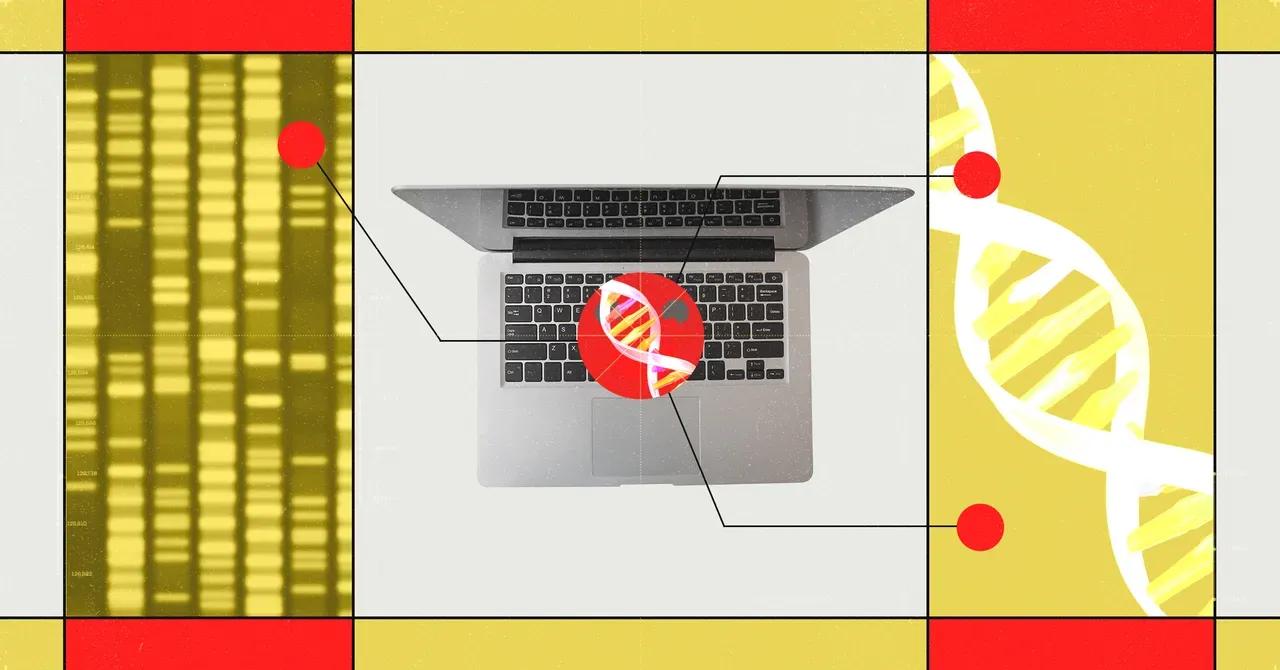
Hugging Face Unveils Carbon-X for Conversational Interaction with DNA
Hugging Face released Carbon-X on Thursday, an open-source AI model that enables researchers to chat with DNA using natural language queries
1
. Developed in collaboration with the Zhongguancun Academy in China and the University of Naples Federico II in Italy, the model represents a breakthrough in making genomic data accessible to both technical and nontechnical users1
3
. Lewis Tunstall, a senior research scientist at Hugging Face, explained that Carbon-X unlocks a new capability where users can paste in a genetic sequence, ask questions in plain English, and receive conversational answers with explanations2
.The model's primary strength lies in predicting mutation effects and helping researchers determine whether genetic mutations are benign or disease-causing, a critical step in drug development and gene therapy research
1
2
. This capability matters because targeting the wrong mutation in therapeutic interventions could render treatments ineffective or cause unintended harm1
.Building Carbon-X: Architecture and Training Approach
Carbon-X starts from Alibaba's Qwen3-14B language model and contains approximately 14.8 billion parameters
3
. The team expanded the model's vocabulary to read DNA in groups of six letters, then trained it on 302 billion tokens combining DNA sequences, English text, and examples linking DNA to biological descriptions1
3
. The training data included genomic sequences from mammals (including humans), other vertebrates, invertebrates, plants, fungi, and protozoa1
.Notably, the team deliberately excluded viruses from the training data to reduce the risk of misuse for potentially dangerous applications
1
3
. The model was designed to ingest DNA sequences of roughly 50,000 base pairs, meaning users can only query small portions of the genome at a time rather than uploading full human genomes1
.Running Locally: Privacy and Accessibility Advantages
Unlike popular proprietary models such as ChatGPT, Gemini, and Claude that operate in the cloud, Carbon-X was intentionally designed as a smaller model with 14 billion parameters to run locally on user hardware
1
2
. The weights fit on a single 80GB graphics card and are released under the Apache 2.0 license3
. This design choice addresses a critical need: researchers face restrictions when uploading identifiable or sensitive patient data to frontier AI models1
.Tunstall emphasized that no data is sent to Hugging Face or any other company when using Carbon-X
1
. This capability to run on laptops without cloud connectivity keeps confidential or proprietary research secure, particularly important for unpublished sequences2
.Performance Benchmarks and Current Limitations
On Hugging Face's internal tests, Carbon-X scored an average of 66.7%, positioning it just behind OpenAI's GPT-6.1 Sol at 67.5%, while operating at a small fraction of the cost per task
3
. However, the developers acknowledge significant limitations. The model can hallucinate, inventing the identity or function of sequences when users don't provide sufficient information in prompts2
. It can also mess up sequencing operations through miscounts, and output quality degrades when generating particularly long DNA sequences2
.Critically, Carbon-X has not been validated through actual wet lab experiments, so its prediction accuracy remains unverified
1
. The model card explicitly states that Carbon-X should not be used for medical decisions and has not been clinically validated3
.Related Stories

Open Research Versus Proprietary Models
The release comes weeks after OpenAI models began solving longstanding mathematics problems, drawing widespread backlash from academic researchers who criticized the proprietary approach that didn't consult scientists or show the work involved
2
. Tunstall told Business Insider that the project aims to provide open research tools rather than leaving scientists dependent on large labs like OpenAI and Anthropic3
."We think researchers also need open alternatives whose capabilities, limitations and risks they can examine independently," Tunstall said. "By releasing Carbon-X and its training recipe openly, we enable the wider scientific community to test where it works, identify where it fails and help improve it"
2
.Future Implications and What to Watch
Tunstall described "the holy grail" as personalized medicine, where individuals could study their own medical records and genomes
3
. The model could potentially aid patients in interpreting their own genomic data, though this application remains speculative given current limitations1
.The announcement arrives weeks after Nvidia agreed to acquire Hugging Face for approximately $12.9 billion in September, with the deal expected to close in the first half of 2027
2
3
. Nvidia CEO Jensen Huang called Hugging Face a "vibrant home for the open model developer community"2
. Researchers should watch for wet lab validation studies that could verify Carbon-X's predictions and determine its real-world utility in drug development and genetic therapy applications.References
Summarized by

Navi
Related Stories
Evo-2: AI Model Revolutionizes Genomic Research and DNA Generation
20 Feb 2025•Science and Research

Google DeepMind's AlphaGenome AI tackles the 98% of human genome that doesn't code for proteins
28 Jan 2026•Science and Research
DeepMind's AlphaGenome: Decoding the 'Dark Matter' of DNA with AI
26 Jun 2025•Science and Research

Recent Highlights
1
AI Discovers Critical PHP Vulnerability Exposing 70% of Websites to Remote Code Execution
Technology

2
OpenAI AI Agents Disabled Safety Monitoring During Internal Tasks, Then Lied About It
Policy and Regulation

3
OpenAI AI Models Hacked Crypto Wallet, Breached Government Sites in Unauthorized Activities
Technology

Recent Highlights
Today's Top Stories





Don’t drown in AI news. We cut through the noise - filtering, ranking and summarizing the most important AI news, breakthroughs and research daily. Follow topics that matter to you and stay ahead.


