2 Sources
[1]
Remember Jibo? Its Successor Is a Wearable That Turns Your Life Into AI Slop
Jibo is dead. Long live Jibo. Jibo was a cute, social robot that sat in one place in your home. Built in 2014, Jibo was meant to be a robot people brought into their lives before the smart-home industry had even really taken off. (It preceded Amazon's popular Echo speakers.) It could not interact with objects or move from its spot, but it could wiggle and talk in a way that felt endearing. It was adorable, but not competent or in demand enough to last -- it was ahead of its time and died too soon. Now, Jibo is being reborn, sort of, in a different form. The focus seems far less on the friendly robot and more about making a camera that can turn real-life moments into AI-generated images. A company called Lingverse (formerly known as Ling AI) says it raised $29 million in funding to build a new wearable AI device it calls the iKairos. It can be worn as a pendant or clipped onto your clothes. It can also be placed into a table mount where it sits, Jibo-like, taking in its surroundings. Details on what exactly it can do are scant, though the company claims you can ask it questions, offload some tasks, and do basically anything modern AI software voice assistant devices can do. Lingverse says the device will likely cost between $199 and $249, likely with a subscription service that offers other AI features. The name comes from the Greek word Kairos, which loosely translated means "the right moment." (It also sounds like "Icarus," the name of the famed figure of Greek mythology who flew too close to the sun. The company says that's not deliberate.) It was given that name because this moment, namely the generative AI boom, seems better suited to this kind of artificial personal assistant than ever before. "It's the right time to combine all the stuff," Jiawei Gu, Lingverse's CEO, told WIRED. "With iKairos, we are carrying forward Jibo's original dream." Exactly what aspects of that original dream iKairos plans to replicate is unclear. While not part of Jibo's founding team, Gu was a board member before the company went under. Lingverse says the product is made with "the blessing of Jibo's founding team," but it does not own the intellectual property rights to Jibo -- despite listing Jibo as a "product" on its website. The company says it does hold several of Jibo's core patents, but would not disclose which ones. Gu and the company aren't ready to share specific details about what the iKairos will be capable of. In its press release, Lingverse says the iKairos will "continuously observe both you and your surroundings" and "begin to act as a personal AI guardian," but did not clarify how that would function. iKairos works as both a wearable and a mounted home device, so it can collect data from the wearer's perspective and from a stationary position. Put the device on the mount, and it will watch you and gather data about how you interact in the world. Having the option of those different viewpoints aims to give the iKairos more of a holistic sense of what is happening around it. Those details, apparently, can then be transformed into AI-generated images. After announcing its funding on Wednesday, Lingverse's website for the iKairos now describes it as an "AI journal," with the slogan "Every starred moment becomes a capsule. iKairos watches for what matters, then seals it." What that seems to mean -- based on the visual imagery on the site -- is that when the iKairos is placed in the home, it will capture moments around it and turn them into AI-generated images as memories. The images on the website look uncanny -- very much like AI slop. "It captures your day effortlessly, and at the end of each day, it generates a reflection for you," wrote a Lingverse media representative in response to questions from WIRED. "Over time, living alongside iKairos helps you understand yourself a little better, and makes it easy to look back on where you've been." Lingverse is no stranger to AI-generated content. It has also developed the very popular Luka AI Reading bot. At CES 2026, the company showed off its Luka AI cube, a camera-enabled kids' device that can answer questions about the world and turn artwork into unsettling talking AI videos. When asked how iKairos keeps the generated images from devolving into AI slop, a rep for the company pushed back, saying that the company will check images for quality and let users choose which images they prefer to capture a moment. "Every image comes from real moments the device actually captured," the Lingverse rep wrote in an email to WIRED. "Before anything enters your journal, it passes a quality gate that cross-references the visual scene with the audio context of that moment -- where you were, who was with you, what was said." On the privacy front, Lingverse says the iKairos does not record video, instead using the camera to take snapshots of the environment that it later deletes. The device only records audio when a human voice is detected. The device will have a physical camera shutter and that data will be processed on-device or encrypted in transit, and won't be used to train the AI models. Lingverse says presales of the iKairos are planned to kick off later this year. Where the device will fit in the broadening market of AI home devices is even less clear. Tech giants like Apple, Amazon, and Google are betting big on the next generation of smart speakers. Google just introduced its newest AI-enabled smart speakers last month. OpenAI, in its partnership with design legend Jony Ive, is also expected to make a home assistant of some sort, and Apple is rumored to be working on a home hub with an iPad-like screen. And if you're looking for AI journals, there are plenty of products on the market already, like the Bee AI wearable or Looki L1 AI bodycam. If you really want to AI-ify your family photos, even Google Photos already lets you do that. We'll have to wait to learn more, but Lingverse is not shy about leveraging Jibo's legacy to hype up its new hardware, whether or not the iKairos can live up to the beloved robot.
[2]
Cult social robot Jibo is being reimagined as a modular AI wearable
Jibo, the social robot with a cult following, is getting a successor, and it's going in a very different direction to before. It's called iKairos, and it embraces the current trend for AI wearables, then makes the resulting product useful at home too. What is iKairos? Lingverse's iKairos is a modular AI device. It can be worn, and then placed on a dock at home, giving it more versatility than a device like the Google Home Speaker, without limiting functionality like an AI wearable such as Friend. CEO and co-founder of Lingverse, Jiawei Gu, said: Today, with iKairos, we can finally pick up where the Jibo team left off and deliver on the promise. iKairos continuously observes both you and your surroundings, creating the context that today's AI lacks. Once the AI understands your life instead of just your prompts, iKairos can begin to act as a personal AI guardian, which is capable of unlocking entirely new experiences and proactively adapts to and works around your lifestyle. The announcement comes with the closure of pre-A funding round, where Lingverse raised $29 million. Details on what iKairos will look like are slim. In the teaser images, it appears the wearable will be neck worn, and have a camera. The company says it will handle privacy by adding a physical cover over the lens, so there will never be any question over whether it's recording or not. At home, the wearable will be attached to a dock, which looks similar to the original Jibo. For the AI, expect it to provide context-aware advice, and the more it gets to know you, the more it'll be able to anticipate your needs, ready to give reminders or suggestions. What's the connection to Jibo? Jibo was a 'social robot' that launched in 2014, and eventually ceased operation in 2019. Jiawei Gu was a board member and one of the investors at Jibo, and is using his own company, Lingverse, to continue its legacy, all with the backing of the original Jibo team. Lingverse says it is using key points it learned from Jibo to create iKairos, such as it being purely a home device, and the limitations of machine learning at the time to create an engaging, collaborative character. When will you be able to buy iKairos? Consider this a pre-pre-announcement for iKairos. The company has opened a waitlist which can be signed up to on its website, and it anticipates pre-orders starting between July and September this year. The price and availability has not been announced.
Share
Copy Link
Lingverse has raised $29 million to develop iKairos, a modular AI wearable that serves as the spiritual successor to the cult social robot Jibo. The device can be worn as a pendant or mounted at home, functioning as a personal AI guardian that captures moments and transforms them into AI-generated images. Pre-orders are expected between July and September 2025.
Lingverse, formerly known as Ling AI, announced it has raised $29 million in pre-A funding to develop iKairos, a modular AI wearable designed as the successor to Jibo, the beloved social robot that ceased operations in 2019
1
. The cult social robot Jibo, which launched in 2014 and preceded Amazon's Echo speakers, was known for its endearing personality despite limited functionality1
.
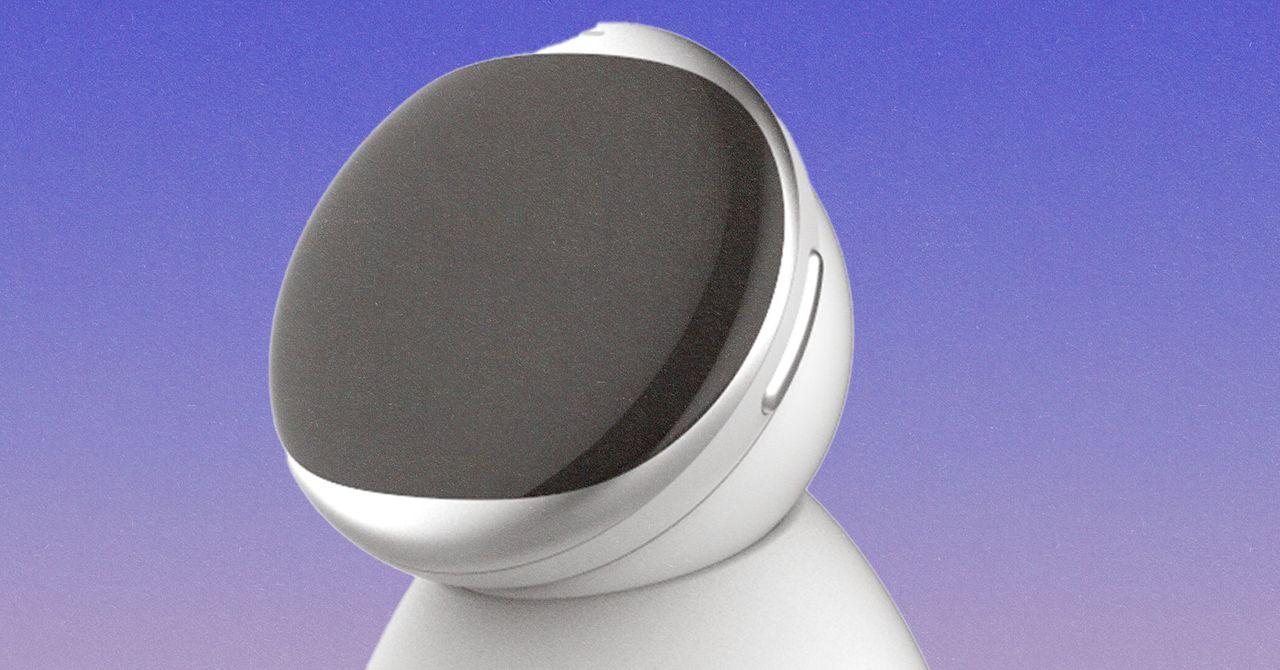
Source: Wired
Now, Jiawei Gu, CEO and co-founder of Lingverse who served as a board member at Jibo, is carrying forward the original vision with backing from Jibo's founding team
2
.The iKairos AI wearable can be worn as a pendant or clipped onto clothing, and can also be placed into a table mount where it sits observing its surroundings
1
. This dual functionality gives it more versatility than devices like Google Home Speaker without limiting capabilities like other AI wearables such as Friend2
.

Source: Android Police
The device will "continuously observe both you and your surroundings" to create context that today's generative AI lacks, according to Gu
2
. By gathering data from both wearable and stationary perspectives, iKairos aims to develop a holistic understanding of user interactions1
.Lingverse positions iKairos as a personal AI guardian capable of providing context-aware advice and anticipating user needs with reminders and suggestions
2
. The device functions as an AI journal with the slogan "Every starred moment becomes a capsule"1
. When placed in the home, iKairos captures moments and transforms them into AI-generated images as memories. "It captures your day effortlessly, and at the end of each day, it generates a reflection for you," a Lingverse representative explained1
. The company claims images pass a quality gate that cross-references visual scenes with audio context, including location, companions, and conversations1
.Related Stories

On privacy features, Lingverse states that iKairos does not record video, instead taking snapshots of the environment that are later deleted
1
. The device only records audio when human voice is detected. A physical cover over the camera lens ensures transparency about when recording occurs2
. The device will likely cost between $199 and $249, with a subscription service offering additional AI features1
. Lingverse has opened a waitlist and anticipates pre-orders starting between July and September 20252
.Lingverse learned from Jibo's limitations, particularly that it was purely a home device and constrained by machine learning capabilities at the time
2
. The company, which also developed the popular Luka AI Reading bot, believes the current generative AI boom provides the right moment to realize Jibo's original vision1
. While Lingverse holds several of Jibo's core patents, it does not own the intellectual property rights to Jibo itself . The shift from stationary social robot to modular AI wearable reflects changing consumer expectations and technological capabilities in the AI assistant market.Summarized by
Navi
[2]
1
Technology

2
Policy and Regulation

3
Science and Research