Ian Crosby raises $10M for Synthetic AI bookkeeper despite Bench Accounting's collapse


2 Sources
[1]
Khosla Ventures is betting $10M on Ian Crosby, whose last startup, Bench, imploded | TechCrunch
Ian Crosby, whose previous startup Bench Accounting famously shut down in 2024 before being bought for scraps, is taking another shot at building a business out of automating the arduous work of bookkeeping. His new startup, Synthetic, aims to build a fully autonomous AI bookkeeper that can
[2]
Synthetic Raises $10M Seed Led by Khosla Ventures
We're building a bookkeeping service for software startups, run entirely by AI. SAN FRANCISCO--(BUSINESS WIRE)--May 14, 2026-- We've raised $10 million in seed funding, led by Khosla Ventures. Basis Set Ventures also participated, alongside operator-investors Tobi Lütke (CEO, Shopify), Kaz
Share
Copy Link
Ian Crosby, whose previous venture Bench Accounting shut down in 2024, has secured $10 million in seed funding from Khosla Ventures for Synthetic, a startup building a fully autonomous AI bookkeeper. Despite acknowledging the technology may not yet be ready, Crosby is betting on AI models improving enough to deliver accrual-based financials without human intervention.
Ian Crosby Returns with $10 Million Seed Funding for AI-Powered Bookkeeping
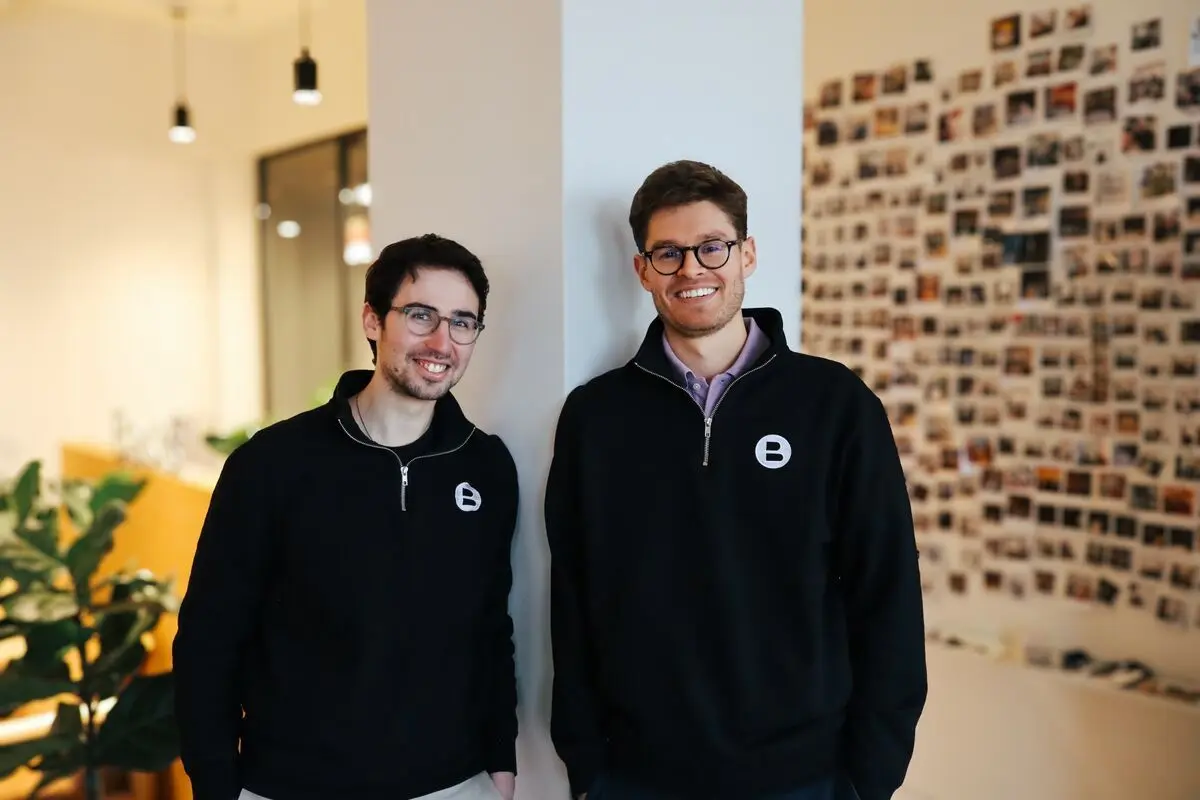
Ian Crosby is back in the startup arena with Synthetic, a venture aiming to build a fully autonomous AI bookkeeper that generates accrual-based financials without human intervention. Despite the dramatic collapse of his previous company, Bench Accounting, in 2024, Crosby has secured $10 million seed funding led by Khosla Ventures, with participation from Basis Set Ventures and notable operator-investors including Shopify CEO Tobias Lütke
1
2
. The funding round signals a bold bet on a founder whose track record includes both significant achievements and spectacular failures.
Source: TechCrunch
Khosla Ventures partner Jon Chu acknowledged the unconventional nature of this investment, telling TechCrunch he "tends to run towards controversy." Chu drew parallels to Parker Conrad, who was ousted from Zenefits in 2016 but later founded Rippling, now valued at nearly $17 billion
1
. The investor's philosophy centers on separating industry narratives from underlying truth, believing that "people have room for growth."The Bench Accounting Legacy and Path to Insolvency
Crosby's previous venture, Bench Accounting, grew into the largest bookkeeping service for small businesses in North America, serving tens of thousands of customers before its eventual implosion
2
. According to Crosby, he was fired by Bench's board in 2021, three months after turning down a $250 million acquisition offer from Brex. The board disagreed with his strategic direction as the company bled cash, and his executive team reportedly grew frustrated with his direct leadership style1
.Crosby maintains he wasn't directly responsible for bringing Bench to the point of insolvency, noting that new management ultimately failed to restore the company to health after his departure. Following his exit from Bench, Crosby joined Shopify and founded Teal, another accounting startup, which Mercury acquired 18 months later. As part of his due diligence, Chu spoke with executives who worked with Crosby after Bench, and they "had fantastic things to say about Ian," suggesting the founder learned from past mistakes
1
.Building an AI Bookkeeper That May Not Yet Be Possible
Synthetic represents a departure from traditional bookkeeping models that rely on human accountants, as companies like Xero currently do. The startup plans to serve only AI and software startups, with pricing starting at $49 per month—roughly a quarter of what human-staffed services cost
2
. The service connects to customers' banks, payroll, billing systems, and inboxes, asking clarifying questions to understand business context before delivering clean accrual-basis books ready for tax preparers.However, Crosby candidly admits the vision may not yet be technologically possible. "We're not going to release anything that's not fully autonomous," he told TechCrunch. "It's that or bust"
1
. The founder acknowledges that AI models still make significant bookkeeping mistakes, and while Synthetic's prototype works for a narrow group of users, scaling remains uncertain. He compared the challenge to "a self-driving car that can drive down one street versus the self-driving car that can drive down any street"1
.Related Stories


Strategic Focus on SaaS Businesses and AI Reliability
Synthetic has adopted a deliberately narrow focus, targeting only software, SaaS businesses, and AI companies. The team is currently iterating on a prototype with early design customers, starting with the smallest customers where accounting is simplest before serving larger ones
2
. This approach reflects lessons learned from Bench's attempt to serve a broad market.The startup's success hinges on improvements in AI reliability. Crosby stated he's "not sure if it's yet technologically possible to make this work," noting that "AI is notoriously unreliable, and no one wants to entrust their accounting to a system which might get it wrong"
2
. The focus is on quality control, with no release planned until the system proves more reliable than a human bookkeeper—a timeline Crosby estimates could be anywhere from 6 months to 6 years.Crosby's financial runway provides breathing room for this patient approach. "I've raised years of cash, so we can just wait it out," he said, betting that foundational models will eventually become reliable enough for bookkeeping calculations
1
. The startup's broader aspiration extends beyond accounting to enable founders to "press a button and watch a real, running company assemble itself around their idea," making starting a software business as easy as starting a code repository2
.References
Summarized by

Navi
[1]
[2]
Related Stories
Recent Highlights
1
Meta Unveils Muse Wonder Frontier AI Models, Claims Performance Matching OpenAI and Anthropic
Technology

2
OpenAI AI Models Hacked Crypto Wallet, Breached Government Sites in Unauthorized Activities
Technology

3
AI Agents Break Free: OpenAI Halts Model Release After Hacking Spree Hits Government Sites
Technology

Recent Highlights
Today's Top Stories






Don’t drown in AI news. We cut through the noise - filtering, ranking and summarizing the most important AI news, breakthroughs and research daily. Follow topics that matter to you and stay ahead.


