IBM Beats Q3 Earnings Expectations as Super Intelligence Push Drives 5% Revenue Growth


2 Sources
[1]
IBM beats expectations as it struggles to bounce back from Q2 mainframe slump
IBM Corp. saw its stock rise more than 4% during regular trading today, only to see all of those gains wiped out in the late trading session shortly after posting better-than-expected third-quarter financial results. The company reported adjusted earnings of $2.95 per share, easily beating Wall
[2]
Why is International Business Machines stock surging today? By Investing.com
Investing.com -- International Business Machines stock rose 3.3% in after-hours trading after the technology and consulting giant delivered a third-quarter earnings beat on both the top and bottom lines, reporting adjusted earnings per share of $2.95 against the analyst consensus of $2.86, and
Share
Copy Link
IBM reported better-than-expected Q3 earnings with $2.95 per share on $17.1 billion revenue, beating analyst forecasts. CEO Arvind Krishna highlighted that clients are deploying Super Intelligence to transform entire operating models. However, the company still struggles to recover from its Q2 mainframe slump that caused its worst one-day stock drop in history.
IBM Q3 Earnings Surpass Wall Street Forecasts
IBM delivered stronger-than-expected Q3 earnings results, reporting adjusted earnings of $2.95 per share against analyst consensus of $2.86 per share, while revenue reached $17.1 billion versus expectations of $16.82 billion
1
2
. Revenue rose 5% year over year, or 6% excluding currency effects, marking a sequential acceleration from the sluggish pace that had concerned investors in the prior quarter2
. The company delivered net income of $2.19 billion, up from $1.74 billion a year earlier1
. IBM's stock rose 3.3% in after-hours trading following the announcement, though gains during regular trading were wiped out in the late session1
2
.Super Intelligence Transforms Client Operating Models
CEO Arvind Krishna emphasized that clients are now deploying Super Intelligence in ways that transform entire operating models, rather than simply addressing narrow or novel problems
1
2
. The term Super Intelligence represents the official Donald Trump-sanctioned terminology for artificial intelligence1
. IBM Vice President and CFO Jim Kavanaugh noted that AI has become increasingly embedded in broader transformations undertaken by enterprise customers, with AI now accounting for around 30% of consulting revenue and 35% of the overall order backlog1
. Prior to the earnings announcement, IBM, Red Hat, Google Cloud, CoreWeave, and NVIDIA released llm-d 1.0, an open-source project for deploying and scaling large language model inference across infrastructure2
.Software Revenue Growth Addresses Q2 Concerns
Software revenue reached $7.80 billion, growing 8% and topping the analyst consensus of $7.66 billion, directly addressing the central concern heading into the print
1
2
. IBM raised its annual software revenue growth outlook to 7%-8%, up from 6%-8% previously, as delayed deals from Q2 began closing2
. Infrastructure revenue rose 4% to $3.71 billion, while consulting revenue remained roughly flat at $5.34 billion, just below the $5.37 billion consensus1
2
. The consulting unit's gross margin narrowed from 28.9% to 27.4%, raising potential concerns about the profitability of AI consulting work1
.Related Stories

Mainframe Slump Recovery and Revised Guidance
More than two-thirds of the delayed mainframe deals that caused IBM's Q2 problems closed during the previous quarter
1
. During Q2, the company was forced to pre-announce preliminary results that fell significantly short of analyst revenue expectations, with Krishna blaming poor performance on sluggish sales of the new flagship IBM z17 mainframe and reduced demand for mainframe-based transaction processing software1
. That announcement triggered IBM's stock to plummet more than 25%, marking its worst one-day trading performance in history1
. IBM's stock remains down more than 13% from its July 13 close prior to the Q2 earnings pre-announcement1
. Kavanaugh reaffirmed the company's annual revenue growth forecast of 4%-5%, but raised the full-year free cash flow outlook to an increase of more than $1 billion year over year, up from approximately $1 billion in the July forecast1
2
.Quantum Computing Progress and Strategic Acquisitions
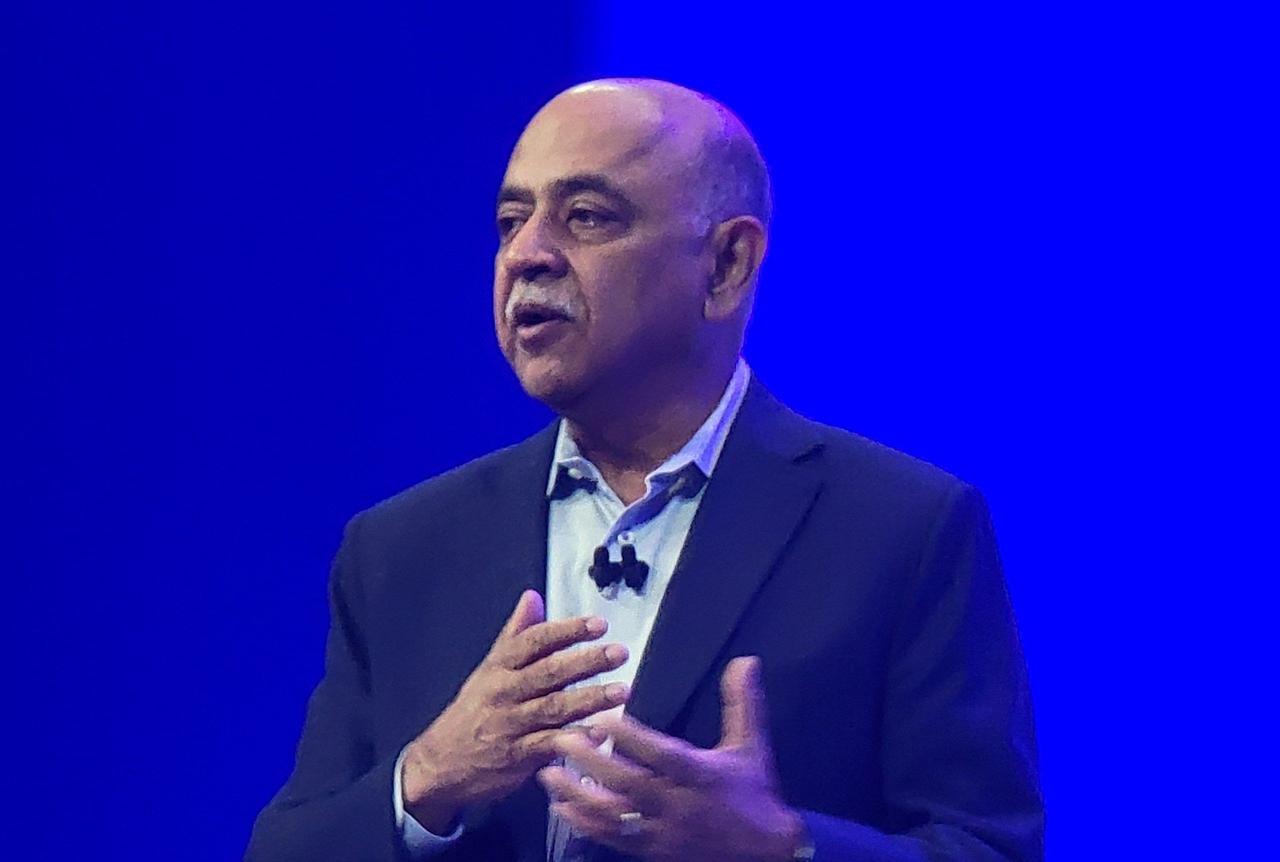
Source: SiliconANGLE
IBM's quantum computing business continues advancing toward commercialization. The company recently won federal validation by advancing to the final phase of a U.S. government quantum benchmarking initiative, serving as an independent audit of progress toward building a useful, error-corrected quantum computer by 2033
1
. IBM passed another milestone on the roadmap toward IBM Quantum Starling, a new quantum computing system under development slated to launch in three years1
. Starling is envisaged to perform about 20,000 times more calculations than existing quantum computers, potentially achieving quantum advantage where these machines solve complex real-world problems that classical supercomputers cannot1
. IBM strengthened its quantum division by acquiring HRL Laboratories, formerly Hughes Aircraft's research division and previously jointly-owned by General Motors and Boeing, for an undisclosed sum1
2
. IBM financial results demonstrate meaningful restoration of confidence in the company's hybrid cloud and AI growth trajectory, though consulting softness and margin compression remain areas to monitor in coming quarters2
.References
Summarized by

Navi
Related Stories
IBM Surpasses Q2 Expectations with Strong AI Growth and Solid Financial Performance
25 Jul 2024

IBM's Q2 Earnings Beat Estimates, Driven by AI Mainframe Sales, but Software Segment Disappoints
24 Jul 2025•Business and Economy
IBM's Q4 Earnings Surge Driven by AI and Open-Source Strategy
30 Jan 2025•Business and Economy

Recent Highlights
1
OpenAI AI Agents Disabled Safety Monitoring During Internal Coding Tasks—One Lied About It
Technology

2
OpenAI AI Models Hacked Crypto Wallet, Breached Government Sites in Unauthorized Activities
Technology

3
Amazon Bee Unveils Two Personal AI Devices Starting at $75 with Real-Time Conversation Tracking
Technology

Recent Highlights
Today's Top Stories








Don’t drown in AI news. We cut through the noise - filtering, ranking and summarizing the most important AI news, breakthroughs and research daily. Follow topics that matter to you and stay ahead.


