3 Sources
[1]
Indian-origin tech leader Uday Ruddaraju is new CTO, Compute at OpenAI
Uday Ruddaraju, an Indian-origin tech executive, now leads compute at OpenAI. He previously worked at Elon Musk's xAI before joining the AI firm. Ruddaraju's team is focused on building significant compute capacity for AI models. OpenAI aims to create the world's largest compute footprint for widespread AI access. The company is actively hiring skilled professionals for its ambitious infrastructure projects. Indian-origin tech executive Uday Ruddaraju has been appointed Chief Technology Officer, Compute at Microsoft-backed OpenAI, a year after parting ways with Elon Musk's xAI. Ruddaraju, who did his BE in Computer Science from Hyderabad-based Chaitanya Bharathi Institute of Technology, announced his new role on LinkedIn. He joined OpenAI in July last year. "I'm excited to share that I'm stepping into the CTO, Compute role at OpenAI. My first 12 months at OpenAI have been incredibly rewarding," he said. Ruddaraju was among the key xAI employees who joined rival OpenAI last year amid increasing competition for talent and resources between major companies in the Artificial Intelligence sector. "Our Compute team has worked relentlessly to bring capacity online quickly and reliably, while doing the deep systems across compute, network and storage, and ML work needed to train frontier models like GPT-5.6. As we scale, the problems only get harder that require pushing the frontiers and innovating across every layer (literally) of the stack," he said. Ruddaraju said OpenAI was on a mission to build the world's largest compute footprint so frontier AI can reach everyone and every workflow. "We have a very exciting compute ramp and roadmap coming up. There is a lot to build across large-scale distributed systems, hardware, manufacturing, and data centre builds spanning civil, mechanical, and electrical engineering. We're hiring exceptional people across the stack," he said. Ruddaraju interned at Amazon Web Services while in college and later moved to the US for a Master's in Computer Science at the University of Minnesota. From 2013 to 2018, he worked at eBay before moving to Robinhood. He later joined xAI before moving to OpenAI last year.
[2]
Who is Uday Ruddarraju? Indian-origin techie who left Elon Musk's xAI to power OpenAI's next big push
Uday Ruddarraju now leads OpenAI's compute infrastructure as Chief Technology Officer. He previously worked at Elon Musk's xAI, focusing on AI systems. Ruddarraju's role involves expanding the company's massive computing footprint for AI development. This promotion highlights the growing importance of compute power in the AI race. OpenAI is preparing for significant infrastructure expansion across various engineering disciplines. OpenAI has elevated Indian-origin technology executive Uday Ruddarraju to the role of Chief Technology Officer (CTO) of Compute, marking a significant rise for the infrastructure specialist roughly a year after he joined the artificial intelligence company from Elon Musk's xAI. Ruddarraju announced his new role in a LinkedIn post, describing his first year at OpenAI as a rewarding period spent expanding the enormous computing infrastructure required to develop increasingly powerful artificial intelligence models. "I'm excited to share that I'm stepping into the CTO, Compute role at OpenAI," Ruddarraju wrote. The promotion places him in a key position overseeing an area that has become central to the global AI race. As companies push towards increasingly sophisticated models, access to computing power, advanced chips, high-speed networks, storage systems and massive data centres has emerged as one of the industry's biggest strategic priorities. Building the backbone for frontier AIReflecting on his first 12 months at OpenAI, Ruddarraju highlighted the work being done behind the scenes to rapidly expand the company's computing capacity while strengthening the complex systems needed to train frontier AI models. "My first 12 months at OpenAI have been incredibly rewarding. Our Compute team has worked relentlessly to bring capacity online quickly and reliably, while doing the deep systems across compute, network and storage, and ML work needed to train frontier models like GPT-5.6," he said. His comments offer a glimpse into the scale of engineering required to support modern AI development. Training and operating advanced models involves far more than simply acquiring powerful processors. Thousands of computing units must work together across sophisticated networks, supported by enormous storage capacity, reliable power infrastructure and specialised data centres. Ruddarraju indicated that OpenAI's ambitions in this area are only growing. "We're on a mission to build the world's largest compute footprint so frontier AI can reach everyone and every workflow," he wrote. OpenAI prepares for massive compute expansionRuddarraju also pointed to an ambitious infrastructure roadmap ahead, spanning disciplines far beyond traditional software engineering. "We have a very exciting compute ramp and roadmap coming up. There is a lot to build across large scale distributed systems, hardware, manufacturing, and data center builds spanning civil, mechanical, and electrical engineering. We're hiring exceptional people across the stack," he said. The statement underscores how the AI infrastructure race is increasingly extending into the physical world. Building computing capacity at the scale required by frontier AI involves semiconductor supply chains, networking hardware, power systems, cooling technology and the construction of increasingly large data-centre campuses. As CTO of Compute, Ruddarraju will be at the heart of that challenge as OpenAI seeks to expand the infrastructure supporting the development and deployment of its AI systems. From Hyderabad engineering student to AI infrastructure leaderRuddarraju's journey to a senior technology role at OpenAI began in Hyderabad. According to his LinkedIn profile, he studied Computer Science at Chaitanya Bharathi Institute of Technology. His entry into the technology industry came early, with an internship at Amazon Web Services (AWS) while he was still in college. He later moved to the United States to pursue a Master's degree in Computer Science at the University of Minnesota. Over the following years, Ruddarraju built extensive experience in engineering and technology infrastructure, holding leadership roles at companies including eBay and Robinhood. His career eventually took him to xAI, Elon Musk's artificial intelligence venture, where he served as Head of Infrastructure Engineering. The role placed him at the centre of efforts to build the computing systems needed to train and operate large-scale AI models. From Musk's xAI to OpenAIRuddarraju moved from xAI to OpenAI in 2025, becoming one of the senior infrastructure executives to make the switch between two companies competing at the forefront of artificial intelligence. His departure drew attention partly because of his involvement with Colossus, xAI's massive AI computing infrastructure project. Despite moving to a rival AI company, Ruddarraju left xAI on an appreciative note, publicly thanking Musk and his former colleagues. "Thank you @elonmusk and everyone at xAI for the rare opportunity to help build something truly foundational with Colossus. It was a privilege to be part of a mission this bold, and to see from the inside what relentless focus and execution really look like," he wrote in his farewell message. Ruddarraju also described working directly with Musk as a defining part of his experience at the company. "Reporting into Elon and learning directly from him was definitely the best part about working at xAI," he said. He further praised Musk's ability to execute ambitious engineering projects, referring to comments by Nvidia CEO Jensen Huang. "Jensen Huang was right, Elon and his teams are singular in what they can achieve. Grateful to have played a small part in shaping the future of AI Compute from the inside," Ruddarraju wrote. Now, roughly a year after making the move to OpenAI, Ruddarraju has stepped into one of the company's key technology leadership roles. His promotion comes at a time when computing infrastructure is becoming as important to the AI race as the models themselves -- and when the ability to build enormous, reliable and efficient compute systems could help determine how quickly the next generation of artificial intelligence takes shape.
[3]
OpenAI Appoints Indian-Origin Uday Ruddaraju as CTO of Compute
OpenAI has promoted Indian-origin technology executive Uday Ruddaraju as Chief Technology Officer (CTO) of Compute, marking a major leadership milestone at one of the world's leading artificial intelligence companies. The promotion comes nearly a year after Ruddaraju joined OpenAI from Elon Musk's AI venture, xAI, where he served as Head of Infrastructure Engineering. Announcing the move on LinkedIn, Ruddaraju described his first year at as 'incredibly rewarding' and said he was excited to lead the company's compute division as it expands the infrastructure powering next-generation AI models.
Share
Copy Link
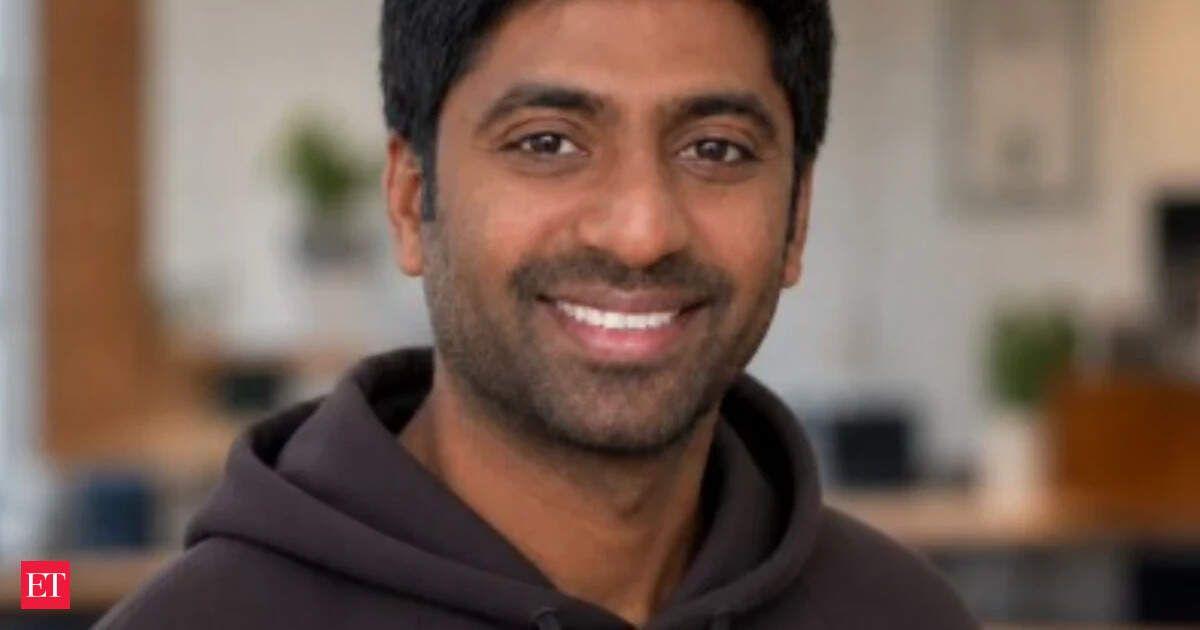
Uday Ruddaraju has been promoted to Chief Technology Officer of Compute at OpenAI, a year after joining from Elon Musk's xAI. The Indian-origin tech leader will oversee the company's mission to build the world's largest compute footprint, supporting frontier models like GPT-5.6. His team focuses on scaling compute infrastructure across distributed systems, hardware, and data centers as the AI race intensifies.
Uday Ruddaraju has stepped into the role of Chief Technology Officer of Compute at OpenAI, marking a significant promotion roughly a year after the Indian-origin tech leader joined the Microsoft-backed AI company
1
. The appointment places Ruddaraju at the center of one of the industry's most critical battlegrounds as companies compete to secure massive computing power needed for next-generation AI models2
. Announcing his new position on LinkedIn, Ruddaraju described his first 12 months at OpenAI as "incredibly rewarding," highlighting the intense work his team has undertaken to expand computing capacity while strengthening the complex systems required to train frontier models like GPT-5.63
.
Source: ET
Ruddaraju left Elon Musk's xAI to join OpenAI in July last year, becoming one of several key infrastructure executives to make the switch between two companies competing at the forefront of the AI race
1
. At xAI, he served as Head of Infrastructure Engineering and was involved with Colossus AI computing project, Musk's massive computing infrastructure initiative2
. His departure drew attention given the fierce competition for talent and resources between major players in the artificial intelligence sector. Despite moving to a rival company, Ruddaraju publicly thanked Elon Musk and his former colleagues at xAI before beginning his journey at OpenAI2
.In his new role, Ruddaraju oversees OpenAI's ambitious mission to build the world's largest compute footprint, ensuring frontier AI can reach everyone and every workflow
1
. His Compute team has worked relentlessly to bring capacity online quickly and reliably while conducting deep systems work across compute, network, storage, and machine learning needed to train advanced models1
. The challenge extends far beyond traditional software engineering, involving thousands of computing units that must work together across sophisticated networks, supported by enormous storage capacity and specialized data centers2
. As companies push towards increasingly sophisticated models, access to computing power, advanced chips, high-speed networks, and massive infrastructure has emerged as one of the industry's biggest strategic priorities.Related Stories
Ruddaraju revealed that OpenAI's compute roadmap involves building across large-scale distributed systems, hardware, manufacturing, and data center construction spanning civil, mechanical, and electrical engineering
1
. The company is actively hiring exceptional people across the stack to support this AI infrastructure expansion1
. This underscores how the infrastructure race is increasingly extending into the physical world, involving semiconductor supply chains, networking hardware, power systems, cooling technology, and the construction of increasingly large data-center campuses2
. The scale of investment and engineering required signals that compute capacity will remain a defining factor in which companies can successfully develop and deploy frontier AI systems.Ruddaraju completed his BE in Computer Science from Chaitanya Bharathi Institute of Technology in Hyderabad, where he interned at Amazon Web Services while still in college
1
. He later moved to the United States to pursue a Master's degree in Computer Science at the University of Minnesota2
. From 2013 to 2018, he worked at eBay before moving to Robinhood, building extensive experience in engineering and technology infrastructure1
. His career trajectory reflects the growing importance of infrastructure specialists in the AI industry, where the ability to build and manage massive computing systems has become as critical as algorithm development. As CTO of Compute, Ruddaraju will be at the heart of OpenAI's efforts to maintain its position in the intensifying global competition for AI supremacy.Summarized by
Navi
[3]
27 Jun 2026•Business and Economy

04 Feb 2025•Policy and Regulation

30 Oct 2025•Business and Economy

1
Technology

2
Policy and Regulation

3
Science and Research