Qatar's Helium Crisis Threatens Chip Supply Chains as Iran Strikes Cut Off Third of Global Supply


3 Sources
[1]
Iran war cuts off helium from Qatar, and shortages will start to bite in a few weeks, threatening chip supply chains that fuel the AI boom | Fortune
Iran's attack this week on Qatar's natural gas export facility threatens to disrupt not just world energy markets but also global technology supply chains because the helium it produces is crucial for a range of advanced industries. Best known as the gas that makes party balloons float, helium is
[2]
The Balloon Explosion Nobody Saw Coming | Investing.com UK
The world's most advanced technology depends on one of the universe's simplest elements, a noble gas so abundant in the universe that it ranks as the second most common element: helium. Essential for AI chips, GPUs, and semiconductors, its market is now tightening as the Iran conflict begins to
[3]
One-third of world's Helium supply gone: How it affects chips to AI chatbots
The next time your AI chatbot answers a question, thank helium. Not the balloon gas, but what is responsible for every chip fab, every MRI machine, and every semiconductor clean room on Earth. On March 2, Iranian drone strikes hit Qatar's Ras Laffan facility, the world's largest helium production
Share
Copy Link
Iranian drone strikes on Qatar's Ras Laffan facility have halted production at the world's largest helium source, cutting off 30% of global supply. The semiconductor industry faces a critical shortage in weeks, threatening AI chip production as South Korea's SK Hynix and Samsung hold only two to three months of inventory.
Iran Strikes Sever Critical Helium Supply from Qatar
Iranian drone strikes against Qatar's Ras Laffan facility have triggered a global helium shortage that threatens to disrupt the semiconductor industry and chip supply chains fueling the AI boom
1
. The attacks, which began on March 2 with follow-up strikes on March 19, forced state-owned QatarGas to halt production at the world's largest liquefied natural gas plant and declare force majeure3
. Qatar produced roughly 63 million cubic meters of helium in 2025, accounting for approximately 30-36% of global helium supply, according to the U.S. Geological Survey1
2
. That entire supply is now offline.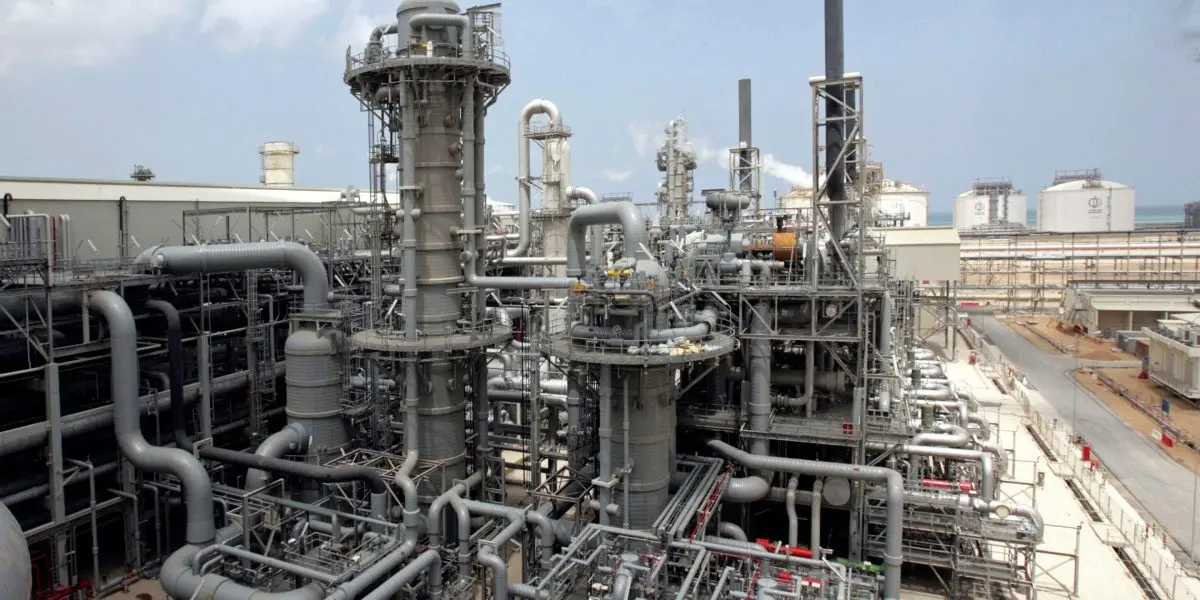
Source: Fortune
The damage to Ras Laffan, where more than 80% of Qatar's helium originates, is extensive and will take years to repair, with QatarGas reporting a 14% cut to annual helium exports
1
. Phil Kornbluth, president of Kornbluth Helium Consulting, stated that the best-case scenario for resuming production would be six weeks, but that timeline now appears "highly unlikely"1
.Why Helium Matters for Manufacturing Semiconductors
Helium plays an essential role in manufacturing semiconductors, particularly the cutting-edge chips used in artificial intelligence models. The semiconductor industry accounts for approximately 17% of U.S. helium consumption in 2025
2
. During chip fabrication, helium is used to cool silicon wafers during the etching process, when material deposited on a wafer is scraped away to form transistor structures. "You really want to maintain a constant temperature over the wafer. And in order to do that, you need to be able to draw heat away from the wafer that's being processed," explained Jacob Feldgoise, an analyst at Georgetown University's Center for Security and Emerging Technology1
.
Source: Digit
Helium's unique physical properties—complete inertness, an ultra-low boiling point of -268.9°C, and unmatched thermal conductivity—make it irreplaceable in current semiconductor manufacturing processes
2
. Jong-hwan Lee, a professor of semiconductor devices at South Korea's Sangmyung University, confirmed there is no viable replacement for helium to cool wafers under current manufacturing processes1
.South Korea's Memory Chip Producers Face Imminent Crisis
The global helium shortage poses an immediate threat to South Korea's semiconductor industry, which imports 64.7% of its helium from Qatar
3
. SK Hynix and Samsung, the two companies that manufacture high-bandwidth memory inside every AI accelerator and data center GPU, currently hold only two to three months of inventory3
. If Ras Laffan remains offline beyond that window, South Korean memory production faces rationing, and the AI hardware supply chain faces a shortage with no short-term fix.Kornbluth noted that the shortage hasn't hit yet because helium containers filled when the conflict erupted would have taken several weeks to arrive in Asia. "Nobody's run out of helium yet. But it's a few weeks out when the shortage really hits," he said
1
. About 200 specialized containers, each costing approximately $1 million, remain stuck in the Middle East1
.Related Stories

Spot Prices Double as Natural Gas Production Halts
Spot prices for helium have roughly doubled since the crisis erupted and will probably rise further, according to Kornbluth
1
. While spot trading only accounts for about 2% of the total market in normal times, contract prices "could go up a lot," with potential increases to $2,000 per thousand cubic feet if the disruption continues1
3
. Major industrial gas suppliers have already begun assessing customers a helium surcharge3
.Helium is a byproduct of natural gas production, extracted through cryogenic distillation when LNG is liquefied
1
3
. When Qatar's LNG production stopped, helium extraction stopped automatically. There is no workaround—you cannot produce helium without producing LNG3
. This structural dependency means helium supply does not respond to shifts in demand from high-growth sectors, even during the AI boom2
.Geopolitical Tensions Expose Supply Chain Vulnerability
The escalation of geopolitical tensions has exposed a critical vulnerability in global technology supply chains. Nearly all Qatari helium is shipped through the Strait of Hormuz, creating a single point of failure
2
. Recycling offers only limited relief, with recovery rates in advanced semiconductor fabs typically not exceeding 80-90%, leaving continued reliance on fresh helium supply2
.The United States and private reserves offer partial relief, and Canada's Rocky Mountain deposits are drawing renewed investor interest. Japan's Iwatani has already begun drawing on U.S. federal reserves
3
. However, industry experts stress that none of these alternatives can replace 63 million cubic meters in weeks. Kornbluth stated plainly: the world cannot compensate for losing a third of its supply3
. The countdown on chip supply has started, with implications extending from AI chips and GPUs to medical imaging and space industry applications that depend on this irreplaceable noble gas.References
Summarized by

Navi
[2]
Related Stories
China halts helium exports as Middle East conflict threatens AI chip manufacturing supply chains
10 Jul 2026•Policy and Regulation

Global Helium Demand Set to Double by 2035 Amid Semiconductor Industry Boom
10 Sept 2024

Iran War Threatens AI Industry as Energy Prices Surge and Supply Chains Face Critical Disruption
26 Mar 2026•Business and Economy

Recent Highlights
1
Microsoft and Nvidia Launch Surface Laptop Ultra: A $2,599 AI-Ready PC With RTX Spark Chip
Technology

2
Meta Muse AI Agent Surges to 6.6M Downloads Despite Privacy and Security Controversies
Technology

3
Scientists Build AI Model That Reconstructs Images From Brain Scans in Record Time
Science and Research

Recent Highlights
Today's Top Stories











Don’t drown in AI news. We cut through the noise - filtering, ranking and summarizing the most important AI news, breakthroughs and research daily. Follow topics that matter to you and stay ahead.


