3 Sources
[1]
Vance says military should never let AI make life-and-death decisions
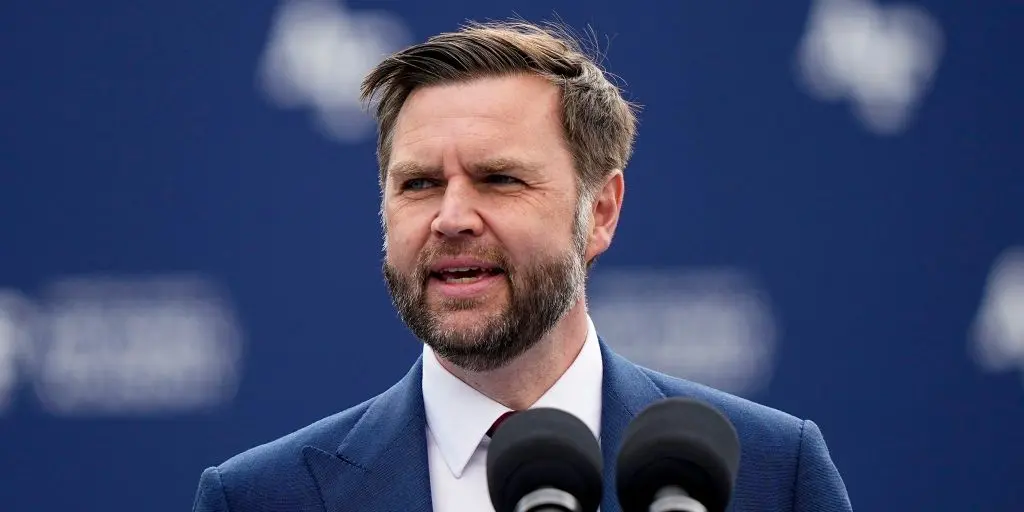
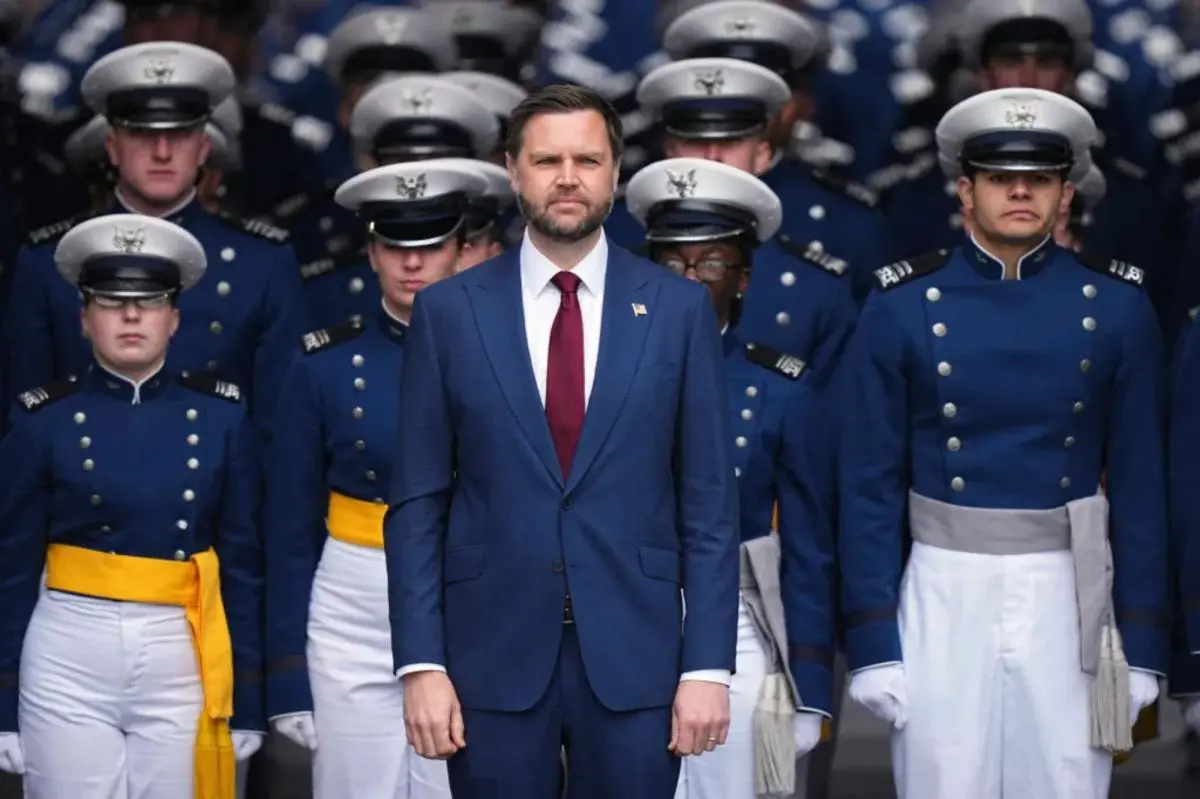
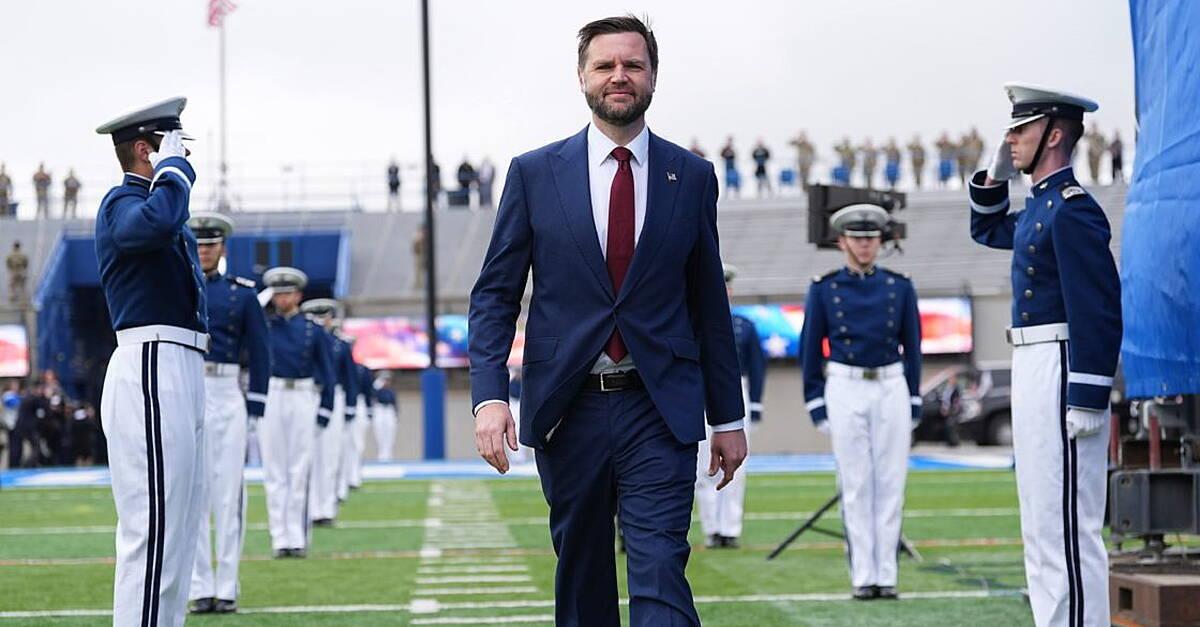
Vice President JD Vance gives a chest bump to a graduating cadet during the U.S. Air Force Academy graduation in Colorado Springs on Thursday. (Matt Rourke/Pool/Reuters) Vice President JD Vance said he is concerned about how artificial intelligence will be used in warfare and urged the military on Thursday to be cautious about the technology, remarks he made as the Pentagon moves forward with using AI on the battlefield. Speaking to graduating cadets at the U.S. Air Force Academy in Colorado Springs, the vice president -- who served in the Iraq War during his time in the Marines -- acknowledged the growing unease among Americans as AI stands to "affect the labor market" and has "fundamentally changed how we interact with one another." "But the thing I worry about most with AI is how it will change warfare," Vance said, adding that it "already has." "If the warfare of the future is to live up to the moral values of our ancestors, decisions over life and death must be made by humans and not machines," he said. The Pentagon has moved quickly to integrate AI into its war-fighting, even as it faces questions about how to impose appropriate safeguards on the still-new technology. The vice president, a Catholic who has previously been bullish about the adoption of AI, used the Air Force Academy speech to "endorse" a sentiment expressed by Pope Leo XIV in his encyclical on AI released this week, even as some other Trump administration officials have dismissed Leo's new guidance. Vance praised the pope's instruction "not to outsource the most important moral decisions to digital technology," saying he wanted the cadets to take it to heart as it applies to decisions made in war. "So as AI transforms the battlefield -- in some ways positively, in some ways not -- I ask that you be jealous and selfish about your role as a decision-maker in warfare," he said. "Use technology to make you better, but never submit to it. You are the masters of warfare, and both your minds but also your hearts are the opposite of artificial." Vance's broad message about the importance of human judgment comes as the Trump administration struggles to articulate more practical guidelines for the use of AI in the United States. Last week, President Donald Trump decided at the last minute not to sign a long-awaited executive order on AI after several tech executives urged him to hold off, concerned it would restrict the technology's development. Other administration officials have brushed off warnings about embracing AI too quickly and without proper evaluation. In January, Defense Secretary Pete Hegseth said the military was in "a race" to develop AI-enabled warfare. "We must accept that the risks of not moving fast enough outweigh the risks of imperfect alignment," Hegseth wrote in a January memo directing broad new implementation of AI development and integration across the military. "Speed wins." When faced with the indirect criticism from Leo in recent months about the administration's involvement in the Iran war, particularly that it did not meet the standards of a "just war," Hegseth downplayed the significance of the pope's opinion on military matters. "The pope's going to do his thing, that's fine," Hegseth told reporters last month. "We know what our mission is, we know what authority we have. We're very clear about that, we follow that, the orders of the president." The Pentagon is still under scrutiny for a military strike on a school in Iran in the first hours of the war. It killed at least 175 people, many of them schoolgirls, according to Iranian officials. The school was hit as the U.S. struck a blistering 1,000 targets in those first 24 hours, enabled in part by the most advanced AI the Pentagon has ever used in warfare, the Maven Smart System. That system used the AI tool Claude to suggest hundreds of targets, issue location coordinates and prioritize targets according to importance. While the investigation into the Iranian school strike is ongoing, officials who have previously spoken to The Washington Post said it is likely the system was fed erroneous targeting information. The school, which is adjacent to an Iranian military site, had been cleared as a legitimate target and had been identified as a weapons factory or storage building. The Pentagon had previously used the Claude-enabled Maven system in January during its raid to capture Venezuelan President Nicolás Maduro. In response, the company that makes Claude, Anthropic, raised questions as to how the Pentagon was using its AI tool, given the firm's stated ethical restrictions. The debate boiled over and resulted in Trump banning Anthropic from future government contracts, while Hegseth claimed Anthropic was a supply chain risk. The matter is still in litigation, and meanwhile, the U.S. military used Anthropic technology as it went into Iran. Dan Lamothe contributed to this report.
[2]
Vance warns that AI should not outrank humans in war
Vice President JD Vance said Thursday that he worries about how emerging artificial intelligence will be used in warfare, urging graduating Air Force cadets to not allow technology to supersede their judgment. "As AI transforms the battlefield -- in some ways positively, in some ways not -- I ask that you be jealous and selfish about your role as the decision-maker in warfare," Vance said in a commencement address at the U.S. Air Force Academy in Colorado Springs, Colorado. "Use technology to make you better, but never submit to it. You are the masters of warfare. And both your minds, but also your hearts, are the opposite of artificial. Vance's admonition came the same week that Pope Leo XIV issued a theological document warning about unchecked advancements in AI. The vice president praised the pope's work on the document in an interview with NBC News and referenced it Thursday in his speech. Vance, one of the Trump administration's most enthusiastic champions of AI, also referenced the recent jeers that have rained down on commencement speakers who have focused on the topic. "Now, you can't boo me, I'm the vice president of the United States," Vance joked. "But your fellow Americans are, understandably, they're worried about AI, about how it will affect the labor market, how it will distribute resources, and how it has fundamentally changed how we interact with one another -- our social lives. But the thing I worry about most with AI is how it will change warfare." Vance, who worked in venture capital before entering politics, has long argued against excessive regulation on AI and promoted what he sees as its benefits. But with polls finding voters concerned about AI's rise, Vance in recent months has approached the issue with more public skepticism. He has stressed a need, for example, to ensure that new AI models protect businesses and consumers from cybersecurity vulnerabilities. "The technology ... just raises such profound questions for how we interact with one another, what kind of skills we need in the workforce, the kind of wars that we'll fight and how we'll fight our wars," Vance said Tuesday, responding to a question about the pope's encyclical on AI. "I think we really need moral leadership to think through those questions, and that's exactly what the church is the best leader to do." Speaking Thursday to about 900 cadets graduating and commissioning as Air Force officers, Vance emphasized that, for all of AI's advancements, "one of the things that makes Americans unique -- that makes you, as war fighters, unique -- is that we wage war justly." Vance added that, "if the warfare of the future is to live up to the moral values of our ancestors, decisions over life and death must be made by humans and not machines." Defense Secretary Pete Hegseth has battled with AI company Anthropic, which has resisted the Trump administration's attempt to lift guardrails on how its products could be used for military purposes, including in lethal autonomous weapons. Just weeks after taking office as vice president last year, Vance delivered a fiery speech at the international AI Action Summit in Paris, chiding European allies for their heavy-handed approach to AI regulation and advising them "to look to this new frontier with optimism rather than trepidation." Over the past few months, Vance has become increasingly focused on how to manage AI's growing capabilities. In early April, he and Treasury Secretary Scott Bessent called leading tech CEOs to learn about the cybersecurity implications of the latest AI models, according to CNBC. Several days later, AI company Anthropic announced that its newest model, called Mythos Preview, found thousands of severe and critical cybersecurity vulnerabilities across common software applications. The announcement kicked off a new level of urgency to define the administration's AI policy, with White House chief of staff Susie Wiles, national cyber director Sean Cairncross and others becoming more involved in AI deliberations. Since then, different factions within the White House have battled over how to approach new threats from powerful AI systems. Some, like Bessent, have advocated for a closer watch over powerful AI systems, while others, like former AI czar David Sacks, have campaigned for a lighter-touch approach. At a White House press conference last Tuesday, Vance emphasized that the administration is collaborating with leading tech companies "to make sure that the American people are as safe as possible." Vance also nodded to an upcoming executive order that was crafted in response to cybersecurity threats from models like Mythos Preview. But President Donald Trump decided at the last minute not to sign the order, which would have implemented a voluntary mechanism for the U.S. government to test the latest AI models from leading AI companies.
[3]
Vance tells Air Force graduates he worries 'the most' about AI changing warfare
Vice President JD Vance told graduates of the Air Force Academy they must "never submit" to artificial intelligence while making life-and-death decisions -- and that decisions on killing "must be made by humans." "The thing I worry about the most with AI is how it will change warfare," Vance said in his address Thursday to the graduates. "Pope Leo XIV, in a recent document, encouraged us as human beings not to outsource the most important world decisions to digital technology, and I want to endorse that sentiment," Vance said at the academy's commencement ceremony. Follow The Post's live coverage of President Trump and national politics for the latest news and analysis "AI will inevitably change warfare ... It already has. But one of the things that make Americans unique ... is we wage war justly," the Marine Corps veteran said. "If the warfare of the future is to live up to the moral values of our ancestors, decisions over life and death must be made by humans and not machines," Vance added. "I ask that you be jealous and selfish about your role as a decision maker in warfare. Use technology to make you better, but never submit to it ... Your minds but also your hearts are the opposite of artificial."
Share
Copy Link
Vice President JD Vance told Air Force Academy graduates that humans must retain control over life-and-death decisions in warfare, even as AI transforms the battlefield. His cautionary remarks come amid the Pentagon's rapid integration of AI in military operations, including the Maven Smart System used in recent conflicts. The speech highlights growing tensions within the Trump administration over AI regulation and ethics.
Vice President JD Vance delivered a pointed message to graduating cadets at the U.S. Air Force Academy in Colorado Springs on Thursday, warning that AI should not outrank humans in war when it comes to critical battlefield decisions. Speaking to approximately 900 cadets commissioning as Air Force officers, the Iraq War veteran emphasized that "decisions over life and death must be made by humans and not machines" as AI changing warfare accelerates across military operations
1
2
.
Source: NBC
The vice president's remarks carry particular weight given his previous enthusiasm for AI adoption. Vance, who worked in venture capital before entering politics, has long argued against excessive AI regulation. Yet his Air Force Academy speech marked a notable shift in tone, acknowledging Americans' growing unease about how artificial intelligence will affect labor markets and social interactions. "But the thing I worry about most with AI is how it will change warfare," Vance said, adding that it "already has"
1
.Vance's cautionary stance contrasts sharply with the Pentagon's aggressive push to deploy AI in military operations. Defense Secretary Pete Hegseth wrote in a January memo that the military was in "a race" to develop AI-enabled warfare, stating that "the risks of not moving fast enough outweigh the risks of imperfect alignment." His directive called for "broad new implementation of AI development and integration across the military," prioritizing speed over careful evaluation
1
.The Maven Smart System represents the Pentagon's most advanced use of AI in warfare to date. During the first 24 hours of the Iran conflict, the system helped enable strikes on 1,000 targets, using the AI tool Claude to suggest hundreds of targets, issue location coordinates, and prioritize targets according to importance. However, this rapid deployment has sparked serious concerns about AI's impact on warfare. A military strike on an Iranian school killed at least 175 people, many of them schoolgirls, according to Iranian officials. The investigation remains ongoing, but officials told The Washington Post that the system was likely fed erroneous targeting information, mistaking the school—adjacent to a military site—for a weapons factory or storage building
1
.JD Vance explicitly endorsed Pope Leo XIV's recent encyclical on AI, which warned against unchecked advancements and encouraged humans "not to outsource the most important moral decisions to digital technology." The vice president, a Catholic, told the cadets to take this guidance to heart as it applies to future conflicts. "One of the things that makes Americans unique—that makes you, as war fighters, unique—is that we wage war justly," Vance said, emphasizing that moral values must guide human decision-making in combat
2
3
.
Source: New York Post
Yet the Trump administration remains deeply divided on AI regulation and AI ethics. President Donald Trump decided at the last minute not to sign a long-awaited executive order on AI after several tech executives urged him to hold off, concerned it would restrict technology development. The order would have implemented a voluntary mechanism for the government to test the latest AI models from leading companies, crafted in response to cybersecurity threats. Different factions within the White House have battled over how to approach powerful AI systems, with Treasury Secretary Scott Bessent advocating for closer oversight while former AI czar David Sacks has campaigned for a lighter-touch approach
2
.Related Stories
The Pentagon's relationship with Anthropic, the company that makes Claude, illustrates the administration's struggle to balance rapid AI deployment with ethical considerations. After the Pentagon used the Claude-enabled Maven system during its January raid to capture Venezuelan President Nicolás Maduro, Anthropic raised questions about how the military was using its AI tool, given the firm's stated ethical restrictions. The debate escalated, resulting in Trump banning Anthropic from future government contracts, with Hegseth claiming the company was a supply chain risk. Despite the ban and ongoing litigation, the U.S. military continued using Anthropic technology during operations in Iran
1
.Vance urged the graduating cadets to "be jealous and selfish about your role as a decision-maker in warfare," instructing them to "use technology to make you better, but never submit to it." He emphasized that "both your minds but also your hearts are the opposite of artificial"
2
. The vice president's message matters because it signals potential policy shifts as polls find voters increasingly concerned about AI's rise. In recent months, Vance has approached the issue with more public skepticism, stressing the need to ensure new AI models protect businesses and consumers from cybersecurity vulnerabilities. Anthropic's announcement in April that its newest model, Mythos Preview, found thousands of severe and critical cybersecurity vulnerabilities across common software applications kicked off new urgency to define the administration's AI policy2
.Summarized by
Navi
[1]
12 Feb 2025•Policy and Regulation

19 Mar 2025•Policy and Regulation

11 Mar 2026•Technology

1
Policy and Regulation

2
Policy and Regulation

3
Technology