3 Sources
[1]
Ex-Google chief scientist tells Gen Z the trick is not to master AI -- instead, just skim papers | Fortune
Trying to keep up with AI developments can feel like a losing game, and Jeff Dean, who has spent the last three decades working on the new technology at Google, says Gen Z shouldn't even try to master it all. Instead, his advice is simple: Skim widely and look for connections others might miss. "I often tell students it's better to skim 10 papers than to read one in detail because you then get 10 points in your cloud of what might be possible," Dean said yesterday at the Asian American Scholar Forum's 2026 Frontier & Pioneer Symposium in his first public talk since leaving Google. "Or, even skim 100 abstracts because what you want to be able to do is connect important ideas that have not yet been connected." For young people entering the tech field, Dean's advice is less about cutting corners than learning how to use time wisely and think broadly. That approach, he said, can identify solutions to problems that previously seemed unsolvable -- and help narrow an appropriate timeline. A problem that could take 20 years to solve is probably too ambitious if you don't have a clear idea of how to attack it, he added. But a problem that can be solved in two years may be too obvious to produce a major breakthrough. "The perfect shape of a problem that you want to work on in a reasonably long-term manner [is] like five years or something," Dean said. "Try lots of things that might not work. Some of them will." AI can put Ph.D.-level expertise in everyone's hands, according to Dean Dean stepped away from Google earlier this month after working at the company for 27 years, notably serving as the head of Google AI from 2018 to 2023 and Google's chief scientist from 2023 to 2026. The 58-year-old is now the cofounder and CEO of DiscoveryLoop, an AI company focused on accelerating scientific and engineering discovery. Despite predictions that the technology could lead to massive unemployment and widening wealth inequality, Dean remains bullish on AI's potential to improve lives. "The vast majority of the uses of these models is incredibly positive for the world. Like advancing AI in healthcare and AI in education...being able to make people able to solve problems they couldn't solve on their own will make people able to do more," Dean said. "And I think that's super exciting." And while Dean acknowledged that even he doesn't have a "magic answer" and frequently encounters failure, part of his optimism comes from AI's potential to give people access to expertise that once would have required years of specialized training. "By building models that are really good at understanding many many different domains of science and engineering you can get Ph.D.-level expertise in a model across many different domains," said Dean, who graduated with a Ph.D. in computer science from the University of Washington in 1996. AI leaders are promising a 'new golden era' -- but the hype faces a reality check Dean isn't unique in his optimism. Some of the biggest names in tech have made even bolder predictions about what AI could mean for humanity. Demis Hassabis, Nobel laureate and chairman of Google Deepmind has predicted that AI could radically transform industries like healthcare, energy, and space. "In 10, 15 years' time, we'll be in a kind of new golden era of discovery that [is] a kind of new renaissance," Hassabis previously told Fortune. In addition to curing diseases, he said he foresees AI unlocking new materials to solve the energy crisis through fusion or solar breakthroughs, eventually allowing humanity to "travel the stars and ... explore the galaxy." Elon Musk has been even more bullish about AI's impact. The Tesla and SpaceX CEO believes the advancement will be so great that goods will be abundant and money will not be a major factor. "Don't worry about squirreling money away for retirement in 10 or 20 years," said the world's richest man on the Moonshots with Peter Diamandis podcast earlier this year. "It won't matter." Challenges, however, persist -- especially when it comes to public skepticism. Anthropic CEO Dario Amodei recently acknowledged on X that promises of AI have begun to sound hollow to the public. "At this point, saying that AI will cure cancer is more a cliche than it is inspiring, and most people think it is deceptive. The thing that will work is actually curing cancer," Amodei said. "I think by far the most accurate criticism of AI companies including Anthropic is that we haven't yet delivered on our big promises to benefit the world. That is totally on us."
[2]
He Left Google After 27 Years. Now He's Telling Gen Z Not to Master AI.
Dean remains firmly optimistic about AI's broader social value, even as other prominent academics are warning that AI could replace workers. Keeping pace with AI can seem impossible, but Google veteran Jeff Dean says Gen Z doesn't need to know everything about AI to succeed in today's job market. "I often tell students it's better to skim 10 papers than to read one in detail because you then get 10 points in your cloud of what might be possible," Dean said recently at the 2026 Frontier & Pioneer Symposium. "Or, even skim 100 abstracts because what you want to be able to do is connect important ideas that have not yet been connected." Dean's appearance at the event was his first public talk since leaving Google earlier this month. He worked at the tech giant for 27 years, serving as head of Google AI from 2018 to 2023 and Google's chief scientist for the past three years, according to his LinkedIn. He is now the co-founder and CEO of AI startup DiscoveryLoop, which aims to act as an autonomous researcher. For aspiring tech workers, Dean says the key is to manage time strategically and think across disciplines, not take shortcuts. The right challenge is neither a 20-year moonshot with no clear path, nor a two-year problem too simple to matter. "The perfect shape of a problem that you want to work on in a reasonably long-term manner [is] like five years or something," Dean said. "Try lots of things that might not work. Some of them will." Dean is optimistic about AI's impact Even as prominent researchers warn that AI could replace workers and concentrate wealth among the people and companies that own the technology, Dean remains firmly optimistic about its broader social value. Geoffrey Hinton, often called the "Godfather of AI" due to his pioneering research in the field, cautioned last year that companies may use the technology to replace employees, potentially producing large-scale job losses while sending more profits to a small group of owners. Economists also warn that companies will not necessarily share AI's benefits evenly without deliberate choices about how to depoy the technology. Dean sees a different, more constructive possibility. He sees AI as a tool that expands what people can accomplish. In his view, AI is not about automating routine work or cutting costs. Instead, use cases of the technology include accelerating medical research, improving access to health services, strengthening education and helping individuals tackle technical or scientific questions that would otherwise be beyond their reach. He argued that AI can make people more capable rather than simply make them easier to replace. AI presents "incredibly positive" use cases, Dean said. "I think that's super exciting."
[3]
Jeff Dean, whose Google exit wiped out nearly $200 billion in a day, has this advice for Gen Z entering AI
Jeff Dean, the Google AI veteran whose exit wiped out nearly $200 billion in Alphabet's market value in a day, has a simple message for Gen Z entering AI. The Google AI veteran advised students not try to master everything. Instead, skim widely, explore ideas and connect breakthroughs others may miss, he said. Trying to keep up with artificial intelligence can feel like an impossible task, with new models, research papers and breakthroughs arriving almost every day. But Jeff Dean, one of the most influential figures in Google's AI journey, believes young people entering the technology field should resist the temptation to learn everything in depth. Instead, Dean has a much simpler strategy: skim widely, absorb ideas from different areas and look for connections that other people may have overlooked. ALSO READ:Jeff Bezos' ex-wife MacKenzie Scott, who sold half of her Amazon stake, helped erase $40 billion in medical debt with $100 million in donations His advice comes at a particularly important moment in his career. Dean recently stepped away from Google after 27 years at the company, and his departure reportedly sent shockwaves through Wall Street. Alphabet shares fell 3.9% in a single day, wiping out nearly $190 billion in market capitalisation. Now, as he begins his next chapter in AI, Dean is encouraging Gen Z and other young technology professionals to think differently about how they learn. Jeff Dean says Gen Z should skim, not try to read everythingSpeaking at the Asian American Scholar Forum's 2026 Frontier & Pioneer Symposium, Dean explained why trying to master every new development in AI may not be the best use of time. "I often tell students it's better to skim 10 papers than to read one in detail because you then get 10 points in your cloud of what might be possible," Dean was quoted as saying by The Fortune. ALSO READ: Europe's youngest self-made billionaire: James Dacombe dropped out of high school at 17 to build his startup and now his wealth has crossed the $1 billion mark at 25 His point is not that young researchers should avoid going deep. Rather, he believes that breadth can help people spot connections between ideas that may otherwise remain separate. "Or, even skim 100 abstracts because what you want to be able to do is connect important ideas that have not yet been connected." That approach could be particularly valuable in AI, where breakthroughs increasingly happen at the intersection of different disciplines. Dean's advice is about finding the right problemsFor Jeff Dean, learning broadly is also connected to choosing the right problem to solve. He cautioned against spending years pursuing a problem without a realistic understanding of how it might eventually be solved. At the same time, a problem that can be solved almost immediately may not offer enough room for a major breakthrough. ALSO READ: MacKenzie Scott, ex-wife of Amazon founder Jeff Bezos, who has given away over $26 billion to 2,500+ nonprofits, returns to fiction in August after 13 years with new novel A problem that could take 20 years to solve is probably too ambitious if there is no clear path forward, Dean suggested. But a problem that can be solved in just two years may be too obvious to lead to a significant discovery. "The perfect shape of a problem that you want to work on in a reasonably long-term manner [is] like five years or something," Dean said. "Try lots of things that might not work. Some of them will." The philosophy reflects a broader lesson for young people entering AI: don't confuse difficulty with importance. The most valuable research questions may sit somewhere between the two extremes -- challenging enough to produce something meaningful, but understandable enough that researchers can see potential ways forward. Jeff Dean's Google exit came after 27 yearsDean's advice carries considerable weight because of his extraordinary career in technology. He joined Google in 1999 and spent 27 years at the company, becoming one of the key architects of its artificial intelligence and computing efforts. ALSO READ: HYROX Bangkok death: Leroy Saunders, South African fitness coach and CrossFit gym owner, dies after collapsing during gruelling race; family says 'we are still trying...' From 2018 to 2023, Dean served as head of Google AI. He subsequently became Google's chief scientist, a position he held from 2023 until 2026. Earlier in his career, Dean was involved in some of the foundational work that helped Google scale its computing infrastructure and later played a major role in the company's AI ambitions. He holds a Ph.D. in computer science from the University of Washington, which he completed in 1996. His departure from Google therefore represented more than the exit of another senior executive. Investors viewed it as a significant development for Alphabet's AI strategy. Alphabet's shares dropped 3.9% following news of Dean's resignation, with the decline wiping out almost $190 billion in market value in a single day. Jeff Dean is now building an AI company focused on discovery Dean has not left the AI world. He is now the cofounder and CEO of DiscoveryLoop, an AI company focused on accelerating scientific and engineering discovery. The move also fits closely with his belief that AI can help people tackle problems that would otherwise require years of specialized knowledge. Dean remains optimistic about the technology despite growing concerns that AI could eliminate jobs and contribute to greater economic inequality. "The vast majority of the uses of these models is incredibly positive for the world. Like advancing AI in healthcare and AI in education...being able to make people able to solve problems they couldn't solve on their own will make people able to do more," Dean said. "And I think that's super exciting." AI could give people Ph.D.-level expertise One of Dean's biggest reasons for optimism is the possibility of making highly specialized knowledge much more accessible. "By building models that are really good at understanding many many different domains of science and engineering you can get Ph.D.-level expertise in a model across many different domains," Dean said. That does not necessarily mean AI will replace scientists or engineers. Instead, Dean sees the technology as something that could expand what individuals are capable of doing.
Share
Copy Link
Former Google chief scientist Jeff Dean, whose departure wiped out nearly $190 billion in Alphabet's market value, shared counterintuitive advice for Gen Z entering AI. Speaking at his first public event since leaving Google after 27 years, Dean urged students to skim research papers widely rather than master everything, focusing on connecting ideas across disciplines.
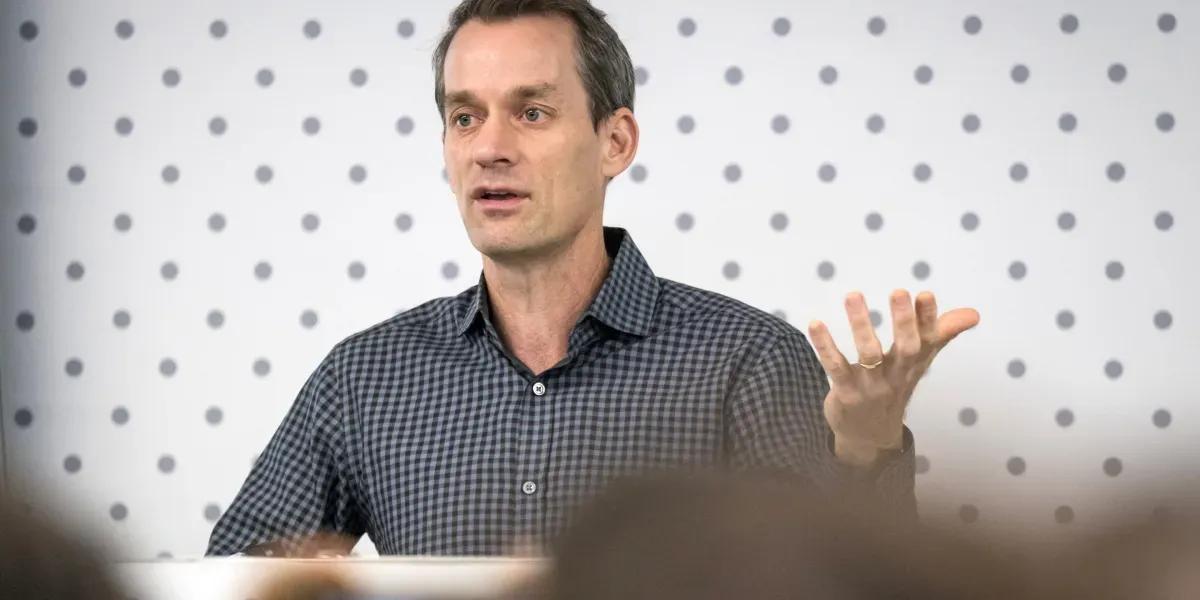
Jeff Dean, who recently departed Google after 27 years, delivered a surprising message to Gen Z at the 2026 Frontier & Pioneer Symposium: stop trying to master AI
1
. In his first public appearance since leaving the tech giant, the former Google chief scientist advocated for broad exploration over deep specialization. His departure sent shockwaves through Wall Street, with Alphabet shares dropping 3.9% and wiping out nearly $190 billion in market capitalization in a single day3
.
Source: Fortune
Dean's advice for Gen Z centers on strategic breadth rather than exhaustive depth. "I often tell students it's better to skim 10 papers than to read one in detail because you then get 10 points in your cloud of what might be possible," he explained
1
. He went further, suggesting students should skim research papers across 100 abstracts to identify connections between important ideas that haven't yet been linked. This approach to interdisciplinary thinking represents a fundamental shift from traditional academic methods that emphasize mastery of narrow domains.Dean's philosophy extends beyond learning strategies to scientific discovery itself. He outlined a framework for selecting research problems that balances ambition with practicality. Problems requiring 20 years without a clear path forward are too ambitious, while two-year problems may be too obvious to yield major breakthroughs
1
. "The perfect shape of a problem that you want to work on in a reasonably long-term manner [is] like five years or something," Dean advised, encouraging experimentation with approaches that might fail.This methodology reflects Dean's decades at Google AI, where he served as head from 2018 to 2023 before becoming Google's chief scientist until 2026
2
. The 58-year-old, who holds a Ph.D. in computer science from the University of Washington, is now cofounder and CEO of DiscoveryLoop, an AI company focused on accelerating scientific and engineering discovery1
.
Source: Entrepreneur
Despite concerns about job displacement, Dean remains optimistic about AI's potential to expand human capability. He envisions AI putting Ph.D.-level expertise across multiple domains into everyone's hands. "By building models that are really good at understanding many many different domains of science and engineering you can get Ph.D.-level expertise in a model across many different domains," Dean explained
1
. This perspective positions AI as a tool for empowerment rather than replacement, enabling people to solve problems previously beyond their reach.Dean's optimism stands in contrast to warnings from other prominent researchers. Geoffrey Hinton, often called the "Godfather of AI," has cautioned that companies may use the technology to replace employees, potentially causing large-scale job losses while concentrating wealth among technology owners
2
. Dean, however, emphasizes positive applications in healthcare and education, arguing that "the vast majority of the uses of these models is incredibly positive for the world"1
.Related Stories
The AI community remains divided on the technology's trajectory. Demis Hassabis, Nobel laureate and chairman of Google DeepMind, has predicted a "new golden era of discovery" within 10 to 15 years, forecasting AI-driven breakthroughs in healthcare, energy, and space exploration that could enable humanity to "travel the stars and explore the galaxy"
1
. Elon Musk has made even bolder claims, suggesting AI advancement will make goods so abundant that money won't matter for retirement planning1
.Yet skepticism persists. Dario Amodei, CEO of Anthropic, acknowledged on X that AI promises have begun sounding hollow to the public. "At this point, saying that AI will cure cancer is more a cliche than it is inspiring, and most people think it is deceptive," Amodei admitted, adding that "the most accurate criticism of AI companies including Anthropic is that we haven't yet delivered on our big promises to benefit the world"
1
. This reality check highlights the gap between AI's potential and its current real-world impact, a challenge Dean's new venture DiscoveryLoop aims to address through practical scientific applications.Summarized by
Navi
19 Aug 2025•Technology

19 Jun 2025•Technology

11 Jun 2026•Business and Economy

1
Policy and Regulation

2
Technology

3
Technology