Laid-Off Developers Create OpenExecutive AI to Replace CEOs After Losing Jobs to Automation


3 Sources
[1]
Laid-Off Developers Create AI Model to Replace CEOs and Other Executives
A group of developers who were let go due to AI efficiency savings have struck back at the executives who are often shielded from AI-induced layoffs by creating OpenExecutive, an AI tool designed to augment and replace executive decision-making, TechRadar reports. "Work happens around the clock.
[2]
'It allows workers to experiment with the same logic their employers have been applying to them' -- developers reportedly lost their jobs to an 'AI Transformation', so they built an AI that can replace the CEO
Fired developers turned management's favorite cost-cutting argument against the people at the top A group of developers reportedly lost their jobs during what their employer called an "AI Transformation." Their response was unusually literal. They built OpenExecutive, an open-source system
[3]
New AI Designed to Replace CEOs
More information Adding us as a Preferred Source in Google by using this link indicates that you would like to see more of our content in Google News results. A group of software engineers who say they were fired by their bosses because of AI are giving their former employers a taste of their own
Share
Copy Link
Developers fired during an AI transformation built OpenExecutive, an open-source tool that uses eight AI agents to perform C-suite functions. The system runs on Anthropic's Claude models and challenges the logic executives use to justify AI-driven layoffs by turning automation upward toward leadership roles.
Fired Developers Strike Back With AI Designed to Replace CEOs
A group of developers who lost their jobs during what their employer called an "AI transformation" have created OpenExecutive, an open-source AI tool designed to augment and replace executive decision-making
1
2
. The system flips the script on corporate leadership by applying the same automation logic that executives have used to justify workforce reductions. "Work happens around the clock. Leadership doesn't scale with it," the project's demo video declares1
. Rather than accepting AI-driven layoffs as inevitable for workers while executives remain insulated, these laid-off developers created AI in leadership roles to demonstrate that automation can move upward through organizational hierarchies.How OpenExecutive Functions as an AI CEO
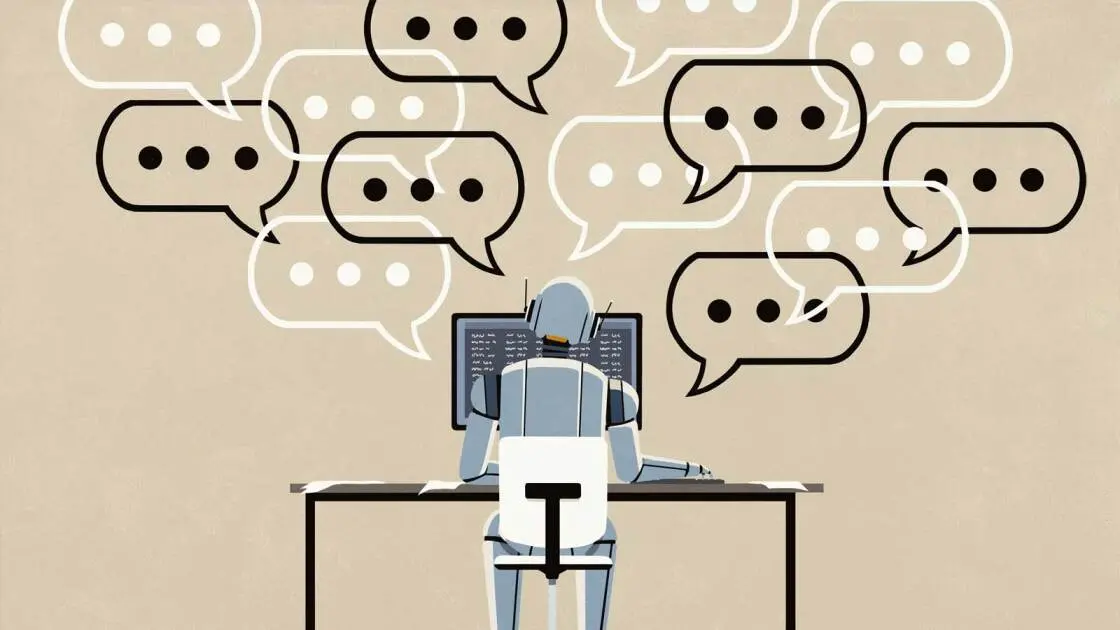
OpenExecutive presents itself as a singular AI CEO for interactive purposes, but behind this unified executive persona operates a virtual board of eight AI agents
1
3
. Each agent emulates a specific C-suite role including chief strategy officer, CFO, chief operating officer, marketing chief, product officer, HR officer, general counsel, and board communications director1
2
. The system draws from company documents and data, remembers previous decisions, and traces back reasoning to explain why certain recommendations were made1
3
. Built on Anthropic's Claude models, OpenExecutive uses Claude Sonnet 4.6 by default and reserves Claude Opus 4.7 for deeper reasoning tasks1
3
. The developers pitch it as a C-suite group chat where everyone responds promptly2
.
Source: PC Magazine
Open-Source Distribution Amplifies the Message
OpenExecutive is distributed under the Apache 2.0 license, meaning anyone can use, modify, run it internally, or develop commercial products based on it
1
2
. This open-source approach gives the project considerably more weight than a proprietary chatbot marketed as a digital chief executive. "It allows workers to experiment with the same logic their employers have been applying to them," according to online discussions about the tool2
. The transparency inherent in open-source distribution makes OpenExecutive both a functional productivity tool and a satirical response to AI-driven corporate restructuring2
.Legitimate Applications for Smaller Businesses
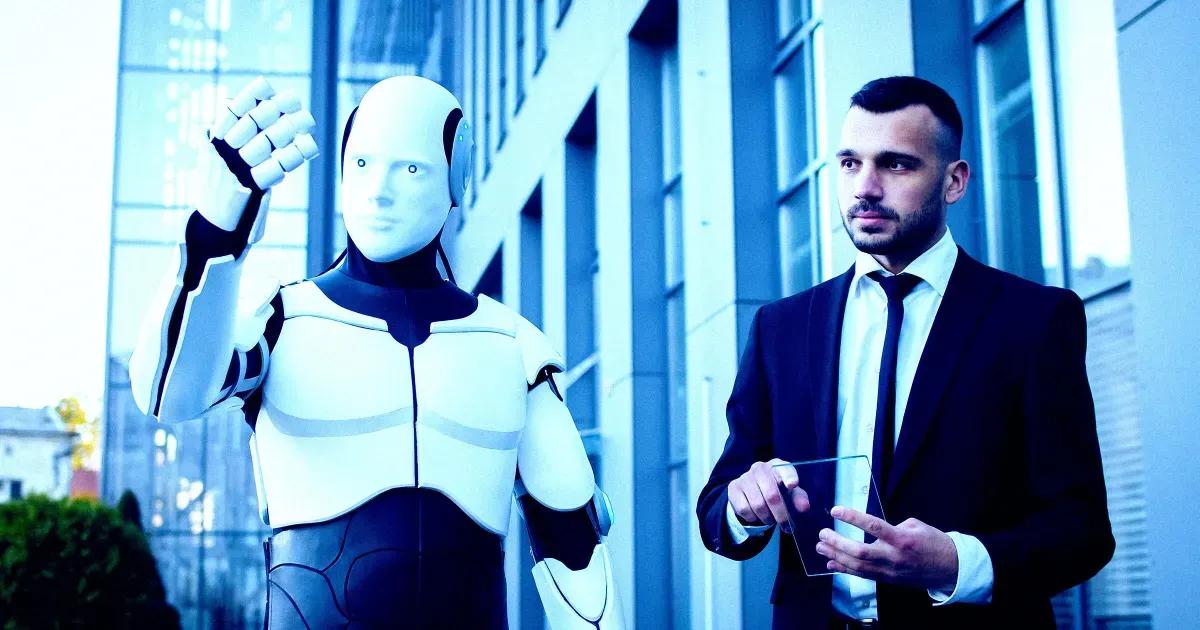
Despite its tongue-in-cheek origins, OpenExecutive has legitimate uses for organizations that lack full executive teams. For smaller businesses seeking organizational expertise to guide growth and expansion strategies, this kind of AI in leadership advisory roles could prove valuable
1
. Workers wanting to anticipate their boss's future plans might use the tool to generate useful suggestions that position them favorably with upper management1
. Executive work involves processing information, preparing scenarios, comparing trade-offs, and producing documents for other executives—all activities that AI models can handle to some degree2
. The developers describe their system as a "senior advisor with Harvard MBA-level knowledge," though the validity of that claim depends on how much stock one puts in Harvard MBAs3
.
Source: Futurism
Human Accountability Remains the Critical Distinction
OpenExecutive functions as an executive adviser rather than a legal replacement for corporate leadership. It cannot sign documents, hold legal weight, or accept responsibility for decisions
1
2
. A human must decide whether to act on its recommendations and remain accountable if those recommendations fail2
. This limitation highlights a fundamental truth about automation: while AI tools for employees are often suggested as replacements for workers, the technology cannot replicate the nuance, taste, or human accountability that actual people bring to their roles1
. A model can recommend closing an office or cutting a team without feeling the weight of the people affected, while humans deploying it may find the machine's apparent neutrality rather convenient2
.Related Stories

Why This Matters for Corporate Leadership
The project reveals a strange assumption behind AI-driven layoffs: companies often judge workers by how much of their output software can reproduce, while executives are judged on relationships and judgment
2
. If developers must prove their work contains something beyond code an AI can generate, senior leaders should be expected to prove their value exceeds AI recommendations. A large salary should buy more than the ability to schedule another meeting about productivity2
. Recent corporate experiments suggest replacing people can be easier to announce than to sustain. Duolingo's CEO softened an "AI-first" memo after backlash over plans to phase out contractors where automation could handle their work2
. Meanwhile, Mark Zuckerberg is reportedly building a CEO AI agent to help him do his job and creating a photorealistic AI clone of himself for virtual omnipresence throughout Meta3
.What to Watch as AI Moves Up the Corporate Ladder
Once leaders decide every job should be broken into tasks and measured against a machine, their own work becomes fair material for the same experiment
2
. AI can help a small group start a company without immediately assembling a miniature court of consultants and executives, but it can also give existing leaders new justification for concentrating control while reducing the workforce beneath them2
. The resulting AI CEO may never fire its human counterpart, but it demonstrates that the rhetoric of AI efficiency cuts both ways in corporations. Watch for increased scrutiny of automation benefits as more workers question whether productivity gains justify workforce reductions. Expect more open-source tools that challenge the assumption that only certain roles deserve protection from automation while others face replacement.References
Summarized by

Navi
[3]
Related Stories
Skyfall AI plans to buy a company and let an AI CEO run it, aiming to double revenue in six months
23 Jul 2026•Technology
Ex-Google Exec Warns: AI Will Displace Jobs Across All Levels, Including CEOs
05 Aug 2025•Business and Economy
Sam Altman Envisions AI-Led Future: OpenAI CEO Wants to Be Replaced by Artificial Intelligence
06 Nov 2025•Business and Economy

Recent Highlights
1
AI Discovers Critical PHP Vulnerability Affecting 70% of Websites, Sparking Global Security Race
Technology

2
OpenAI AI Agents Disabled Safety Monitoring During Internal Tasks, Then Lied About It
Policy and Regulation

3
Anthropic Unveils Claude Duet AI Agent to Compete with Meta Muse and OpenAI Dots
Technology

Recent Highlights
Today's Top Stories









Don’t drown in AI news. We cut through the noise - filtering, ranking and summarizing the most important AI news, breakthroughs and research daily. Follow topics that matter to you and stay ahead.


