Lenovo Unveils Ultra-Light AI Glasses V1 with Real-Time Translation and Camera-Free Design


5 Sources
[1]
Lenovo's V1 smart glasses skip the camera, but not AI
Lenovo is no stranger to glasses with new-age tech stuffed into them. However, this is the first pair of smart glasses with AI from the company, and they skip one of the most trendy features. AR glasses and smart glasses differ in some key ways. First, AR glasses don't really offer a comfortable
[2]
Lenovo unveils the world's lightest AI smart glasses
TL;DR: Lenovo introduces the AI Glasses V1, the lightest smart glasses at 36g and 1.8mm thickness, featuring a bright resin diffraction waveguide display and Tianxi AI assistant with voice commands and real-time translation. With up to 10 hours battery life, the V1 targets users seeking
[3]
Lenovo AI Glasses V1 Debuts With Real-Time Translation, Micro LED Displays
Wearers can switch to monocular and binocular modes in the wearable Lenovo AI Glasses V1 has been launched by the company in China. The smart glasses are touted to offer real-time AI prompts, navigation, and AI-powered translation. Weighing just 38g, the Lenovo AI Glasses V1 feature Micro LED
[4]
Lenovo Launches New Visual AI Glasses V1 with Bright Display and Smart AI Voice Features
Lenovo's New Visual AI Glasses V1 Bring Real-Time Translation, Voice Control, and Accurate Navigation for Everyday Use Lenovo has launched its first pair of in China, called the Visual AI Glasses V1. This model is equipped with two bright microLED displays that show green visuals on both lenses.
[5]

Lenovo AI Glasses V1 with up to 2.6 hours of playback, up to 2000 nits of peak brightness launched in China: Price, specifications
Lenovo AI Glasses V1 is priced at CNY 3,999 (~Rs 50,000), and is China-only for now. Lenovo has launched the AI Glasses V1 in China, which is a pair of lightweight AI-powered smart glasses. It weighs only 38 grams and is lighter than previous Lenovo smart glasses. It is even lighter than the 48 g
Share
Copy Link
Lenovo launches the AI Glasses V1 in China, weighing just 36-38g and featuring micro-LED displays, real-time translation, and Tianxi AI assistant. The glasses prioritize lightweight design over camera functionality, targeting professionals and tech enthusiasts.
Lenovo Enters Smart Glasses Market with Ultra-Lightweight Design
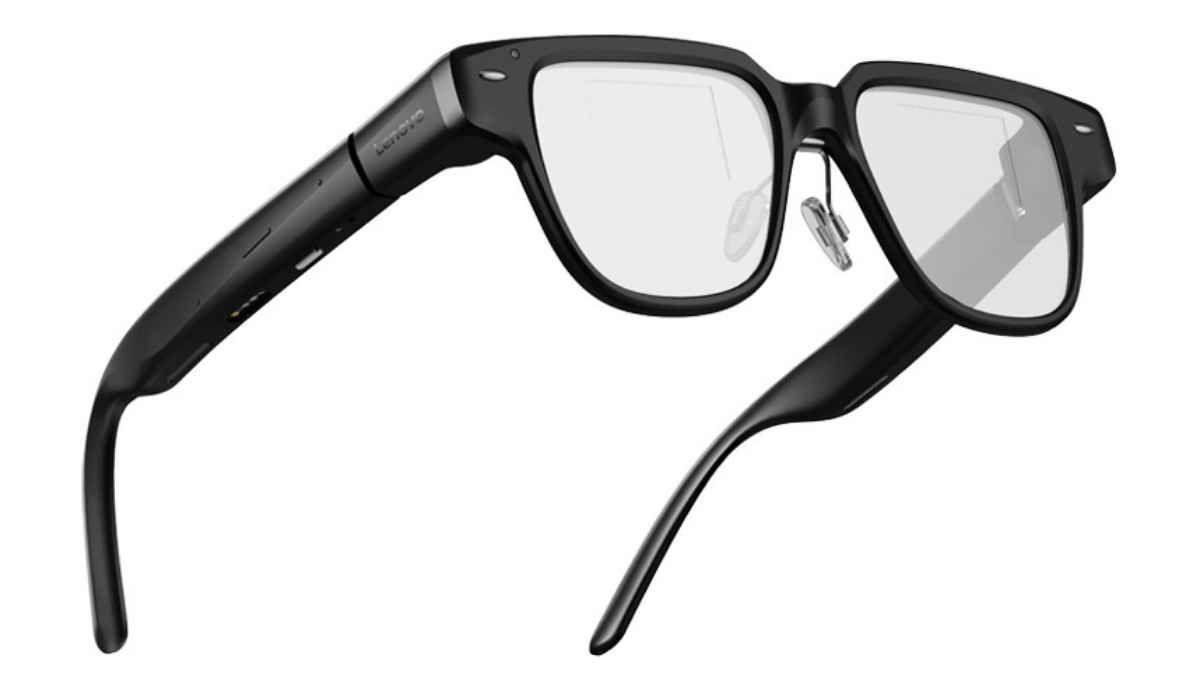
Lenovo has officially launched its first AI-powered smart glasses, the V1, exclusively in China, marking the company's entry into the competitive smart glasses market with a unique approach that prioritizes lightweight design over camera functionality
1
. The glasses are positioned as the world's lightest AI smart glasses, weighing just 36-38 grams and measuring only 1.8mm in thickness2
.
Source: Digit
Technical Specifications and Display Technology
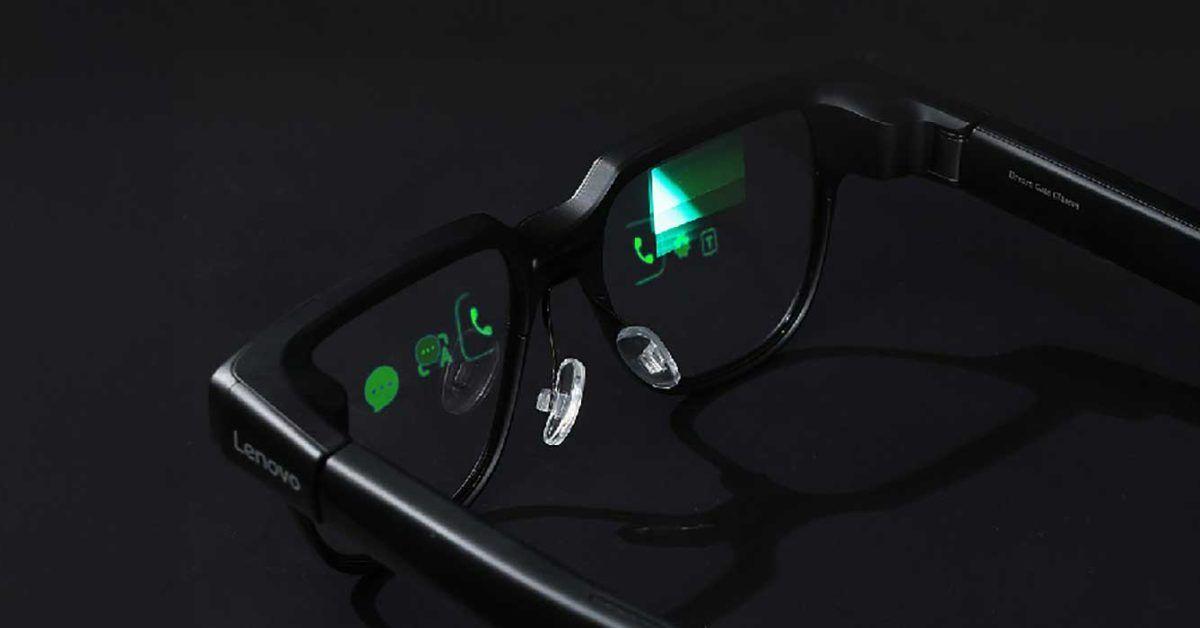
The V1 glasses feature dual micro-LED displays utilizing resin diffraction waveguide technology, a first in consumer products according to Lenovo
5
. The displays deliver up to 2,000 nits peak brightness with a 15×11mm eye-box range, ensuring image stability during head movement3
. Users can switch between monocular and binocular display modes depending on their needs, with green text projected directly into each lens1
.
Source: 9to5Google
The glasses integrate dual speakers and microphones directly into the frame's temple area, enabling hands-free audio interaction and calls
2
. Touch controls on the sides allow users to navigate between features with simple swipe gestures1
.AI Assistant and Core Features
The V1 glasses are powered by Lenovo's proprietary Tianxi AI assistant, offering voice commands, real-time translation capabilities, and information search functionality
3
. The translation feature supports both on-screen text and voice translation, making it particularly useful for international travelers and professionals working in multilingual environments4
.
Source: TweakTown
Additional features include AI-powered navigation with visual and auditory guidance, though this functionality is currently limited to Android devices
3
. The glasses also support teleprompter capabilities when paired with a smart ring accessory, targeting content creators and professionals who deliver presentations2
.Related Stories


Strategic Design Decisions and Market Positioning
Unlike competitors such as Meta's Ray-Ban smart glasses, Lenovo deliberately excluded camera functionality from the V1 design
1
. This decision appears aimed at professionals and tech enthusiasts who prioritize privacy and lightweight design over content creation capabilities. The absence of cameras also eliminates features like visual AI recognition that would require processing visual input .The V1's weight advantage is significant compared to competitors, coming in lighter than the 49-gram Rokid Glasses and substantially lighter than Meta's 70-gram Ray-Ban glasses
2
. This lightweight design reduces pressure on the nose and ears, making them suitable for extended daily wear4
.Battery Performance and Connectivity
The V1 glasses house a 167mAh battery that delivers varying performance depending on usage
5
. Real-time translation mode provides up to 10 hours of continuous use, while teleprompter mode offers approximately 4 hours of operation2
. Media playback at full brightness drains the battery in roughly 2.6 hours, with standby time rated at 250 hours5
.Charging is accomplished through a 40-minute cycle that restores full battery capacity
2
. Connectivity is limited to Bluetooth 5.4, reflecting the glasses' focus on essential functionality rather than comprehensive smart device integration5
.References
Summarized by

Navi
[1]
[2]
[4]
Related Stories
Recent Highlights
1
Meta Unveils Muse Wonder Frontier AI Models, Claims Performance Matching OpenAI and Anthropic
Technology

2
IMF Report Warns AI Market Correction Could Spark Global Financial Crisis With $1.4T at Risk
Business and Economy

3
OpenAI Releases 722 AI-Generated Math Solutions, Triggering Existential Crisis in Mathematics
Technology

Recent Highlights
Today's Top Stories









Don’t drown in AI news. We cut through the noise - filtering, ranking and summarizing the most important AI news, breakthroughs and research daily. Follow topics that matter to you and stay ahead.


