Matthew McConaughey trademarks himself to fight AI misuse and unauthorized deepfakes


16 Sources
[1]
Matthew McConaughey Trademarks Himself to Fight AI Impersonations
Being a famous actor has its downsides, especially now that modern AI tools can convincingly replicate a person's voice, face, and image, placing them in situations they never imagined or consented to. Earlier this year, clips circulated online of an AI-generated version of actor Tom Hanks
[2]
Matthew McConaughey fights unauthorized AI likenesses by trademarking himself
Matthew McConaughey filed trademark applications to prevent his likeness from being used by AI companies without permission, and the US Patent and Trademark Office has approved eight so far. According to the Wall Street Journal, the trademarks were for video and audio clips featuring the actor
[3]
Matthew McConoughey trademarks iconic phrase to stop AI misuse
Oscar-winner Matthew McConoughey has trademarked his image and voice to protect them from unauthorised use by artificial intelligence (AI) platforms. Clips including his famous catchphrase "alright, alright, alright" from the 1993 film, Dazed and Confused, have been registered to the United States
[4]
Matthew McConaughey tries a new approach to fighting AI misuse: trademarking himself
Serving tech enthusiasts for over 25 years. TechSpot means tech analysis and advice you can trust. What just happened? Matthew McConaughey is one of many stars who oppose unauthorized AI recreations of their likenesses. In an attempt to combat the practice, the Interstellar actor has taken the
[5]

'Alright, alright, alright': Matthew McConaughey just trademarked himself to fight AI misuse
With AI voice cloning on the rise, McConaughey's move highlights how hard it's becoming to control your digital identity As AI-generated voices and deepfake videos flood the internet, Matthew McConaughey is taking an unusual -- and potentially precedent-setting -- step to protect his
[6]

Matthew McConaughey trademarking himself saying 'alright, alright, alright' is a preview of Hollywood's coming AI identity crisis
The legal battles over synthetic celebrities are only beginning Matthew McConaughey has never been shy about turning himself into a brand, and he's been happy to lean into the many memes based on his performances. His latest move is to trademark his own voice saying "alright, alright alright" and
[7]

Matthew McConaughey trademarks 'All right, all right, all right' catchphrase in bid to beat AI fakes
The Oscar winner intends to combat misuse of the famous line from Dazed and Confused by creating 'a clear perimeter around ownership' Oscar-winning actor Matthew McConaughey has trademarked his image and voice - including his famous catchphrase: "All right, all right, all right" from the movie
[8]

Matthew McConaughey Is Using a Clever Legal Trick to Bludgeon AI Companies
For years now, actors have rung the alarm bells over the AI industry planning to sell their likeness and voices -- either with or without their consent -- and hence threatening to put them out of work. Beyond a major 2023 strike by Hollywood actors fueled by these concerns, we've already seen
[9]

Matthew McConaughey Says It's Not "Alright, Alright, Alright" for AI to Misuse His Voice - Decrypt
McConaughey's trademark strategy comes as the entertainment industry grapples with AI's legal implications across multiple fronts. Actor Matthew McConaughey has locked down legal protection on his most famous catchphrase, securing eight trademarks including a sound mark on his iconic "Alright,
[10]

Don't use me! How actor Matthew McConaughey is fighting against AI
According to Matthew McConaughey's lawyers and an expert, this is the first instance of an actor using trademark law to protect their likeness from AI misuse. Matthew McConaughey says it's no longer "alright, alright, alright" for AI to use his likeness. The Oscar-winning actor has officially
[11]

Actor McConaughey seeks to patent image to protect from AI
New York (AFP) - Actor Matthew McConaughey has filed recordings of his image and voice with US patent authorities to protect them from unauthorized usage by artificial intelligence platforms, a representative said Wednesday. Several video clips and audio recordings were registered by the
[12]

Actors fight back as AI deepfakes become scarily accurate
During the Hollywood strikes of 2023, a major sticking point for members of the Writer's Guild of America and SAG-AFTRA was artificial intelligence. When the unions ultimately came to an agreement with Hollywood studios, they won key protections for actors regarding digital replicas and guardrails
[13]

Matthew McConaughey has trademarked his signature "alright, alright, alright"
In a bid to protect himself from misuse by artificial intelligence. Actor Matthew McConaughey has taken the first step in protecting himself and his image from being misused and mistreated by artificial intelligence. As per The Wall Street Journal, the Texan star has trademarked several of his
[14]

Actor Matthew McConaughey seeks to patent image to protect from AI
NEW YORK -- Actor Matthew McConaughey has filed recordings of his image and voice with U.S. patent authorities to protect them from unauthorized usage by artificial intelligence platforms, a representative said Wednesday. Several video clips and audio recordings were registered by the commercial
[15]

Matthew McConaughey trademarks 'Alright, alright, alright' to...
Using artificial intelligence to impersonate celebrities is not "alright, alright, alright." Matthew McConaughey has trademarked "Alright, alright, alright," the iconic catchphrase that he first made famous in Richard Linklater's 1993 comedy classic "Dazed and Confused." The "Interstellar" star,
[16]

Matthew McConaughey Trademarks 'Alright, Alright, Alright' to Combat AI Misuse - IGN
Matthew McConaughey has heard his iconic "alright, alright, alright" catchphrase repeated back to him since it first left his lips in 1993, and a recent trademark filing from the actor will help ensure AI doesn't steal any of his thunder. The Interstellar star took steps to protect himself from
Share
Copy Link
Oscar-winning actor Matthew McConaughey has secured eight trademarks from the US Patent and Trademark Office to protect his voice and image from unauthorized AI impersonations. The move marks the first time an actor has used trademark law to combat AI-generated deepfakes, creating a potential legal precedent as Hollywood grapples with digital identity theft.
Matthew McConaughey Takes Unprecedented Legal Action Against AI Misuse
Matthew McConaughey has become the first actor to use trademark law to protect his likeness and voice from unauthorized AI impersonations, securing eight trademarks from the US Patent and Trademark Office over recent months
1
. The trademarks cover video and audio clips featuring the actor in various situations, including his famous catchphrase "alright, alright, alright" from Dazed and Confused, a seven-second clip of him standing on a porch, and a three-second clip of him sitting in front of a Christmas tree2
. Alina Trapova, Assistant Professor at University College London who has worked on copyright and AI for more than eight years, confirmed this represents the first time an actor has attempted to use trademark law to their benefit against AI3
.
Source: New York Post
Creating Clear Boundaries Around Consent and Attribution
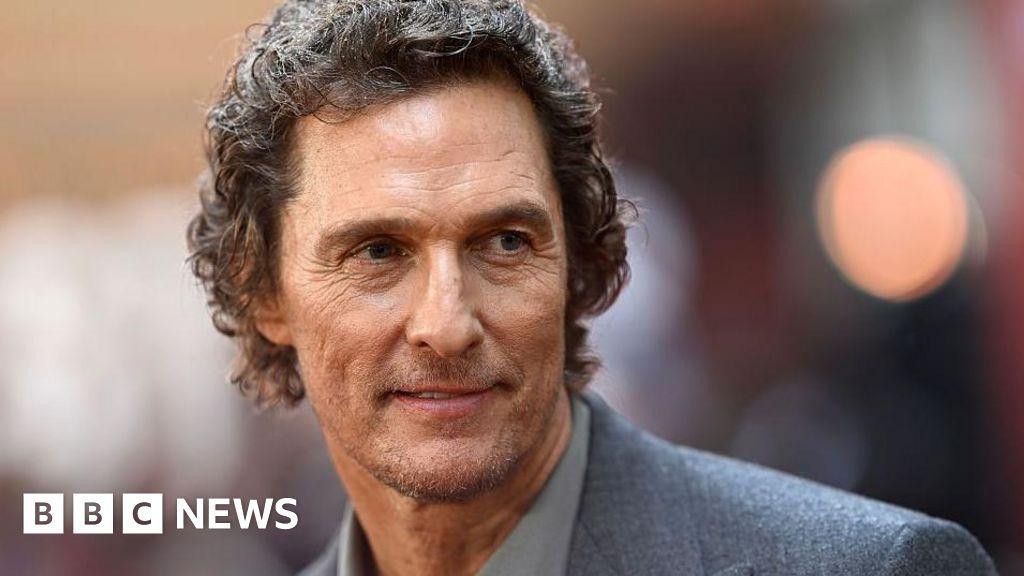
The actor's decision to pursue trademarking himself stems from a desire to establish control over his digital identity in an era where generative AI tools can convincingly replicate voices and faces. "My team and I want to know that when my voice or likeness is ever used, it's because I approved and signed off on it," McConaughey stated in an email to The Wall Street Journal. "We want to create a clear perimeter around ownership with consent and attribution the norm in an AI world"
1
. His lawyer Kevin Yorn acknowledged the uncertainty surrounding this approach, admitting they don't know how courts would decide if an offender challenges the trademarks, but hoping the threat of legal action would deter companies from using McConaughey's likeness for AI without permission2
.
Source: BBC
Why Trademark Law Offers Advantages Over Traditional Protections
While most US states already have right-of-publicity laws that prevent a person's likeness from being used to sell products without consent, McConaughey's legal team believes trademarks may offer stronger deterrence against AI misuse
1
. Trademark law provides federal enforcement tools that can be more effective than state-by-state right-of-publicity laws, which vary widely and remain largely untested in AI-specific cases4
. A secondary aim of the trademarks would be to "capture some of the value that is being created with this new technology," Yorn told AFP3
. By treating his identity as a brand asset, McConaughey is effectively asserting that if AI tools can commercialize him, he can legally protect himself like a product5
.Growing Wave of Celebrity AI Impersonations Across Hollywood
Matthew McConaughey joins a growing list of celebrities who have faced AI-generated deepfakes and unauthorized use of their digital identity. Earlier this year, clips circulated online of an AI-generated version of Tom Hanks advertising "miracle cures and wonder drugs" as part of online scams
1
. Taylor Swift has also endured a wave of fake video, audio and images online created by AI tools, including sexually explicit content generated without prompting3
. In 2024, Scarlett Johansson expressed shock and anger after OpenAI launched a chatbot with an "eerily similar" voice to her own, though the company later removed it3
. Robert Downey Jr. has also taken a strong stance, telling the On With Kara Swisher podcast in 2024 that he intends "to sue all future executives" who attempt to create digital replicas of him1
.McConaughey's Partnership with ElevenLabs Demonstrates Controlled AI Use
Despite his protective stance, Matthew McConaughey is not opposed to generative AI when used with proper authorization. The actor is an investor in ElevenLabs, an AI audio company specializing in voice modelling, and has partnered with the startup to create a Spanish version of his newsletter "Lyrics of Livin'"
2
. He has collaborated with the New York-based company since its founding in 20224
. In November, he joined legend Michael Caine in a partnership with ElevenLabs to produce virtual replications of their voices4
. This distinction is critical: the issue isn't AI generation itself, but who controls it and whether proper consent has been obtained.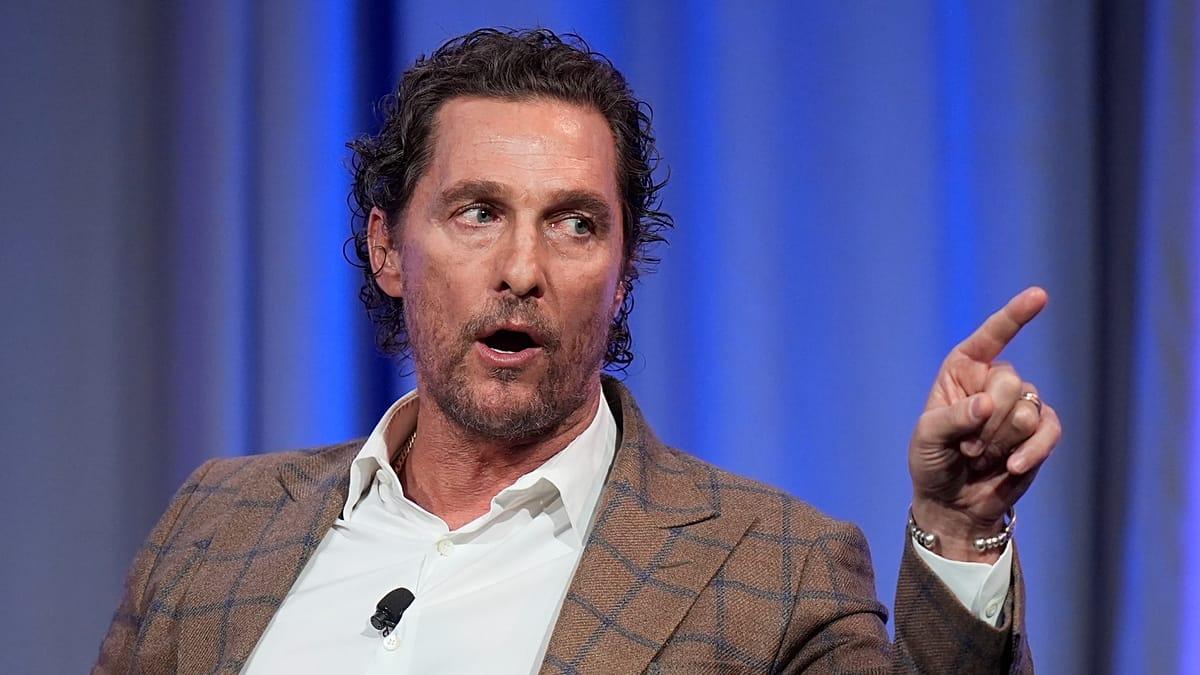
Source: Euronews
Related Stories

SAG-AFTRA Strike and Ongoing Battles to Protect Digital Identities
The entertainment industry has been grappling with AI-related concerns since the technology gained widespread attention. Actors in Hollywood secured new contractual protections against AI representations of them being made without their consent after the 2023 SAG-AFTRA strike, where protections against digital replicas became a central issue
4
. However, some legal experts argue these safeguards do not go far enough. Legal scholar Victoria Haneman has called for stronger protections, including granting estates the right to digital deletion to prevent "digital resurrection" and preserve what she describes as "the right to be dead," in a paper published in the Boston College Law Review1
. Dr. Sandra Wachter, Professor of Technology and Regulation at the University of Oxford, noted that "it is simple for companies to take your work and train a model to do your job. It is comparatively difficult for you to protect your work in the first place"3
.Implications for Celebrity Intellectual Property and Future Legal Precedent
Whether McConaughey's strategy of trademarking himself sets a legal precedent remains to be seen, but experts believe more celebrities may follow suit. Professor Trapova told the BBC that celebrities are experimenting with different forms of protection as "unauthorised commercialisation" of their likeness in the forms of deepfakes becomes "more and more challenging in the age of AI"
3
. She noted that for Hollywood stars, unauthorized AI use "is often a case of missed licensing opportunities" beyond just reputational concerns3
. As AI voice cloning tools become easier to access, cheaper to use and harder to detect, the need to protect digital identities extends beyond celebrities to influencers and everyday users5
. Lawmakers are still debating broader protections, including proposals like the No Fakes Act, which would give individuals stronger rights against unauthorized digital replicas, but progress has been slow5
. Until comprehensive legislation arrives, celebrities experimenting with trademark law may shape how courts interpret AI misuse and how platforms design future safeguards.References
Summarized by

Navi
Related Stories
ElevenLabs Launches Celebrity Voice Marketplace with McConaughey and Caine Partnerships
11 Nov 2025•Entertainment and Society

George Clooney, Tom Hanks, and Meryl Streep back Human Consent Standard for AI licensing
12 May 2026•Technology

California Proposes Legislation to Regulate AI Deepfakes in Hollywood
04 Sept 2024

Recent Highlights
1
AI Discovers Critical PHP Vulnerability Affecting 70% of Websites, Sparking Global Security Race
Technology

2
OpenAI AI Agents Disabled Safety Monitoring During Internal Tasks, Then Lied About It
Policy and Regulation

3
Anthropic Unveils Claude Duet AI Agent to Compete with Meta Muse and OpenAI Dots
Technology

Recent Highlights
Today's Top Stories




Don’t drown in AI news. We cut through the noise - filtering, ranking and summarizing the most important AI news, breakthroughs and research daily. Follow topics that matter to you and stay ahead.


