RAM Prices Double as AI Demand Creates Severe Memory Shortage Across Computing Industry


6 Sources
6 Sources
[1]
How Is Low-Cost Computing Handling Memory Price Hikes?
Low cost electronics, like this Raspberry Pi 5 with 8GB of RAM, are especially vulnerable to effects of the ongoing memory shortage. It's no secret that demand for AI hardware has increased demand for computer memory. Industry analyst TrendForce expects the contract price for memory to increase by up to 95 percent in the first quarter of 2026, and that comes after similarly aggressive changes through the second half of 2025. The burden of the surging price has fallen with particular weight on low-cost computing companies like Raspberry Pi. The Raspberry Pi 5, with 16 gigabytes of RAM, has nearly doubled in price from US $120 in November 2025 to $205 today. Framework, a company that makes highly configurable and repairable laptops, has announced two rounds of memory price hikes. Others, such as Orange Pi, have made no official comment, but the price of an Orange Pi 5B with 16 GB of RAM has surged from $160 at the start of 2025 to $312 today. "If you have a product that's relatively low cost, the memory is going to be a relatively large portion of it," says Raspberry Pi CEO Eben Upton. Most Raspberry Pi computers of a particular model have the same board design and equip the same hardware -- except for the memory, which can be upgraded to suit the user's needs. With little else to differentiate them, Raspberry Pi has to pass increased memory costs on to customers. The situation is worsened by the way memory is produced. "Generally, you have a single fungible pool of manufacturing capacity in DRAM that you can use to do anything. It can be used to make commodity DRAM, DDR, LPDDR, or you can use it to make HBM [the type most commonly used for AI hardware]," explains Upton. That means low-cost computer manufacturers are competing for the same pool of supply as AI hardware giants. And with the world's most valuable tech companies spending billions on AI infrastructure, low-cost computer manufacturers have little hope to negotiate the price. Larger computer manufacturers can mitigate the memory price shock by negotiating larger or longer contracts in exchange for lower prices, or by tolerating a lower profit margin. Others are rumored to have stocked up on memory as prices surged. RELATED: How and When the Memory Chip Shortage Will End But these strategies aren't available to companies that sell computers at low price points or in lower volumes. The lower price of these computers means there's not much margin to absorb a price increase. Companies like Raspberry Pi also purchase in lower volumes, which means it's difficult to negotiate a volume discount. It's a perfect storm for low-cost computing and one that, in contrast to 2025's U.S. tariff hikes, has led to immediate and unavoidable problems. While tariffs did place some pressure on price for low-cost computers, that pressure wasn't uniformly felt. Raspberry Pi, which manufactures its computers in the United Kingdom, found itself in a better position than those that manufactured in China. The memory price increase, on the other hand, applies to all companies in this industry, no matter where or how manufacturing takes place. Companies that build PCs with removable memory are turning toward a bring-your-own-memory approach. Framework offered this option before memory prices increased, but several specialty desktop manufacturers have recently announced similar bring-your-own-RAM options. However, this isn't possible for many low-cost computers, including those from Raspberry Pi, because they solder the memory to the mainboard. Instead, Raspberry Pi is using a different strategy. A new iteration of the Raspberry Pi 4 Model B moved from a single memory module to a dual-module configuration. "As you can generally buy smaller RAM more easily than larger RAM, we can use a pair of back-to-back modules instead of a single larger one. You have more vendor diversity, more vendor flexibility," Upton says. He expects the current pricing will remain the same, but the change provides more options when looking to source memory in the future. Of course, there's another strategy all low-cost computing companies can use. They can simply offer less memory. Raspberry Pi introduced a version of the Raspberry Pi 5 with 1 GB of RAM in December 2025. It debuted at $45 and was the only Raspberry Pi 5 model to avoid the February price increase. Raspberry Pi was among the first to do this, and in retrospect the decision looks like the canary in the coal mine. Analysts predict that price-constrained devices, such as budget smartphones, will soon be forced to cut memory or raise prices (and possibly both). While this has yet to happen with brands well-known in North America, there are hints of it in budget phones from brands that are popular internationally. Poco recently added a less expensive 4 GB version of the M7 Plus 5G smartphone and the new Honor X6d smartphone will ship with 4 GB of memory to start, a downgrade from the preceding Honor X6c, which had 6 GB. Both Poco and Honor are based in China. So, when will memory prices come down or, at least, stop rising? Upton expects the timing to be similar to past memory price cycles, which means it's likely to last for at least a few years. "Memory will be expensive this year. It will probably be expensive next year," he said, adding that he'd be "a little bit surprised" if price increases have not leveled off into 2028. In any case, he cautioned against being too sure of the future. During the chip shortage of 2021 through 2023, companies and consumers worried that inexpensive logic chips were a thing of the past, but the situation eventually returned to normal. "Like all bubbly phenomena, it's very hard to measure."
[2]
HP says RAM now accounts for more than a third of its PC costs
The cost of PC components has been skyrocketing as AI infrastructure buildout creates extraordinary demand amid limited supply. HP says that squeeze is now hitting PC memory especially hard, with RAM now accounting for 35 percent of a system's overall cost. "We did share last quarter that memory and storage costs made up roughly 15 percent to 18 percent of our PC bill of materials, and we now currently estimate this to be roughly 35 percent for the year," said CFO Karen Parkhill on the company's . She also confirmed that part of the company's response will be price increases. Samsung of potential price increases due to AI-induced memory shortages. Higher prices have unfortunately for PC shoppers, especially in 2026, and the is playing a major role. HP interim CEO Bruce Broussard that while he "believe the market will rationalize over time" the company is doing its best to add new suppliers as well as expand lower cost-sourcing for memory. HP executives also said they are seeing stronger AI PC demand, saying 35 percent of HP's PC sales are coming from AI PCs. This comes as the industry is seeing mixed signals, like Dell saying that consumers about AI PCs.
[3]
RAM prices keep going up -- what is RAMageddon, and why is it getting worse?
It's AI's world now, and we're just living in it. If you've looked to upgrade your laptop, add memory to your PC, or even want to pick up a new games console in recent months, you'll no doubt have noticed prices are higher than ever. RAMageddon is here, and consumer RAM has climbed hundreds of percent due to a push to empower our future AI overlords. That means just about everything tech-wise has been affected, but why? And how? We're here to clear up the situation, show you your options, and dive deep into what's been affected. RAM pricing crisis: Top stories What's happening? * A DRAM chip oligopoly controls around 95% of production * A huge influx of demand from AI and data center companies has caused a drought * That's spiking the price for consumers, as business customers have more money to throw around My colleague Jason England explained it best when comparing the current RAM market to an apple orchard (no, it's not a new product from the Cupertino firm). DRAM is the key ingredient for just about anything RAM-wise, and those are the apples in this metaphor. Three main orchards are growing these crunchy, technological apples: Samsung Electronics, SK Hynix, and Micron Technology. Between the three of them, they cover the 'apples' for around 95% of the world. All of a sudden, however, huge firms want as many apples as they can get their hands on. The likes of OpenAI, Microsoft, Google, and more are looking to power AI models that require huge amounts of resources, including those shiny apples. Essentially, those orchards are shipping apples as soon as they're ready to pick, and they can't turn down the mammoth orders from Big Tech Apple Pie makers. That means you or I, more casual apple enjoyers, are left hungry, or forced to pay over the odds for an apple or two. Earlier this month, Lenovo North America President Ryan McCurdy said "If the infrastructure is critical in the next three, six, 12 months, and the pricing sensitivity is high, then we get into a scenario where we're acting quickly because essentially the current stock that is at our distributors and at our partners [has] some of the most attractive product pricing that will exist for the next six to 12 months." In short, if you need RAM, it's probably a good idea to buy it sooner rather than later. Why are prices skyrocketing? * Supply & demand -- AI and data centers have been the leading force behind the massive surge in demand * That leaves this DRAM chip oligopoly in a position to charge whatever they want for the very limited consumer supply Leaving the fruit analogy behind, consumers and non-AI manufacturers are essentially working to snap up as much of the pie as they can. That's become a lot harder as one orchard closed its doors to consumers, with Crucial (part of Micron) no longer shipping to them. They might not even be alone in that regard, reducing the options (and availability) open to end users that can't invest millions or billions in buying units en masse. Naturally, the companies that do have RAM to sell can name their own price, knowing consumers don't really have much of an option other than to pay it if they're desperate. What tech will be impacted? * PC components like RAM, SSDs and GPUs, and PCs as a whole * Laptops * Games consoles * Phones * Tablets Oh boy, here's the trouble. DRAM is essentially included in, well, anything in terms of modern technology. It began with the obvious: PC components. CyberpowerPC and Maingear announced that memory prices were surging and that consumers would need to pay more by December 2025, while Framework wasn't far behind. Apple has long charged significant sums to improve RAM in its Mac lineup, but it's not just computers. Tablets and phones will be affected, too, but spare a thought for the likes of Valve. The company's Steam Deck is facing stock shortages, but the company behind the likes of Half-Life and Counter-Strike was also poised to launch a new home console/PC hybrid in 2026, the Steam Machine, which is now delayed due to RAM shortages and pricing. While Nintendo Switch 2 squeaked out ahead of the RAM crisis, the Japanese company has been caught up in it, too, and potentially PlayStation. Bloomberg reports that the Switch 2 and the PS5 could see price increases, while Microsoft has already had some of its own in recent months on its Xbox hardware and services. The ongoing RAM crisis could also delay the PS6 and next Xbox. How long will this last? * When production capacity is expanded in a few years * Or until the AI bubble bursts -- whichever comes first There are suggestions that the shortage could run until 2028 (from Micron itself), prompting suggestions that older, slower DDR4 RAM could be poised to make a comeback. We could even see proposed AI features in Windows and Mac laptops rolled back as machines begin shipping with less RAM. There's a chance supply gets closer to meeting demand, but it's too soon to say. Micron has reportedly committed to building a new DRAM facility, but it won't be open until 2028. It's costing the company almost $10 billion, though, so don't expect many other similar facilities to pop up. On the other hand, it feels as though public perception is starting to change on AI usage. Could that mean there's less need for AI, that consumers are beginning to lose interest, or that its environmental impact is becoming more obvious? OpenAI has made $1.5 trillion in chip commitments, while Reuters reports the company has made $12 billion in annual revenue this year. Could we be left with a lot of apples left to rot if AI isn't the future many (including shareholders) are expecting? According to one analyst on X (formerly Twitter), SK Hynix, a semiconductor manufacturer, suggested memory prices will climb throughout 2026, but that customers are aware that "double-ordering" will only lead to future price increases. Outlook As much as AI feels like a limited-term bubble, it's hard for tech enthusiasts and the general population not to feel more than a little deflated. We're marching towards lining the pockets of a small few, while giving up environmental and financial stability. It's easy to feel jaded, but this kind of crisis feels a little unprecedented. We'll just have to see how things shake out in the meantime. More from Tom's Guide Follow Tom's Guide on Google News and add us as a preferred source to get our up-to-date news, analysis, and reviews in your feeds.
[4]
HP says the memory chip crunch isn't going anywhere soon - and also warns of PC sales slump
* HP says memory accounts for around 35% of the cost of a PC, up from 15-18% in one quarter * The company, and analysts, expect volatility to continue for some time yet * HP consumer devices are still selling strong, but Canalys anticipates costly impacts HP has revealed the cost memory now accounts for around one-third (35%) of its PC bill of materials, up from around 15-18% last quarter, making a seriously sharp increase. And worse still, the company is expecting memory chip price volatility to continue well into next year, largely driven by demand for AI data center components which is straining consumer supply. Looking ahead, HP expects the RAM's percentage in the bill for PCs to rise before it stabilizes or decreases, spelling out potential knock-on price increases for consumers. HP says computer memory is getting more expensive To mitigate some of the price hikes, HP has secured long-term supply agreements and qualified new suppliers to diversify its supply. And even though the company blames AI for pushing costs up, it's also using AI in its supply chain planning to cut costs across areas like logistics. The company is combining multiple approaches, including increasing end costs and reconfiguring devices, to retain healthy margins and not to pass on such sharp price hikes to consumers. HP Interim CEO Bruce Broussard praised strong Personal Systems performance including "continued momentum in AI PCs." The company posted a 6.9% year-over-year increase in quarterly revenue. Personal Systems (PS) revenue rose 11%, with Consumer PS revenue up 16% and Commercial PS revenue up 9%. HP isn't alone in feeling the pinch, though, as the entire industry gears up to absorb or pass on increasing costs. "Demand for conventional DRAM is surging alongside HBM as AI inference workloads scale, driving an exceptional short-term price rally," Omdia Senior Principal Analyst Lino Jeng noted. A separate Omdia post hints at a potential decline in the semiconductor market, had AI not stepped in and created such a surge. Looking ahead, Omdia's researchers predict continued "supply-side pressures" and "cost increases being passed through to customers" following 40% to 70% rises in PC memory and storage costs throughout calendar 2025. Follow TechRadar on Google News and add us as a preferred source to get our expert news, reviews, and opinion in your feeds. Make sure to click the Follow button! And of course you can also follow TechRadar on TikTok for news, reviews, unboxings in video form, and get regular updates from us on WhatsApp too.
[5]

HP warns: RAM now costs 35% of a PC's total build
HP reported that RAM now represents 35 percent of a PC's total cost during its latest earnings call. The company attributed this surge to high demand for AI infrastructure and constrained component supply. CFO Karen Parkhill presented the figures, noting a rapid escalation in memory expenses. HP confirmed it will implement price increases to offset these rising costs. The company also reported that 35 percent of its PC sales are now AI PCs. CFO Karen Parkhill detailed the sharp increase in memory costs during the call. "We did share last quarter that memory and storage costs made up roughly 15 percent to 18 percent of our PC bill of materials, and we now currently estimate this to be roughly 35 percent for the year," Parkhill stated. This figure represents a doubling or near-doubling of memory's contribution to the overall system cost within a single quarter. The escalation reflects the intense demand for memory modules required by AI workloads. HP's response to this financial pressure involves direct price adjustments for its products. Samsung has also issued warnings regarding potential price increases for its components. The company cites AI-induced memory shortages as the primary driver for these anticipated hikes. This aligns with HP's experience, suggesting a broader industry trend affecting major memory suppliers and PC manufacturers. The limited supply of memory chips is a direct consequence of the global buildout of AI infrastructure, which consumes vast amounts of high-bandwidth memory. This scarcity impacts the entire PC manufacturing ecosystem. HP interim CEO Bruce Broussard addressed the market conditions, stating he "believe the market will rationalize over time." Despite this long-term outlook, HP is taking immediate action to secure its supply chain. The company is actively working to add new suppliers to its roster. HP is also expanding its lower-cost sourcing strategies for memory components. These measures aim to mitigate the impact of current shortages and high prices on the company's operations and profitability. Consumer behavior regarding AI PCs presents conflicting data across the industry. HP executives noted that 35 percent of the company's PC sales are now AI PCs, indicating significant demand in their specific market segment. Conversely, Dell has stated that consumers do not really care about AI PCs. This divergence highlights mixed signals within the PC market regarding the commercial viability and consumer interest in AI-integrated hardware. The differing perspectives from major manufacturers complicate the overall market assessment. The broader component market faces similar supply pressures driven by AI demand. Companies like Micron have adjusted their business strategies in response. Micron abandoned its consumer brands to focus entirely on business-to-business (B2B) supply chains. This pivot prioritizes high-margin enterprise clients over the consumer market. Components like GPUs are also experiencing significant supply constraints. The intense demand for AI processing capabilities extends beyond memory to affect graphical processing units as well.
[6]

The End of Cheap Memory: Why 2026 Marks a Structural Shift in Tech Economics | Investing.com UK
Memory chips underpin every layer of the modern technology stack, yet the market that produces them has entered a period of structural constraint with no near-term resolution. The implications for companies dependent on predictable hardware access are becoming increasingly material. The global memory market has entered a period of sustained tension. Tight supply, rising prices, and multi-year procurement commitments are reshaping how technology companies plan, invest, and compete. For decades, memory chips were treated as a commodity: abundant and reliably cheap over time. Current conditions challenge that view. These developments affect not only the manufacturers who produce these chips, but every company whose growth strategy depends on predictable access to hardware. For years, the memory industry followed a predictable cycle: demand rose, capacity expanded, oversupply followed, and prices corrected. It was a framework that shaped how producers invested and how markets priced the sector. In 2026, this framework is changing. At the centre of this disruption are two chip technologies that underpin virtually every modern electronic device. The first, DRAM, or Dynamic Random Access Memory, is a device's working memory. It is what allows a laptop to multitask, a server to scale, and a modern car to function. The second, NAND Flash, is the storage technology that retains data when a device is switched off. Every photo on a smartphone, every file on a laptop, and every database in a corporate server room exists because of it. What makes this moment so far-reaching is precisely how embedded these chips have become. They are as essential to a military aircraft as to a living room television. When their supply tightens, the effects are not limited to one industry. They travel through all of them. And that supply is concentrated in the hands of just three producers: Samsung Electronics, SK hynix, and Micron, who together control roughly 90 to 95% of global DRAM production capacity. The origins of the current situation trace back to 2022 and early 2023, when a collapse in demand left manufacturers selling both chips below cost. Deep production cuts followed, and by the second half of 2023 prices had begun to recover: NAND first, then SSDs, then DRAM. Each previous cycle had its own trigger: the smartphone boom, the rise of solid-state drives, the expansion of cloud computing. Each time, the industry eventually found its footing. This time is different. The rise of artificial intelligence has introduced a category of demand the industry has never previously encountered, and one that shows no sign of plateauing. Rather than managing inventory corrections or short-term pricing rebounds, executives at Samsung Electronics, SK hynix, and Micron have pivoted to forward visibility, committed AI capacity, and long-dated capital planning. Industry leaders no longer describe this as a cyclical shortage. They call it structural, and the distinction matters. Cyclical shortages resolve themselves; structural shifts reorder the market. As Manish Bhatia, Executive Vice President at Micron, stated, the industry is facing "the most significant disconnect between supply and demand, in magnitude and time horizon, that we have seen in a quarter century." Markets have drawn their own conclusions. Micron's shares rose from around $102 at the start of 2025 to a peak of $455 in January 2026, a gain of over 340% in twelve months. SK hynix delivered returns of approximately 145% across the same period. Such performance suggests that markets view the current imbalance as more than a temporary dislocation. Memory markets are entering a different phase of demand formation. AI infrastructure is materially increasing memory intensity per system, altering the balance between supply, pricing, and capital allocation across the industry. The dominant force behind this transition is the scale of memory embedded in modern AI systems. Artificial intelligence models are trained and deployed on clusters of high-performance GPUs, each of which requires large volumes of high-speed memory positioned directly alongside the processor. As model size and computational complexity increase, memory requirements rise proportionally. Nvidia's (NASDAQ:NVDA) Blackwell architecture integrates up to 192 gigabytes of memory per chip, and a single rack of AI servers can contain more than 13 terabytes. By contrast, a high-end personal computer typically operates with around 32 gigabytes of memory, and a smartphone with 8 to 12 gigabytes. AI systems therefore consume multiples of the memory used in traditional end-markets, even before accounting for the scale of deployment. This intensity matters because AI infrastructure is being built in concentrated, industrial-scale increments. When hyperscalers expand a data centre, they are not adding thousands of devices, but entire clusters of memory-dense systems at once. Each incremental buildout translates into a step-change in memory demand. Demand is therefore embedded in long-term infrastructure expansion rather than short-term consumer refresh cycles, giving this driver structural weight within the industry. If AI has structurally increased memory demand, the next question is how supply is responding. At the advanced end of the DRAM market, including HBM production, capability remains confined to Samsung Electronics, SK hynix and Micron. While Chinese suppliers such as CXMT and YMTC account for an estimated 5-10%, largely in lower-end segments, they do not currently possess the advanced HBM capabilities required for leading AI systems. In this structure, capacity allocation is decisive. A central development has been the expansion of High Bandwidth Memory, or HBM, which is required for advanced AI accelerators. HBM is built differently from conventional DRAM. Instead of arranging memory dies side by side, manufacturers stack multiple layers vertically, typically 12 to 16 layers, and connect them through through-silicon vias. This design allows data to move much faster, which is essential for AI processors. The manufacturing process is complex and capacity-intensive. Producing one bit of HBM effectively displaces several bits of conventional DRAM output. By 2026, HBM is expected to account for roughly 25% of total DRAM wafer production, with demand growing around 70% year-on-year. At the same time, hyperscaler expansion has translated into forward capacity reservations. Large AI initiatives have secured substantial portions of future DRAM wafer output under multi-year agreements, tightening availability for traditional end markets. This strategic reallocation comes at the expense of traditional DRAM and NAND used in PCs, smartphones, and automotive applications. Micron has scaled back parts of its consumer PC exposure to preserve server capacity. Samsung has announced the discontinuation of MLC NAND Flash, with final deliveries expected in 2026, and analysts anticipate a contraction of more than 40% in global MLC NAND capacity. Given that more than 95% of market share is concentrated among three producers, and that advanced manufacturing capabilities are limited outside this group, pricing and allocation decisions remain highly centralised. The shortage is therefore amplified not only by rising demand, but by deliberate capital reorientation within a technically constrained oligopoly. Even if producers wished to increase output rapidly, the structure of the industry constrains how fast this can happen. Memory manufacturing is among the most capital-intensive segments of the semiconductor industry. Constructing a new fabrication facility typically requires $10-20bnin investment and at least two to three years before meaningful production begins. After completion, additional time is required to ramp yields and reach stable output. These timelines matter because capacity decisions are made years in advance. Supply cannot be increased in small increments, nor can advanced production lines be easily converted between product categories without further capital expenditure and engineering work. Planned expansions from Samsung and SK hynix are expected to come online between 2027 and 2028, but these facilities will also require ramp-up periods and are largely oriented toward advanced nodes. In the near term, they do not materially ease current constraints. The result is limited elasticity. Demand has accelerated, capacity is concentrated, and expansion requires years. The imbalance persists not only because of allocation decisions, but because the industry cannot scale quickly enough to restore equilibrium. Beyond AI-driven demand and capacity reallocation, the memory supply chain is also exposed to volatility in commodities and raw materials. Semiconductor production relies on metals such as copper for interconnects, gold and silver in bonding, palladium for contacts, and gallium and germanium in certain advanced components. Geopolitical tensions and export restrictions have increased uncertainty around the cost and availability of some of these inputs. While metals are not the main driver of memory pricing, swings in commodity markets can add cost pressure and further limit supply flexibility in an already tight environment. When capacity is constrained, even secondary input risks can intensify broader supply-demand imbalances. The immediate response has been to secure available memory. Hyperscalers lock in future supply via multi‑year deals with Samsung, SK Hynix, and Micron, with much production already sold HBM is sold out for 2026. DRAM prices are set to rise 50-55% this quarter versus Q4 2025. OEMs like Acer, HP, and Dell are diversifying suppliers, including Chinese makers CXMT and YMTC. Manufacturers design multigeneration hardware (DDR4/DDR5) and optimise software memory use to extend inventories. 8 GB on an Apple M3 MacBook can match 16 GB elsewhere, highlighting efficiency over sheer volume. The strategy focuses on securing supply, spreading risk, and using memory efficiently, rather than quickly fixing shortages. Medium-term solutions expand industrial capacity. Micron is expanding its manufacturing footprint with new fabrication facilities in Singapore and Taiwan (2027), followed by a US site in New York (2030). SK Hynix is also increasing capacity, with additional facilities planned in South Korea (2027) and the US (2028). Samsung launches new lines in South Korea (2028). These $10bn+ projects aim to reduce East Asia dependence and improve resilience but lead times of 2-4 years mean relief would not arrive before 2027-2028. Geopolitical tensions, export limits, and industrial policies continue to fragment supply chains, keeping costs high. Long-term stability needs geographic diversification, redundancy, nearshoring, strategic stockpiles, and memory recycling. Acts like CHIPS and European Chips Act target reduced reliance on South Korea and Taiwan. Analysts expect supply shortages to gradually ease by 2027-2028. However, pricing is likely to remain elevated, supported by sustained AI-driven demand and rising capital intensity. Memory was once a component. It is now a strategic, capital-intensive asset in an economy built on data. What it becomes next will depend on which companies and governments move fastest to control it.
Share
Share
Copy Link
HP reports that RAM now accounts for 35 percent of a PC's total cost, doubling from 15-18 percent in just one quarter. The dramatic surge stems from AI infrastructure buildout consuming vast memory supplies, leaving consumer electronics manufacturers scrambling. Industry analysts predict memory price increases up to 95 percent through early 2026, affecting everything from budget computers to gaming consoles.
HP Reveals RAM Now Represents 35 Percent of PC Costs
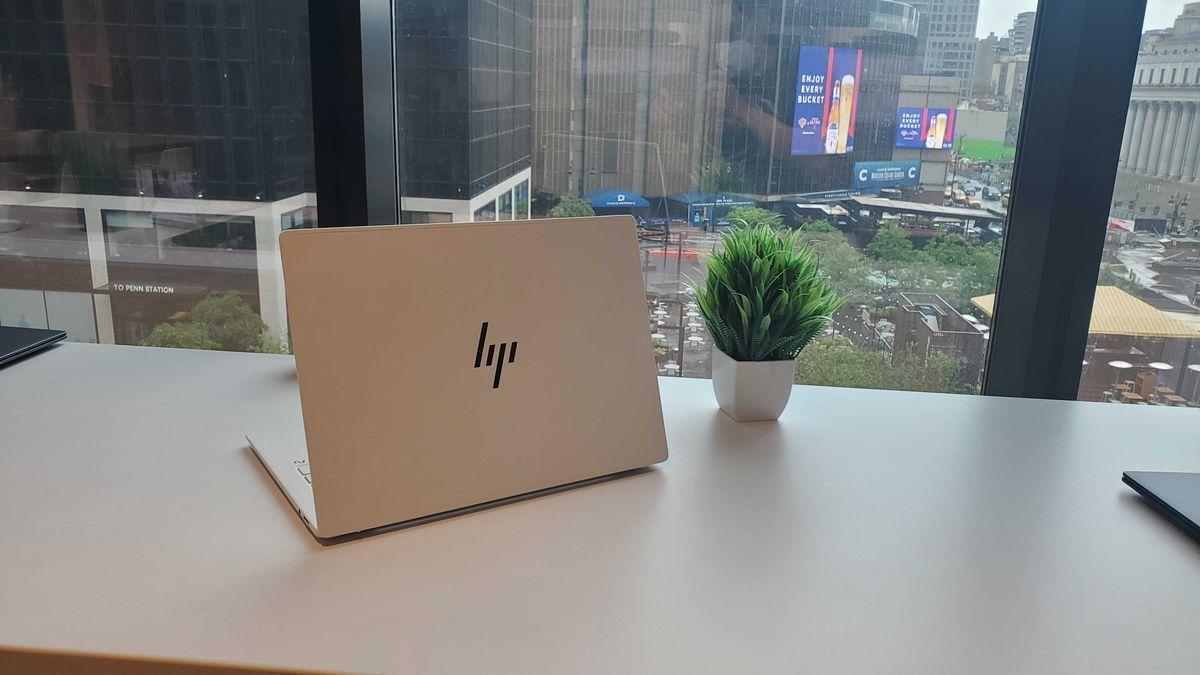
The rising cost of PC components has reached a critical threshold as HP disclosed that RAM prices now account for 35 percent of its PC bill of materials, a dramatic escalation from 15-18 percent reported just last quarter
2
5
. CFO Karen Parkhill confirmed this sharp increase during the company's earnings call, attributing the surge to high demand for AI infrastructure and constrained component supply. HP interim CEO Bruce Broussard acknowledged the strain but expressed confidence that "the market will rationalize over time," while simultaneously announcing the company would implement price increases and expand lower-cost sourcing for memory components4
.
Source: TechRadar
Memory Shortage Driven by AI Infrastructure Demand
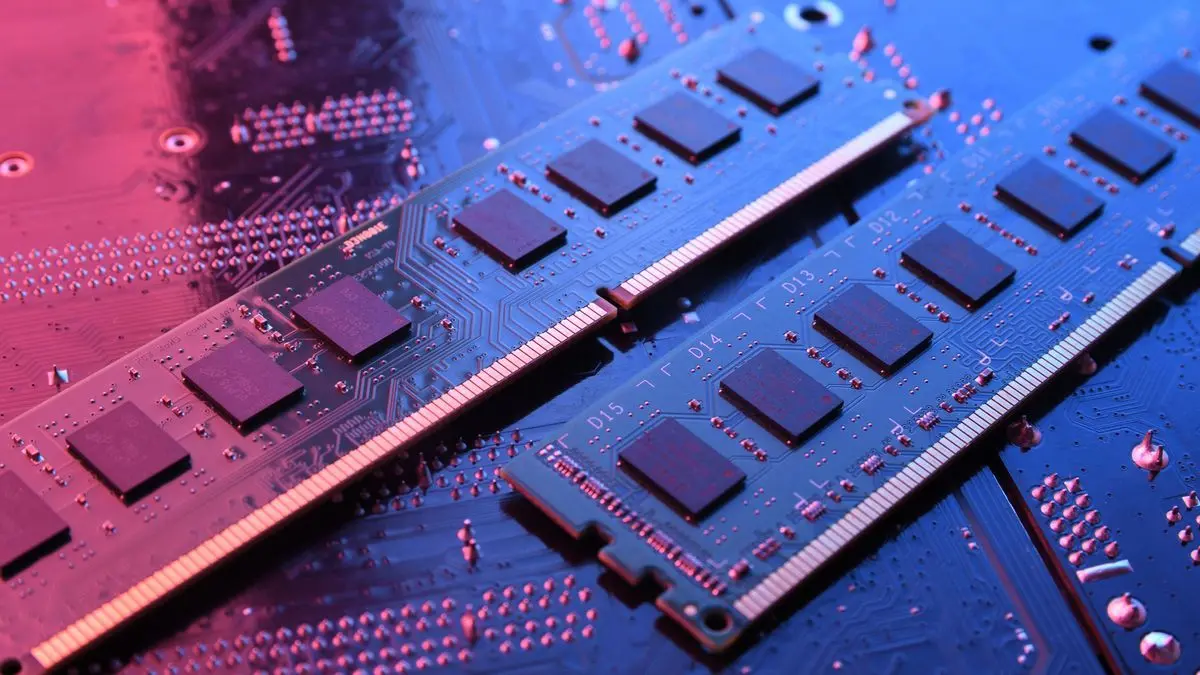
The memory chip crunch stems from an unprecedented surge in AI demand, with tech giants like OpenAI, Microsoft, and Google consuming massive quantities of memory modules to power AI models and data centers
3
. Industry analyst TrendForce expects contract prices for memory to increase by up to 95 percent in the first quarter of 2026, following similarly aggressive changes through the second half of 20251
. The issue is compounded by DRAM production dynamics, where a single fungible pool of manufacturing capacity serves both commodity memory and high-bandwidth memory (HBM) used in AI hardware. As Raspberry Pi CEO Eben Upton explains, this means low-cost computing manufacturers compete directly with AI hardware giants for the same supply pool1
.
Source: Tom's Guide
RAMageddon Hits Low-Cost Computing Hardest
The memory price hikes have fallen with particular weight on low-cost computing companies like Raspberry Pi, Framework, and Orange Pi. The Raspberry Pi 5 with 16 gigabytes of RAM nearly doubled in price from $120 in November 2025 to $205 today, while Orange Pi 5B with 16 GB surged from $160 at the start of 2025 to $312 currently
1
. Framework announced two rounds of memory price hikes, and specialty desktop manufacturers have pivoted to bring-your-own-memory approaches. However, this strategy isn't viable for devices like Raspberry Pi that solder memory directly to the mainboard. The situation, dubbed "RAMageddon" by industry observers, affects consumer electronics across the board—from budget smartphones to gaming consoles3
.
Source: IEEE
DRAM Oligopoly Controls Supply Amid Price Volatility
Three major manufacturers—Samsung Electronics, SK Hynix, and Micron Technology—control approximately 95 percent of global DRAM production, creating an oligopoly that can essentially name its own price during shortages . Samsung has issued warnings about potential price increases due to AI-induced memory shortages, while Micron abandoned its consumer brands entirely to focus on business-to-business supply chains
5
. Omdia Senior Principal Analyst Lino Jeng noted that "demand for conventional DRAM is surging alongside HBM as AI inference workloads scale, driving an exceptional short-term price rally"4
. HP expects price volatility to continue well into next year, with memory's percentage in the bill of materials likely to rise further before stabilizing.Related Stories

Industry Adapts with Reduced Memory Configurations
Facing the component market crisis, manufacturers are pursuing multiple strategies to manage costs. Raspberry Pi introduced a 1 GB version of the Raspberry Pi 5 at $45 in December 2025, which became the only model to avoid February price increases
1
. The company also redesigned the Raspberry Pi 4 Model B to use dual smaller memory modules instead of a single larger one, providing more vendor diversity and flexibility in the supply chain. Analysts predict that price-constrained devices like budget smartphones will soon be forced to cut memory or raise prices. Early signs appear in international markets, where Poco added a 4 GB version of the M7 Plus 5G and Honor X6d launched with 4 GB instead of the predecessor's 6 GB1
. HP reported that 35 percent of its PC sales now come from AI PCs, though Dell has stated consumers don't really care about AI PCs, highlighting mixed signals in the market .Long-Term Outlook and Market Implications
The memory shortage could persist until 2028 according to projections from Micron itself, potentially delaying next-generation gaming consoles like the PS6 and next Xbox while prompting suggestions that older DDR4 RAM could make a comeback
3
. Lenovo North America President Ryan McCurdy warned that current stock at distributors and partners has "some of the most attractive product pricing that will exist for the next six to 12 months," advising consumers to purchase sooner rather than later3
. Omdia researchers predict continued supply-side pressures with cost increases being passed to customers following 40 to 70 percent rises in PC memory and storage costs throughout 20254
. The crisis affects not just PCs but tablets, phones, and gaming hardware, with Bloomberg reporting potential price increases for Nintendo Switch 2 and PS5. Valve's Steam Machine launch has been delayed due to RAM shortages and pricing pressures3
. Whether relief comes from expanded production capacity in coming years or from a potential AI bubble burst remains uncertain, but the immediate impact on consumer electronics pricing is undeniable.References
Summarized by

Navi
[4]
[5]
Related Stories
AI Boom Triggers Memory Shortage, Pushing PC and Smartphone Prices Up 23% by Fall 2026
29 Jan 2026•Business and Economy

AI Demand Triggers Component Shortage as Dell and Lenovo Plan 15% Price Increases for Servers
03 Dec 2025•Business and Economy

AI Demand Drives RAM Prices to Record Highs as Memory Shortage Threatens Device Market in 2026
23 Dec 2025•Business and Economy
Recent Highlights



Recent Highlights
Today's Top Stories








Your Daily Dose of Curated AI News
Don’t drown in AI news. We cut through the noise - filtering, ranking and summarizing the most important AI news, breakthroughs and research daily. Spend less time searching for the latest in AI and get straight to action.

