Mercedes-Benz Partners with Wayve to Deploy AI Driver in Production Cars Within 2 Years


5 Sources
[1]
Mercedes-Benz aims to close AI gap with China rivals through Wayve deal
Mercedes-Benz has struck a partnership deal with Wayve, the London-based autonomous driving start-up, as the German premium brand seeks to close an AI technology gap with Tesla and software-focused Chinese rivals. The deal -- Wayve's third -- is the latest effort by a traditional carmaker to keep
[2]
Mercedes-Benz is putting a British AI driver into its production cars
The deal covers point-to-point driving assistance rather than autonomy, so the person in the seat stays responsible, while Mercedes already sells a system that lets a driver look away at 95 km/h Wayve has signed a definitive production agreement with Mercedes-Benz to put its AI Driver into future
[3]
Mercedes Taps Wayve For Tesla FSD-Like System Within 2 Years
* Mercedes-Benz tapped a new supplier for advanced driver-assistance systems, the UK's Wayve. * Wayve touts an end-to-end approach to automated driving that does not require HD maps. * The companies plan to deploy a Wayve-based point-to-point driving assistant in Mercedes vehicles within two
[4]
Mercedes-Benz signs deal to put Wayve AI Driver in cars within 2 years
Mercedes-Benz has signed a definitive production agreement with British self-driving startup Wayve to build its "AI Driver" into future Mercedes vehicles, with integration starting within the next two years. It's the first time Wayve's end-to-end driving AI is going into a production car in the
[5]

Mercedes-Benz Signs Autonomous Driving Tech Deal With U.K.'s Wayve
Mercedes-Benz vehicles are set to integrate autonomous driving technology from U.K. start-up Wayve after the companies signed a production agreement Tuesday. The deal to use Wayve's AI Driver system will see the German luxury automaker start to fit the new tech in vehicles in the next two years,
Share
Copy Link
Mercedes-Benz has signed a definitive production agreement with British self-driving startup Wayve to integrate its AI Driver into production vehicles within the next two years. The deal brings end-to-end AI driving systems to the premium segment as Mercedes hedges its autonomous driving strategy across multiple technology partners.
Mercedes-Benz Wayve Partnership Brings AI Driver to Production
Mercedes-Benz has signed a definitive production agreement with London-based autonomous driving startup Wayve to integrate its AI Driver into future Mercedes vehicles within the next two years
1
2
. The deal marks the first integration of Wayve's end-to-end AI driving system in the premium automotive segment, enabling advanced urban point-to-point driving assistance across both city streets and motorways3
4
. Mercedes-Benz Chief Technology Officer Jörg Burzer emphasized that this partnership lays the foundation to roll out autonomous driving technology worldwide5
. The German automaker invested in Wayve's $1.5 billion Series D funding round in February at an $8.6 billion valuation, alongside Nissan and Stellantis1
.
Source: Electrek
How the AI-Driven Autonomous Driving System Works
Wayve's AI Driver represents what the company calls an AV2.0 approach—an embodied AI system that learns to drive from data rather than following hand-coded rules and HD maps
4
. The system operates without HD maps, geofences, or city-specific retraining, allowing it to generalize to new cities it hasn't encountered before2
. This AI-driven driver-assistance systems philosophy mirrors Tesla FSD's learned, end-to-end approach, though Wayve has added radar to its sensor suite unlike Tesla which removed it4
. Wayve integrated its software into Mercedes production architecture using the automaker's hardware, its MB.OS operating system, and its map interfaces2
. The AI-powered autonomous driving system trains on Nvidia infrastructure hosted on Microsoft Azure, demonstrating successful integration in Stuttgart, London, and San Francisco2
.Mercedes Hedges With Multiple Autonomous Driving Strategies
Mercedes-Benz is running three separate autonomous driving tech deal approaches simultaneously, revealing a hedging strategy as the automotive industry navigates uncertain paths to full autonomy
4
. The automaker already sells Drive Pilot, its Level 3 system approved for conditionally automated driving up to 95 km/h on German motorways, where drivers can turn their attention elsewhere2
. Mercedes also plans to launch its new CLA model equipped with Nvidia's open-source Alpamayo model offering Level 2+ capabilities by the end of this year1
. Now Wayve's end-to-end AI driving system adds a third path focused on urban point-to-point driving assistance. This multi-pronged approach reflects broader industry trends where traditional automakers partner with multiple technology providers across different regions while maintaining in-house development efforts1
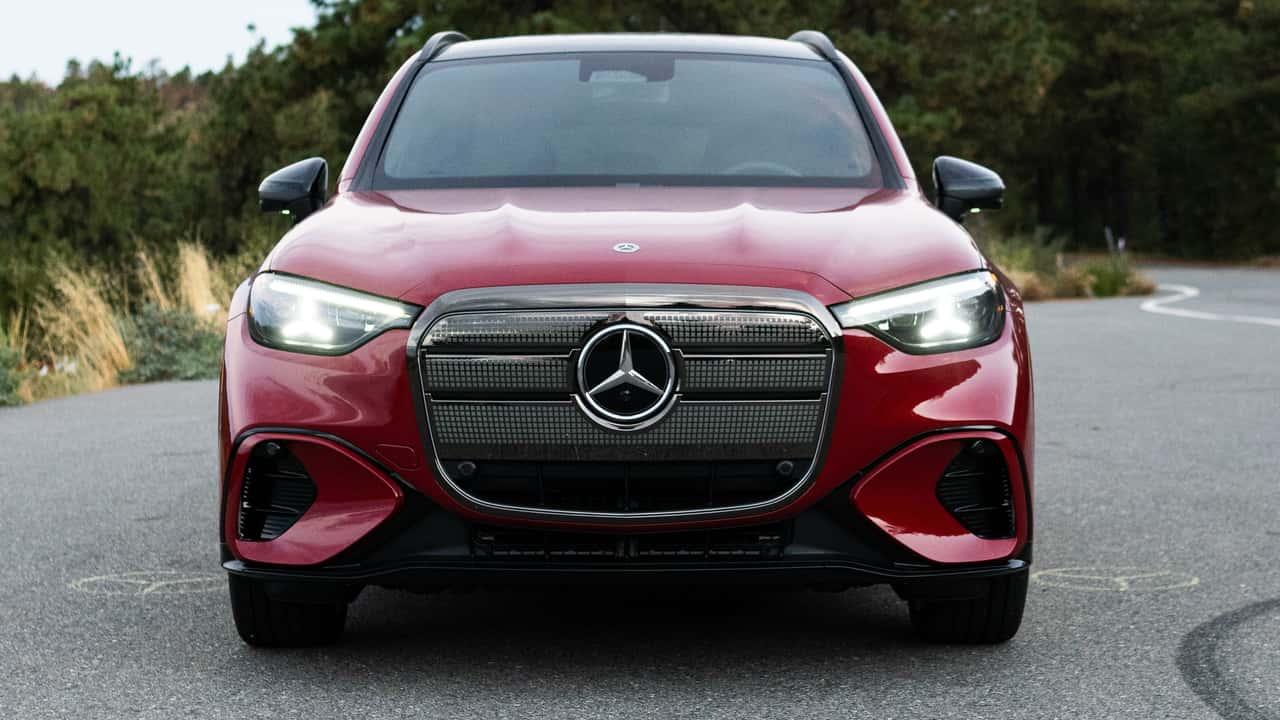
.
Source: InsideEVs
Closing the Gap With Tesla and Chinese Rivals
The Mercedes-Benz Wayve partnership addresses a pressing competitive challenge as European carmakers struggle to match the heavy investments Tesla and Chinese rivals like Xpeng are making in advanced autonomous capabilities
1
. Wayve co-founder and CEO Alex Kendall told the Financial Times that market conviction around autonomous driving has shifted dramatically, with automakers moving from skepticism a year ago to deep belief that this technology works1
. The system delivers Level 2 autonomous driving technology requiring active monitoring by a human driver, similar to Tesla's Autopilot1
. Like Tesla, Wayve's technology relies primarily on cameras and computers, making the software more affordable than systems requiring expensive lidar sensors1
.Related Stories
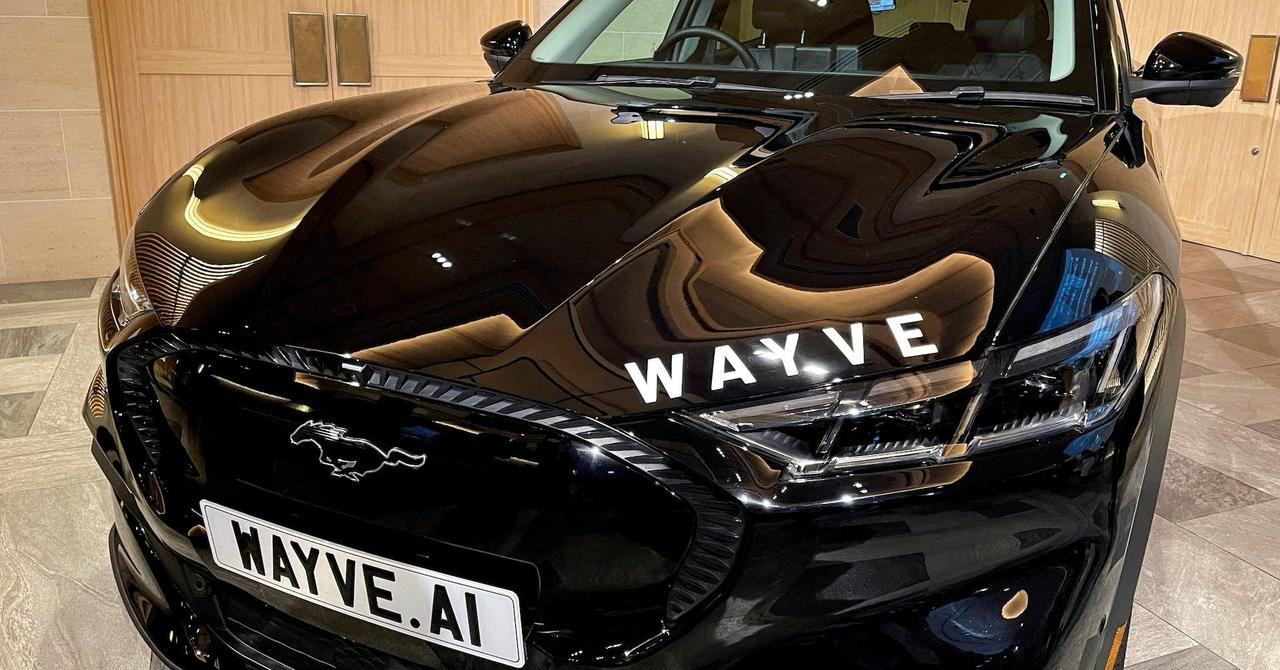
Why Automakers Choose Wayve Over In-House Development
The self-driving startup has secured partnerships with three major automakers—Mercedes-Benz, Nissan, and Stellantis—all of whom backed Wayve's $1.2 billion Series D funding round in February
1
. Wayve also counts Nvidia, Qualcomm, Microsoft, and Uber among its investors1
. Automotive engineers have been reluctant to hand over too much control of core technologies and data to tech giants, especially as software becomes the key competitive feature in vehicles1
. Wayve addresses these concerns by offering flexibility in vehicle architecture and design, allowing automakers to maintain control while accessing advanced AI capabilities1
. Kendall pushed back against black box concerns, stating that tools exist to measure performance and validate capabilities while remaining compliant with existing regulations1
. He argued that Wayve's approach will scale to a much greater degree than what a single automaker can achieve building AI themselves, ultimately making it safer1
.What This Means for the Future of Driving Assistance
The Mercedes-Benz Wayve deal signals a broader industry shift where legacy automakers increasingly buy AI-driven autonomous driving systems from specialists rather than developing everything in-house like Tesla
4
. Rivian plans to launch a point-to-point upgrade to its Autonomy+ system this year, while Toyota reportedly plans its own Level 2++ feature in 20283
. Hyundai has tapped Nvidia for Level 2+ capability while working on an in-house Atria AI system later this decade3
. However, concerns remain about liability and transparency. A former senior Nissan executive noted that rules-based self-driving systems would still be necessary for more advanced operations because the reason for an accident caused by a car using Wayve's system could not easily be identified1
. Watch for regulatory developments around learned AI systems and how quickly Mercedes can scale Wayve's technology across its vehicle lineup beyond the initial deployment within two years.References
Summarized by

Navi
[5]
Related Stories
Wayve Expands to Germany: British AI Startup Accelerates Global Autonomous Driving Ambitions
03 Mar 2025•Technology

Mercedes-Benz Drive Assist Pro brings AI-powered autonomous driving to US city streets
06 Jan 2026•Technology
Nissan Partners with UK AI Startup Wayve for Advanced Self-Driving Technology
10 Apr 2025•Technology

Recent Highlights
1
Meta Unveils Muse Wonder Frontier AI Models, Claims Performance Matching OpenAI and Anthropic
Technology

2
IMF Report Warns AI Market Correction Could Spark Global Financial Crisis With $1.4T at Risk
Business and Economy

3
OpenAI Releases 722 AI-Generated Math Solutions, Triggering Existential Crisis in Mathematics
Technology

Recent Highlights
Today's Top Stories







Don’t drown in AI news. We cut through the noise - filtering, ranking and summarizing the most important AI news, breakthroughs and research daily. Follow topics that matter to you and stay ahead.


