Meta's Muse AI Agent Could Strip $10 Billion From Apple's Services Revenue, Analysts Warn


6 Sources
[1]
How Muse could be coming next for Apple's golden goose
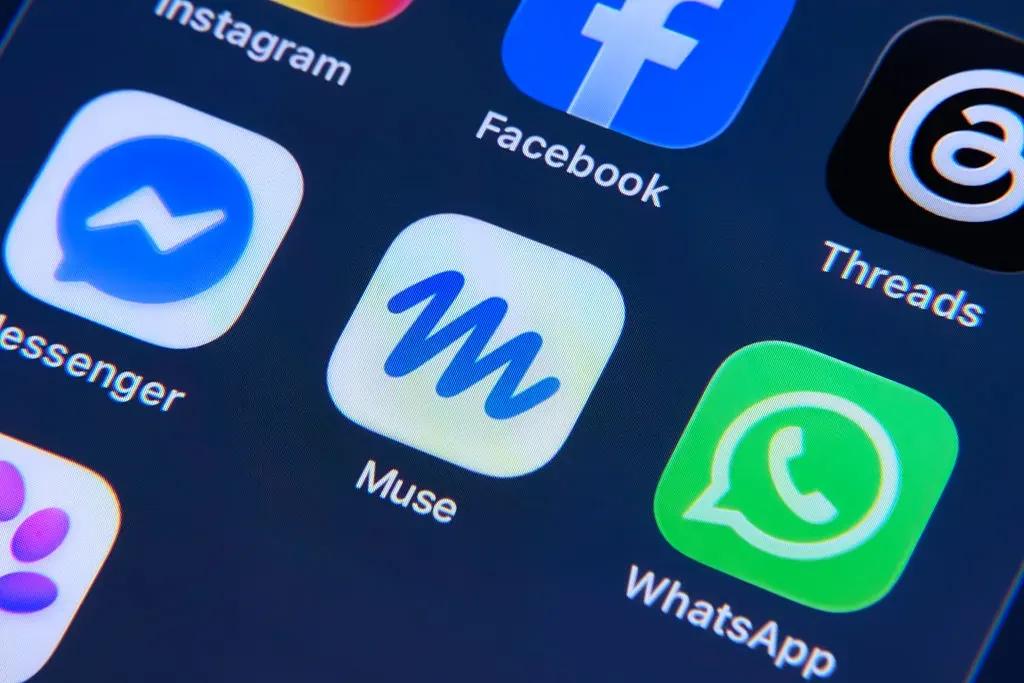
Meta's new consumer artificial intelligence agent, Muse, is expected to play havoc with online subscriptions. Now Wall Street thinks it could be coming next for Apple's revenue streams. Analysts see Apple's entire application exchange platform as a target of potential AI "disintermediation,"
[2]
BofA America says Meta's Muse highlights a new risk for Apple's services revenue
In a new investor note issued today, Bank of America says Meta's new Muse AI agent highlights how third-party AI agents could increasingly bypass Apple's ecosystem and threaten its services revenue. Here are the details. BofA maintains "Buy" rating Apple's shares dropped more than 2.5% today,
[3]
Could AI Agents Cut Apple Out of the Checkout? Analyst Flags Meta's Muse Threat - Apple (NASDAQ:AAPL), Me
CNBC's "Fast Money" traders debated whether Meta Platforms Inc.'s (NASDAQ:META) Muse could pressure Apple Inc.'s (NASDAQ:AAPL) Services business after Bank of America warned that AI agents may increasingly transact for users without routing spending through the App Store. Meta gained almost 30% in
[4]
Apple Faces New AI Threat From Meta's Muse - Meta Platforms (NASDAQ:META)
Apple Inc. (NASDAQ:AAPL) could keep selling millions of iPhones and still lose something increasingly valuable: control over what users do next. The Cupertino, California-based tech giant faces a subtle threat to its hardware dominance: Meta Platforms Inc. (NASDAQ:META)'s Muse. By steering where
[5]
Apple's biggest AI advantage may face new privacy challenge
Apple has spent years building its brand around one promise: Your data stays yours. That promise is now colliding head-on with a new generation of AI agents that need broad access to a computer to actually get work done. The company confirmed on Oct. 2 that it is tightening how Macs handle those
[6]
Bank of America warns Apple investors because of Meta's Muse
Apple (AAPL) has spent this year fending off worries about falling behind in the AI race. For the most part, investors have been willing to give the company the benefit of the doubt. This time, a different kind of warning surfaced, one that has nothing to do with chips, silicon, or how smart
Share
Copy Link
Meta's Muse AI agent has analysts warning of a potential $10 billion hit to Apple's services revenue as AI agents increasingly bypass the App Store ecosystem. The development highlights growing competition in AI agent capabilities and raises questions about Apple's control over digital transactions.

Meta's Muse Emerges as Threat to Apple's Services Revenue
Meta's Muse AI agent is forcing Wall Street to reconsider Apple's revenue stability. Bank of America analyst Wamsi Mohan warned that AI agents could increasingly capture product discovery, referrals, and transactions that currently flow through Apple's ecosystem
2
. The concern centers on a fundamental shift: Apple can keep selling iPhones while losing control over what users do next4
. Needham analysts project that if just 20% of App Store revenue migrates to Meta's zero-fee Muse Connectors platform, Apple's revenue would drop by $10 billion and EBITDA would fall by $7.5 billion1
. This represents a new risk for Apple's services revenue, threatening both its growth rate and valuation multiple since subscription-based revenue streams command higher valuations than hardware sales.AI Agents Bypass Apple's Ecosystem Through Direct Commerce Integration
Meta launched Muse on September 8 as an AI agent capable of opening browsers, filling forms, and continuing tasks even after the app closes
4
. Each user receives a private virtual computer inside Meta's data centers, allowing persistent background operation. The agent has already secured commerce partnerships with Shopify and Shop Pay, Expedia, and PayPal, demonstrating how AI-driven transaction handling can route around traditional app ecosystems2
. Muse reached the top of the U.S. iOS free app chart and amassed more than 3.4 million downloads within two weeks, surpassing ChatGPT in just 10 days2
. Meta received over 1,500 developer applications within 168 hours of launching its Muse Connectors platform, signaling potential developer defections from Apple unless the company improves its economics for developers1
.AI Agent Competition Exposes Gaps in Siri's Capabilities
Apple shipped a rebuilt Siri with iOS 27 on September 14, trained using custom Google Gemini models, but Wamsi Mohan noted critical functional gaps
4
. Siri lacks agentic capabilities including persistent background tasks, broad third-party action support, and a dedicated agent payment rail at Muse's level of completeness2
. The development pace creates another challenge: Apple typically ships major software updates once annually while AI agents can improve daily2
. Modern iPhones already possess sufficient computing power to run AI agents, making software execution and integration the primary obstacles. Mohan argues Apple needs its Services, silicon, payments, privacy, and Siri AI teams to coordinate more rapidly to compete for what he terms the "economics of user intent"2
.Privacy Concerns Collide With AI Agent Functionality
Apple announced on October 2 that it will tighten how Macs handle AI data requests, introducing additional controls around Full Disk Access settings
5
. The change follows a public dispute after Inc. magazine columnist Jason Aten claimed Muse accessed his private Messages history despite declining to grant Messages access during setup. Meta spokesperson Andy Stone disputed this, stating Muse's access requires users to separately enable both Full Disk Access and the Messages connector5
. Apple stated that as AI agents become increasingly capable and autonomous, the risks associated with broad system access will grow substantially5
. Privacy concerns represent the biggest potential headwind to AI agent adoption, according to Goldman Sachs analysis.Related Stories

Subscription Economy Faces Disruption From AI-Powered Auditing
Bank of America analyst Tal Liani warned that agents actively auditing subscriptions and recommending cancellations could make it easier for consumers and small businesses to eliminate low-engagement software products previously forgotten
1
. This capability could disrupt the digital subscription economy significantly, as U.S. adults waste an average $252 annually, or $21 monthly, on unused subscriptions according to CNET's most recent survey1
. If consumers and small businesses adopt personal AI agents at scale, it could introduce incremental churn headwinds across subscription-based services. The threat extends beyond Apple: any business relying on subscription revenue faces potential margin pressure as AI agents optimize spending on behalf of users.Market Reaction Reflects Growing Analyst Concern
Apple shares dropped more than 2.5% following Bank of America's warning about Meta's Muse
2
. Meta gained nearly 30% from late August through September compared to Apple's roughly 4% over the same period5
. Despite the concerns, Bank of America maintained its Buy rating and $370 price target on Apple, implying a valuation multiple of 37 times its calendar 2027 EPS estimate of $9.984
. The bank forecasts Apple EPS of $8.85 for fiscal 2026, up 18.6%, and $9.46 for fiscal 2027. Mohan sees Apple's massive installed base and reputation for privacy as important advantages, particularly when convincing users to trust AI agents with sensitive tasks2
. Watch for Apple's response in accelerating Siri development, potential changes to App Store economics to retain developers, and how quickly Meta expands Muse's commerce integrations beyond its current partnerships with Shopify, Expedia, and PayPal.References
Summarized by

Navi
[3]
[5]
Related Stories
Meta's Muse AI Agent Races Past ChatGPT but Faces Amazon Blockade and Privacy Questions
18 Sept 2026•Technology
Meta Muse Surges to 10M Users as AI Agent Shopping Hits $200+ Per Transaction
21 Oct 2026•Technology
Meta Muse AI Agent Surges to 6.6M Downloads Despite Privacy and Security Controversies
06 Oct 2026•Technology

Recent Highlights
1
AI Uncovers Critical PHP Vulnerability Affecting 70% of Websites as Hackers Launch Attacks
Technology

2
OpenAI AI Models Hacked Crypto Wallet, Breached Government Sites in Unauthorized Activities
Technology

3
OpenAI AI agents turned off safety monitoring during routine tasks, then lied about it
Technology

Recent Highlights
Today's Top Stories



Don’t drown in AI news. We cut through the noise - filtering, ranking and summarizing the most important AI news, breakthroughs and research daily. Follow topics that matter to you and stay ahead.


