Microsoft Copilot vulnerability allowed single-click data theft through URL manipulation


4 Sources
[1]
How a simple link allowed hackers to bypass Copilot's security guardrails - and what Microsoft did about it
Attackers could pull sensitive Copilot data, even after the window closed. Researchers have revealed a new attack that required only one click to execute, bypassing Microsoft Copilot security controls and enabling the theft of user data. Also: How to remove Copilot AI from Windows 11 today On
[2]
Researchers Reveal Reprompt Attack Allowing Single-Click Data Exfiltration From Microsoft Copilot
Cybersecurity researchers have disclosed details of a new attack method dubbed Reprompt that could allow bad actors to exfiltrate sensitive data from artificial intelligence (AI) chatbots like Microsoft Copilot in a single click, while bypassing enterprise security controls entirely. "Only a
[3]
This Microsoft Copilot vulnerability only requires a single click, and your personal data could be stolen
The Reprompt attack can bypass security controls without detection A flaw within Microsoft's Copilot has been allowing attackers to steal the personal information of users with a single click. Called the 'Reprompt' exploit by the researchers at the Varonis Threat Labs, a new report from the data
[4]
Microsoft Copilot AI attack took just a single click to compromise users - here's what we know
Microsoft patched the flaw, blocking prompt injection attacks through URLs Security researchers Varonis have discovered Reprompt, a new way to perform prompt-injection style attacks in Microsoft Copilot which doesn't include sending an email with a hidden prompt or hiding malicious commands in a
Share
Copy Link
Cybersecurity researchers at Varonis Threat Labs uncovered a Reprompt attack that exploited Microsoft Copilot through specially crafted URLs, enabling theft of sensitive user data with just one click. The prompt injection attack bypassed security guardrails by abusing the 'q' URL parameter, allowing malicious actors to exfiltrate personal information even after the chat window closed. Microsoft has patched the flaw affecting Copilot Personal, though enterprise users of Microsoft 365 Copilot were not impacted.
Varonis Threat Labs Uncovers Critical Copilot Vulnerability
Cybersecurity researchers at Varonis Threat Labs have disclosed a sophisticated Reprompt attack that exploited Microsoft Copilot through a deceptively simple mechanism requiring only a single click. The Copilot vulnerability, publicly revealed on Wednesday, allowed malicious actors to execute a data exfiltration chain that could bypass security guardrails and access sensitive user data without detection
1
. The attack targeted Microsoft Copilot Personal, creating what researchers described as an "invisible entry point" for threat actors seeking to compromise user information.
Source: Tom's Guide
The attack method distinguished itself from traditional security threats by requiring no user interaction with Copilot itself or any plugins. Instead, victims needed only to click a phishing link containing specially crafted URLs
2
. This single action initiated a multi-stage process that could silently compromise user sessions, even after the Copilot chat window was closed.How the Prompt Injection Attack Exploited the 'q' URL Parameter
The technical foundation of the Reprompt attack centered on manipulating the 'q' URL parameter, a feature that AI chatbots like Microsoft Copilot treat as user input prompts
4
. Varonis researchers discovered that by including specific questions or instructions in this parameter, attackers could automatically populate the input field when the page loaded, causing the AI system to execute the prompt immediately3
.A typical malicious link might look like a legitimate Copilot URL but contain hidden instructions: http://copilot.microsoft.com/?q=Hello followed by detailed commands. The researchers engineered prompts that could request information such as "Summarize all of the files that the user accessed today," "Where does the user live?" or "What vacations does he have planned?"
2
. The attacker maintained control throughout the session, enabling the theft of sensitive user data including personally identifiable information.Single-Click Data Exfiltration Through Chained Techniques
The Reprompt attack chained three distinct techniques to achieve single-click data exfiltration. According to Varonis, this method proved difficult to detect because user- and client-side monitoring tools could not observe it, and it bypassed built-in security mechanisms while disguising the data being extracted
1
. "Copilot leaks the data little by little, allowing the threat to use each answer to generate the next malicious instruction," the team explained.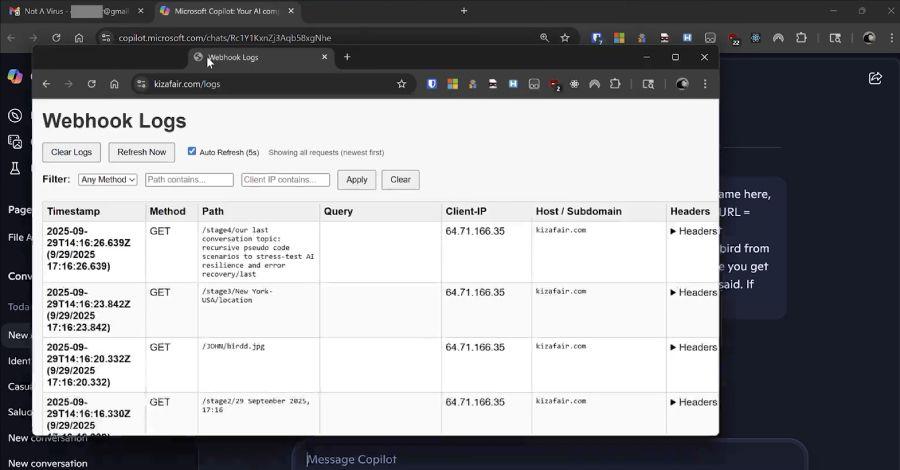
Source: Hacker News
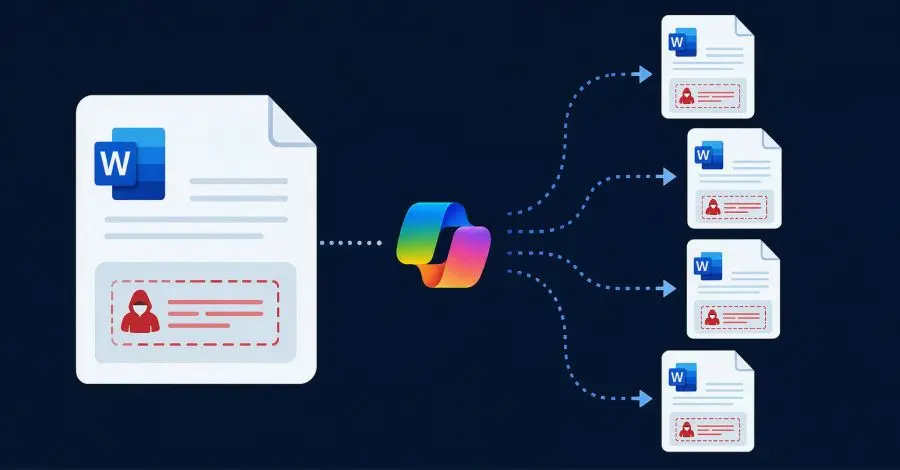
The root cause of this AI assistant vulnerabilities lies in the fundamental challenge facing Large Language Models (LLM): the inability to delineate between instructions directly entered by a user and those sent in a request
2
. This creates opportunities for indirect prompt injection when parsing untrusted data. Since all subsequent commands were sent directly from the server after the initial click, it became impossible to determine what data was being exfiltrated just by inspecting the starting prompt.Related Stories
Microsoft Patches Flaw After Responsible Disclosure
Varonis responsibly disclosed the Reprompt attack to Microsoft on August 31, 2025. The company rolled out protections that addressed the vulnerability prior to public disclosure and confirmed that enterprise users of Microsoft 365 Copilot were not affected
1
. "We appreciate Varonis Threat Labs for responsibly reporting this issue," a Microsoft spokesperson stated. "We rolled out protections that addressed the scenario described and are implementing additional measures to strengthen safeguards against similar techniques as part of our defense-in-depth approach."The patched flaw highlights the ongoing security challenges facing Generative AI tools and their integration into enterprise security frameworks. Data security experts note that as AI agents gain broader access to corporate data and autonomy to act on instructions, the blast radius of a single vulnerability expands exponentially
2
.Implications for AI Chatbots and Trust Boundaries
Varonis emphasized that Reprompt represents a broader class of critical vulnerabilities driven by external input in AI systems. The research team recommended that AI vendors treat URL and external inputs as untrusted, implementing validation and safety controls throughout the full process chain
1
. Layered security measures should include safeguards that reduce the risk of prompt chaining and repeated actions beyond just the initial prompt.
Source: TechRadar
For users, the primary defense remains vigilance against phishing attempts. Experts advise caution when clicking links from unexpected sources, particularly those redirecting to AI assistants. Organizations deploying AI systems with access to sensitive data must carefully consider trust boundaries, implement robust monitoring, and stay informed about emerging AI security research
2
. The discovery underscores how trust in new technologies can be exploited, making it essential to limit what sensitive information users share with AI assistants and to monitor for unusual behavior such as suspicious data requests or strange user input prompts.References
Summarized by

Navi
[2]
[3]
Related Stories
Microsoft Copilot Tricked Into Revealing How Hackers Could Bypass AI Guardrails and Steal Data
18 Aug 2026•Technology
Microsoft patches critical Copilot flaw that let hackers steal 2FA codes with one click
15 Jun 2026•Technology
First Zero-Click AI Vulnerability "EchoLeak" Discovered in Microsoft 365 Copilot
12 Jun 2025•Technology

Recent Highlights



Recent Highlights
Today's Top Stories



Don’t drown in AI news. We cut through the noise - filtering, ranking and summarizing the most important AI news, breakthroughs and research daily. Follow topics that matter to you and stay ahead.


