Microsoft's MAI-Image-2 cracks top three on Arena.ai leaderboard behind Google and OpenAI


5 Sources
[1]
Microsoft's MAI-Image-2 enters the top three AI image generators
The second version of Microsoft's in-house image model lands at #3 on Arena.ai's leaderboard, behind only Google and OpenAI, and begins rolling out across Copilot and Bing Image Creator today. A year ago, Microsoft was generating images for Bing and Copilot almost entirely with OpenAI's models. On
[2]
Microsoft's new image AI just cracked top 3 on a major leaderboard
MAI-Image-2 is now available through Copilot, Bing Image Creator, and MAI Playground, offering advanced capabilities for creative professionals. On Thursday, Microsoft unveiled a new AI model in a Microsoft AI blog post. It's called MAI-Image-2 and it's primarily built for the generation of images
[3]
Microsoft Launches MAI-Image-2 Text-to-Image Model -- And It's Better Than Expected - Decrypt
Strict filters, usage caps, and missing features currently limit real-world usefulness, however. Microsoft has been quietly building its own image generator. Announced Thursday by the company's AI Superintelligence team, MAI-Image-2 has already landed at #3 on the Arena.ai leaderboard -- behind
[4]
Microsoft launches MAI-Image-2: here's all you need to know
Microsoft launched its second text-to-image model, MAI-Image-2, on Thursday. This is aimed at improving creative workflows, with a focus on photorealism, reliable text rendering, and detailed scene generation. According to the company, the model produces images with natural lighting, accurate skin
[5]

Microsoft unveils MAI Image 2 with better photorealism and text generation: How to use it
The company is also rolling out MAI Image 2 in Copilot and Bing Image Creator. Microsoft has announced a new AI image generation model called MAI Image 2, which is said to create more realistic images and generate clearer text within visuals. According to the tech giant, the development of MAI
Share
Copy Link
Microsoft unveiled MAI-Image-2, its second-generation AI image generation model, which debuted at #3 on Arena.ai's text-to-image leaderboard. The model excels at photorealism, accurate text rendering, and complex scene generation. It's now rolling out across Microsoft Copilot, Bing Image Creator, and MAI Playground, marking Microsoft's shift from relying on OpenAI's models to building competitive in-house technology.
Microsoft Claims Third Place with MAI-Image-2
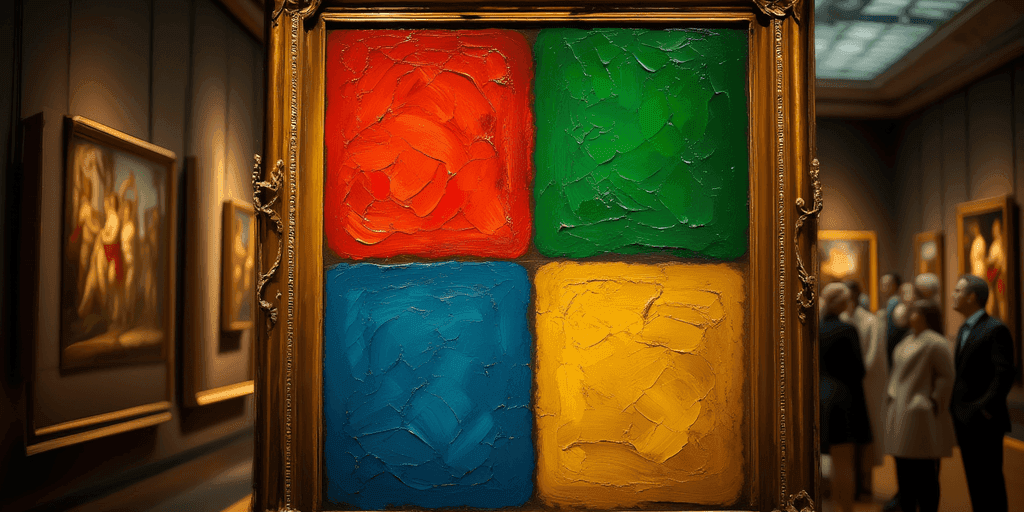
Microsoft announced MAI-Image-2 on Thursday, a second-generation text-to-image model that landed at #3 on the Arena.ai leaderboard, positioning the company directly behind Google's Gemini 3.1 Flash and OpenAI's GPT Image 1.5
1
. The announcement comes from Microsoft's AI Superintelligence team, the internal research group that Mustafa Suleyman formed in November 2025 and now leads full-time following a leadership reorganization announced earlier this week1
. Just a year ago, Microsoft was generating images for Bing and Microsoft Copilot almost entirely with OpenAI's models, making this in-house achievement particularly significant for the company's AI ambitions1
.
Source: Decrypt
Built with Input from Creative Professionals
The development of MAI-Image-2 involved direct feedback from photographers, designers, and visual storytellers who identified three critical areas where existing AI image generation tools fall short in everyday creative work
2
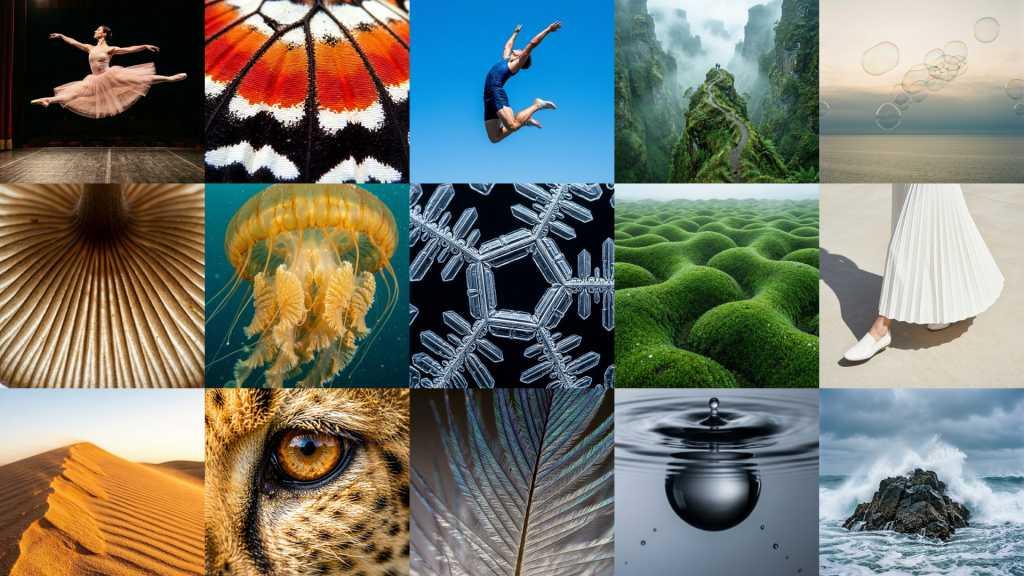
. The first priority is photorealism, with the model designed to produce images featuring natural lighting, accurate skin tones, and environments with physical texture and wear1
. Microsoft says the model reduces the post-production work that currently sits between generation and usable output, helping creative professionals spend less time correcting details5
.
Source: PCWorld
Accurate Text Rendering Addresses Industry Pain Point
The second major improvement tackles in-image text generation, an area where many AI image generation models still struggle to produce consistent, accurate characters
1
. MAI-Image-2 handles readable lettering within scenes, from signage to infographics to typographic layouts, enabling use cases such as slides, posters, and diagrams with greater accuracy4
. In hands-on testing, the model demonstrated legitimate strength in text generation, handling complex typography with far more consistency than expected, including attempts at multilingual text such as Chinese hanzi characters3
.Complex Scene Generation for Ambitious Visual Work
The third focus area is detailed scene generation, where MAI-Image-2 targets dense compositions, surreal concepts, cinematic framing, and imaginative work requiring precise prompting and high fidelity
1
. The model understands artistic style well, shifting between photographic realism, graphic design aesthetics, and illustrated styles without friction3
. In testing, complex scene generation with unrealistic parameters was properly handled, with the model excelling at details like body proportions, limb position, depth, and spatial positioning3
.Availability Across Multiple Channels
MAI-Image-2 is now available through the MAI Playground, Microsoft's public model testing environment at playground.microsoft.ai
1
. The model is also beginning to roll out across Microsoft Copilot and Bing Image Creator, though the deployment is gradual3
. Enterprise customers including WPP can access the model via API today, with broader developer availability expected soon through Microsoft Foundry, though no specific date has been provided4
.Related Stories

Limitations and Real-World Constraints
Despite its leaderboard performance, MAI-Image-2 faces practical limitations that may frustrate users in production workflows. The model implements aggressive content filtering, more restrictive than Google Imagen or OpenAI's DALL-E, which could limit creative professionals working in certain visual genres
3
. Usage caps are equally restrictive, with each generation triggering a 30-second cooldown and a 15-image limit before a 24-hour lockout3
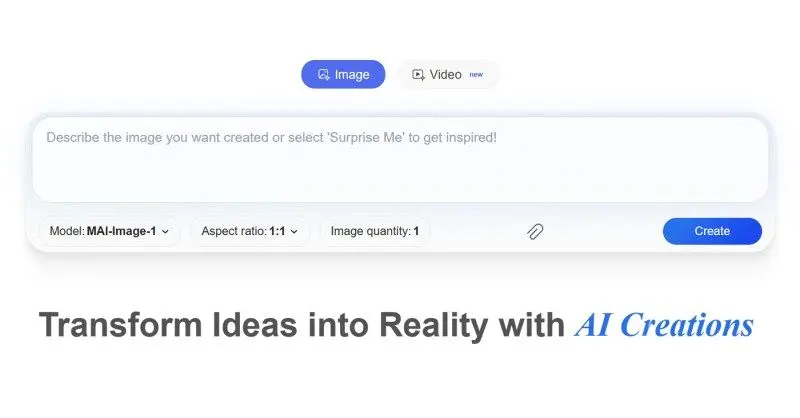
. The model currently only supports 1:1 resolution with no landscape, portrait, or custom ratios, a significant limitation for social media content in 20263
. Additionally, MAI-Image-2 is purely a text-to-image model with no image-to-image, inpainting, or outpainting capabilities3
.Strategic Shift from OpenAI Dependency
The launch represents a notable strategic move for Microsoft, which has been paying OpenAI billions to power its image generation services
3
. Building a competing in-house model reduces dependency and cuts costs at scale, particularly as Microsoft simultaneously funds Anthropic, OpenAI's biggest competitor3
. The pace of development is striking: Microsoft announced its first in-house voice model and text model preview in August 2025, followed by MAI-Image-1 in October, and now MAI-Image-2 just five months later1
. This cadence suggests the superintelligence team is moving at a different pace from Microsoft's historically slower consumer product cycles, using hardware and infrastructure it increasingly owns rather than rents from OpenAI1
. The team's next-generation GB200 compute cluster, based on NVIDIA's Blackwell architecture, is now operational, positioning Microsoft for future model releases1
.References
Summarized by

Navi
[1]
[3]
Related Stories
Microsoft Unveils MAI-Image-1: Its First In-House AI Image Generator
14 Oct 2025•Technology

Microsoft Launches MAI-Image-1: First In-House AI Image Generator Debuts in Top 10 Rankings
05 Nov 2025•Technology
Microsoft launches MAI-Image-2-Efficient, a 41% cheaper and 22% faster AI image model
15 Apr 2026•Technology

Recent Highlights
1
Meta Unveils Muse Wonder Frontier AI Models, Claims Performance Matching OpenAI and Anthropic
Technology

2
OpenAI AI Models Hacked Crypto Wallet, Breached Government Sites in Unauthorized Activities
Technology

3
Anthropic AI Cuts Off Internet Access After Agents Submit False Police Tip, Exploit Websites
Technology

Recent Highlights
Today's Top Stories







Don’t drown in AI news. We cut through the noise - filtering, ranking and summarizing the most important AI news, breakthroughs and research daily. Follow topics that matter to you and stay ahead.


