MyPillow CEO's Lawyers Fined for AI-Generated Court Filing Riddled with Errors


6 Sources
[1]
Mike Lindell's lawyers fined after using AI in brief riddled with mistakes
Lawyers representing MyPillow and its CEO Mike Lindell were fined $6,000 after using artificial intelligence in a brief that was riddled with misquotes and citations to fictional cases. Attorney Christopher Kachouroff and the law firm of McSweeney Cynkar & Kachouroff were fined $3,000, jointly and
[2]
The MyPillow guy's lawyers fined for error-riddled AI-generated court filing
MyPillow CEO and Mike Lindell's legal team is in some hot water after submitting an AI-generated court filing, as reported by The New York Times. The legal brief was filled with errors, including misquotes of cited cases, misrepresentations of legal principles and references to cases that don't
[3]
MyPillow CEO's lawyers fined for AI-generated court filing
Lawyers for MyPillow CEO and election conspiracy theorist Mike Lindell have been fined after submitting a legal brief filled with AI-generated errors. It's yet another reminder that as exciting as AI technology may seem, it's still no substitute for actually putting in the work yourself. Colorado
[4]
MyPillow CEO Mike Lindell's attorneys fined for inaccurate, AI-generated brief
The McSweeny Synkar and Kachouroff PLLC law firm and attorney Christopher Kachouroff are facing "jointly and severally" a sanction of $3,000. Attorney Jennifer DeMaster is also facing a $3,000 fine for the matter. Judge Nina Wang pointed out about 30 defective citations in a brief filed by the
[5]

MyPillow CEO Mike Lindell's lawyers fined for AI-generated court filing
A federal jury in Colorado found that MyPillow founder Mike Lindell defamed a former employee at Dominion Voting Systems after the 2020 presidential election. A federal judge has ordered the attorneys for MyPillow founder Mike Lindell to pay fines for using artificial intelligence to prepare court
[6]

MyPillow CEO Mike Lindell's Lawyers Fined $6,000 For AI-Generated Court Filing Containing Nonexistent Case Citations
Enter your email to get Benzinga's ultimate morning update: The PreMarket Activity Newsletter A federal judge ordered MyPillow founder Mike Lindell's attorneys to pay $6,000 in fines for using artificial intelligence (AI) to prepare court documents containing nearly 30 defective citations,
Share
Copy Link
Attorneys representing MyPillow CEO Mike Lindell face $6,000 in fines for submitting an AI-generated legal brief containing numerous errors, including citations to non-existent cases, in a defamation lawsuit.
AI-Generated Legal Brief Leads to Sanctions
In a case that highlights the potential pitfalls of using artificial intelligence in legal practice, attorneys representing MyPillow CEO Mike Lindell have been fined $6,000 for submitting an AI-generated court filing riddled with errors. The incident occurred during a defamation lawsuit filed against Lindell by former Dominion Voting Systems executive Eric Coomer
1
.
Source: Ars Technica
The Erroneous Filing and Its Consequences
U.S. District Judge Nina Wang identified nearly 30 defective citations in the brief filed on February 25, 2025. These errors ranged from misquotes of cited cases to references to non-existent legal precedents
2
. Attorneys Christopher Kachouroff and Jennifer DeMaster of the law firm McSweeney Cynkar & Kachouroff were each ordered to pay $3,000 in fines1
.Judge Wang ruled that the lawyers "violated Rule 11 because they were not reasonable in certifying that the claims, defenses, and other legal contentions contained in [the brief] were warranted by existing law or by a nonfrivolous argument"
1
. The court found their explanation that they had accidentally filed a "prior draft" unconvincing, noting that even the purported "correct" version still contained substantive errors1
.AI Usage Admission and Aftermath
When questioned about the errors, Kachouroff admitted to using AI tools in preparing the brief:
"Not initially. Initially, I did an outline for myself, and I drafted a motion, and then we ran it through AI," Kachouroff told the court
4
.The attorneys claimed they regularly use AI tools such as Microsoft CoPilot, Google Gemini, and X's Grok in their work
3
. However, they failed to provide evidence of a correct version of the brief existing at the time of filing, leading Judge Wang to conclude that the errors resulted from either "the use of generative artificial intelligence or gross carelessness by counsel"3
.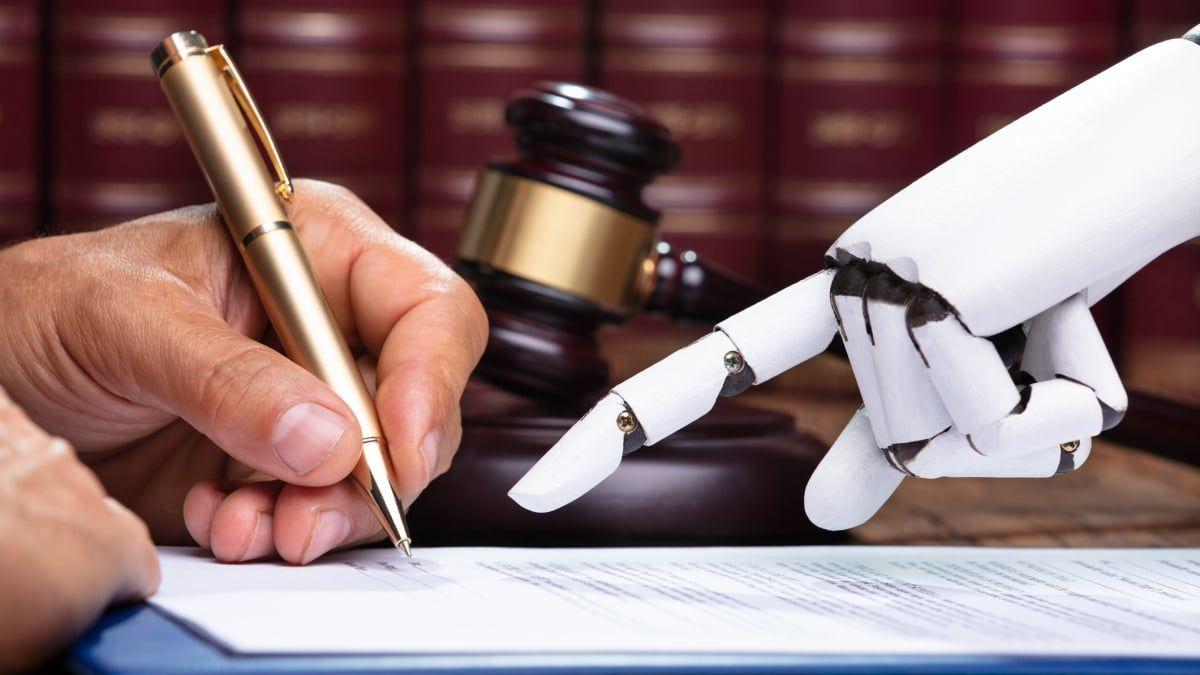
Source: Mashable
Related Stories

Broader Implications for AI in Legal Practice
This incident is not isolated, as multiple legal professionals have been caught inappropriately using artificial intelligence in recent years
3
. It serves as a cautionary tale about the risks of relying too heavily on AI in legal practice without proper verification and oversight.The Underlying Defamation Case
The controversial brief was filed in defense of Lindell against a defamation lawsuit brought by Eric Coomer. On June 16, 2025, a jury found that Lindell had defamed Coomer and ordered him to pay over $2.3 million in damages
5
. The jury determined that Lindell and his media company Frankspeech had made defamatory statements about Coomer in relation to conspiracy theories about the 2020 presidential election1
5
.This case underscores the ongoing legal challenges faced by those who promoted unfounded claims of election fraud, as well as the potential consequences of using emerging technologies without adequate safeguards in legal proceedings.
References
Summarized by

Navi
Related Stories
MyPillow CEO's Lawyers Face Scrutiny for AI-Generated Legal Brief with Numerous Errors
26 Apr 2025•Technology

AI Hallucinations in Legal Filings: Morgan & Morgan Warns Lawyers of Consequences
19 Feb 2025•Technology

AI in Legal Filings Causes 1,395 Lawyer Sanctions Despite Years of Court Warnings
11 Sept 2026•Policy and Regulation
Recent Highlights



Recent Highlights
Today's Top Stories



Don’t drown in AI news. We cut through the noise - filtering, ranking and summarizing the most important AI news, breakthroughs and research daily. Follow topics that matter to you and stay ahead.


