MIT Develops Patient-Specific AI Model That Achieves Sub-Millimeter Precision in Minimally Invasive Surgeries


2 Sources
[1]
New AI technique could make minimally invasive surgeries safer and more precise
Xvr takes one patient's preoperative 3D scan, like an MRI or CT, and uses it to generate thousands of synthetic X-rays from many angles, producing about 1,000 images each second. Pictured is a patient pose estimation model. Researchers created a new technique that accurately and rapidly matches
[2]
New patient-specific AI model improves precision in minimally invasive surgeries
Massachusetts Institute of TechnologySep 16 2026Reviewed Researchers created a new technique that accurately and rapidly matches X-rays captured during surgery with a patient's preoperative 3D medical scan. This method could make it easier for clinicians to precisely pilot minimally invasive
Share
Copy Link
MIT researchers unveiled xvr, an AI model that adapts to individual patients in five minutes and matches real-time X-rays with preoperative 3D scans in seconds with sub-millimeter precision. Published in Nature, the system outperformed existing AI methods by an order of magnitude and could make life-saving procedures like emergency stroke interventions more accessible.
MIT Researchers Develop Patient-Specific AI Model for Surgical Precision
Researchers at MIT and collaborating institutions have created xvr (X-ray volume registration), a patient-specific AI model that matches real-time X-rays captured during minimally invasive surgeries with preoperative 3D scans in seconds with sub-millimeter precision
1
. The system adapts to each patient in approximately five minutes and outperformed existing AI methods by an order of magnitude across diverse patients, body parts, and medical procedures2
. Published in Nature, this development addresses a critical challenge in surgical navigation where clinicians must determine the exact location and orientation of surgical tools within the patient's body using flat X-ray images.
Source: News-Medical
Solving the Challenge of Real-Time Surgical Navigation
During minimally invasive surgeries like angioplasty, clinicians insert instruments through tiny incisions and rely on high-speed mobile X-ray scanners to visualize procedures from multiple angles. However, guiding surgical tools without damaging surrounding tissue requires aligning real-time X-rays with the patient's preoperative MRI scans or CT scans—a process called registration that helps determine where tools are positioned relative to anatomical structures
1
. "It takes decades of training for a clinician to become skilled enough to see grainy, 2D images and understand how everything is oriented. We want to make these 2D X-rays more informative, so it becomes safer and easier to do these life-saving procedures," says Vivek Gopalakrishnan, lead author and postdoc in the MIT Computer Science and Artificial Intelligence Laboratory2
. Manual registration methods remain slow and burdensome, requiring clinicians to guess instrument positions by entering numbers into computers or clicking anatomical landmarks on screens.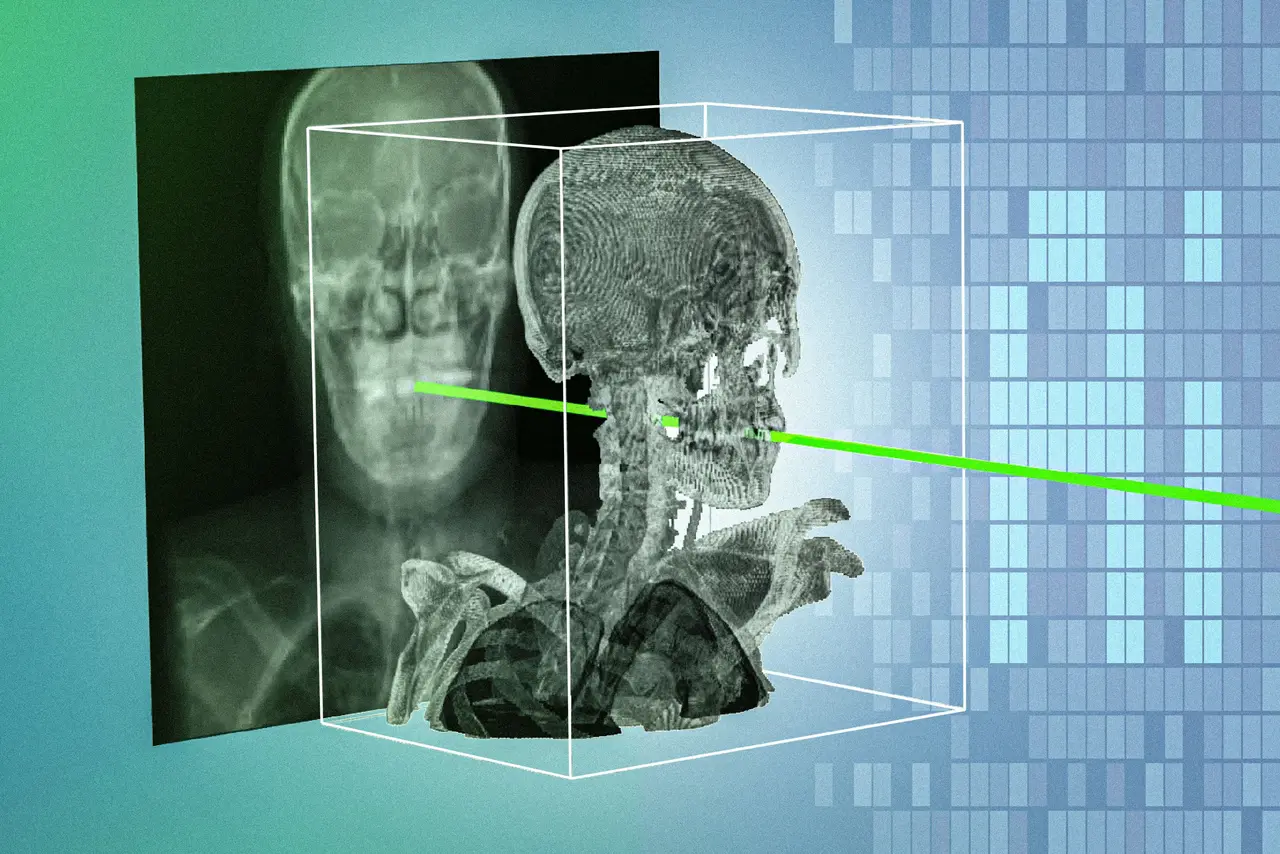
Source: MIT
Why Existing AI Solutions Fall Short
While researchers have been developing AI models to predict 2D/3D registration and streamline this process, these tools struggle to align images robustly for all patients, making them infeasible in practice
1
. Human anatomy varies so dramatically that a model working well for some patients may fail completely for others. The lack of high-quality annotated medical image data makes training a deep-learning model robust enough to adapt to many patients extremely difficult. Rather than attempting to create a universal machine-learning model applicable to all patients, the MIT team built a model designed to adapt exceptionally well for each specific patient. "We tailor this one specific model for this one specific patient, and it doesn't matter if it works on other people because there will be different models for those people," Gopalakrishnan explains2
.Related Stories

Expanding Access to Life-Saving Emergency Stroke Interventions
The implications extend beyond surgical precision to healthcare accessibility. A majority of Americans live more than an hour away from centers capable of performing minimally invasive procedures like emergency stroke interventions, where every minute proves critical
1
. "An hour in stroke time is incredibly substantial. Making these procedures easier by combining 2D and 3D information enables these types of highly specialized life-saving procedures to be more accessible to much broader parts of the population," Gopalakrishnan notes2
. By improving catheter navigation and endoscope navigation through safer and more precise surgeries, xvr could enable more medical facilities to perform complex interventions, reducing the geographic barriers that currently limit access to specialized care. The system's ability to deliver surgical precision in seconds rather than minutes could prove decisive in time-sensitive medical procedures where delays directly impact patient outcomes.References
Summarized by

Navi
Related Stories
MIT's AI System Revolutionizes Medical Image Segmentation for Clinical Research
25 Sept 2025•Science and Research
Researchers Develop AI Training Method Mimicking Physician Education for Medical Image Analysis
16 Oct 2024•Science and Research

AI-Powered Surgical Robot Learns to Perform Complex Procedures by Watching Videos
12 Nov 2024•Science and Research

Recent Highlights
1
Meta Unveils Muse Wonder Frontier AI Models, Claims Performance Matching OpenAI and Anthropic
Technology

2
IMF Report Warns AI Market Correction Could Spark Global Financial Crisis With $1.4T at Risk
Business and Economy

3
OpenAI Releases 722 AI-Generated Math Solutions, Triggering Existential Crisis in Mathematics
Technology

Recent Highlights
Today's Top Stories












Don’t drown in AI news. We cut through the noise - filtering, ranking and summarizing the most important AI news, breakthroughs and research daily. Follow topics that matter to you and stay ahead.


