5 Sources
[1]
At VivaTech, Modi pitches 'AI for All', highlights $50 bn innovation push
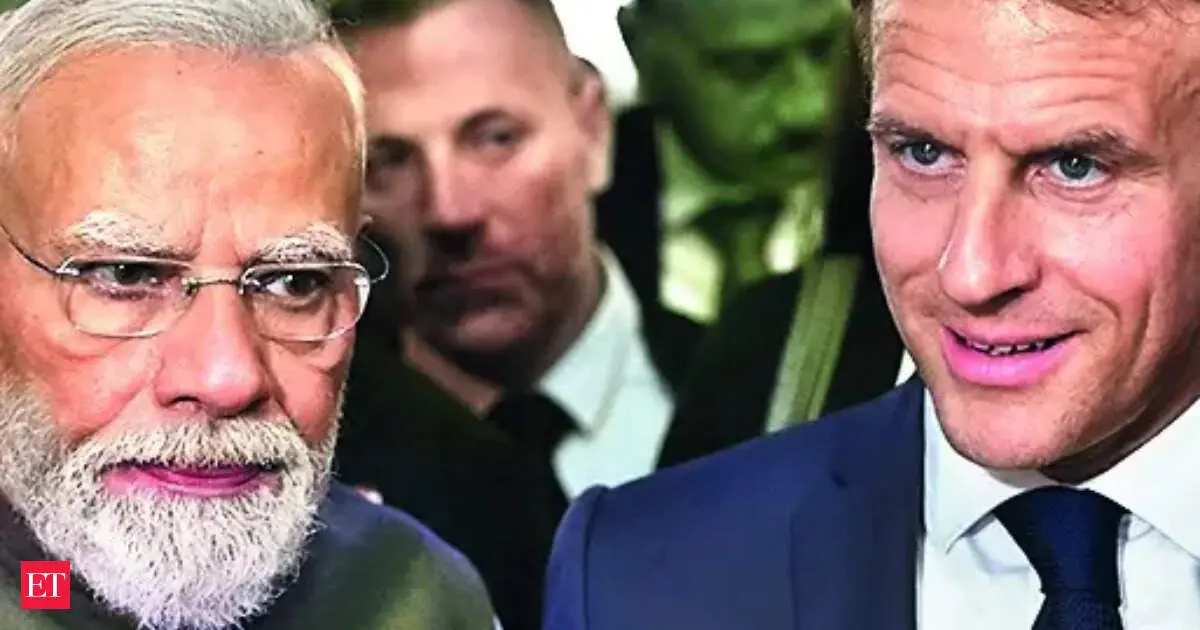
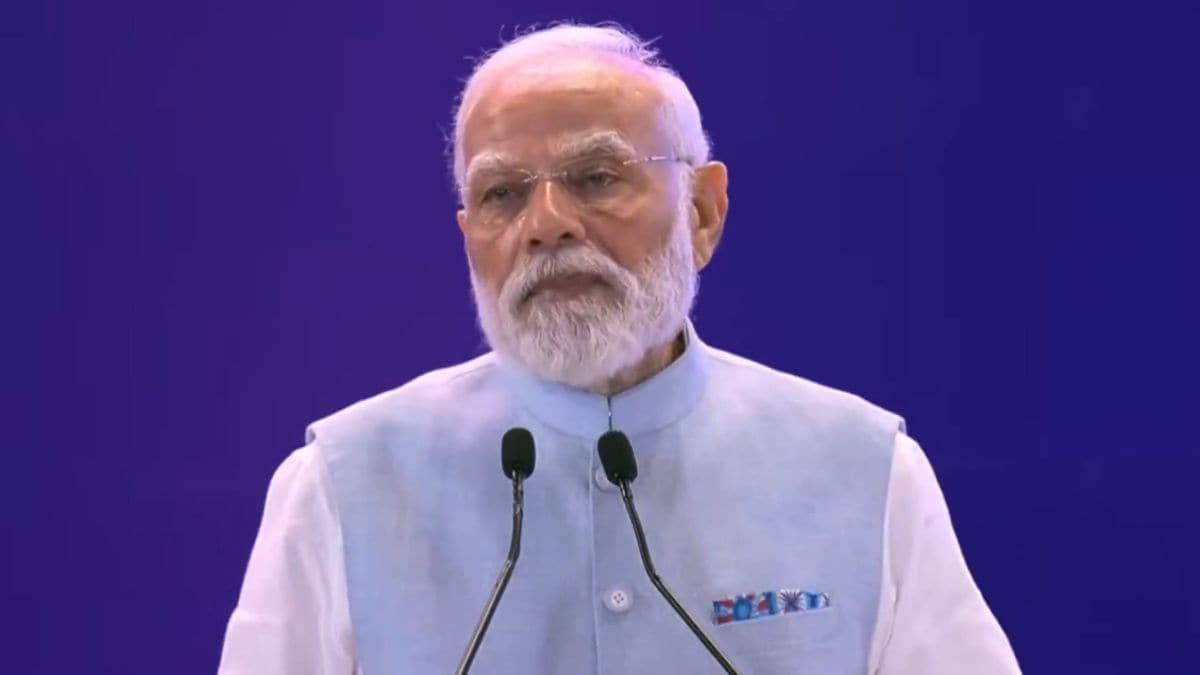
Prime Minister Narendra Modi and French President Emmanuel Macron attended VivaTech 2026 in Paris. India showcased its vision for human-centric AI and frontier technologies. The Prime Minister emphasized democratizing technology for inclusive progress. India is fostering innovation and supporting private enterprise with significant incentives. The nation offers affordable data and green energy, positioning itself as a partner for global scaling. New Delhi: Prime Minister Narendra Modi, accompanied by French President Emmanual Macron, on Thursday participated in VivaTech 2026 in Paris, Europe's largest technology and startup event. Addressing a gathering of tech-entrepreneurs, startups, investors and business leaders, Modi highlighted India's vision for human-centric AI and frontier technologies, and the growing expanse of India-France cooperation in emerging technologies. "When it comes to technology, along with innovation, what matters is access. Technology can lead to progress, only when it is democratised. India believes that in this era of disruption, technology must deliver for all," Modi pointed out. Also Read: India's technological self-reliance to be on display at VivaTech 2026 in Paris: Jawed Ashraf "Let us take the example of AI. AI must improve lives, widen access, drive growth and also help us sustain a healthy planet. Our participation as the AI Country Partner at VivaTech 2026 reflects this very vision. For India, AI means 'All Inclusive'." Noting that India is an open society and the world's largest talent pool, the PM said, "We are simplifying regulations and ensuring ease of doing business. From innovation to commercialisation, we are supporting private enterprise through targeted incentives of over $50 billion. We are also providing one of the world's most affordable data and low-cost green energy. Our approach is clear. Our government will enable and industry will innovate. Startups will disrupt and global partners will scale with us." He noted that technology had enabled transformative changes in India, from digital payments, AI enabled agricultural progress to cutting-edge space applications. Also Read: Tech can lead to progress only if democratised: PM Modi Following the keynote address, Modi and Macron interacted with Indian startups and innovators displaying frontier technologies and practical solutions for industry, healthcare, sustainability, and mobility.
[2]
Tech can lead to progress only if democratised: PM Modi
At Vivatech 2026, Prime Minister Narendra Modi emphasized the necessity of democratizing technology for sustainable development, describing AI as 'All Inclusive' for the nation. With India setting a benchmark in digital transactions, he showcased the country's commitment to utilizing technology for enhancing financial inclusion and educational access. Prime Minister Narendra Modi on Thursday asserted that technology can lead to progress only if it is democratised and said AI means "All Inclusive" for India. His remarks at a global technology summit come against the backdrop of the US restricting the use of Anthropic's latest Artificial Intelligence (AI) models for foreign nationals. Highlighting India's growing prowess in the technology space, Modi said half of the global digital transactions are happening in the country. "Technology can lead to progress only when it is democratised," the Prime Minister said at Vivatech 2026. In the last decade, he said, India has been going through a rapid transformation powered by technology. "From creating the world's largest digital identity system to the world's largest digital payments platforms, we are using technology at a massive scale for financial inclusion, education, telemedicine...," he added. Vivatech is Europe's foremost gathering of technology and innovation, and India has set up the largest national pavilion at this edition as a symbol of the potential for partnership between Indian and European innovation ecosystems.
[3]
AI must empower people: PM Modi at G7 Summit
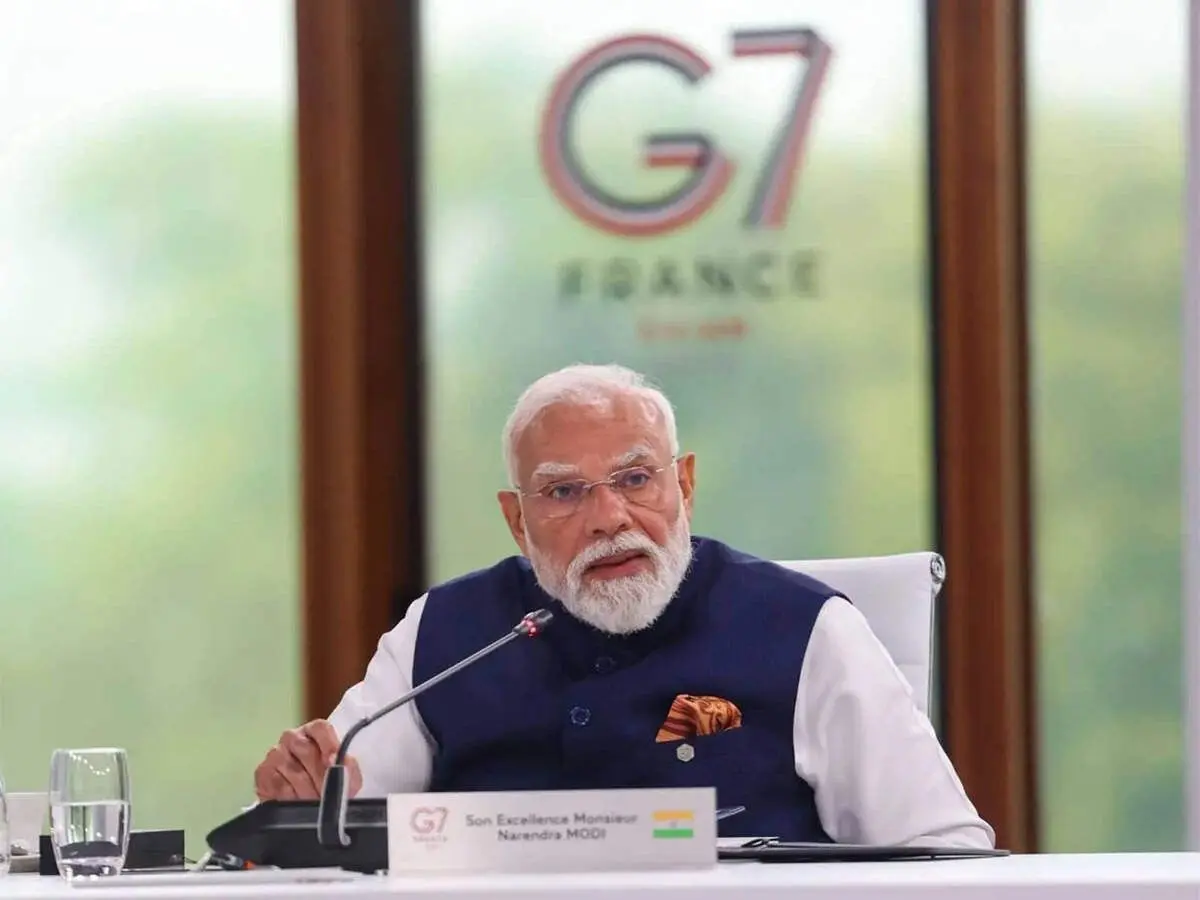
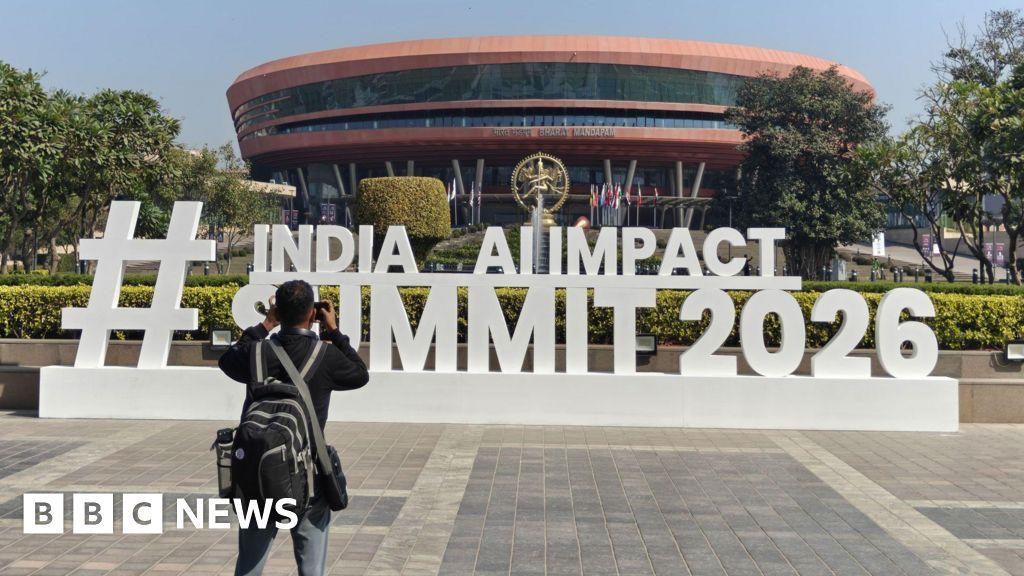
Prime Minister Narendra Modi spoke at the G7 Summit in France about Artificial Intelligence. He stressed AI must empower people and be inclusive. Modi also met US President Donald Trump. They reviewed progress in defense, technology, and trade. Both leaders aim for a strong India-US partnership. Prime Minister Narendra Modi on Wednesday addressed the Outreach Session on "Ensuring a Safe, Rapid and Efficient Rollout of Artificial Intelligence", at the G7 Summit in Evian, France. The Prime Minister highlighted that while Artificial Intelligence was a transformative force with the potential to redefine the direction of human civilization, it must also empower people. He elaborated that it was with this larger thought that India had hosted the AI Impact Summit recently. Underlining India's human-centric or MANAV [human] vision for AI, he stated that the technology must be anchored in the principles of inclusivity, security, and public good. Noting that India has always viewed cyberspace as a global public good, Prime Minister emphasized that democratic countries must have access to AI models that can secure their critical information infrastructure and help them deal with cyber threats. He called for an integrated approach to AI development where safety, speed and efficiency are dealt together. In this regard, he made four suggestions: AI systems should be safe-by-design; AI deployment must be accompanied by common standards, testing frameworks, and regulatory guidelines; there should be effective global cooperation to deal with deepfakes, misinformation and cyber fraud; and the benefits of AI must reach countries of the Global South to ensure an inclusive world, as per the statement. The Prime Minister concluded by stating that AI must expand human potential, empower human choice and protect human dignity, and noted that India would continue to work with partners to promote these objectives, the statement said. Meanwhile, PM Modi met US President Donald Trump on the margins of the G7 Summit. He commended President Trump for his efforts that had resulted in an understanding to end the ongoing conflict in West Asia and restore peace and stability across the broader region. He also underlined the importance of maintaining freedom of navigation and unimpeded commerce in the Strait of Hormuz and the need to ensure the safety of seafarers. The two leaders reviewed the substantial progress achieved under the India-U.S. COMPACT (Catalyzing Opportunities for Military Partnership, Accelerated Commerce and Technology) since their meeting in Washington DC in February 2025. They welcomed key developments across the defence, strategic technologies, energy, and bilateral trade sectors. The statement said that the leaders noted with particular satisfaction the significant progress made in negotiations towards an interim Bilateral Trade Agreement and instructed their officials to work towards a balanced, mutually beneficial, and commercially meaningful agreement at the earliest. The US Trade Representative, Jamieson Greer, will be visiting India next week in this connection. Prime Minister Modi and President Trump reaffirmed their commitment to further strengthening the India-US Comprehensive Global Strategic Partnership and advancing cooperation across all domains for the mutual benefit of the two countries and their peoples, the statement said.
[4]
At G7, PM Modi warns against misuse of AI
Prime Minister Narendra Modi cautioned world leaders at the G7 summit about the dangers of artificial intelligence. He stressed the need for global collaboration to combat deepfakes and misinformation. Modi advocated for AI to be a tool for learning and empowerment, not manipulation. He emphasized that AI development must prioritize human values and dignity. France: Prime Minister Narendra Modi on Wednesday warned against the misuse of artificial intelligence, saying that without safeguards, it could expose children to the risks of misinformation, deepfakes and exploitation. Speaking at an outreach session of the G7 summit in this French commune, Modi also called for strengthening global cooperation against deepfakes, misinformation, and cyber fraud. Modi said that AI can educate children in their own languages, boost their creativity, and personalise learning. However, without safeguards, this technology can expose them to risks such as misinformation, deepfakes, and exploitation, he warned. Also read: UK-India free trade deal to kick in on July 15, cutting tariffs by over $480 mn in year one "We must transform the digital space into a learning playground for children, not a tool for manipulation," he said, addressing the G7 session titled 'Ensuring a Safe, Rapid and Efficient Rollout of AI'. He said that the difference between these two scenarios is not about technology; it is about values, design, and governance. Our thinking and policy regarding AI must be clear, he said, adding that AI must expand human potential, empower human choice, and protect human dignity. Modi noted that Artificial Intelligence is one of the most transformative technologies created by humans and added that the true test of AI lies not in how powerful our machines become, but in the extent to which the ordinary person is empowered. He said that at the AI Impact Summit hosted by India this year, we emphasised the creation of human-centric AI, guided by this very perspective. "At the summit, India presented its 'MANAV' vision; this vision inspires all of India's endeavours in the field of AI," he said, asserting that the human element must remain at its core. The Prime Minister also said no country can be fully secure in cyberspace unless all nations are secure. That is why India has always viewed cyberspace as a global public good, he added. All democratic nations should have access to such AI models so that they can safeguard their critical information infrastructure and counter growing cyber threats, the prime minister said. Modi suggested promoting 'safe-by-design' AI systems, asserting that safety must be made a core element of the design itself. "We should develop common standards, testing frameworks, and regulatory sandboxes for AI deployment so that innovation and governance progress hand in hand," he said, citing examples in civil aviation and maritime transport. He also suggested promoting technologies like watermarking to guard against deepfakes. "We must strive to ensure that the benefits of AI reach all nations of the Global South, transforming it into an inclusive force rather than a divisive one," he added. The prime minister travelled to France for the G7 summit as India was invited as a guest country to the summit.
[5]
India at G7 2026: Access to frontier AI models key to fight cyber threats
"True test of AI is empowering ordinary humans," says Indian PM Modi at G7 2026 Of course, it begins and ends with Anthropic's Mythos class of frontier AI models - the bone of all contentions in all things AI right now. The US government's unilateral decision to restrict the export of Claude Fable 5 and Mythos 5 models for the rest of the world was a topic India commented on at the G7 2026 summit in France. In PM Modi's official statement at the G7 summit, he pointed out to world leaders - including US President Donald Trump sitting right next to him - how "no country can be completely secure in cyberspace until all countries are secure." In this PM Modi was correct, if you remember the old adage how the chain is only as strong as its weakest link. Continuing in his official statement, PM Modi further said how, "India has always viewed cyberspace as a Global Public Good. Consequently, access to these critical AI technologies must also be widespread and inclusive." PM Modi made India's stance on who should (and shouldn't) get access to leading edge frontier AI models like Anthropic's Mythos class of models. "All democratic nations should have access to such AI models so that they can protect their critical information infrastructure and counter growing cyber threats." India believes access to frontier AI models should be "broad and inclusive." For India, it isn't so much a question of commercial opportunities but one of safeguarding fundamental building blocks of the digital world against cyber threats. India placed four specific proposals before the G7 summit members, prime among which is the need to develop "safe-by-design systems." Also read: Fable 5 shutdown reveals a dangerous gap between AI regulation and AI reality Safety shouldn't be an afterthought in the development of any technology meant for mass deployment, PM Modi argued India's position at the G7 summit. It moves the debate beyond post-release moderation. What would "safe by design" AI systems look like? Lots of model evaluations, access controls, secure development, misuse testing and protections against dangerous outputs, to name just a few starting points. PM Modi called for G7 countries to develop common AI standards, shared testing framework, and regulatory sandboxes in which models and applications could be tested under supervision. Speaking broadly about AI's efficacy, PM Modi reminded world leaders and technical visionaries from the likes of Anthropic, OpenAI and Google DeepMind (who were in attendance) on how AI's power shouldn't be measured in machine capabilities but the technology's ability to empower ordinary people. Indian PM Modi also highlighted child safety as the moral case for global standards in AI, warning how the same AI that can educate and empower children and enhance their creativity can also expose them to misinformation, deepfakes and exploitation - in the absence of AI standards, governance and guardrails.
Share
Copy Link
Prime Minister Narendra Modi addressed world leaders at the G7 Summit and VivaTech 2026, advocating for human-centric AI and inclusive access to frontier technologies. He warned against the misuse of AI through deepfakes and misinformation while calling for global cooperation on AI governance. Modi highlighted India's $50 billion innovation push and emphasized that democratizing technology is essential for progress.
Prime Minister Narendra Modi made a compelling case for democratizing technology and ensuring Artificial Intelligence serves humanity at two major international events this week. Speaking at the G7 Summit in Evian, France, and later at VivaTech 2026 in Paris alongside French President Emmanuel Macron, Modi outlined India's vision for AI for All, emphasizing that technology must be accessible to drive inclusive progress
1
2
. His remarks come at a critical juncture, particularly after the US restricted access to Anthropic's latest frontier AI models for foreign nationals, raising questions about equitable access to cutting-edge AI technologies.
Source: ET
At VivaTech 2026, Europe's largest technology and startup event, Modi declared that "technology can lead to progress only when it is democratised," highlighting how half of the world's digital transactions now occur in India
2
. The Prime Minister emphasized India's commitment to supporting private enterprise through targeted incentives exceeding $50 billion, while providing some of the world's most affordable data and low-cost green energy1
. For India, he explained, AI means "All Inclusive" rather than a tool reserved for select nations or corporations.At the G7 Summit's outreach session on "Ensuring a Safe, Rapid and Efficient Rollout of Artificial Intelligence," Modi issued stark warnings about the potential dangers posed by unregulated AI deployment. He cautioned that without proper safeguards, AI could expose children to misinformation, deepfakes, and exploitation
4
5
. "We must transform the digital space into a learning playground for children, not a tool for manipulation," Modi stated, addressing world leaders including US President Donald Trump who sat beside him4
.
Source: ET
The Prime Minister argued that no country can be fully secure in cyberspace unless all nations are secure, describing cyberspace as a global public good
4
5
. This position directly addresses concerns about restricted access to frontier technologies, with Modi asserting that all democratic nations should have access to advanced AI models to protect their critical information infrastructure and counter growing cybersecurity threats5
.Modi presented four specific proposals to establish international frameworks for responsible AI development. First, he called for safe-by-design AI systems where safety becomes a core element of the design itself rather than an afterthought
4
5
. Second, he advocated for common standards, testing frameworks, and regulatory guidelines to ensure innovation and governance progress hand in hand, citing successful examples from civil aviation and maritime transport3
4
.Third, Modi urged effective global cooperation to combat deepfakes, misinformation, and cyber fraud, suggesting technologies like watermarking to guard against manipulated content
3
4
. Finally, he emphasized that AI benefits must reach countries of the Global South to ensure an inclusive world, transforming AI into a unifying force rather than a divisive one3
4
.Related Stories
Underlining India's human-centric approach, Modi referenced the country's MANAV (human) vision for AI, which anchors the technology in principles of inclusivity, security, and public good
3
4
. This vision, presented at India's AI Impact Summit earlier this year, reflects the belief that AI must expand human potential, empower human choice, and protect human dignity3
4
.
Source: ET
The Prime Minister highlighted India's technological transformation over the past decade, from creating the world's largest digital identity system to massive-scale digital payments platforms used for financial inclusion, education, and telemedicine
2
. As the AI Country Partner at VivaTech 2026, India showcased frontier technologies and practical solutions for industry, healthcare, sustainability, and mobility through its largest-ever national pavilion at the event1
2
. Modi and Emmanuel Macron interacted with Indian startups and innovators, demonstrating the growing India-France cooperation in emerging technologies and innovation1
.Modi's message was clear: the true test of AI lies not in machine capabilities but in how effectively it empowers ordinary people
5
. With simplified regulations and a focus on ease of doing business, India positions itself as a partner for global scaling, where government enables, industry innovates, and startups disrupt1
. Modi also met with Donald Trump on the margins of the G7 Summit, reviewing progress under the India-US COMPACT initiative across defense, strategic technologies, energy, and bilateral trade sectors3
.Summarized by
Navi
02 Jan 2026•Policy and Regulation

12 Feb 2025•Policy and Regulation

03 Nov 2025•Policy and Regulation

1
Policy and Regulation

2
Policy and Regulation

3
Business and Economy