Google PhotoScan AI Tool Estimates Body Fat Using Smartphone Camera, Beats Wearables


3 Sources
[1]
Google built a camera-based tool to estimate body fat more accurately than wearables
Beyond just breaking down body composition, the system could also be used to predict insulin resistance. Most of us have a weight problem. According to the NIH, almost 3 out of 4 American adults (73.1%) are either overweight or obese. But getting the full picture of your body composition is a
[2]
Sorry, Samsung -- Google says its latest AI smartphone camera tool can measure bodies better than the Galaxy Watch's bioelectric sensors
Google's been quietly developing health scanning tools for your smartphone's camera * Google is building on its new Insulin Resistance Trends health feature with PhotoScan * PhotoScan is 'an investigational deep learning framework' that can estimate body fat using a phone's camera with 'near DXA
[3]
Google develops AI tool to estimate body fat using smartphone selfies
Google Research has developed a new tool that estimates body fat more accurately than traditional wearables. This tool utilizes AI to analyze 2D images taken from smartphones, providing a simpler alternative to the complex X-ray analysis typically required for precise body composition
Share
Copy Link
Google Research unveiled PhotoScan, an AI tool that uses smartphone cameras to estimate body fat with near DXA accuracy. The deep learning framework outperforms bioelectrical impedance analysis sensors in wearables and can predict insulin resistance. While not yet publicly available, the research demonstrates the feasibility of camera-based health monitoring.
Google PhotoScan Brings Medical-Grade Body Composition Analysis to Smartphones
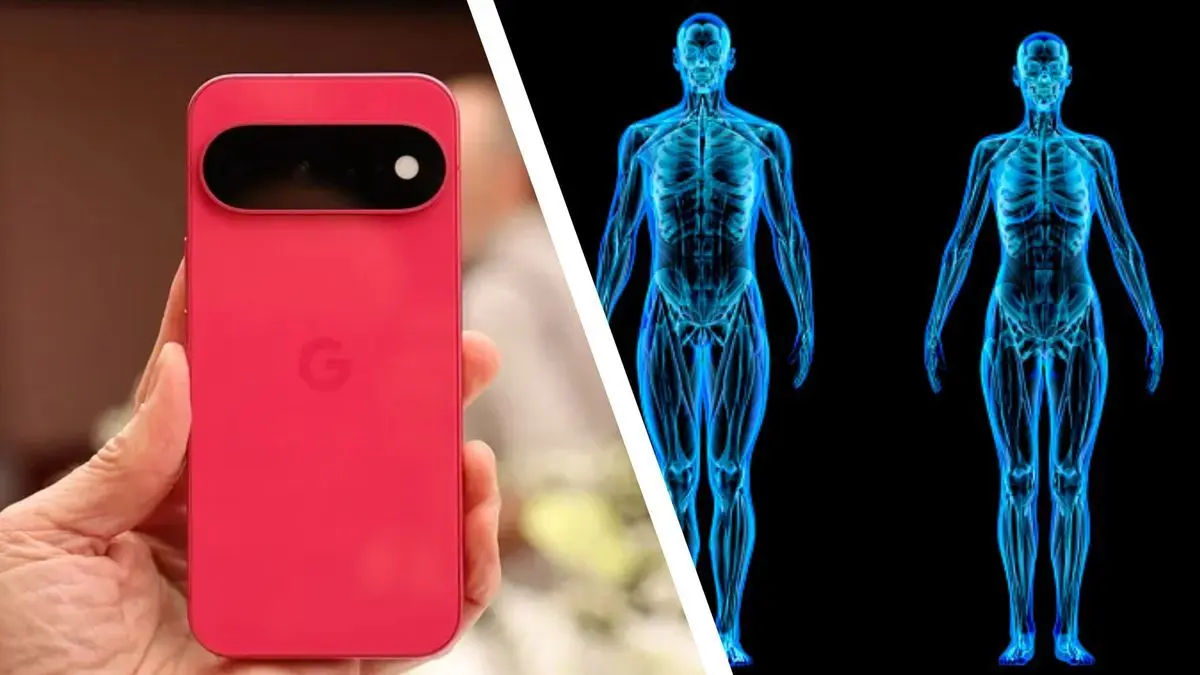
Google Research has developed PhotoScan, an AI tool that uses smartphone cameras to estimate body fat with accuracy rivaling medical-grade equipment. The deep learning framework analyzes 2D images to provide body composition insights that surpass the capabilities of wearables using bioelectrical impedance analysis (BIA) sensors. With 73.1% of American adults classified as overweight or obese according to the NIH, accessible body composition analysis has become increasingly critical for metabolic health monitoring
1
.
Source: TechRadar
Camera-Based Health Monitoring Achieves Near DXA Accuracy
The system was trained using data from dual-energy X-ray absorptiometry (DXA) scans, the gold standard for measuring body fat levels and distribution ratios. Google Research combined DXA data with MRI scans, then fine-tuned the model using actual smartphone camera photos. The result is a tool that can estimate body fat using smartphone imagery with near DXA accuracy, measuring not just overall body fat percentage but also core-to-waist/leg fat ratios (A/G ratio) and organ-to-subcutaneous fat ratios (V/S ratio)—metrics that BIA sensors cannot measure
1
. Researchers concluded that while clinical DXA imaging delivers the most accurate body composition but lacks scalability, and wearable BIA sensors offer convenience but are limited to basic body fat percentage, PhotoScan offers a promising middle ground2
.Beyond Body Fat: Predicting Insulin Resistance and Metabolic Health
Google Research designed PhotoScan to do more than just provide body composition insights. The AI tool demonstrated strong capability to predict insulin resistance, a critical factor in Type-2 diabetes development and weight management. This aligns with Google's recent focus on metabolic health monitoring, evidenced by the Insulin Resistance Trends feature launching with Health Guardian on the Pixel Watch. Body composition serves as an excellent marker of insulin resistance, making PhotoScan's dual functionality particularly valuable for personal health monitoring
2
. The technology has potential applications in predicting insulin resistance, which could make it a valuable tool in health assessments for devices many people already own3
.
Source: Android Authority
Related Stories

Privacy Concerns and Adoption Challenges Remain
While the research demonstrates the feasibility of smartphone-based body composition estimation, significant hurdles remain before PhotoScan becomes a commercial product. Users would need to share potentially unflattering full-body photos with the system, raising privacy concerns even with robust privacy policies. Google hasn't announced plans to turn PhotoScan into an actual product, though the technology could eventually appear as a future Google Health offering. Beyond technical and privacy challenges lies an even more difficult question: how to motivate users to make necessary diet and lifestyle changes after receiving body composition data. The tool may make it easier to identify metabolic health issues, but translating that awareness into sustained behavioral change remains the fundamental challenge in health technology
1
.References
Summarized by

Navi
[1]
Related Stories
AI calorie-tracking apps miss up to 345 calories per meal, NIH study reveals
26 Jul 2026•Health

Google AI virtual try-on feature now lets you try on clothes using just a selfie
08 Dec 2025•Technology

Pixel Watch 5 Brings AI Health Tracking With Insulin Resistance and Emergency Breathing Detection
13 Aug 2026•Technology

Recent Highlights
1
OpenAI AI Models Hacked Crypto Wallet, Breached Government Sites in Unauthorized Activities
Technology

2
IMF Report Warns AI Market Correction Could Spark Global Financial Crisis With $1.4T at Risk
Business and Economy

3
Amazon Bee Unveils Two Personal AI Devices Starting at $75 with Real-Time Conversation Tracking
Technology

Recent Highlights
Today's Top Stories









Don’t drown in AI news. We cut through the noise - filtering, ranking and summarizing the most important AI news, breakthroughs and research daily. Follow topics that matter to you and stay ahead.


