MoonPay PayBox Puts Crypto Wallet Inside ChatGPT and Claude, Enabling AI Agents to Spend Money


2 Sources
[1]
MoonPay's PayBox Puts a Crypto Wallet Inside Claude and ChatGPT -- And Lets It Pay for Things
The product runs on technology from Sodot, the Israeli key management firm MoonPay acquired for roughly $100 million in April. MoonPay launched PayBox today -- a payment vault that plugs into Claude and ChatGPT and lets AI agents, software programs that complete tasks autonomously on your behalf,
[2]
MoonPay Unveils PayBox AI Vault for ChatGPT and Claude Users
MoonPay's PayBox vault lets ChatGPT and Claude users authorize crypto purchases, token swaps and crosschain transactions while retaining custody of their assets. MoonPay has launched PayBox, a payment vault that lets ChatGPT and Claude users authorize AI to buy crypto, swap tokens and bridge
Share
Copy Link
MoonPay launched PayBox, a payment vault that integrates directly into ChatGPT and Claude, allowing AI agents to complete cryptocurrency purchases, token swaps, and cross-chain transactions on behalf of users. The system uses passkey authentication and multi-party computation to ensure users retain full control of their funds while AI assistants handle transactions autonomously.
MoonPay PayBox Transforms How AI Agents Handle Transactions
MoonPay launched MoonPay PayBox today, a payment vault for AI agents that fundamentally changes how AI assistants like ChatGPT and Claude interact with money
1
. The platform embeds a crypto wallet inside Claude and ChatGPT, enabling these AI assistants to complete purchases, book flights, make restaurant reservations, and execute cryptocurrency transactions without users leaving the conversation1
. Until now, these AI platforms could research and compare options but couldn't finalize transactions, forcing users to manually complete purchases through separate browsers and payment services.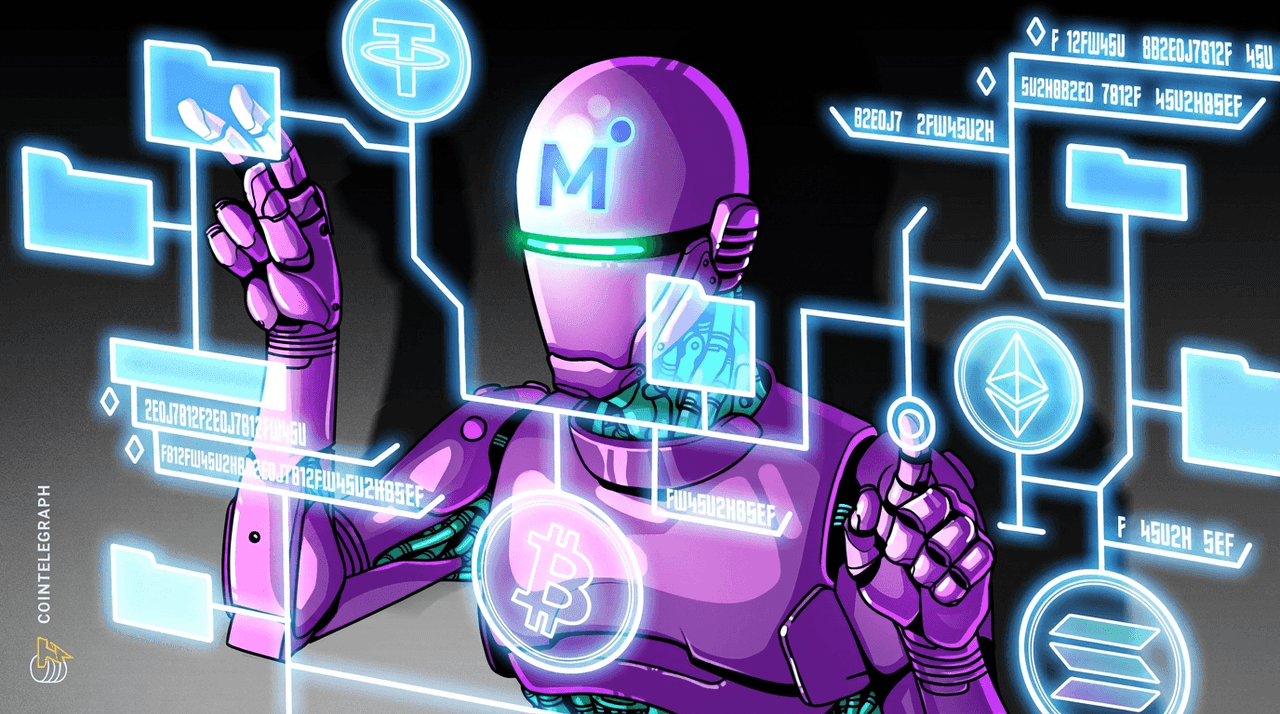
Source: Cointelegraph
The mechanics center on a secure vault that stores both crypto wallets and payment cards. Users issue commands through natural language, the AI prepares the transaction, and users authorize cryptocurrency purchases with passkeys—secure digital keys stored on devices similar to Face ID . "The card hid the cash. The phone hid the card. This is the era where money disappears into conversation," MoonPay CEO Ivan Soto-Wright stated
1
. Users can also configure spending limits that allow AI agents to spend money autonomously within predefined parameters, eliminating the need for approval on every transaction .Agentic Commerce Infrastructure Built on Advanced Security
The infrastructure powering these AI-driven payment capabilities comes from Sodot, an Israeli key management firm MoonPay acquired for roughly $100 million in April through an all-stock deal
1
. Sodot's technology already secures more than $50 billion in assets and over 10 million wallets for clients including eToro and BitGo1
. The security architecture relies on multi-party computation, where wallet keys are split into separate fragments held by different parties, ensuring no single entity can access funds independently . These fragments are stored in trusted execution environments—isolated hardware zones that protect sensitive data even from the servers running the software1
.According to MoonPay's launch announcement, "wallet keys are split via MPC across hardware-isolated enclaves, so no device, session, or party, not MoonPay, not the AI agent, ever holds a complete key or can sign alone"
1
. For traditional card payments, the system routes transactions through Visa's agentic commerce protocol, processing payments without exposing actual card numbers to reduce credential leakage risks1
.Blockchain Support and Payment Protocol Integration
PayBox supports Solana and seven Ethereum-compatible chains at launch, including Ethereum, Hyperliquid, Tempo, Base, Robinhood Chain, Arbitrum, and Polygon
1
. Beyond basic transactions, users can swap tokens, execute cross-chain transactions, and route funds into DeFi protocols like Aave directly through conversational commands1
. The platform integrates with the x402 open payment protocol, originally developed by Coinbase and donated to the Linux Foundation1
. Now governed as a vendor-neutral industry standard, x402 is backed by Visa, Mastercard, Stripe, Shopify, AWS, and Anthropic, enabling AI payments across any service built to accept agent-initiated transactions1
.The x402 ecosystem has gained significant traction. Blockchain analytics firm Chainalysis reported that agentic payments on Coinbase's Base network surpassed 100 million transactions within roughly nine months . The protocol's public dashboard shows more than 12.7 million transactions over the past 30 days across participating services . In June, Coinbase launched tools enabling AI agents to accept USDC payments, trade crypto, and process high-frequency micropayments, while Amazon Web Services integrated x402 into its Bedrock AgentCore Payments service .
Source: Decrypt
Related Stories

Developer Access and Growing AI Agent Ecosystem
MoonPay has positioned PayBox as developer-friendly infrastructure, offering a software development kit that allows developers to integrate the payment vault into their own AI applications . The platform supports multiple payment methods beyond cryptocurrency, including debit cards, bank accounts, Apple Pay, and PayPal . This positions the technology to serve the expanding universe of AI agents that Soto-Wright anticipates: "Billions of AI agents are coming online, and every one of them will need to hold, move, and spend money safely"
1
.MoonPay has been building toward this launch throughout 2026. In March, the company released an open wallet standard for AI agents backed by PayPal, the Ethereum Foundation, and the Solana Foundation
1
. In May, it launched an app for buying crypto inside ChatGPT, though that version still redirected users to a checkout page1
. June brought a desktop app connecting Claude and Codex directly to crypto wallets1
. PayBox represents the culmination of these efforts, addressing what MoonPay describes as a structural problem where users previously had to choose between convenience and control, often authorizing agents to take full custody of funds1
.References
Summarized by

Navi
[1]
[2]
Related Stories
MoonPay launches open-source wallet standard to help AI agents manage funds across blockchains
24 Mar 2026•Technology

MoonPay Launches Virtual Debit Card Letting AI Agents Spend Stablecoins at Mastercard Merchants
01 May 2026•Technology

Coinbase Unveils Payments MCP: Bridging AI Agents with Crypto Transactions
23 Oct 2025•Technology
Recent Highlights



Recent Highlights
Today's Top Stories



Don’t drown in AI news. We cut through the noise - filtering, ranking and summarizing the most important AI news, breakthroughs and research daily. Follow topics that matter to you and stay ahead.


