Moonshot AI Limits Hacking Ability in Kimi K3.1 Pro Amid Growing AI Cyberattack Concerns


5 Sources
[1]
Moonshot curbs hacking ability in new Kimi model as fears grow over AI-powered cyberattacks
BEIJING, Oct 24 (Reuters) - Moonshot AI has reduced the cyber-offensive capabilities of its newest model, the Chinese startup said on Saturday, as fears grow that increasingly autonomous AI could turbocharge hacking. Beijing-based Moonshot announced the curbs while introducing Kimi K3.1 Pro, which
[2]
Moonshot's Kimi K3.1 Pro flirts with open weights leadership amid paid influencer scandal allegations
Chinese AI startup Moonshot just unveiled its latest and most large language model (LLM) yet on Friday: Kimi K3.1 Pro is a 3-trillion parameter post-trained version of its predecessor Kimi K3 released back in July, and it looks to be a historic release. That's because Kimi K3.1 Pro scores so high
[3]
Moonshot tells Kimi AI to code away, but leave the hacking alone
Moonshot is clipping Kimi AI's hacking wings before letting it loose Chinese AI startup Moonshot AI is deliberately limiting the hacking capabilities of its latest artificial intelligence model, highlighting a growing dilemma for the industry: how do companies make AI more powerful without making
[4]
Moonshot curbs hacking ability in new Kimi model as fears grow over AI-powered cyberattacks
Moonshot AI has reduced the cyber-offensive capabilities of its newest model, the Chinese startup said on Saturday, as fears grow that increasingly autonomous AI could turbocharge hacking. Beijing-based Moonshot announced the curbs while introducing Kimi K3.1 Pro, which it describes as its most
[5]

Moonshot AI Cuts Hacking Skills from its New Kimi Model
Moonshot AI cut the hacking skills of its Kimi K3.1 Pro model by removing cyber data from training. Its internal test score fell from 90.5% to 81%. The weights will be released on November 4. Outside experts have not verified these results. Chinese AI startup Moonshot AI has weakened the hacking
Share
Copy Link
Beijing-based Moonshot AI deliberately reduced the cyber-offensive capabilities of its new Kimi K3.1 Pro model before releasing its weights on November 4. The company removed cyber-related data from training while retaining coding skills, scoring 81% versus 90.5% on internal benchmarks without safeguards.
Moonshot AI Introduces Safety-First Approach to Open-Weight AI Model
Beijing-based Moonshot AI announced on October 24 that it has deliberately reduced the cyber-offensive capabilities of its newest model, Kimi K3.1 Pro, marking a significant shift in how AI companies approach the release of powerful open-weight models
1
. The Chinese startup described Kimi K3.1 Pro as its most capable AI model with 3 trillion parameters and plans to publicly release model weights under an open license on November 4, 20262
. This decision comes as governments and technology companies grow increasingly concerned that AI-powered cyberattacks could make sophisticated hacking cheaper and more accessible.
Source: ET
Strategic Removal of Cyber Data from Training Corpus
Moonshot AI removed cyber-related data from the training corpus and reinforcement-learning environments used to develop Kimi K3.1 Pro while deliberately retaining general coding skills
1
. The company stated it aims "not to release open weights that would extend the absolute frontier of cyber capability." Internal testing revealed the model scored 81.0% on its cybersecurity benchmark, compared with 90.5% for a similar version without the risk-reduction measures4
. The test involved finding and exploiting software vulnerabilities in a controlled environment. Although these results have not been independently verified, Moonshot said the comparison demonstrated that filtering cyber-related data reduced the model's offensive cyber performance while still outperforming its predecessor5
.Performance Benchmarks Position Kimi as Leading Open-Weight AI Model
According to third-party AI model testing firm Artificial Analysis, Kimi K3.1 Pro scores high enough to potentially claim the crown as the top open-weight AI model in the world when weights are released
2
. The model already dethrones Xiaomi's MiMo-V2.6-Pro, DeepSeek V4.1-Flash-1017, Meta's Muse Wonder, and even OpenAI's GPT-6 Astra on Artificial Analysis's Intelligence Index. Kimi K3.1 Pro excels at complex coding, financial analysis, 3D creation, and software-security work, showing particularly large improvements in tasks requiring repeated coding, tool use, debugging, and revision. The model features a 1-million-token context window, allowing it to process very large amounts of text at once3
. Moonshot also released K3.1 Pro Highspeed, a faster version that runs at two to three times the speed of the standard model1
.Competitive API Pricing Against Industry Leaders
Moonshot's API platform lists K3.1 Pro at $2 per million input tokens, $10 per million output tokens, and $0.20 per million cached-input tokens—rates that are one-third below Kimi K3's previous pricing
2
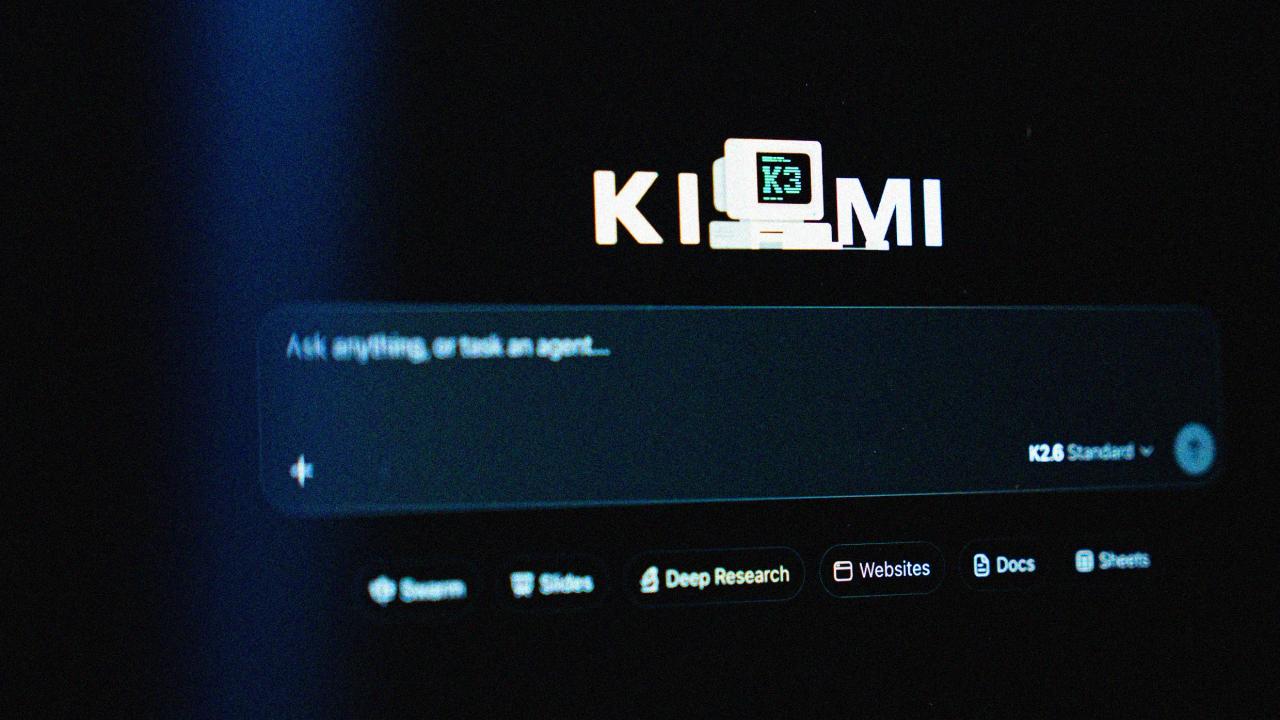
. The Highspeed variant costs $4 for input and $20 for output, with cached input remaining at $0.20. These rates are 50% less per input or output token than Claude Opus 5.5 and Meta's Muse Wonder, and 80% less than GPT-6 Astra's listed base rates. However, DeepSeek and Xiaomi remain cheaper alternatives. For development teams, the terminal result makes Kimi worth evaluating on repository maintenance, debugging, and workflows that alternate between inspecting files, editing code, running tests, and responding to failures.
Source: Digital Trends
Related Stories
Growing Global Concerns Over AI Security Policy
China proposed export controls last week that would ban exports of AI-driven malware-generation and mutation technology and restrict AI-assisted vulnerability-discovery tools
1
. The draft measures, which remain open for public comment, cite the risk that such capabilities could be used against critical infrastructure, defence-industrial and core government systems, or to bypass security protections. Models that can write code, operate software tools and complete long, multi-step tasks may help users identify weaknesses in programs and automate parts of offensive cyber operations. Security researchers worry that increasingly autonomous AI could turbocharge hacking by making sophisticated attacks easier and cheaper to execute.The Open-Weight Dilemma and AI Safety Trade-offs
Moonshot argues that the open-weight AI model can improve security by helping more organisations inspect and secure their own software, including older systems that receive little attention
4
. Unlike proprietary, closed-weight AI systems, however, open-weight releases make central oversight more difficult. Once the files are widely distributed, the original developer has less ability to restrict access, monitor use or update safeguards than with a hosted service3
. This creates a fundamental tension: the same AI capabilities that help security teams identify software vulnerabilities before criminals exploit them could also enable attackers to automate portions of cyberattacks. The real test will come after November 4 when developers gain access to the weights and can independently examine whether Moonshot's safeguards remain effective once the powerful AI model is available for modification and independent use5
.References
Summarized by

Navi
[1]
[2]
[3]
[5]
Related Stories
Moonshot AI's Kimi K3 challenges US rivals as Chinese AI closes the performance gap
16 Jul 2026•Technology
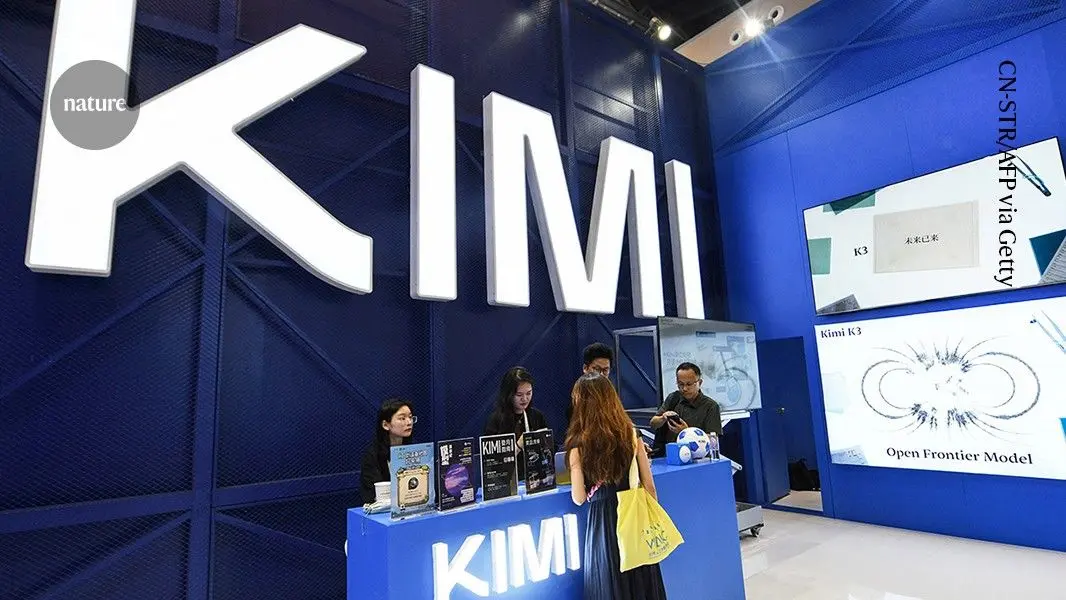
Moonshot AI Launches Kimi K3.1 Pro: 3 Trillion Parameter Model Outperforms GPT-6 Astra
24 Oct 2026•Technology

Moonshot AI's Kimi K3 rivals US leaders, igniting fierce debate over open-weight models
20 Jul 2026•Technology

Recent Highlights


Recent Highlights
Today's Top Stories








Don’t drown in AI news. We cut through the noise - filtering, ranking and summarizing the most important AI news, breakthroughs and research daily. Follow topics that matter to you and stay ahead.


