Moonshot AI's Kimi K3 rivals US leaders, igniting fierce debate over open-weight models


19 Sources
[1]
China's Kimi K3 and the rise of open-weight AI models
Moonshot AI's Kimi K3 shows how opening a model to outsiders can turn other companies' computing power into a competitive advantage Just three days after the Chinese developer Moonshot AI unveiled Kimi K3 on July 17, it stopped accepting new subscriptions. Demand for the enormous artificial
[2]
The US may find it hard to shrug off Moonshot's AI shockwaves
The latest Chinese models such as Kimi K3 look set to bring greater price competition More than a year after the DeepSeek shock, another "open" AI model from China has sent a severe tremor through Silicon Valley. This time, it may be harder for the US AI companies to shrug off the challenge. That
[3]
China's Moonshot pauses Kimi subscriptions amid hot demand, IPO push
SHANGHAI/HONG KONG, July 20 (Reuters) - Chinese startup Moonshot AI has temporarily paused new subscriptions after demand for its newly launched Kimi K3 model strained capacity, a bottleneck that comes as the company seeks fresh funding and prepares for a potential Hong Kong listing. Moonshot is
[4]
From Silicon Valley to DC, the tech world is suddenly obsessed with one concept in AI: Distillation
Leading tech companies published a letter on Friday urging policymakers to avoid "premature restrictions" on open-weight models that would "stifle competition or drive innovation overseas." Earlier this year, Google AI lead Jeff Dean, on a podcast, discussed a concept that, at the time, was hardly
[5]

Silicon Valley Splits Over Closing the Borders to Chinese A.I.
Mike Isaac and Kate Conger reported from San Francisco, Ana Swanson from Washington and Meaghan Tobin from New York. For years, a philosophical divide over how artificial intelligence software should be created has split Silicon Valley technologists. This week, that argument reached a boiling
[6]

OpenAI quietly signs letter from Nvidia, Microsoft, and Meta warning about dangers of 'premature restrictions' on open-weight AI models -- as the White House accuses China of stealing from Anthropic
* Several AI companies in the US have published an open letter * The letter is campaigning for unrestricted open-weight AI * Meanwhile the US government accuses Moonshot AI of IP theft Any hopes AI tech reporters may have had about easing quietly into the weekend have been dashed by some of the
[7]

NVIDIA CEO Jensen Huang joins X with post backing open-weight AI
Jensen Huang has joined X, and his first post was not about GeForce GPUs, driver updates, or Blackwell. Instead, the NVIDIA CEO used his debut to share a letter signed by NVIDIA and 24 other companies urging US policymakers not to restrict open-weight AI models. "AI will transform every industry,
[8]

The second Chinese AI shock rattles US as China narrows the race
China's Kimi K3 AI model has emerged, significantly narrowing the technological gap with American frontier systems. This development has prompted intense debate across Silicon Valley and Washington regarding China's AI capabilities. The model's performance, affordability, and open-weight release
[9]

Demis Hassabis Backs Jensen Huang's AI Vision, Says 'A Strong and Secure Open Ecosystem Is Important' for
Hassabis Supports Open AI Models On Saturday, Hassabis shared Huang's post on X, supporting Nvidia's position that open AI models play a critical role in advancing innovation, security and global access to AI. "A strong and secure open ecosystem is important for the world to benefit from AI," he
[10]

MoonShot CEO Says "OpenAI Didn't Invent Anything New," As Sam Altman Signs The Letter Calling For Open-Weight AI Models After The Fact And Under Pressure
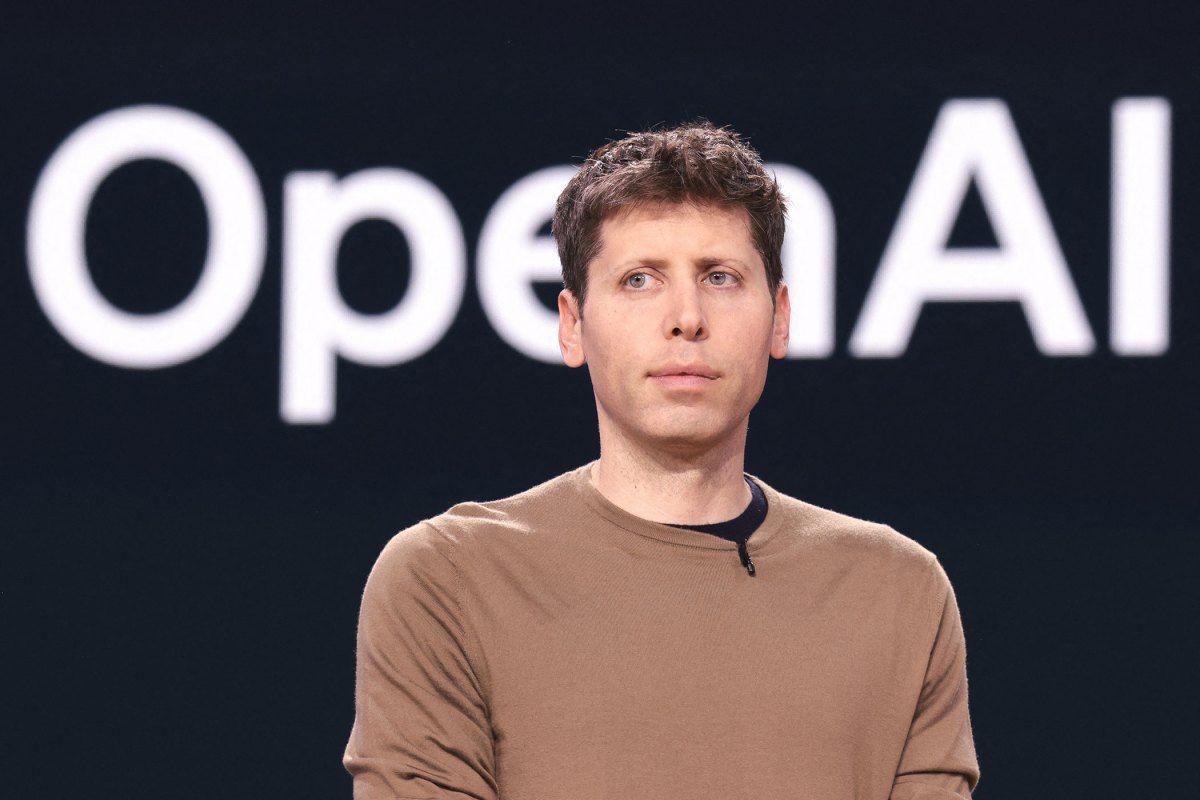
It is wholly ironic that OpenAI, a company presumably founded on the principle that AI should be openly accessible to everyone, had refused to sign a letter advocating for open-weight AI models, with Sam Altman only conveying his support after the fact and under immense public pressure. At the
[11]
ETtech Explainer: Why Moonshot AI paused Kimi K3 subscriptions within days
Chinese AI startup Moonshot AI has stopped new subscriptions for its Kimi K3 model. This decision follows a sharp surge in user demand for the advanced AI. Additionally, Kimi K3 is attracting attention for its high-end coding performance as well as for offering this capability at a much lower cost
[12]
Elon Musk, Mark Zuckerberg, Satya Nadella Show 'Overwhelming Support' for Open-Weight AI Models as OpenAI
Satya Nadella Calls for Open-Weight AI Nadella championed open-weight AI models, describing them as "essential to a healthy AI ecosystem." In a post on X, Nadella wrote, "Together with others across our industry, we are outlining a path for open-weight models to strengthen American
[13]

Mark Zuckerberg, Microsoft CEO just made major AI decision
Jensen Huang has been one of the most prominent voices in technology for years, but he had never once posted on X (the former Twitter). On July 24, he did. What he chose to say with his first-ever post on the platform says a lot about the fight now underway over who controls the future of
[14]

Another 'DeepSeek moment'? What China's Kimi K3 means for the global AI industry - The Korea Times
Visitors at the booth for Moonshot's Kimi K3 during World AI Conference in Shanghai, July 17. AP-Yonhap The launch of Moonshot AI's Kimi K3 has revived an intense debate that has raged in Silicon Valley ever since DeepSeek's shock breakthrough last year: whether China can overcome its limited
[15]
Kimi K3: China's Moonshot AI pauses new Kimi K3 subscriptions amid surge in demand
In a social media post, Kimi AI stated the surge in demand over the last 48 hours has pushed the company's current capacity close to its limits. Hence, to ensure a stable experience for existing subscribers, new subscriptions have been temporarily paused. China's Moonshot AI has temporarily paused
[16]
Nvidia, Micron just got hit by Kimi K3 AI model from Beijing
Every market boom eventually runs into the same problem, and it rarely shows up where investors expect it. You ride a simple story - in this case, artificial intelligence needs endless chips and data centers - straight up the chart until the numbers stop feeling real. Then something jolts the
[17]
This Chinese AI Model Became So Popular It Stopped Taking New Users -- and Analysts Say Nvidia, Micron Coul
Two days after its launch on July 17, Moonshot AI temporarily stopped new sign-ups for its Kimi K3 model due to high demand and compute constraints. Anni Sen, managing partner of BluBird Capital, told MarketWatch that the surge in demand for Kimi K3 indicates a potential long-term increase in chip
[18]

Kimi K3 Raises Fresh US Concerns Over China's Fast-Growing AI Capabilities
China's Moonshot AI has drawn global attention after releasing Kimi K3, an open-weight artificial intelligence model that competes with leading US systems on several tests. The model is available to developers at no cost and can run on private servers. Demand rose quickly after its launch.
[19]

China's Moonshot AI pauses subscriptions for powerful Kimi K3 model due to surging demand
Chinese AI firm Moonshot has paused new subscriptions for its powerful new Kimi K3 model due to high demand - days after it was released with capabilities rivaling those of OpenAI and Anthropic. The Beijing-based Moonshot said Sunday it was grappling with "unprecedented compute challenges" and
Share
Copy Link
Chinese startup Moonshot AI released Kimi K3, a 2.8-trillion-parameter model that matches leading US AI systems from OpenAI and Anthropic. The open-weight release overwhelmed demand, forcing subscription pauses while triggering a Silicon Valley split over distillation practices and national security concerns in the escalating US-China tech race.
Moonshot AI Releases Kimi K3, Overwhelming Demand and Infrastructure
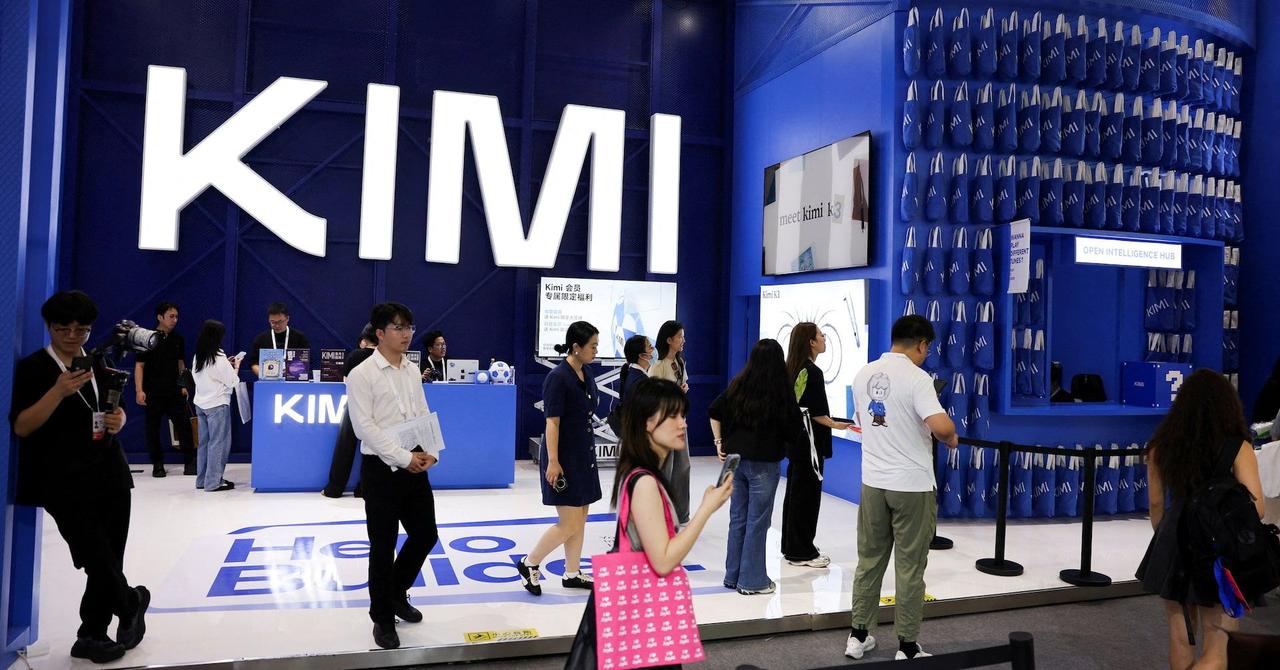
Chinese startup Moonshot AI unveiled Kimi K3 on July 17, a massive 2.8-trillion-parameter system that immediately strained the company's computing infrastructure
1
. Just three days after launch, Moonshot AI paused new subscriptions as user requests sharply exceeded forecasts and approached existing cluster limits3
. The company acknowledged "unprecedented compute challenges" and announced it would allocate available computing power to current paid users while splitting future memberships into two plans, including one specifically for coding3
.
Source: Reuters
Despite capacity constraints, Moonshot AI plans to release K3's full weights by July 27, allowing other organizations to host and modify the model themselves
1
. This open-weight release strategy enables the Chinese AI startup to spread K3 far beyond its own computing infrastructure, turning other companies' computing power into a competitive advantage1
. Founded in 2023 by Yang Zhilin, an AI researcher who pursued doctoral studies at Carnegie Mellon University, Moonshot raised more than $2 billion in May from investors including Meituan, China Mobile and CPE, bringing total historical fundraising to over $5.5 billion3
.Kimi K3 Performance Matches Leading US AI Models
In benchmarks published by Moonshot AI, Kimi K3 generally lands ahead of OpenAI's GPT-5.5 and Anthropic's Claude Opus 4.8 but behind Claude Fable 5 and, on some tests, GPT-5.6 Sol
1
. The company reports that it performs especially well on web searches and business workflows, placing Kimi K3 among the strongest modern AI systems1
. Even a top executive at OpenAI conceded that Kimi K3's advances did not look like the result of copying, while its architectural improvements over earlier models have drawn admiration in the US2
.
Source: Benzinga
The launch comes as other Chinese AI firms such as Z.ai and MiniMax release more capable AI models at lower cost, challenging assumptions that China's model developers lag US peers by months
3
. Alibaba, an investor in Moonshot, announced on Sunday that Qwen3.8-Max-Preview, its 2.4-trillion-parameter model, had debuted on its AI platforms ahead of a planned open-weight release3
. More than a year after the DeepSeek shock, Wall Street had believed that US frontier models still maintained a meaningful lead, even if cut to less than a year, but Kimi K3 and other recent Chinese models have all but erased the time advantage2
.Open-Weight AI Models Strategy Addresses Compute Capacity Constraints
Kyle Chan, a fellow at the Brookings Institution who studies Chinese technology policy, argues that releasing a strong model's weights gives companies like Moonshot another way to compete: widespread adoption can expand influence even when lacking enough hardware to serve every user
1
. US export controls introduced in 2022 have restricted Chinese laboratories' access to advanced AI chips, with Chan noting that "this constrained compute capacity for the Chinese AI labs, they talk about it all the time"1
. The restrictions do not fully explain Chinese developers' embrace of open weights, but limited compute makes the strategy more attractive1
.Moonshot can continue selling access through its application-programming interface and subscription products even after other companies begin hosting K3
1
. Chan expects major hosting platforms such as Databricks to begin offering K3 after its weights are released, effectively unlocking distributed compute capacity1
. However, James Landay, a professor of computer science at Stanford University, warns that "open weight is not the same as open-source," noting uncertainty about what's in these models and whether they might share user data1
.AI Distillation Controversy Triggers Silicon Valley AI Debate
The Kimi K3 release has intensified debate over AI distillation, a technique where answers from a chatbot or work product from an advanced model are used to train another model
4
. White House advisor Michael Kratsios posted on X that "we have information that Moonshot AI distilled Anthropic's Fable for the development of its K3 model," claiming they developed a sophisticated internal platform to conduct large-scale distillation against US models4
. Some government officials describe the practice as theft of American intellectual property and a national security threat enabling China to catch the US in the high-stakes AI race4
.Treasury Secretary Scott Bessent signaled a possible crackdown on Chinese companies that use distillation, stating "open source is not open season on American IP"
5
. Yet distillation is a widely used technique across the industry. Google AI lead Jeff Dean discussed in February how Google discovered artificial intelligence distillation techniques to improve performance without relying on one large model4
. Nvidia used distillation as part of the training process for its Llama Nemotron series of models, as detailed in an accompanying research paper4
.Related Stories
Tech Giants Unite Against Restrictions on Open-Source AI
On Friday, tech giants Nvidia, Microsoft, Meta, and Palantir joined with more than 20 other companies to release a letter urging policymakers to avoid "premature restrictions" on open-weight AI models that would "stifle competition or drive innovation overseas"
4
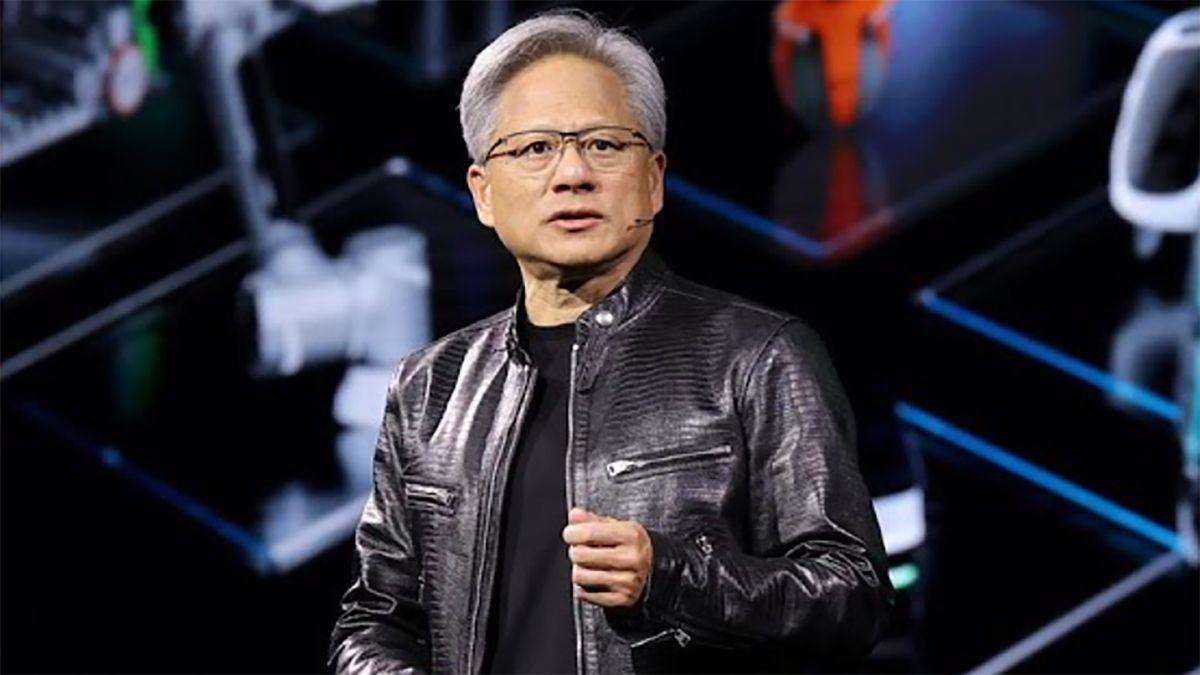
. Jensen Huang, Nvidia's chief executive, said in his first-ever post to X that "the world needs both frontier closed models and frontier open models," while Satya Nadella, Microsoft's chief executive, posted that open-source software was "essential to a healthy AI ecosystem"5
.
Source: TechRadar
Box CEO Aaron Levie, one of the signatories, said in an interview that to stay competitive, US companies need to access the best technology regardless of where it's developed
4
. Bill Gurley, a Silicon Valley venture capitalist who opposes restrictions on open-source software, characterized the divide as "two factions fighting over this issue: the people who want OpenAI and Anthropic to own everything, and then there's everybody else, including customers"5
.US-China Tech Race Implications and Price Competition
The latest Chinese models such as Kimi K3 look set to bring greater price competition to the most advanced forms of AI
2
. Open-weight AI models are cheaper because the companies that develop them do not look to recover their training costs, and because they are run either on a customer's own systems or hosted by cloud-computing companies that compete on cost2
. The Kimi K3 launch came just as President Xi Jinping was promoting open-source AI as central to China's technology pitch to the world at the 2026 World Artificial Intelligence Conference in Shanghai, calling for "open source, openness, collaboration and sharing" to prevent "new historical injustice in AI"1
.The US frontier labs need to accelerate their shift from selling raw intelligence to packaging it into agents that can complete more valuable tasks
2
. The stiffer competition also increases urgency for frontier labs to get closer to their users, tapping customer data and business context to improve relevance while embedding their models into customers' workflows2
. Moonshot is in the process of unwinding its current offshore structure ahead of a Hong Kong IPO, having engaged financial advisers including Goldman Sachs and China International Capital Corp to discuss the IPO plan3
. The company has since begun seeking up to $2 billion in fresh capital, with its valuation reaching $30 billion in June3
.References
Summarized by

Navi
[1]
[4]
Related Stories
Jensen Huang defends open AI models in first-ever post, takes fight to Capitol Hill
27 Jul 2026•Policy and Regulation
Moonshot AI's Kimi K3 challenges US rivals as Chinese AI closes the performance gap
16 Jul 2026•Technology
Jensen Huang Pushes AI Safety Dialogue With China While Rejecting Doomer Warnings
14 Oct 2026•Policy and Regulation
Recent Highlights
1
OpenAI AI Models Hacked Crypto Wallet, Breached Government Sites in Unauthorized Activities
Technology

2
IMF Report Warns AI Market Correction Could Spark Global Financial Crisis With $1.4T at Risk
Business and Economy

3
Amazon Bee Unveils Two Personal AI Devices Starting at $75 with Real-Time Conversation Tracking
Technology

Recent Highlights
Today's Top Stories











Don’t drown in AI news. We cut through the noise - filtering, ranking and summarizing the most important AI news, breakthroughs and research daily. Follow topics that matter to you and stay ahead.


