Memory shortage forces PC makers to raise prices up to 30% as AI demand drains supply


8 Sources
8 Sources
[1]
MSI plans to raise prices by up to 30% amid memory crunch
Serving tech enthusiasts for over 25 years. TechSpot means tech analysis and advice you can trust. Hardware Slop: MSI is adding its own chapter to the ongoing story of memory chip shortages and the growing concentration of power in the AI industry. Big tech companies and AI startups are buying up chips straight off the production lines years in advance, leaving end customers with the leftovers - which are also expected to become significantly more expensive in the near future. MSI plans to increase the price of its PC products by 15 - 30%, company general manager Huang Jinqing recently said. Speaking with investors, Jinqing confirmed that the entire hardware industry is facing unprecedented market conditions. Memory manufacturers have almost entirely shifted their priorities, allocating the majority of their production to Big Tech and other corporations investing heavily in AI data centers. Jinqing added that 2026 is shaping up to be the most challenging year in MSI's 40-year history, which began in 1986 in New Taipei City's Zhonghe District. The Taiwanese corporation offers a wide range of hardware products and services, including GPUs, motherboards, desktop and laptop systems, and servers. MSI is also active in the automotive infotainment market. Today's PC industry is facing several challenges, Jinqing said, but the memory chip shortage is now the most urgent issue. DRAM, SSD, and other traditional memory-based products are going through a series of price hikes, with OEM players such as HP lamenting the exploding costs for building new consumer systems. Even worse, memory manufacturers with foundry capabilities are now seeking changes to their partnership models. Taiwanese companies like MSI have traditionally worked with memory foundries through long-term commitments, a model that no longer seems to work. Adding to the challenge, Nvidia is now producing GPUs primarily for AI data centers, leaving gaming GPU builders like MSI facing roughly a 20% supply shortfall. MSI is attempting to stay afloat - and potentially thrive - in an AI-focused technology market by pursuing three main strategies. First, the company plans to concentrate on high-end products, cutting its low-end business by about 30%. Second, MSI is negotiating three- to five-year agreements with memory makers while "upgrading" its motherboard models to support both DDR5 and DDR4 memory modules. Finally, the Taiwanese OEM is doubling down on its server business, targeting 50 - 100% annual revenue growth. MSI hopes to offset shrinking consumer output by selling more servers and AI-related products. Early results, however, have been mixed. The company recently launched its EZ PC Builder AI chatbot, a generative assistant designed to help users build custom PCs, but it received poor reception for several understandable reasons.
[2]
Think the RAM Crisis Is Bad Now? It Just Keeps Getting Worse
With relief now not expected until 2030, PCs and smartphones will just keep getting more expensive. Unless the AI bubble bursts and sends all those planned data center projects packing, you won’t see an end to memory pricing woes anytime soon. One of the big three semiconductor companies capable of making memory doesn’t imagine it will be able to meet all consumer demand for at least another four years. The DRAM and NAND memory market is dominated by three major players, Micron, Samsung, and SK Hynix. The latter falls under the global conglomerate SK Group. The South Korean-based RAM maker’s chairman, Chey Tae-won, told Bloomberg that the company is expanding memory-making capacity. Unfortunately, it won’t be able to meet demand until “around†2030. Chey spoke to reporters outside of GTC 2026 earlier this week. He said that capacity for the basic wafers the company uses for its chips is lagging 20% behind demand. All this inevitably trickles down to consumers. We’ve seen prices increase for practically every gadget, from laptops to smartphones like the recent Samsung Galaxy S26, all the way down to enthusiast-level miniature computing chips like the Raspberry Pi. The blame for the memory shortage falls at the feet of the AI boom. The largest AI datacenter projects, like OpenAI’s multi-state Stargate project, have such a massive demand for high-bandwidth memory (HBM). Semiconductor companies are making such a profit from these high-end memory chips that they have reduced capacity for consumer-level DRAM and SSD storage. Even major companies like Valve are struggling to source affordable RAM for its Steam Machine. One of the company's staff reportedly joked to industry insiders at GDC 2026, “If you have a line on a bunch of RAM, we are in the market and would like to buy it." The reason why the major semiconductor companies are moving slowly to increase supply isâ€"ironicallyâ€"a fear of having too much RAM. Korean outlet Chosun Biz reported, based on anonymous industry sources, that Samsung hopes the global semiconductor market may reverse course in 2028. It reportedly doesn’t want to scale capacity so much because of "uncertainties in demand forecasting.†Essentially, Samsung may be concerned about scaling up too fast and then the RAM supply being too much once AI data center demand for high-bandwidth memory falters. Currently, 50% of SK Hynix and Samsung memory output is in the form of HBM slated for AI data centers. SK Hynix is expanding capacity, according to Chosun Biz. It’s building more centers located around Korea such as Icheon, Cheongju, and Yongin. It’s spending close to $13 billion on a massive new assembly plant made solely to supply HBM. The work is set to start in April and not be finished until the end of 2027, according to Reuters. A single Nvidia Vera Rubin chipâ€"the company’s latest, most powerful AI training SoC (system on a chip)â€"requires as much as 288GB of HBM. That’s nine times as much as your typical gaming-ready PC. The older Grace Blackwell-based B300 chips require just slightly less memory. And this AI boom is how Nvidia plans to drive $1 trillion in revenue. Data centers plan to stack hundreds of these chips together, just for the sake of AI cloud compute. Until demand for AI data centers bottoms out, we’ll be in for years of inflated gadget prices.
[3]
'Difficult to survive': RAMaggedon hits Intel as new report says it is jacking CPU prices by 10%
Windows PC makers are struggling through the ongoing RAM crisis, and a new report indicates it's not going to get better, thanks to an integral PC component getting more expensive. The Korean outlet, ETNews is reporting that Intel will raise the prices of its CPUs by 10%, largely because of skyrocketing RAM prices due to AI greed. The publication says Intel informed its major clients of the price hike today (March 19) with increases expected to hit "most" of the company's CPU lineup. It's suggested that the move is being made to secure profitability as the supply of consumer devices (ie gaming PCs, laptops, etc) shrinks due to the ever-growing demand of AI data centers. Beyond RAM prices, Intel is facing stiffer competition from AMD and Intel. While Intel still dominates the CPU market, holding 60% of market share overall, AMD is catching up. According to charts from CPUbenchmark.net, Intel makes up 73% of Windows laptop share, but was surpassed by AMD last year in desktops at 51%. This year, Qualcomm announced a new Snapdragon X2 Plus CPU that is supposed to be an "epic" upgrade. At CES 2026, AMD claimed its Ryzen AI CPUs are faster and better than Intel's Panther Lake for both gaming and AI. Intel may be feeling the heat. 'Difficult to survive' "There are concerns that if Intel CPU prices also rise, operating profits will shrink significantly, making it difficult to survive," an industry insider told ETNews. Still, any price hike during RAMaggedon is going to adversely affect PC manufacturers who are struggling in the face of new competition from the $599 MacBook Neo and surging RAM prices. Outside of the Neo, we may be seeing the end of the era of cheap PCs, with no relief insight until 2028, at the earliest. PC makers are trying different things to survive from seeking out smaller memory producers to focusing on premium PCs over budget offerings. For now, the RAM crisis just keeps claiming victims. Even major companies like Samsung have put its mobile division into "emergency management" mode despite record pre-orders for the Galaxy S26 Ultra. Follow Tom's Guide on Google News and add us as a preferred source to get our up-to-date news, analysis, and reviews in your feeds.
[4]
'We are only able to supply, for our key customers in the midterm, about 50% to two-thirds of their requirements': Micron CEO forecasts production spend increase to meet the insane demand for memory - but the RAM crisis will only get worse
* Micron CEO says company is unable to meet current demand * DRAM production is being prioritized for AI and datacenters * Consumers are reeling for the cheap RAM of yesteryear Micron Technology Inc. CEO Sanjay Mehrotra has said that the company "are only able to supply, for our key customers in the midterm, about 50% to two-thirds of their requirements." Mehrotra's statement reflects the growing demand by datacenters for components related to AI compute that will likely worsen the supply of memory. The CEO added that, in order to meet the demand, the company will have to spend heavily on production. RAM crisis not easing any time soon Mehrotra's statements come after Micron reported excellent Q2 earnings, largely driven by datacenters looking for components to fill the ever growing demand for AI with specific reference to high-bandwidth memory - namely Dynamic Random Access Memory (DRAM) and NAND memory. But demand has massively outstripped supply, with Mehrotra stating that, "We are only able to supply, for our key customers in the midterm, about 50% to two-thirds of their requirements," Mehrotra told CNBC's "Squawk on the Street." Mehrotra also added that there is currently an "unprecedented gap between supply and demand" and that "we continue to expect supply-demand conditions for both DRAM and NAND to remain tight beyond calendar 2026." This has been the catalyst for the 'RAM crisis' being experienced by consumers, with manufacturers shifting production to cater to the more profitable demands of AI, which has spiked memory prices across the board. TrendForce predicted that the price of DRAM will likely double quarter-over-quarter in its 1Q2026 memory industry survey. Storage in general to take a hit As the production of DRAM and NAND share similar production environments, resources intended for the production of NAND memory are being cannibalized by DRAM production, especially as DRAM commands a far higher margin for profit. This has had a further knock on effect for investment in NAND production, with the remaining supply being hoovered up by enterprise demand for high-speed memory. But the knock-ons don't end there. The lack of RAM supply is also forcing new devices such as mobile phones and laptops to ship with what is widely considered to be the bare minimum in RAM, forcing software developers to cater to the reduced memory provisions - resulting in an increase in the use of virtual memory. Virtual memory uses a portion of the storage of a device's Solid State Drive (SSD) as a RAM surrogate. The constant writing and re-writing of temporary data to the SSD can cause it to fail far faster than its warranty would suggest, adding an additional cost to the consumer on top of the increased price of devices. China to seize the opportunity? There is however an opportunity for smaller firms, especially those in China, to fill the gap in the market. Several Chinese firms have fast-tracked construction timelines for new NAND and DRAM production facilities. Yangtze Memory recently pushed up the completion of its Wuhan Phase III NAND plant from 2027 to the second half of 2026, and ChangXin Memory is in the process of expanding its Shanghai DRAM facility to an output of 300,000 wafers per month by late 2026. The good news for consumers - especially now that the US has removed both companies from its restriction list - is that the market could soon see an influx of cheaper and higher capacity DRAM and NAND memory. The only caveat being that the products won't be from a recognizable brand name, so time will only tell how it holds up in quality. Follow TechRadar on Google News and add us as a preferred source to get our expert news, reviews, and opinion in your feeds. Make sure to click the Follow button! And of course you can also follow TechRadar on TikTok for news, reviews, unboxings in video form, and get regular updates from us on WhatsApp too.
[5]

MSI to increase gaming product prices by up to 30% as memory costs spike
With artificial intelligence (AI) demand surging and key components such as memory in tight supply, Micro-Star International (MSI) chairman Joseph Hsu and president Jeans Huang said the company is actively expanding in the AI server market, achieving growth of 50 to 100% in 2025, and expects to maintain strong growth in 2026. In addition, they expect gaming products to see a price increase of about 15 to 30% in 2026 due to the impact of rising memory costs. PC shipments to fall in 2026 Hsu explained that the traditional "seasonal cycle" long relied upon by the PC industry is gradually disappearing. In the future, shipment rhythms will no longer be driven by market demand but by GPU supply. According to Hsu, the rapid rise in AI computing demand has led AI servers to take priority for GPU and high-end memory capacity. In the past, the PC market experienced clear peak seasons around national holiday promotions, back-to-school periods, and year-end holidays. However, with chip supply constraints, the market's seasonal rhythm is undergoing a structural change. Hsu emphasized that under tight GPU and high-end memory supply, future PC industry competition will no longer focus solely on sales volume. Instead, it will test manufacturers on product mix, supply chain management, and high-end market positioning. Huang added that the PC market faces multiple pressures in 2026. In addition to overall demand being affected by macroeconomic factors, the crowding-out effect of AI investment continues to grow. Combined with the lack of major new product launches, market momentum has clearly weakened. Based on various estimates, global PC shipments in 2026 could decline by more than 10%, with a potential drop of up to 20%. Adjusting PC pricing strategies On the supply chain side, soaring memory prices have forced PC brands to readjust their pricing strategies. Since the fourth quarter of 2025, DDR5 prices have risen sharply, with some specifications increasing two- to threefold, putting significant pressure on the cost of motherboards and complete systems. To reflect rising costs, MSI has gradually adjusted its end-product prices. Although market demand remains uncertain, shrinking supply has eased price competition. In other words, the current environment is no longer about cutting prices to gain market share; instead, those who can secure components hold the leverage to negotiate prices. MSI expects 2026 operations to follow a lower volume, higher price pattern. Even if PC shipment volumes fall, revenue performance and profitability can improve through price adjustments and product mix optimization. In terms of product strategy, mid- and low-tier products have historically accounted for more than 30% of MSI's portfolio. With key component supplies limited, the company plans to prioritize high-priced product lines such as gaming and commercial, as well as concentrate research and development resources on high-value-added products. AI servers to drive growth MSI's gross margin returned to a healthy level in the first quarter of 2026, with further improvement anticipated after cost-reflective price adjustments take hold after the second quarter. Beyond its core PC business, AI servers have become the company's most important growth driver. Hsu noted that since 2024, MSI has been actively investing in the development of AI computing products. Although AI servers currently only account for a single-digit percentage of total revenue, the company has set a target of at least 50% annual growth in AI server revenue over the next three years. Unlike large cloud service providers, MSI focuses on small and medium-sized businesses and the enterprise-level AI application market, offering flexible, cost-effective computing platforms. As AI applications become more widespread, enterprise demand for AI servers will continue to grow. While gross margins for AI servers are currently lower than for PC products, their vast market scale makes them an important source of a second growth curve. Expanding production to mitigate risks To mitigate geopolitical and tariff risks, MSI has accelerated adjustments to its global capacity layout in recent years. Its main manufacturing bases remain concentrated in China, with the Kunshan facility handling notebook and automotive product assembly, while the Baoan facility focuses on graphics cards and other non-notebook products. In terms of overseas expansion, MSI's new US facility officially began operations in early 2026, primarily handling data center and AI server assembly. Going forward, depending on customer demand, the company plans to shift over half of its server production capacity to the US to meet local data center needs and government procurement requirements for "Made in USA" products. In Europe, MSI's facility in the Netherlands is currently undergoing renovation, with completion scheduled for late 2027, at which point a full European production line will be established. Meanwhile, a new plant in Taoyuan, Taiwan, is under accelerated construction and is expected to be completed by the end of 2026. This facility will support new products such as AI servers, industrial computers, and charging stations. As global production capacity gradually comes online, MSI will have greater supply chain flexibility over the next three to five years to respond to changes in tariff policies and market demand. MSI posted consolidated revenue of NT$230.20 billion (approx. US$7.18 billion) in 2025, up about 16% year-over-year and a record high. However, net profit after tax fell over 15% to NT$5.75 billion, impacted by currency fluctuations in the second quarter, tariff policies, and rising component costs. Earnings per share dropped to roughly NT$6.80 from NT$8.04 in 2024, while gross margin declined 1.2pp to 11%. Article translated by Eifeh Strom and edited by Jack Wu
[6]

MSI confirms GeForce RTX 50 Series shortage and more price increases incoming
TL;DR: MSI warns 2026 will be its toughest year due to DRAM, storage, and GPU supply shortages driven by AI demand. It says that a 20% GPU supply gap from NVIDIA may shrink the PC market by up to 20%. MSI plans to focus on mid-to-high-end GeForce RTX cards with 15-30% price hikes and shift motherboard memory to DDR4 to maintain growth and profitability. The company also aims to grow its AI and data center business by 50-100% annually over the next 3-5 years. In a new report in Taiwan's United Daily News publication (auto-translated), MSI's General Manager Huang Jinqing has warned investors in a recent briefing that 2026 is shaping up to be the "most severe year since the company was founded." Naturally, this is due to current DRAM, storage, and even GPU supply and pricing issues driven by demand for all things AI and AI infrastructure. And when it comes to graphics cards, of which MSI is a key GeForce RTX partner, the company estimates a supply gap of around 20%, meaning NVIDIA isn't able to provide the stock and GPUs needed to maintain the broader consumer PC market. Not only that, but MSI also predicts this will lead to the PC market shrinking by 10 to 20% in 2026, a larger figure than the one we recently reported from the International Data Corporation (IDC). When it comes to the company's plans to weather the storm, so to speak, in 2026, it will focus on the mid-range and high-end GeForce RTX market, with cards like the GeForce RTX 5060 and RTX 5070, and the price of its graphics cards will increase by anywhere between 15 and 30%. The goal is to increase profit and profit margins as the overall volume decreases. Cutting back on lower-end models with low profit margins might become the new norm for many companies in the short term as component costs continue to rise. However, the report also indicates that MSI will switch its motherboard memory focus from DDR5 to DDR4 this year, as DDR4 memory prices are much more reasonable than the skyrocketing DDR5 prices. And finally, outside the consumer space, MSI is actively working to rapidly expand its AI and data center/server business, with a growth target of 50 to 100% per year for the next three to five years, targeting second and third-tier customers to build its presence in this space.
[7]

PC Gaming Hardware Maker Calls 2026 'Most Challenging Year Ever' As It Hikes Prices Up To 30 Percent
MSI is cutting back on how many low-end GPUs it makes to focus on mid-and high-range hardware I bring more bad news about the price of GPUs and other PC gaming hardware in 2026. MSI explained that due to continued shortages of DRAM, some of its gaming products could increase by as much as 30 percent this year. On March 13, as spotted by The Gamer and originally reported by Taiwan's United Daily News, MSI general manager Huang Jinqing told investors during an earnings call that it plans to raise prices on gaming hardware by 15 to 30 percent over nine months. It is expected that these price increases will primarily affect MSI's lower-end and more affordable gaming hardware options, as the company is cutting back on producing these cheaper components. Instead, MSI plans to redistribute those resources to mid-range and high-end GPUs and hardware. Huang told investors that customers are already showing a willingness to pay more. The plan is to charge more and sells less to offset fewer produced and shipped products in 2026. Jinqing blamed the rising prices on ongoing shortages of DRAM, AI hyperscalers buying up all available memory, and a low supply of Nvidia GPU components. These are the same problems leading to other hardware makers raising prices or delaying releases, like Valve, Xbox, and Intel. "This year is the most challenging year since the company was founded," Huang told investors during the earnings call, as reported by United Daily News. According to MSI's general manager, a 16GB module cost $40 last year. Now it costs $170 or more. Huang told investors that MSI holds about two months of memory inventory and is working to secure mult-year contracts with other hardware makers to avoid having to pay high prices to meet future demand. MSI currently projects that due to supply issues, the PC market will contract by 10 to 20 percent. This is not going to help the alreay terrible (and getting worse) RAM-aggedon, which has seen PC and tech hardware prices continue to increase week after week as companies like Nvidia and Micron focus more and more on supplying companies like Microsoft, Meta, and Google who are all racing to build AI datacenters across the country using many of the parts needed to make advanced gaming GPUs and RAM. Even MSI isn't ignoring the AI market, with Huang telling investors that MSI is investing an extra $20 billion NTD (around $625,786,200 USD) in building a new AI server facility.
[8]

Big Tech Is Paying Billions to Lock In Memory Supply, Essentially Promising Suppliers the Shortage Is Here to Stay
The memory industry is now witnessing a major shift, as DRAM suppliers are now looking to lock in customers into 'multi-year' contracts, essentially guaranteeing demand. It appears that the demand for memory products among Big Tech is so massive that they are willing to take the risk of entering long-term agreements with suppliers like Samsung and Micron, which is seen as a rather 'untraditional' move within the industry. A report by the Korean media outlet EBN reveals that hyperscalers are entering into long-term memory contracts with firms like Google and Microsoft, which lead the list. The idea with such contracts is to fix long-term volume while keeping spot pricing at its current level. By bagging such deals, memory manufacturers are looking to factor in demand that potentially extends the cycle much further. If concluded in this manner, Samsung Electronics secures long-term demand visibility, enabling it to accelerate capacity expansion and prevent sharp price drops like in the past by avoiding inventory buildup. - EBN We have already discussed Samsung's co-CEO proposing such a model, and, from a business perspective, such contracts factor out the uncertainty involved in investing in capacity buildout and the risk of overinvestment. But at the same time, in the consumer industry, this basically means most of the future capacity built out would be dedicated to the AI sector, so shortages wouldn't ease anytime soon and instead would extend beyond traditional timelines, which is disappointing. Hyperscalers' DRAM demand isn't driven solely by the infrastructure buildout; rather, efforts to deploy custom chips are expected to increase significantly as we move towards inference. This particular workload area is one where performance isn't the only priority; factors like throughput, TCO per token, latency, and others become significant, which is why ASICs are seen as a viable replacement. Companies like Google with TPUs, Microsoft with Maia, Meta with MTIA, and Amazon with Trainium are looking to increase the split between GPU-ASIC-based compute for inference, which is why locking HBM supply is vital to them. It is indeed disappointing to see how the memory industry is evolving, and how, with each development, the priority given to the average consumer is decreasing. Initial estimates suggested the shortages would ease by the middle of 2027, but this could extend well beyond that.
Share
Share
Copy Link
The RAM crisis deepens as MSI announces price increases of up to 30% on gaming products while Intel raises CPU prices by 10%. Semiconductor companies like Micron can only supply 50-67% of customer requirements, with SK Hynix chairman warning relief won't come until around 2030 as AI data centers consume half of all memory production.
AI Demand Reshapes Memory Market Priorities
The technology industry faces an escalating memory shortage that threatens to reshape consumer electronics pricing for years to come. MSI plans to raise prices by 15-30% on its PC products, company president Jeans Huang recently confirmed to investors
1
5
. The Taiwanese hardware manufacturer, which has operated for 40 years since its 1986 founding, called 2026 "the most challenging year" in its history as memory chip shortage conditions intensify across the industry.
Source: DIGITIMES
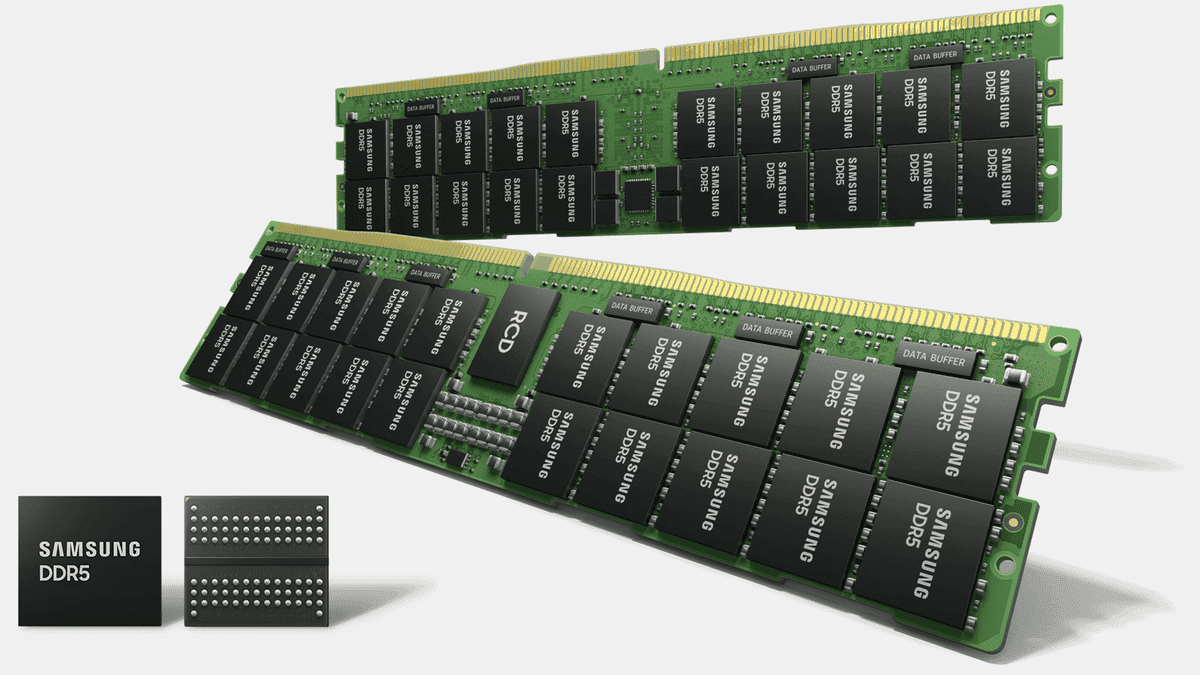
The root cause lies in how semiconductor companies have prioritized production. Currently, 50% of SK Hynix and Samsung memory output takes the form of high-bandwidth memory (HBM) destined for AI data centers
2
. This massive shift leaves PC manufacturers scrambling for components. Micron CEO Sanjay Mehrotra told CNBC that the company can "only supply, for our key customers in the midterm, about 50% to two-thirds of their requirements"4
. He described an "unprecedented gap between supply and demand" with tight conditions expected to persist beyond calendar 2026.Rising Component Costs Hit Multiple Product Categories
The RAM crisis extends beyond gaming PCs to affect virtually every consumer device market. Intel informed major clients on March 19 that it would raise CPU prices by 10% across most of its lineup, largely to maintain profitability as spiking memory costs erode margins
3
. An industry insider told Korean outlet ETNews there are "concerns that if Intel CPU prices also rise, operating profits will shrink significantly, making it difficult to survive."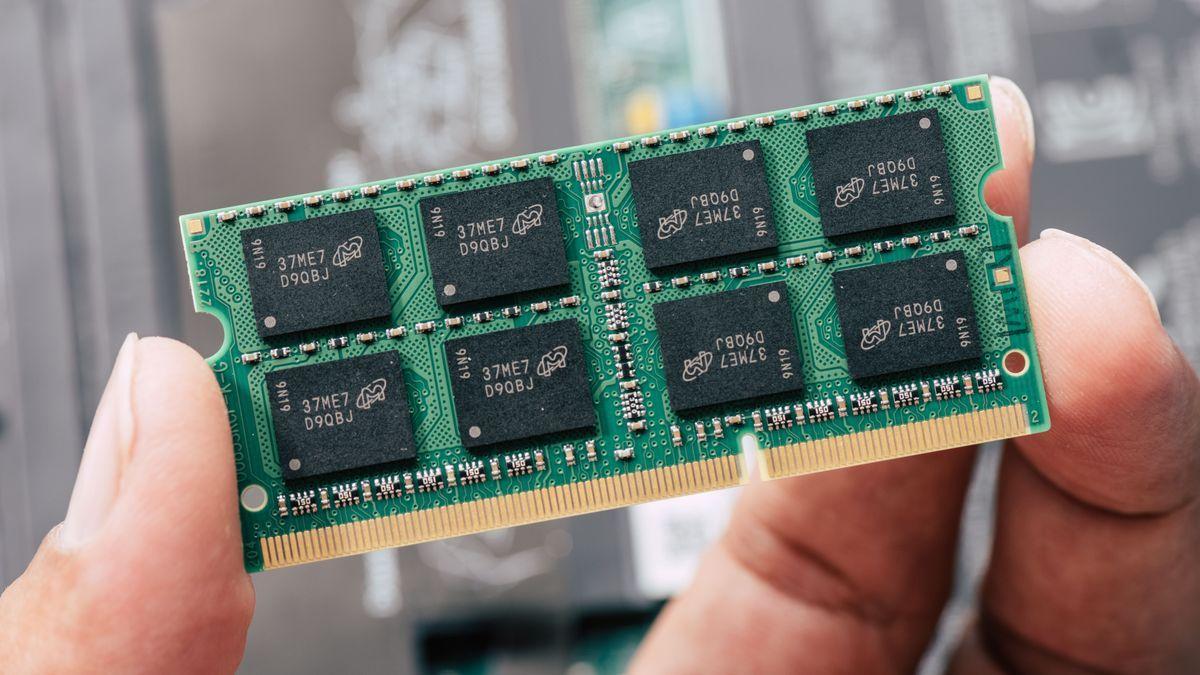
Source: TechRadar
DRAM prices have surged dramatically, with DDR5 specifications increasing two- to threefold since the fourth quarter of 2025
5
. TrendForce predicted DRAM prices would likely double quarter-over-quarter in its 1Q2026 memory industry survey . The impact reaches smartphones like the Samsung Galaxy S26, enthusiast products like Raspberry Pi, and even Valve's Steam Machine, with company staff reportedly joking at GDC 2026 that they're actively seeking RAM suppliers2
.PC Manufacturers Adapt Survival Strategies
Facing these pressures, PC manufacturers are implementing dramatic strategic shifts. MSI announced it will cut its low-end business by approximately 30% to focus on high-margin products
1
. The company is negotiating three- to five-year agreements with memory makers while upgrading motherboard models to support both DDR5 and DDR4 memory modules. MSI chairman Joseph Hsu explained that the traditional seasonal cycle relied upon by the PC industry is "gradually disappearing," with shipment rhythms now driven by GPU supply rather than market demand5
.Global PC shipments in 2026 could decline by more than 10%, with potential drops reaching 20% according to various estimates
5
. MSI expects operations to follow a "lower volume, higher price pattern," maintaining revenue performance through price adjustments and product mix optimization even as shipment volumes fall. The company is also doubling down on its server market, targeting 50-100% annual revenue growth to offset shrinking consumer output1
.Related Stories
Supply Chain Constraints Extend to 2030
SK Hynix chairman Chey Tae-won told Bloomberg outside GTC 2026 that the company won't meet all consumer demand until "around" 2030
2
. Current capacity for basic wafers lags 20% behind demand. The delay stems partly from semiconductor companies' cautious approach to expansion. Korean outlet Chosun Biz reported that Samsung fears oversupply if AI data center demand for high-bandwidth memory falters, creating "uncertainties in demand forecasting" that discourage aggressive capacity increases2
.SK Hynix is building new centers in Icheon, Cheongju, and Yongin, spending close to $13 billion on a massive assembly plant dedicated solely to HBM supply
2
. Construction begins in April but won't finish until the end of 2027. The scale of AI requirements explains the timeline: a single Nvidia Vera Rubin chip requires up to 288GB of HBM, nine times as much as a typical gaming-ready PC2
. Data centers plan to stack hundreds of these chips together for AI cloud compute, supporting Nvidia's goal to drive $1 trillion in revenue.Gaming GPU Supply Adds Another Constraint
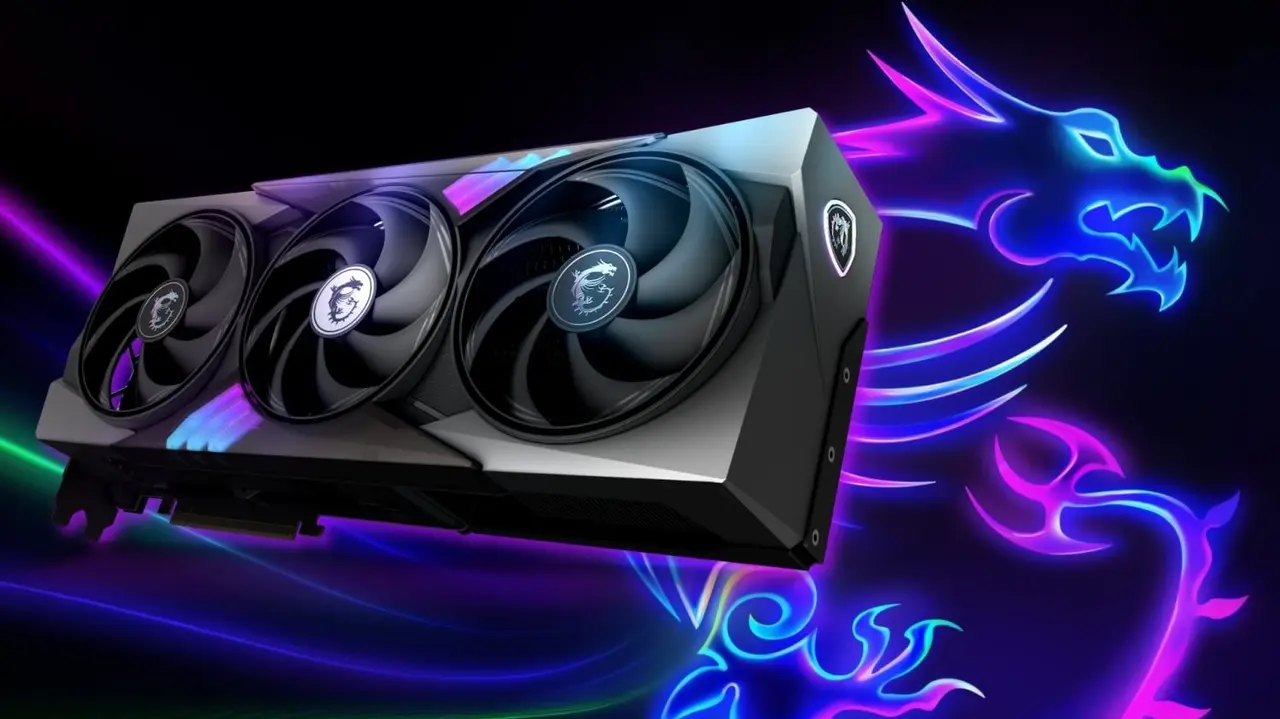
Beyond memory, Nvidia's production priorities compound difficulties for consumer device manufacturers. The company now produces GPUs primarily for AI data centers, leaving gaming GPU builders like MSI facing roughly a 20% supply shortfall
1
. This dual constraint on both memory and graphics processors forces manufacturers to completely rethink their supply chain management and product positioning strategies. MSI chairman Hsu emphasized that future PC industry competition will test manufacturers on "product mix, supply chain management, and high-end market positioning" rather than sales volume alone5
.
Source: TweakTown
Chinese firms may seize opportunities in this constrained market. Yangtze Memory pushed completion of its Wuhan Phase III NAND plant from 2027 to the second half of 2026, while ChangXin Memory expands its Shanghai DRAM facility to 300,000 wafers per month by late 2026
4
. With both companies recently removed from US restriction lists, consumers may soon see an influx of cheaper, higher-capacity DRAM and NAND memory from lesser-known brands, though quality remains to be proven.References
Summarized by

Navi
[3]
Related Stories
RAM and Storage Prices Surge 500% as AI Demand Triggers Global Memory Crisis
26 Nov 2025•Business and Economy
Memory prices spike up to 400% as AI demand creates global shortage lasting through 2026
14 Dec 2025•Business and Economy

AI Demand Triggers Component Shortage as Dell and Lenovo Plan 15% Price Increases for Servers
03 Dec 2025•Business and Economy

Recent Highlights


Recent Highlights
Today's Top Stories










Your Daily Dose of Curated AI News
Don’t drown in AI news. We cut through the noise - filtering, ranking and summarizing the most important AI news, breakthroughs and research daily. Spend less time searching for the latest in AI and get straight to action.

