NASA and Google Collaborate on AI Medical Assistant for Deep Space Missions


5 Sources
[1]
NASA and Google test AI medical assistant for astronaut missions to the moon and Mars
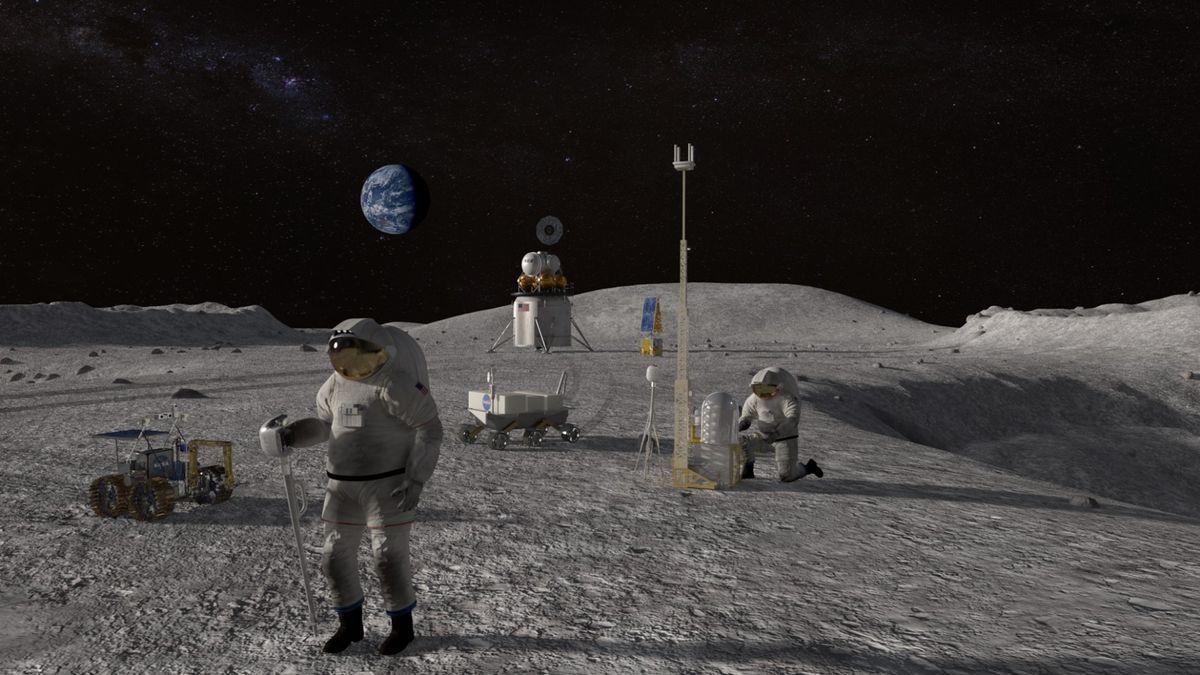
Astronauts working on the moon as part of the Artemis program (Image credit: NASA) NASA and Google are collaborating to test an AI-powered medical assistant designed to support astronauts on long-duration missions, where communication delays with Earth make real-time medical consultations
[2]
Google, NASA developing AI tool to treat health problems in space
The 'Crew Medical Officer Digital Assistant' will help medical crews on Earth diagnose astronauts' health issues in space in real time. Google and NASA, the American space agency, are collaborating on an artificial intelligence (AI) tool to address health problems in space, as the United States
[3]
NASA Teams Up With Google to Build an A.I. Doctor for Astronauts in Space
Future spaceflights will stretch longer and venture deeper into the cosmos, meaning astronauts will more likely need medical care in space. It's an exciting time for space research as NASA eyes a future of longer and more ambitious space missions to the Moon, Mars and beyond through programs like
[4]
Google Teams With NASA On AI 'Space Doctor' To Diagnose, Treat Astronauts On Moon, Mars Missions Where Real-Time Earth Contact Isn't Possible - Alphabet (NASDAQ:GOOG), Alphabet (NASDAQ:GOOGL)
Alphabet Inc. GOOGL GOOG is collaborating with NASA to develop an artificial intelligence medical assistant designed to diagnose and treat astronauts during extended space missions where real-time Earth communication isn't feasible. AI System Addresses Critical Gap In Deep Space Medicine The Crew
[5]

NASA and Google Build AI Medical Assistant for Deep-Space Missions
NASA and Google join forces on a bold leap in space health technology. The joint effort aims to equip astronauts with autonomous medical support during future deep-space missions. The tool, known as Crew Medical Officer Digital Assistant (CMO-DA), promises reliable health aid when ground contact
Share
Copy Link
NASA and Google are developing an AI-powered medical assistant to support astronauts on long-duration missions to the Moon and Mars, where real-time communication with Earth is impossible.
NASA and Google's Collaborative AI Medical Assistant
NASA and Google have joined forces to develop an innovative AI-powered medical assistant designed to support astronauts on long-duration missions to the Moon and Mars. This collaboration aims to address a critical challenge in deep space exploration: providing medical care when real-time communication with Earth is impossible
1
2
.
Source: Observer
The Crew Medical Officer Digital Assistant (CMO-DA)
The AI system, named the Crew Medical Officer Digital Assistant (CMO-DA), is a type of Clinical Decision Support System (CDSS) that utilizes cutting-edge natural language processing and machine learning techniques
1
. Built on Google Cloud's Vertex AI platform, the CMO-DA is trained on spaceflight literature and open-source data covering the 250 most common medical issues encountered in space3
4
.Key features of the CMO-DA include:
- Real-time analysis of crew health and performance
- Diagnosis and treatment recommendations based on reported symptoms
- Multi-modal input capabilities, including speech, text, and image
5
Early Results and Testing
Early trials of the CMO-DA have shown promising results:
- 88% diagnostic accuracy for ankle injuries
- 80% accuracy for ear pain
- 74% accuracy for flank pain
3
4
These results were evaluated by a panel of physicians and an astronaut, demonstrating the potential reliability of the system
5
. NASA and Google are now collaborating with doctors to further test and refine the model1
.
Source: Analytics Insight
Addressing Deep Space Medical Challenges
The development of the CMO-DA is crucial for future deep space missions, where communication delays with Earth can be significant:
- Moon missions: Up to 10-second communication delay
- Mars missions: Up to 40-minute communication delay
2
These delays make real-time medical consultations impossible, and emergency evacuations can take anywhere from two weeks (Moon) to six months (Mars)
2
. The AI assistant aims to bridge this critical gap by providing autonomous medical support.Related Stories
Broader Applications and Future Development
While primarily designed for space missions, the CMO-DA has potential applications in remote and demanding environments on Earth where access to trained medical professionals is limited
1
. Google and NASA are working to make the AI more "situationally aware" of space-specific conditions, including the effects of microgravity on the human body3
.Collaboration and Ownership
Source: Space
The partnership between NASA and Google leverages each organization's strengths:
- Google hosts the CMO-DA in the cloud
- NASA retains full ownership of the source code
- Both parties actively contribute to refining the models
5
As NASA prepares for ambitious missions through programs like Artemis, the CMO-DA represents a significant advancement in space-based healthcare. It is designed to support, not replace, human experts, assessing health, providing real-time diagnostics, and guiding treatment until a medical professional is available
3
4
.This collaboration between NASA and Google marks a bold leap in space health technology, potentially revolutionizing medical care for astronauts and paving the way for safer, longer-duration space exploration.
References
Summarized by

Navi
[5]
Related Stories
Google Enhances Health-Related Features with AI Integration in Search and Android
19 Mar 2025•Technology

Google's AMIE Chatbot Shows Promise in First Real-World Clinical Trial for AI in Healthcare
09 Oct 2026•Health
Google AMIE transitions from simulation to real-world clinical practice with 100-patient study
21 Oct 2026•Health

Recent Highlights



Recent Highlights
Today's Top Stories



Don’t drown in AI news. We cut through the noise - filtering, ranking and summarizing the most important AI news, breakthroughs and research daily. Follow topics that matter to you and stay ahead.


