NetApp Novus Architecture Promises 100TB/s Throughput for Zettabyte-Scale AI Workloads


19 Sources
[1]
AI-ready data without a rebuild, NetApp says
Enterprises sitting on decades of legacy information face a pressing question as artificial intelligence moves from pilots to production: Can that archive become AI-ready data without a costly rebuild of the infrastructure underneath it? NetApp Inc. is betting it can answer that question with a
[2]
NetApp's Novus targets AI data infrastructure at zettabyte scale
NetApp's Novus tackles metadata bottlenecks in AI data infrastructure AI data infrastructure must support growing GPU clusters while making enterprise data usable for models and agents. NetApp Inc. is tying intelligent data infrastructure to production AI through a unified approach to storage and
[3]
Cyber resilience now depends on governing AI agent data use
Storage admins get automated guardrails as agents outrun human-in-the-loop review Enterprises pushing AI agents into production are finding that cyber resilience now depends as much on governing what autonomous software does with data as on keeping attackers out. Much of the risk doesn't come from
[4]
NetApp Targets Massive GPU Utilization, Zettabyte-Scale AI Workloads With Novus Architecture
'Today we are in the accelerated computing era, [which] brings new demands and new opportunities for infrastructure and system design and new technologies that are available today. We are introducing a new architecture, one that is disaggregated intelligently, so that every single element can be
[5]
NetApp Unveils Zero-Copy Data Activation Capabilities for Agentic AI
NetApp announced new capabilities that enable enterprises to accelerate their adoption of agentic AI with secure, in-place, zero-copy data activation. The heterogeneous metadata capability of NetApp AI Data Engine (AIDE) helps organizations discover, understand, govern, and operationalize data
[6]
Data governance sets the rules for NetApp's AI storage agents
NetApp hands storage operations to AI agents, but humans still draw the boundaries Artificial intelligence is turning nearly every enterprise workload into a data workload, and data governance is becoming the test of whether companies can trust autonomous systems with the infrastructure
[7]
NetApp CEO George Kurian: 'We Are Light Years Ahead Of Everybody Else' In Cloud, AI
'Everyone else is doing what we did 10 years ago. We are the only natively-integrated cloud platform. We are bringing other cloud providers like Oracle Cloud and SAP Cloud into our ecosystem, so that now you can get native offerings in the Oracle Cloud, just like you can do in the other
[8]
NetApp Delivers Secure, Zero-Copy Data Activation for the Agentic Enterprise
NetApp today announced new capabilities that enable enterprises to accelerate their adoption of agentic AI with secure, in-place, zero-copy data activation. The heterogeneous metadata capability of NetApp AI Data Engine (AIDE) helps organizations discover, understand, govern, and operationalize
[9]
Open-weight models power private AI on NetApp and Iterate.ai
Enterprise storage becomes AI memory as privately run models close in on the frontier As open-weight models close in on the performance of proprietary frontier systems, enterprises are gaining a credible way to run generative AI on hardware they own. That shift puts the data already sitting in
[10]
NetApp Empowers Enterprises to Build Anything, Anywhere
New hybrid multi-cloud capabilities remove borders between on-premises and cloud operations NetApp today announced new hybrid multi-cloud capabilities with autonomous controls to maximize enterprise flexibility and efficiency for any workload. Enterprises can now more easily adopt modern data
[11]

NetApp launches Novus storage architecture for AI workloads By Investing.com
SAN JOSE, Calif. - NetApp (NASDAQ:NTAP) announced Tuesday the launch of NetApp Novus, a storage architecture designed for AI infrastructure providers operating large GPU environments. The new architecture separates metadata from the data path to allow performance, capacity, and concurrency to
[12]
FlexPod brings validated AI infrastructure to enterprises
Decades of DIY best-of-breed give way to pretested stacks as AI raises integration risk As enterprises push AI out of pilots and into production, FlexPod, the converged infrastructure franchise built by NetApp Inc. and Cisco Systems Inc., is being recast as a pretested answer to AI's complexity.
[13]
NetApp Removes Storage Bottleneck for AI Factories
New architecture delivers fastest storage on the planet, designed to maximize GPU utilization and architected for up to 100 TB per second aggregate throughput NetApp today announced NetApp Novus, the fastest storage on the planet designed for AI infrastructure providers operating large GPU
[14]
NetApp unveils AI data engine updates, expands Commvault tie By Investing.com
SAN JOSE, Calif. - NetApp (NASDAQ:NTAP) announced Tuesday new capabilities for its AI Data Engine and an expanded integration with Commvault aimed at helping enterprises deploy agentic AI systems. The updates include heterogeneous metadata discovery across NetApp ONTAP, StorageGRID, and non-NetApp
[15]
NetApp partners with Supermicro for AI infrastructure solutions By Investing.com
SAN JOSE, Calif. - NetApp (NASDAQ:NTAP) announced Tuesday a collaboration with Supermicro to deliver jointly validated AI infrastructure solutions for AI factories, enterprise deployments, and sovereign AI initiatives. The partnership combines Supermicro's AI-optimized compute and rack-scale
[16]
Data infrastructure draws new buyers to NetApp's AI pitch
Artificial intelligence has pulled data infrastructure out of the back office and into conversations with buyers who never had to think about storage before. For longtime storage providers, that shift is a rare chance to retell their story to an audience with no preconceptions. NetApp Inc. has
[17]
NetApp unveils hybrid cloud tools with autonomous controls By Investing.com
SAN JOSE, Calif. - NetApp (NASDAQ:NTAP) announced Tuesday new hybrid multi-cloud capabilities designed to provide enterprises with autonomous controls across on-premises and cloud environments. The company introduced several new tools, according to a press release statement. NetApp Keystone
[18]
Storage architecture shifts for AI factories
Storage architecture is being rewritten for artificial intelligence factories. Traditional enterprise storage was designed around workloads that scaled in relatively predictable ways. AI changes that equation by combining heavy data movement with transactional metadata activity, often on shared
[19]
NetApp ties intelligent data infrastructure to production AI
CEO George Kurian outlines NetApp's data strategy for production AI Intelligent data infrastructure is becoming critical as enterprises move artificial intelligence from curated pilots into production. NetApp Inc. is positioning its Novus architecture for that transition. Ninety-three percent of
Share
Copy Link
NetApp unveiled its Novus architecture at NetApp INSIGHT, designed to support AI factories with 100TB/s aggregate throughput and access to over 1 zettabyte of data. The company also introduced zero-copy data activation capabilities through its AI Data Engine, addressing enterprise challenges in making legacy data AI-ready without infrastructure rebuilds.
NetApp Novus Architecture Tackles GPU Utilization Bottlenecks
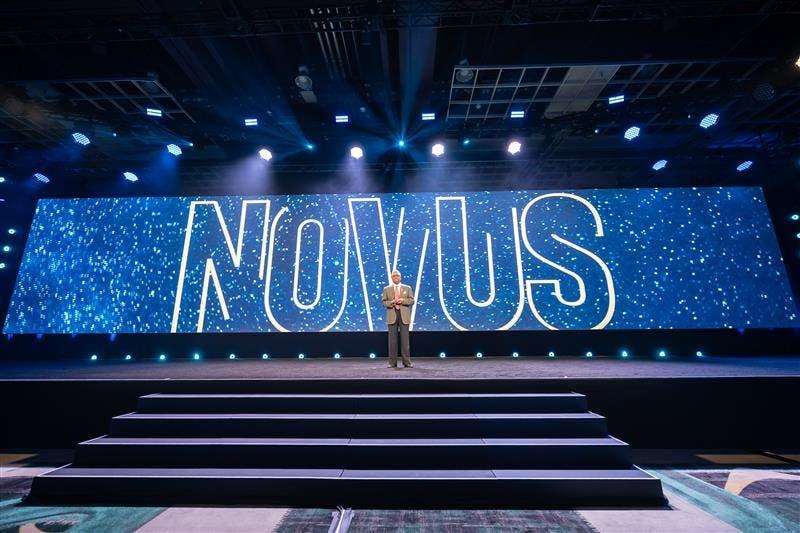
NetApp unveiled its Novus architecture at NetApp INSIGHT, targeting a critical infrastructure challenge: GPU utilization in large-scale AI deployments often drops to just 5 percent because traditional storage cannot keep pace with accelerated computing demands
4
. CEO George Kurian positioned Novus as the company's most significant product introduction in years, designed specifically for the accelerated computing era where AI factories need to maximize efficiency across millions of GPUs4
.
Source: CRN
The NetApp Novus architecture delivers 100TB/s of aggregate throughput and can access over 1 zettabyte of data within a single namespace
2
4
. This performance leap addresses a fundamental problem in AI data infrastructure: while a single GPU can process up to 8TB per second, traditional storage systems create bottlenecks that prevent GPUs from operating at full capacity4
. As AI factories scale from 10,000 GPUs to clusters of 50,000 to 100,000 GPUs, maintaining constant line rates becomes essential for avoiding wasted investment in expensive GPU hardware4
.Disaggregated Metadata Solves AI Data Infrastructure Scaling
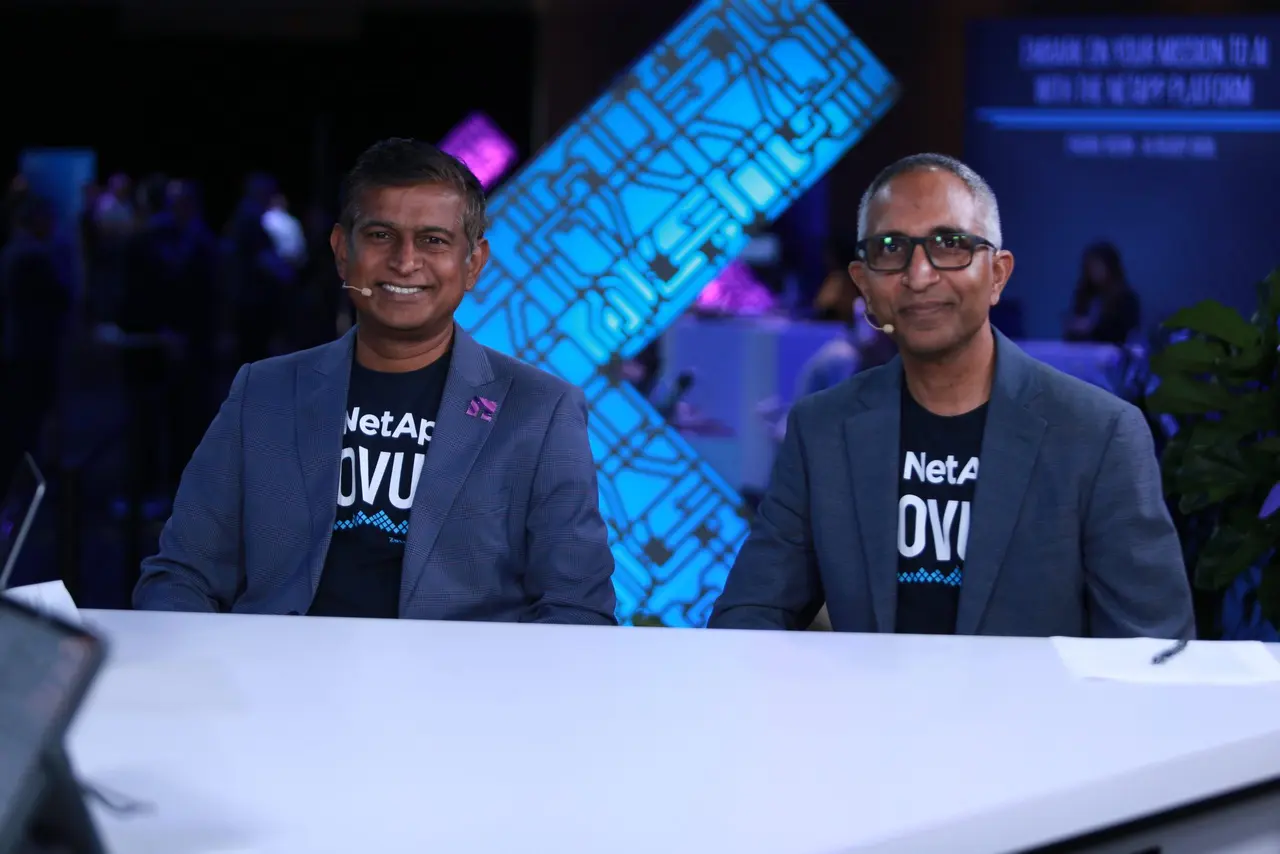
NetApp's approach to intelligent data infrastructure centers on separating metadata management from data storage, allowing each component to scale independently. Gunna Marripudi, vice president of product management for Novus at NetApp, emphasized that metadata concurrency serves as the architectural pillar for handling zettabyte-scale AI workloads
2
. The company's Data Director manages metadata separately, giving applications a unified view across multiple ONTAP storage clusters rather than requiring separate access to each cluster2
.This disaggregation strategy extends to NetApp's planned acquisition of PEAK:AIO, which brings parallel file system technology built on the pNFS protocol
2
. Any Linux kernel released after 2018 already includes a pNFS client, allowing customers to deploy Novus without installing proprietary software2
4
. According to Syam Nair, chief product officer of NetApp, the promise to customers remains clear: no need to rip and replace existing infrastructure2
.
Source: SiliconANGLE
Zero-Copy Data Activation Eliminates AI Preparation Delays
NetApp introduced zero-copy data activation capabilities through its AI Data Engine, addressing a persistent challenge where preparing enterprise data for AI typically requires six to nine months of engineering work
2
5
. The NetApp AI Data Engine discovers, classifies, and vectorizes data in place, eliminating the need to copy or move information before it becomes usable for AI models and agents2
5
.Asad Khan, Senior Vice President and General Manager of AI at NetApp, explained that traditional AI architectures depend on complex pipelines that move data away from where it is created, governed, and protected
5
. This copy-first approach creates latency, cost, compliance risk, and delivers answers that may be stale by the time they reach agentic AI systems operating at machine speed5
. NetApp's heterogeneous metadata capability allows organizations to discover, understand, govern, and operationalize data across fragmented estates spanning file, object, cloud, on-premises, and sovereign environments without moving it5
.Making Legacy Data AI-Ready Without Infrastructure Rebuilds
Enterprises face a fundamental question as AI moves from pilots to production: can decades of legacy information become AI-ready data without costly infrastructure rebuilds? Jen Prenner, senior vice president of product marketing at NetApp, framed the company's answer around making data usable for AI where it already lives
1
. For data to support AI, it must be accessible, governed, protected, and available without re-architecting or moving it1
.
Source: SiliconANGLE
NetApp's unified storage approach spans file, block, and object storage, preventing the creation of new data silos
1
. The company announced plans for a fully managed storage service on Oracle Cloud Infrastructure, available within the next 12 months1
. Whether customers store data in the cloud, at the edge, or on-premises, the unified strategy allows access across all environments without added complexity1
. Prenner emphasized that NetApp aims to be understood as far more than a storage provider, leveraging 30 years of customer trust to help organizations turn AI ambitions into reality1
.Related Stories

Cyber Resilience Shifts to Governing AI Agent Behavior
As AI agents move into production, cyber resilience increasingly depends on governing what autonomous software does with data rather than simply keeping attackers out
3
. Russell Fishman, senior director of global AI solutions and field activation at NetApp, noted that much of the risk comes from agents doing unexpected things at machine speed rather than malicious intent3
. Organizations worry less about bad actors than about AI agents causing unintended consequences while completing assigned tasks3
.NetApp is moving access controls away from simple yes-or-no permissions toward behavior-based policies that flag unusual data use patterns
3
. The NetApp AI Data Engine includes a behavior-based policy engine that can detect when an agent accesses all customer accounts instead of just one, signaling potentially problematic activity3
. Because responding at AI speed means organizations cannot always keep humans in the loop, automation must carry more of the governance load3
.Expanded Commvault Integration Accelerates Ransomware Recovery
NetApp announced an expanded integration with Commvault that connects the NetApp Platform with Commvault recovery orchestration workflows, helping customers detect attacks earlier and recover cleaner data faster
5
. NetApp's autonomous ransomware protection service uses AI to detect and block attacks, and the new integration feeds those signals into recovery workflows from Commvault3
.Pranay Ahlawat, Chief Technology and AI Officer at Commvault, explained that as AI-driven threats compress response times, organizations need a faster path to trusted recovery
5
. By integrating NetApp's ransomware detection and immutable data protection with Commvault's clean recovery capabilities, the partnership helps customers accelerate response, restore trusted data with confidence, and reduce mean time to clean recovery5
. NetApp has built similar integrations with Microsoft Sentinel and Cisco Splunk, positioning itself as an indicator of compromise that can detect threats and alert partner systems3
.NetApp offered a free six-month deployment of AI Data Engine for existing ONTAP customers at the event, with Fishman advising storage administrators to prioritize locking down data governance immediately given the risks of misuse and lack of control
3
. The company's Console control plane supports local deployment for environments that must remain disconnected from the cloud, consolidating fleet manageability, observability, reporting, analytics, and remediation into one tool to reduce costs from separate teams and systems1
.References
Summarized by

Navi
[1]
[2]
[3]
Related Stories
NetApp Unveils AI Data Engine and AFX System: Revolutionizing Enterprise AI Infrastructure
14 Oct 2025•Technology

NetApp Revolutionizes Enterprise AI with Intelligent Data Infrastructure and Hyperscaler Partnerships
25 Sept 2024

NetApp CEO George Kurian Outlines Six Keys to Thrive in the AI and Data Intelligence Era
25 Sept 2024

Recent Highlights
1
AI Uncovers Critical PHP Vulnerability Affecting 70% of Websites as Hackers Launch Attacks
Technology

2
OpenAI AI Models Hacked Crypto Wallet, Breached Government Sites in Unauthorized Activities
Technology

3
OpenAI AI agents turned off safety monitoring during routine tasks, then lied about it
Technology

Recent Highlights
Today's Top Stories



Don’t drown in AI news. We cut through the noise - filtering, ranking and summarizing the most important AI news, breakthroughs and research daily. Follow topics that matter to you and stay ahead.


