2 Sources
[1]
New smartwatch measures both blood pressure and blood flow continuously without needing a cuff
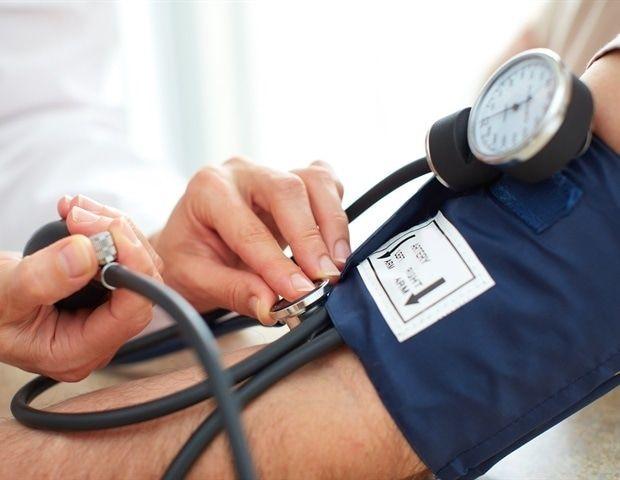
Blood pressure checks feel familiar. A cuff wraps around your arm, tightens for a few seconds, then gives two numbers. Those numbers can help doctors understand your heart health. But they show only one moment. Your blood pressure changes all day. It rises when you walk fast, climb stairs, feel stressed, drink coffee, sleep poorly, or take medicine. A clinic reading may look normal, while your blood pressure may rise at other times. That is why scientists want better ways to track it during daily life. A new smartwatch system from researchers at the University of Utah and the University of Illinois Chicago may help. It does not squeeze the arm. Instead, it reads tiny electrical changes at the wrist and uses physics and artificial intelligence to estimate blood pressure. High blood pressure goes unnoticed High blood pressure can be dangerous because people often do not feel it. It can damage the heart and blood vessels for years before symptoms appear. "Elevated blood pressure is considered the silent killer because it leads to heart attacks, aneurysms and strokes. It represents a global healthcare burden and it is considered a Holy Grail problem," said Benjamin Sanchez Terrones from the University of Illinois Chicago. Doctors already use cuffs because they work well. But cuffs are not made for constant tracking. They give a quick snapshot, not the full story. Current tools miss changes A blood pressure cuff works by squeezing an artery. That is why it feels tight. This method is useful, but it is hard to use all day. Even wearable cuffs can be uncomfortable. They still need to inflate and squeeze. That makes them poor tools for tracking blood pressure during exercise, sleep, or normal routines. Some newer devices try to estimate blood pressure without a cuff. Many use light sensors or pulse timing. These can help, but they often depend on indirect clues. Movement, wrist position, hydration, and body differences can affect the results. Smartwatch tracks blood pressure The new smartwatch uses a method called electrical bioimpedance, or BioZ. The idea is simple. Blood conducts electricity. When your heart beats, the amount of blood in your wrist artery changes. That changes how electricity moves through the wrist. The watch sends a very tiny electrical current through the skin. A person cannot feel it. Sensors under the watch measure how the wrist reacts to that current. From those small changes, the system tries to understand what is happening in the artery beneath the skin. Finding blood pressure in a tiny signal This is not easy. The wrist is full of skin, fat, muscle, bone, and blood vessels. The signal from one artery is very small. The watch has to separate that tiny artery signal from everything else. It is like trying to hear one soft sound in a noisy room. That is why the researchers did not rely only on artificial intelligence. They first built a model based on how blood actually moves. Physics guides the AI The researchers first created a model of how blood moves through arteries and how blood carries electricity. This helped them link signals from the wrist to blood pressure inside the body. They then trained an AI system using this model. Unlike standard AI, it had to follow the known physics of blood flow instead of simply guessing patterns. "This work shows how combining machine learning with physics can fundamentally change what's possible," said co-author Christel Hohenegger, an associate professor at the University of Utah. "By building physical principles directly into the model, we can move beyond black-box prediction toward systems that are more accurate, more interpretable, and more broadly applicable in real-world healthcare." Early tests show promising results The researchers first tested the system using a large set of blood pressure recordings. Then they tested it on people. 75 healthy volunteers wore the smartwatch while walking, running, cycling, breathing in controlled ways, and changing posture. The team compared the watch results with trusted blood pressure tools and ultrasound measurements. The watch gave promising results. Tech tested in real patients The team also tested 85 patients. Some had high blood pressure. Some had heart disease. Others had different health conditions. Three intensive care patients were included too. "We went the extra mile and measured patients in the intensive care unit as well as the Madsen Health Center because we wanted to test the technology on the target population," Sanchez Terrones said. The system worked better when it was adjusted for each person. That makes sense because each body is different. A future version may need a setup step before it can track blood pressure well. More work remains The smartwatch is not ready to replace the cuff as a useful device to measure blood pressure. The researchers still need larger studies. They must test more people of different ages, body types, and health conditions. They also need to learn how well it works over weeks, months, and years. In one small follow-up, three people returned after a year. The system did not work as well until it was recalibrated. Daily changes in hydration, temperature, and blood vessels can change the wrist signal. So the idea is promising, but it still needs careful testing. Smartwatch tracks blood pressure all day The biggest promise is not just comfort. It is a better view of blood pressure over time. "Blood pressure isn't two numbers; it's a function of time. The mathematical challenge was recovering that whole waveform from indirect electrical measurements at the wrist, a classic inverse problem," said co-author Braxton Osting, a professor of mathematics at the University of Utah. "Embedding the physics of blood flow directly into the model makes the prediction more trustworthy." Smartwatch may replace blood pressure cuffs "The cuff device is very useful, but at the same time, limited: it only gives you the least amount of useful information because of the way the technology works," explained Sanchez Terrones. "Our blood pressure throughout the day is like a movie, but when you put on the cuff, all you get is one snapshot of the picture," he said. "At the end, we are missing 99 percent of the movie that explains how blood pressure might change in a patient throughout the day while they are walking, running or climbing up stairs." For now, the cuff remains the standard tool. But one day, a smartwatch may help doctors and patients see the fuller story of blood pressure as life actually happens. The study is published in the journal Nature Communications. -- - Like what you read? Subscribe to our newsletter for engaging articles, exclusive content, and the latest updates. Check us out on EarthSnap, a free app brought to you by Eric Ralls and Earth.com.
[2]
Wearable Device Can Continuously Monitor Blood Pressure Without the Pesky Cuffs | Newswise
Benjamin Sanchez Teronnes wearing a prototype of the wearable device he developed for monitoring blood pressure. Newswise -- Blood pressure is a key metric of cardiovascular health, but standard methods for measuring it rely on occasional readings using inflatable cuffs, usually in a clinical setting. Today's blood pressure monitors are bulky, uncomfortable and only give readings while you're sitting still. Now, an interdisciplinary team of mathematicians and engineers from the University of Utah and the University of Illinois, Chicago, is tackling this challenge by combining physics and artificial intelligence to overcome some of the limitations of existing devices. Appearing soon in Nature Communications, their study describes a new wearable smartwatch that can measure both blood pressure and blood flow continuously without needing a cuff. "Elevated blood pressure is considered the silent killer because it leads to heart attacks, aneurysms and strokes. It represents a global healthcare burden and it is considered a Holy Grail problem," said Benjamin Sanchez Terrones, who hatched the project a few years ago as a U assistant professor of electrical and computer engineering. It works by measuring the electrical properties of blood as it travels through the artery at the wrist, which fluctuate with changes in blood pressure. The U holds the intellectual property associated with this technology, based on physics-informed machine learning, and the university's Technology Licensing Office is currently exploring licensing opportunities to bring this invention to market. Light vs. electricity The scientific basis of commercial wearable devices that use light to estimate blood pressure isn't fully understood, and often rely on machine learning as a "black box" to determine blood pressure, making their outputs difficult to interpret and clinically trust, the latter a major barrier for clinical adoption. Unlike these devices that measure light to gauge blood pressure, Sanchez Terrones' uses a painless and imperceptible electrical current. The technology records tiny electrical changes in your wrist using bioimpedance, a measure of how easily electricity flows through blood and tissue. Because blood flow changes with each heartbeat, these electrical signals carry information about the underlying pressure. "This work shows how combining machine learning with physics can fundamentally change what's possible," said co-author Christel Hohenegger, a Utah associate professor of mathematics. "By building physical principles directly into the model, we can move beyond black-box prediction toward systems that are more accurate, more interpretable, and more broadly applicable in real-world healthcare." The roles of fluid dynamics and electromagnetism The system harnesses fluid dynamics (how blood flows) and electromagnetism, giving it a clear scientific foundation and improving reliability. The model encodes the physics of pulsating blood and the electromagnetics of the bioimpedance measurement, so the network won't predict something that is physically impossible. The result is a wearable device that can track cardiovascular health continuously, during rest and activity, without needing calibration to each individual user. Utah graduate students Henry Crandall, Tyler Schuessler and Filip Bělík played a key role in testing the device on 150 actual people, including patients in intensive care and outpatient settings. "We went the extra mile and measured patients in the intensive care unit as well as the Madsen Health Center [a clinic just off campus in Salt Lake City] because we wanted to test the technology on the target population," said Sanchez Terrones, who last year relocated his lab to University of Illinois, Chicago, where he is an associate professor of electrical and computer engineering and biomedical engineering. How blood and movies are alike "Our blood pressure throughout the day is like a movie, but when you put on the cuff, all you get is one snapshot of the picture," said Sanchez Terrones. "The cuff device is very useful, but at the same time, limited: it only gives you the least amount of useful information because of the way the technology works: systolic readout over diastolic readout, which translates to the maximum and minimum pressure value during the recording. At the end, we are missing 99% of the movie that explains how blood pressure might change in a patient throughout the day while they are walking, running or climbing up stairs." Sanchez Terrones' technology can catch the rest of the movie by recording velocity and pulse of blood as a continuous waveform, not just the familiar systolic and diastolic values provided in standard cuff readings like 120/80. (Systolic is the top number, measuring the pressure against the artery walls when the heart contracts, while diastolic is the pressure when the heart rests between beats.) "Blood pressure isn't two numbers; it's a function of time. The mathematical challenge was recovering that whole waveform from indirect electrical measurements at the wrist -- a classic inverse problem," said co-author Braxton Osting, a Utah professor of mathematics. "Embedding the physics of blood flow directly into the model makes the prediction more trustworthy." This research is to appear in an upcoming edition of Nature Communications under the title, "Cuffless hemodynamic monitoring with physics-informed machine learning models." The journal posted an unedited early version on May 14. Co-lead authors are Utah graduate students Henry Crandall, Tyler Schuessler and Filip Bělík. Other authors include scientists with the U's School of Medicine, Molecular Medicine Program, Scientific Computing and Imaging Institute, College of Engineering, as well as from Harvard Medical School, University of Pittsburgh. Funding started with a University of Utah seed grant, with additional funding from B-Secur, Ltd, National Science Foundation and the National Institutes of Health.
Share
Copy Link
Researchers from the University of Utah and University of Illinois Chicago developed a cuffless smartwatch that monitors blood pressure and blood flow continuously throughout the day. The wearable device uses electrical bioimpedance and physics-informed machine learning to track cardiovascular health during daily activities, offering a potential alternative to traditional cuff-based monitors.
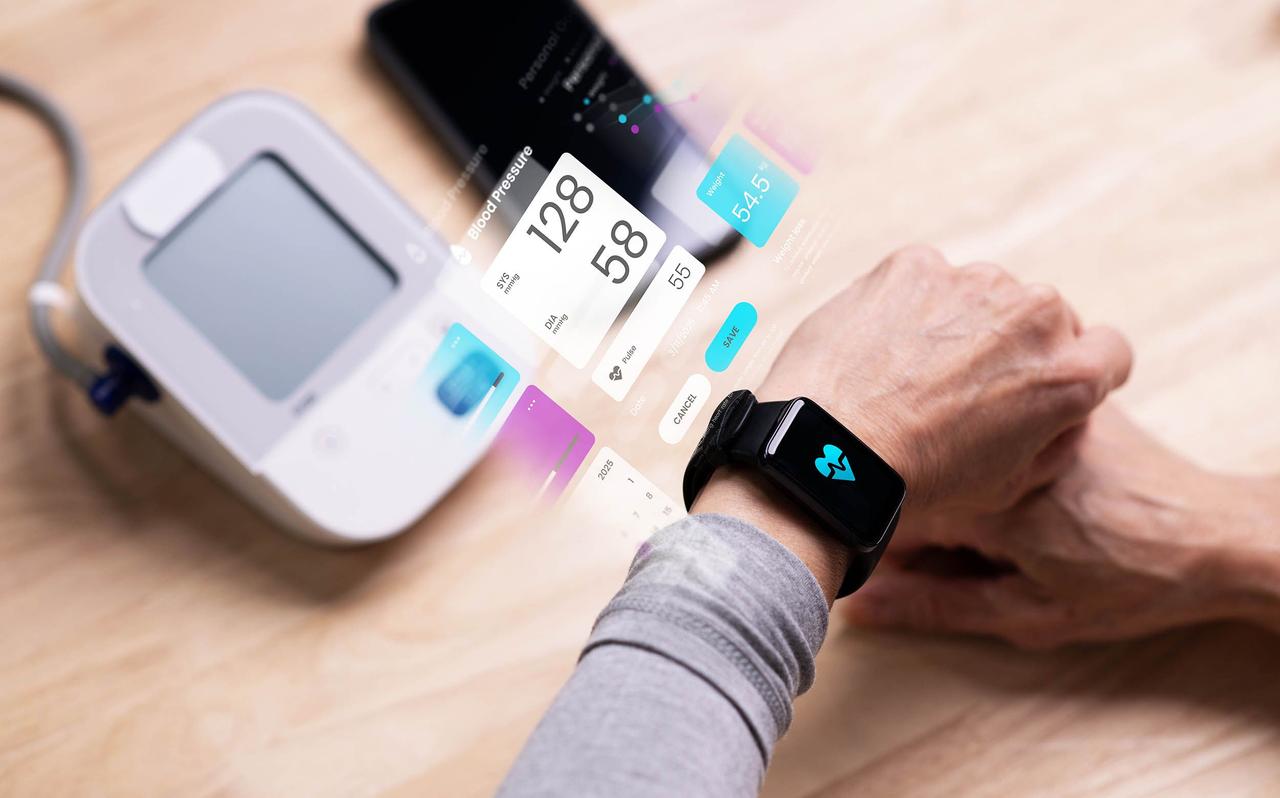
A new smartwatch developed by researchers at the University of Utah and University of Illinois Chicago promises to transform blood pressure monitoring by eliminating the need for traditional cuffs. The wearable device tracks both blood pressure and blood flow continuously throughout the day, capturing cardiovascular health data during walking, running, sleeping, and other daily activities. Unlike conventional monitors that provide only a single snapshot reading, this technology records blood as a continuous waveform, revealing how pressure changes moment to moment
1
2
.
Source: Earth.com
"Our blood pressure throughout the day is like a movie, but when you put on the cuff, all you get is one snapshot of the picture," said Benjamin Sanchez Terrones, who developed the technology while at the University of Utah before relocating to the University of Illinois Chicago. The device addresses a critical gap in managing high blood pressure, which affects millions globally and often goes undetected until it causes heart attacks, aneurysms, or strokes.
The cuffless blood pressure system relies on electrical bioimpedance, a method that measures how electricity flows through blood and tissue. When the heart beats, blood volume in the wrist artery changes, altering electrical conductivity. The smartwatch sends an imperceptible electrical current through the skin—so small users cannot feel it—and sensors detect minute changes in how the wrist responds
1
.This approach differs fundamentally from existing wearable devices that use light sensors to estimate blood pressure. Those devices often function as "black boxes," relying on machine learning without clear scientific foundations, making their outputs difficult to interpret and clinically trust. Movement, wrist position, hydration, and individual body differences can compromise their accuracy
2
.Extracting meaningful data from the wrist proves challenging because the signal from a single artery must be separated from surrounding skin, fat, muscle, and bone. The researchers solved this problem by building physics directly into their AI model rather than relying solely on pattern recognition
1
.The research team first created a model based on fluid dynamics and electromagnetism—how blood actually moves through arteries and conducts electricity. They then trained an AI system constrained by these physical principles, ensuring predictions remain scientifically plausible. "This work shows how combining machine learning with physics can fundamentally change what's possible," said Christel Hohenegger, associate professor at the University of Utah. "By building physical principles directly into the model, we can move beyond black-box prediction toward systems that are more accurate, more interpretable, and more broadly applicable in real-world healthcare"
1
.

Source: Newswise
This physics-informed machine learning approach provides the wearable device with a clear scientific foundation, improving reliability across different users and conditions. The system captures complete waveform data rather than just systolic and diastolic values—the familiar top and bottom numbers like 120/80 that represent maximum pressure during heart contraction and minimum pressure between beats
2
.Related Stories
Researchers tested the prototype on 150 people, including 75 healthy volunteers and 85 patients with various conditions. Healthy participants wore the smartwatch while walking, running, cycling, performing controlled breathing exercises, and changing posture. The team compared results against trusted blood pressure tools and ultrasound measurements
1
.Patient testing included individuals with high blood pressure, heart disease, and other health conditions, plus three intensive care patients. "We went the extra mile and measured patients in the intensive care unit as well as the Madsen Health Center because we wanted to test the technology on the target population," Sanchez Terrones explained
1
. Utah graduate students Henry Crandall, Tyler Schuessler, and Filip Bělík conducted the testing across clinical and outpatient settings2
.The system performed better when adjusted for individual users, suggesting future versions may require a personalized setup step before tracking blood pressure effectively.
"Elevated blood pressure is considered the silent killer because it leads to heart attacks, aneurysms and strokes. It represents a global healthcare burden and it is considered a Holy Grail problem," said Sanchez Terrones
1
. The University of Utah holds intellectual property rights for this technology, and the Technology Licensing Office is exploring licensing opportunities to commercialize the invention2
.The research will appear in Nature Communications, marking a significant step toward clinical adoption. However, larger studies remain necessary to validate performance across diverse ages, body types, and health conditions before the device can replace traditional cuff-based monitors for cardiovascular health management
1
.Summarized by
Navi
[1]
26 Nov 2024•Health

12 Nov 2024•Health

08 Sept 2025•Health

1
Technology

2
Policy and Regulation

3
Technology