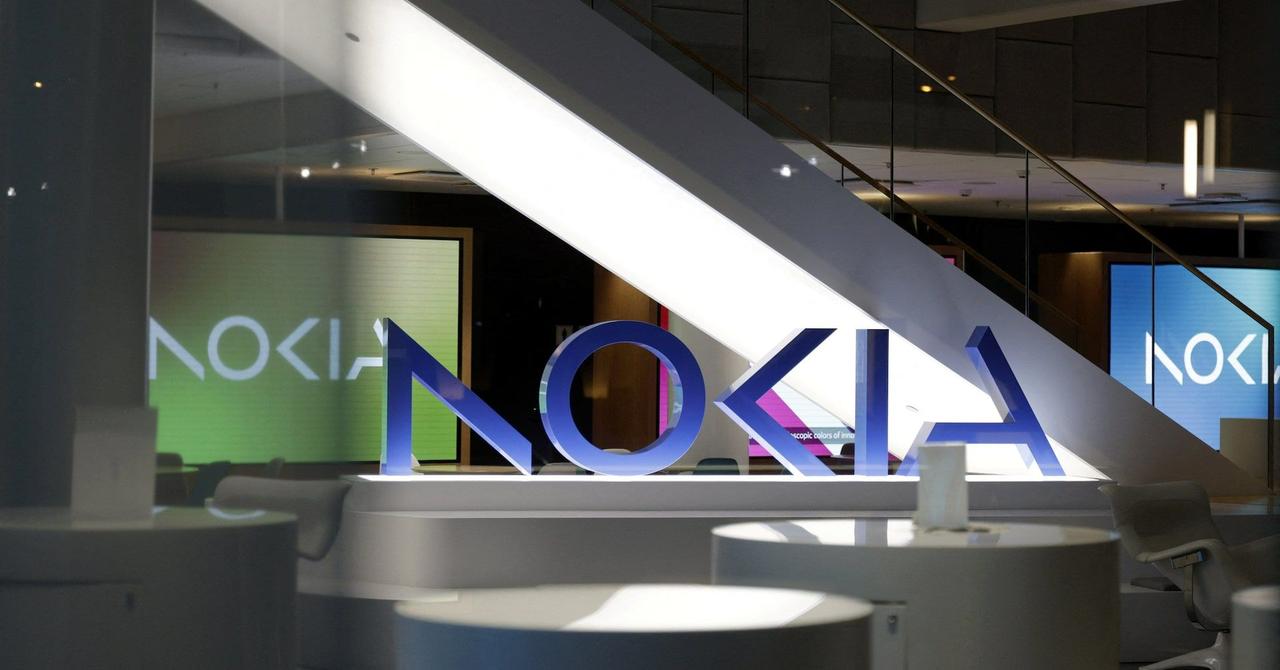
Nokia earnings beat estimates as artificial intelligence and cloud demand fuel data center pivot


2 Sources
[1]
Nokia Earnings Beat Estimates as Data Center Pivot Shows Promise
Nokia Oyj reported first-quarter adjusted profit that beat analyst forecasts, as its push into artificial intelligence and cloud software paid off. Adjusted operating income was €281 million ($329 million) in the period, the Espoo, Finland-based company said in a statement on Thursday. That
[2]
Nokia Bets On AI, Cloud Demand As Optical Networks Gain Momentum - Nokia (NYSE:NOK)
Nokia Corp. (NYSE:NOK) on Thursday posted first-quarter results, highlighting strong momentum in optical networking and a sharp jump in sales tied to AI and cloud customers. Nokia Q1 Results The Finnish company reported net sales of $5.26 billion (EUR 4.5 billion), up 4% year over year, but
Share
Copy Link
Nokia reported first-quarter adjusted operating profit of €281 million, surpassing analyst expectations of €244 million. The Finnish telecom giant's strategic shift toward connecting AI data centers and serving cloud customers is paying off, with AI and cloud sales surging 49% year-over-year. The company now expects its AI and cloud addressable market to grow at a 27% compounded annual growth rate through 2028.
Nokia Delivers Strong Q1 Performance Amid Strategic Transformation
Nokia reported first-quarter adjusted operating profit of €281 million ($329 million), exceeding analyst estimates of approximately €244 million
1
. The Nokia earnings beat signals that the Finnish telecom equipment maker's aggressive data center pivot is gaining traction. Net sales reached €4.5 billion ($5.26 billion) for the quarter, representing a 4% year-over-year increase, though slightly missing analyst expectations of €4.6 billion2
.
Source: Benzinga
CEO Justin Hotard stated the company "delivered a solid start to the year" and is tracking "above the mid-point" of its full-year guidance of €2 billion to €2.5 billion in comparable operating profit
1
. This performance marks the first quarterly results under Nokia's restructured business model, which now focuses on two primary units: Network Infrastructure and Mobile Infrastructure.Artificial Intelligence and Cloud Demand Drive Revenue Surge
The most striking aspect of Nokia's quarterly performance came from AI and cloud customers, where sales jumped 49% year-over-year
2
. This segment now accounts for 8% of group sales, with Nokia booking €1 billion ($1.17 billion) in orders from these customers during the quarter alone. Hotard emphasized that the company is "increasing our growth assumption for Optical and IP Networks" and "investing to capture accelerating demand from AI & Cloud customers"2
.The company has significantly revised its market outlook, now expecting a 27% compounded annual growth rate in the AI and cloud addressable market from 2025 to 2028, compared to the 16% previously estimated at its November capital markets day
2
.
Source: Bloomberg
Optical Networks Emerge as Growth Engine
Nokia's Network Infrastructure segment grew 6% year-over-year, propelled by a 20% increase in Optical Networks sales
2
. This growth underscores the company's successful transition away from its legacy mobile equipment business, which has stagnated as anticipated carrier spending on network upgrades failed to materialize1
.At the OFC optical conference in March, Nokia unveiled a suite of innovations including four new Digital Signal Processors powering 13 new solutions designed to boost network efficiency while reducing total cost of ownership by up to 70%
2
. These products are expected to begin sampling in mid-2027, with volume production scheduled for the second half of that year. The company's indium phosphide manufacturing site in San Jose, California, remains on schedule to start ramping output later in 2026.Related Stories

Strategic Partnership with Nvidia Corp. Strengthens Position
Nokia's pivot toward AI infrastructure gained significant validation when chipmaker Nvidia Corp. took a $1 billion equity stake in the company last year
1
. As part of this partnership, Nvidia will supply Nokia with AI-powered computers for wireless networks, positioning the Finnish company to capitalize on the global AI spending boom.Investor optimism around Nokia's AI strategy has driven the company's shares to nearly double over the past year
1
. Following the Q1 earnings announcement, Nokia shares surged approximately 12% in pre-market trading2
.Market Dynamics and Competitive Landscape
While Nokia benefits from increasing cloud demand for AI-enabling compute infrastructure, the competitive environment presents challenges. European rival Ericsson AB warned of rising chip costs due to increased demand when it reported earnings below analyst expectations last week
1
. Nokia acknowledged that supply-chain lead times are stretching as investment activity scales up2
.For full-year 2026, Nokia maintained its comparable operating profit outlook of €2.0 billion to €2.5 billion ($2.34 billion to $2.93 billion). The company projects Network Infrastructure sales growth of 12% to 14% on a constant-currency and portfolio basis, with optical and IP Networks together expected to grow 18% to 20%
2
. For the second quarter, Nokia expects net sales to rise 5% to 9% quarter-over-quarter, with Q2 operating profit representing 12% to 16% of the full-year total.References
Summarized by

Navi
Related Stories
Nokia Q2 profit beats expectations as AI data-centre demand doubles cloud sales to €446 million
23 Jul 2026•Business and Economy
Nokia Stock Surges 8.7% as AI Technology Orders Reach 6.3 Times Quarterly Revenue
13 Aug 2026•Business and Economy

Nvidia Invests $1 Billion in Nokia, Signaling Major AI Infrastructure Partnership
29 Oct 2025•Business and Economy

Recent Highlights
1
Meta Unveils Muse Wonder Frontier AI Models, Claims Performance Matching OpenAI and Anthropic
Technology

2
IMF Report Warns AI Market Correction Could Spark Global Financial Crisis With $1.4T at Risk
Business and Economy

3
OpenAI Releases 722 AI-Generated Math Solutions, Triggering Existential Crisis in Mathematics
Technology

Recent Highlights
Today's Top Stories









Don’t drown in AI news. We cut through the noise - filtering, ranking and summarizing the most important AI news, breakthroughs and research daily. Follow topics that matter to you and stay ahead.


