4 Sources
[1]
Nvidia's AI squadmate is finally dropping into PUBG
The technology requires an Nvidia graphics card with 8GB+ memory and could revolutionize gaming by making NPCs more lifelike and interactive. One of the frustrating things about the proliferation of "AI", in the large language model sense, is how it muddles previously serviceable terms. It's neither artificial intelligence, in the sci-fi robot sense, nor artificial intelligence in the video game sense -- i.e., deliberate programmed behavior not controlled by the player. Until now: Nvidia's newest software goodie is very much in the latter category. This is Nvidia ACE, short for Avatar Cloud Engine, which the company has been demonstrating for multiple years. The first arguably practical implementation is now available in Player Unknown's Battlegrounds, where a special "Ally Duo Mode" will let you play with an ACE-controlled squadmate on your quest to kill every other person (and now, non-person) on the map. The mode will only be available for the next two weeks, until June 30th, and only to those with an Nvidia graphics card with 8GB of memory or more. Players won't have a competitive advantage in this mode. The demonstration video (only in Chinese, with English subtitles) does its best to make you believe that you're playing co-op with a real, talking person. It's running at least three different SLM (small language model) programs simultaneously to analyze and synthesize speech, apparently in near-real time. The demo is more or less convincing, though I must say that the ACE NPC's responses seem to have the same fawning effluence as a ChatGPT reply. The demo video's on-demand tips on where to drop on the battle royale map or alerts that it's found a specific weapon are reminding me of Razer's Project Ava anime girl in a jar. It doesn't help that the only available avatar for your squadmate is "Ella," who wears a hoodie with a corgi face in the demonstration video. There's something to be unpacked here, but it's beyond my scope of coverage as a PC nerd. That said, I find it funny that this AI demo is coming in cooperation with Krafton, a company that famously asked ChatGPT for tips on how to screw developers out of millions of dollars in contracted payments. Sadly I haven't played PUBG in years, and wasn't very good when I did, so I can't evaluate ACE's effectiveness as a virtual squadmate in combat. That seems like a pretty huge potential pitfall to this test. Though Nvidia claims that it's "responsive enough for high-stakes combat while preserving the flexible, natural feel of a true teammate," I suspect that high-skill players will still find them less useful as an actual combatant than as a decoy or distraction. That's generally how I use hired NPCs in Fortnite, anyway, and it would take a dramatic performance that didn't rely on overpowered exploits to convince me to do otherwise. Even so, having an NPC that can interact with the environment dynamically, synthesize speech without pre-recorded lines, and do it all on only a portion of video memory is impressive. Computer-controlled squadmates or escort characters have long been a thorn in the side of gamers, breaking immersion and causing headaches. They get lost or stuck on the environment, or heal you with an expensive potion after barely a scratch. Improving this AI (in the gaming sense) really could open up options for developers trying to expand their in-game worlds with more lifelike NPCs. I wonder if you could have enough variety in these characters to make them feel more real -- we've all felt how the allegedly human residents of Liberty City or Night City eventually just fade into the background, more obstacle than interactive element, after a few hours of play. And imbuing hundreds of these ACE-powered NPCs at a time is probably beyond the system's capabilities at the moment. But pulling something like that off might be a huge step forward for larger games, and even as a self-styled hater of "AI" in its modern and deliberately mislabeled incarnation, I'd be curious to see it.
[2]
Forget NPCs, now we have CPCs -- Co-Playable Characters or AI teammates in PUBG courtesy of Nvidia ACE tech, but I'm not impressed so far
* PUBG's Ally Duo mode is now in testing on Steam * Nvidia's ACE tech is powering the AI teammates in this mode * You can play with an AI teammate against other human + AI duos until the end of June PUBG Battlegrounds now offers the option to play with an AI teammate -- powered by Nvidia -- in a new mode which is available to try in beta for the next two weeks. As VideoCardz noticed, the Ally Duo Mode is now available through PUBG Arcade, and represents Krafton and Nvidia teaming up to use Team Green's ACE technology -- as aired back at the start of the year -- to create an AI teammate called Ella. PUBG Ally was in testing early in 2026 and has now reached the point where it's ready for public consumption -- at least as a beta, where the mode will be playable through to the end of June on Steam. This is an opportunity to "collect invaluable real-world player feedback, to guide the future of AI agents in games," Nvidia tells us. How does Ella work exactly? The best way to find out is to watch the demo in the YouTube video below. As you can see, the idea is that you have an AI teammate you can talk to, and more to the point, give orders, or ask for help, using natural spoken language (or typed text if you prefer), with responses from the AI designed to be suitably 'human' in feeling and tone. At least that's the idea here, but watching the brief demo leaves me with a lot of doubts about what "represents a new generation of AI game characters designed for deeper immersion" according to Nvidia. Analysis: reaping what was sown a long time ago It should be no surprise that Nvidia is dressing this up in a lot of fancy talk. Last year when it introduced the concept, Team Green talked about revolutionary Co-Playable Characters or CPCs, as opposed to boring old NPCs. Of course, as my colleague on TechRadar Christian Guyton noted at the time, these are just glorified bots - and we've had bots for ages (PUBG has, too). In fact, I was deathmatching bots some 30 years ago in Quake, when the Reaper Bot mod arrived. (The Reaper was a horrifically accurate CPU-controlled creation -- positively lethal if it got hold of the lightning gun - but overall it had the strategic skills and gaming savvy of a house brick, and was easily trounced by a reasonably good player, but hey, these were very early days here.) So, this isn't a revolutionary idea, or the next step on from NPCs, or whatever accolades relating to gaming greatness that Nvidia might want to heap on PUBG Ally. However, there is more to Ella than this, in fairness to Team Green. One half of Ella is the bot intelligence to actually play the shooter well enough (hopefully), but the other side is the AI models -- the Nvidia ACE trimmings. These are small language models (SLMs requiring an Nvidia GPU with at least 8GB of video RAM) driving the AI companion's "realistic" decision-making processes, and facilitating communication via speech models. Ella is "equipped with the ability to understand and respond to game situations in a human-like manner" over and above your typical game bot, but I'm not convinced from the demo. Ella feels painfully artificial -- not human -- and borderline sycophantic in the game footage shared by Nvidia. OK, so this is still early testing, but I'm not getting any real 'revolutionary' vibes about the gaming skills or chat on show here. Maybe we'll get selectable personalities eventually -- and even true-to-life gaming types. For realism there definitely needs to be an occasional AI teammate who throws a massive hissy fit about how rubbish you are before abruptly quitting, surely? The general reaction to the emergence of PUBG Ally has been as you might expect: some gamers are curious, while others are mystified or even scathing, and there are more in the latter camp. Some are convinced this will be highly amusing: "I look forward to the comedy that this feature will produce." While others on the same Reddit thread are already trash-talking the AI's ability to play. I'm not surprised at the feedback thus far given the way Ella has been realized by Nvidia, and the AI being overly chatty hasn't gone down well either. Players engaged in a competitive game don't want flowery chat putting them off their flow, and maybe obscuring important sound effects that are clues as to where the enemy might be and so forth. The whole thing leaves me rather cold at this stage, frankly, but among more casual gamers -- or those who don't have friends to play with at the time, and don't want to hang around in lobbies, or be exposed to toxicity in pick-ups -- Nvidia's AI teammate may yet find a place. As long as the gamer in question owns a decently beefy Nvidia graphics card, that is, and another concern of mine is how much of the GPU's resources are these AI models demanding? Presumably not a lot -- they are 'small' by nature -- but gamers are notoriously unhappy about anything running interference with their FPS, no matter how slight. Follow TechRadar on Google News and add us as a preferred source to get our expert news, reviews, and opinion in your feeds.
[3]
NVIDIA launches ACE Game Agent SDK Beta for in-game AI companions that run on RTX GPUs
As part of Unreal Fest 2026, NVIDIA has announced that its new NVIDIA ACE Game Agent SDK for creating and building in-game AI companions that run on GeForce RTX hardware is now available in Beta. This suite of tools includes Unreal Engine 5 plugins for the AI-powered Automatic Speech Recognition (ASR), Small Language Models (SLM), and Text-to-Speech (TTS) components of NVIDIA ACE. Examples of the technology in action are already available, with KRAFTON recently launching its new PUBG Ally in-game AI teammate as part of a limited-time Beta to test and gauge feedback on a new Ally Duo Mode that will pair humans with AI. Another in-development example is Creative Assembly adding an AI advisor to Total War: PHARAOH. Naturally, the NVIDIA ACE Game Agent SDK will allow any game developer to play around with in-game AI companions, with NVIDIA noting that it has been designed as a "lightweight, C/C++ agentic framework" for seamless integration thanks to the inclusion of a ready-to-use Qwen 3.5 4B model for decision-making and an ultra-lightweight Chatterbox Turbo 350M model for text-to-speech. As seen with the new PUBG Ally, ACE Game Agents can run on GPUs with only 8GB of VRAM, and cards like the GeForce RTX 3060. So yeah, you won't need a GeForce RTX 5080 to run them. The NVIDIA ACE Game Agent SDK comprises three key APIs, and, without getting too technical, they can be summarized as follows. The Agent API handles chat history and drives multi-step reasoning with minimal coding. The Chat API gives developers complete control over inference, while the RAG (retrieval-augmented generation) API focuses on game-specific knowledge, using developer-built databases and up-to-date information to retrieve and answer player questions and act. With Unreal Engine 5 plugins, all of these tools and features can be stored within the game and then run on local RTX hardware without any cloud-based assistance. There's a lot more coming too, with NVIDIA partnering with Epic to bring NVIDIA ACE to Unreal Engine's MetaHuman NPC technology to leverage models for voice synthesis and Audio2Face technology for facial animation that takes into account emotion and personality traits of characters.
[4]
NVIDIA ACE-Powered PUBG Ally AI-Teammates now Available in PUBG Duos for Two-Week Beta
NVIDIA ACE (Avatar Cloud Engine) was first shown back at Computex 2023, with the promise to bring NPCs to life through its suite of AI technologies in games like PUBG, Naraka: Bladepoint, and inZoi. Now, players will get to test for themselves how real that promise is, as the NVIDIA ACE-powered PUBG Ally AI-teammates are available for players to add to their squad in Duos games for the next two weeks as part of a beta test. The demo video below shows a team winning a match in PUBG with one human player and one AI-controller Ally player that communicates and discusses strategy with you as you play. The AI companion is a "highly adaptive, context-aware AI teammate that dynamically adjusts its playstyle based on your commands and emergent battlefield situations," NVIDIA says in a blog announcing the beta. "It makes independent decisions such as looting, fighting and navigating to support you, all without requiring continuous prompting. Capable of understanding both voice and text inputs, from casual comments to tactical instructions, PUBG Ally possesses a deep knowledge of PUBG-specific terminology, player lingo, map locations, and item attributes." The AI companions will be available for players to check out as part of a beta test for the technology until June 30, 2026, so you have two weeks starting from today to win as many matches with an AI companion carrying you to victory. AI-powered companions in video games are, of course, nothing new conceptually, but what the AI-first company KRAFTON is introducing here alongside NVIDIA is something more than just having an NPC fight alongside you in a game. It's closer to what we've seen get implemented in Dragon Quest X or another of KRAFTON's games, the aforementioned inZoi with its 'Smart Zoi' NPCs. An AI companion that can actually respond to you and to the game, rather than being limited to carrying out pre-determined actions in pre-determined scenarios. NVIDIA claims that PUBG Ally "represents a new generation of AI game characters designed for deeper immersion," though the jury is still out as to whether these characters can actually get you more immersed in the game. 'Bots' in multiplayer games are the kind of thing you see in game modes that aren't as populated, and have always served to take players out of the multiplayer action they're trying to enjoy when they realize that kill they just got wasn't actually impressive at all. People play competitive multiplayer games for the thrill of going up against other real life human players and coming out victorious. The competitive nature of all these games is about being better than the other person. It's difficult to see how investing tons of time and energy into encouraging more play without humans is something anyone in a multiplayer game might want to have. There are arguments to be made for newcomers who are still learning the ropes, of course, but once you have a handle on how to play, adding a PUBG Ally to your squad kind of runs against the whole point of competitive multiplayer games in the first place. It'll be interesting to see how players react to the tech as they try it out over the next couple of weeks. Follow Wccftech on Google to get more of our news coverage in your feeds.
Share
Copy Link
NVIDIA's Avatar Cloud Engine technology debuts in PUBG with AI-controlled squadmate Ella, available for testing until June 30. The system runs on GeForce RTX GPUs with 8GB+ memory, using small language models to enable voice communication and tactical gameplay. While the tech showcases advances in NPC behavior, early reactions reveal skepticism about whether AI companions enhance competitive multiplayer experiences.
NVIDIA's Avatar Cloud Engine, or NVIDIA ACE, has finally arrived in Player Unknown's Battlegrounds through a new Ally Duo Mode that pairs human players with AI-controlled squadmates
1
. The beta test, which runs until June 30, marks the first practical implementation of technology NVIDIA has demonstrated for years1
. Available exclusively to players with NVIDIA graphics cards featuring 8GB of memory or more, the mode introduces an AI companion named Ella who can communicate via voice or text and adapt her playstyle based on player commands and battlefield situations4
. KRAFTON, the developer behind PUBG, partnered with NVIDIA to test what the companies call a "new generation of AI game characters designed for deeper immersion"4
.
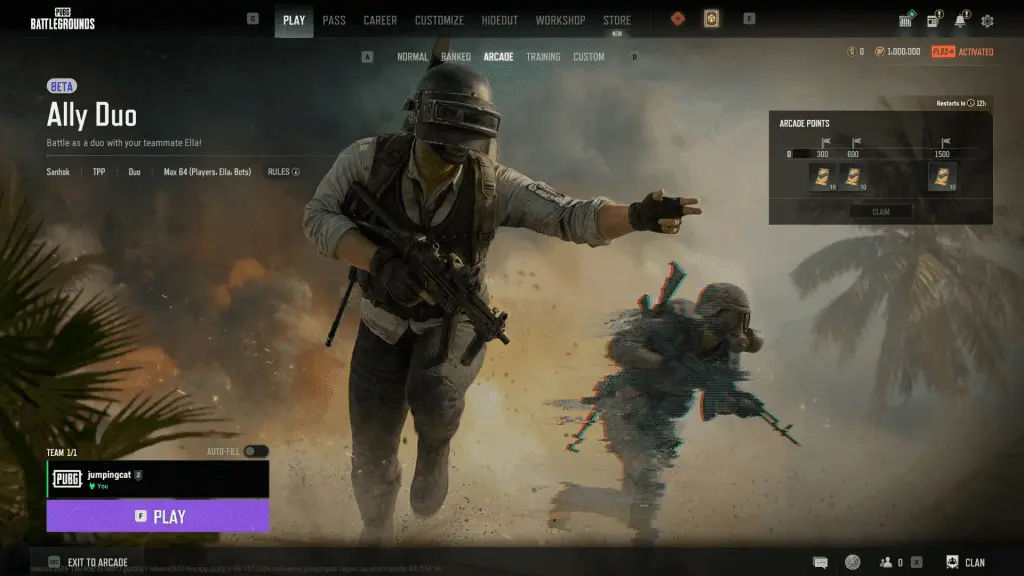
Source: PCWorld
The technology behind these AI teammates relies on small language models, or SLMs, running simultaneously to analyze and synthesize speech in near-real time
1
. NVIDIA has now released the ACE Game Agent SDK in beta, providing developers with tools to create their own in-game AI companions that run locally on GeForce RTX GPUs. The SDK includes Unreal Engine 5 plugins for AI-powered Automatic Speech Recognition, small language models, and Text-to-Speech components3
. Built as a lightweight C/C++ framework, the system features a ready-to-use Qwen 3.5 4B model for decision-making and an ultra-lightweight Chatterbox Turbo 350M model for text-to-speech3
. These AI companions can run on GPUs with only 8GB VRAM, including cards like the GeForce RTX 30603
.NVIDIA has branded these AI agents as Co-Playable Characters, or CPCs, positioning them as an evolution beyond traditional NPCs
2
. However, early reactions suggest players remain unconvinced about their value in competitive multiplayer settings. The AI-controlled squadmate in the demonstration video exhibits responses that feel "painfully artificial" and "borderline sycophantic," according to observers2
. PUBG Ally is described as "highly adaptive" and "context-aware," capable of making independent decisions about looting, fighting, and navigating while understanding PUBG-specific terminology, map locations, and item attributes4
. Yet questions persist about whether high-skill players will find these AI game characters useful in actual combat or merely as decoys1
.Related Stories
The core tension lies in whether AI companions enhance or detract from what draws players to competitive multiplayer games. Players engage in titles like PUBG for the challenge of competing against real human opponents, not AI-controlled entities
4
. Having an NPC that can interact dynamically with the environment and synthesize speech without pre-recorded lines represents technical progress in addressing long-standing frustrations with computer-controlled squadmates who get stuck or make poor decisions1
. The technology could benefit casual gamers or those without friends available to play, offering an alternative to waiting in lobbies or dealing with toxic pick-up groups2
. NVIDIA positions this beta mode as an opportunity to "collect invaluable real-world player feedback to guide the future of AI agents in games"2
.

Source: TechRadar
Beyond PUBG, NVIDIA's partnership with Epic aims to integrate ACE with Unreal Engine's MetaHuman NPC technology, leveraging models for voice synthesis and Audio2Face technology that accounts for emotion and personality traits
3
. Creative Assembly is already adding an AI advisor to Total War: PHARAOH using the Game Agent SDK3
. The SDK's three key APIs handle chat history with minimal coding, give developers complete control over inference, and focus on game-specific knowledge through retrieval-augmented generation databases3
. All tools and features can be stored within games and run on local GeForce RTX hardware without cloud-based assistance3
. Whether this technology finds acceptance depends on player feedback during the beta period and whether developers can create AI companions that feel genuinely helpful rather than intrusive or artificial.🟡 Atkinson said the company is focused on the beta period to gather feedback, and that in the future, it might be possible for gamers to "tune" the AI agents, providing them with certain parameters regarding how passive or aggressive they are.The article mentions "NVIDIA's Avatar Cloud Engine, or NVIDIA ACE" with "a new Ally Duo Mode" introducing an "AI companion named Ella." The image ar-144333 clearly shows the "Ally Duo" mode lobby in PUBG, with an AI squadmate named Ella and indicates the mode is in "Beta." This image directly illustrates the central topic of the first paragraph, a tech product launch/feature update.
The section "Testing Immersion in Gaming Against Competitive Multiplayer Values" discusses how AI companions affect "what draws players to competitive multiplayer games." The image ar-144334 shows a person intensely focused on a gaming setup, which represents the general gaming experience and competitive aspect that players value. This image supports the discussion about player engagement and the impact of AI on it.
Both chosen images directly relate to the specific content of the paragraphs they are placed after, enhance comprehension, and align with the story's tone which is about a tech product update and its reception in the gaming community. There is intervening text between the images, adhering to the placement rules.
Summarized by
Navi
1
Policy and Regulation

2
Business and Economy

3
Policy and Regulation