5 Sources
[1]
Ilya Sutskever's Safe Superintelligence partners with Nvidia to scale its AI research
After two years in stealth, Safe Superintelligence, the AI lab founded by former OpenAI co-founder and alignment lead Ilya Sutskever, has announced a long-term partnership with Nvidia as it prepares to scale to its next phase. The deal, which includes an undisclosed investment, will give Safe Superintelligence (SSI) access to Nvidia's Vera Rubin GPU platform, which is expected to increase the startup's compute resources "by an order of magnitude." The partnership comes as SSI has achieved significant research milestones, per Nvidia. Nvidia's investment stretches into multiple billions, a source familiar with the deal told TechCrunch. Already an investor in SSI, the chipmaking giant said it signed this compute partnership to "accelerate SSI's next stage of growth after obtaining rare access into the company's closely guarded research." "We have research that is worthy of scaling up, and having access to a big NVIDIA computer will let us do so," Sutskever said in a statement. "We are confident that our big bet on the Vera Rubin platform will take us to the next level. The partnership news, while sparse in details, brings SSI back into the spotlight after a quiet two years since it was founded. The company is pursuing a "straight shot" research approach to building what it says is a safe, aligned artificial superintelligence, without getting distracted by commercial product releases or short-term revenue cycles. At a time when commercial pressures to move fast could encourage AI labs to lower their bar for safety, SSI's approach to developing foundational techniques focused on alignment and true general reasoning feels poignant. That's especially true in light of OpenAI's recent disclosure that one of its advanced models broke out of its sandbox to hack into Hugging Face during testing -- sparking concerns about whether it's even possible to ensure AI alignment before new, increasingly capable models are released. According to Nvidia, the two companies will also collaborate on advancing Nvidia's current and future compute platforms, relying on SSI's tech and "unique insights into the future of AI." (SSI also partnered last year with Google Cloud to power its research.) Sutskever is a pioneer in the field of AI. He co-authored and co-created AlexNet alongside Alex Krizhevsky and Geoffrey Hinton, proving that GPU scaling and deep neural networks can work. That work has largely been credited for setting the groundwork for today's generative AI. Prior to leading SSI, Sutskever headed the now-defunct Superalignment team at OpenAI. He left OpenAI months after a failed attempt to oust OpenAI CEO Sam Altman, following what Sutskever referred to as a "breakdown in communications." SSI has raised $7 billion to date, and is valued at $32 billion post-money, according to PitchBook data. Aside from Nvidia, the firm's backers included Andreessen Horowitz, Alphabet, Lightspeed Venture Partners, GV, Sequoia Capital Partners, and others. TechCrunch has reached out to SSI and Nvidia for more information.
[2]
Nvidia bets billions on Ilya Sutskever's AI breakthrough
Nvidia has agreed a multibillion-dollar investment in Safe Superintelligence, the secretive artificial intelligence start-up led by OpenAI co-founder Ilya Sutskever, deepening the chipmaker's ties with one of Silicon Valley's most closely watched AI companies. The Silicon Valley group and SSI announced the deal on Monday as part of a "long-term partnership" that will see the start-up use the chipmaker's latest Vera Rubin hardware. SSI is raising multiple billions of dollars from Nvidia, according to people briefed on the deal, to build out the computing capacity needed to capitalise on what it says is a research breakthrough. The two companies declined to comment on the financial terms of the deal. "We have research that is worthy of scaling up, and having access to a big Nvidia computer will let us do so," Sutskever said in a statement on Monday. The investment will allow SSI to increase its available computing power 10-fold over the next 12 months, the company said. The investment is the latest in a series of circular financing deals between AI chipmakers and model developers. Just last week, Nvidia rival AMD said it would invest up to $5bn in Anthropic. The start-up, which still has only a few dozen employees, has been working on a new approach to AI research that breaks with the approach underpinning large language models developed by OpenAI, Google and Anthropic. SSI was previously valued at $32bn last year when it raised $2bn from investors including Greenoaks, Lightspeed Venture Partners and Andreessen Horowitz. Nvidia is an existing investor in the company. Despite its lofty valuation and high-profile talent, little is known about what it is working on. The start-up is yet to release its first product or publish any research. Sutskever told the FT in 2024 that he and his team had "identified a new mountain to climb that's a bit different from what I was working on previously". Jensen Huang, Nvidia chief executive, said Sutskever had already "pioneered fundamental breakthroughs at the foundation of modern AI". "We are excited to see what new breakthroughs SSI will discover powered by our Vera Rubin platform," he added, referring to the latest generation of its AI systems. Nvidia has previously agreed similar large-scale investments with some of its biggest customers, including OpenAI and Mira Murati's Thinking Machines Lab. Such investments are typically contingent on technology or infrastructure milestones. Widely regarded as one of the leading AI researchers of his generation, Sutskever was instrumental in the creation of the technology that led to the breakthrough launch of ChatGPT in 2022. He co-founded SSI in 2024 after being closely involved in a boardroom coup against OpenAI's chief executive Sam Altman the previous year. Altman was quickly reinstated as CEO and Sutskever left OpenAI six months later. Sutskever was one of the first AI engineers to grasp the so-called "scaling law" that showed that LLMs became more capable with more data and computing power. In November, he suggested that the returns from that approach were diminishing. "Now that compute is big, compute is now very big, in some sense we are back to the age of research," Sutskever said in a podcast interview.
[3]
Nvidia invests in Sutskever's SSI to 10x its compute
Nvidia has taken a substantial stake in Safe Superintelligence, the lab Ilya Sutskever founded after leaving OpenAI. SSI has no product, no revenue and a $32bn valuation. It says the money will let it multiply its compute tenfold within a year, and that its research has reached the point of being worth scaling. Nvidia has taken a stake in a company with no product, no revenue and no plans to sell anything soon. Safe Superintelligence, the lab Ilya Sutskever founded after leaving OpenAI, said on Monday that Nvidia had made a "substantial" investment as part of a long-term partnership. Neither side disclosed the figure. What the money buys SSI was unusually direct about the point of it. "NVIDIA is making a substantial investment in SSI that will let us 10x our compute in the next 12 months," the company posted on X. Then came the sentence that matters. "We reached the point where our research is worth scaling." Sutskever added four words of his own: "Time to scale that SSI." Co-founder Daniel Levy was more colourful. "Deep learning happens when a small, cracked team operates a big computer," he wrote. "The computer just got bigger." The deal also gives SSI access to Nvidia's Vera Rubin platform, which reached full production this month. That detail carries weight. OpenAI is deploying the same generation at scale this quarter, and supply is the binding constraint across the industry. A lab with no product has just been placed in the same queue as the company running the largest deployment in the world. Why that one sentence is the story SSI has spent two years as the quietest company in AI. It has raised roughly $3bn from Andreessen Horowitz, Sequoia Capital and DST Global, reached a $32bn valuation, and shipped nothing. That is deliberate. The company has said it does not intend to sell AI products in the near future. It has one goal and no roadmap to a customer. Sutskever left OpenAI in May 2024, having been central to the research that built it. He disclosed a $7bn stake in the company during testimony in the Musk litigation, so he is not raising money because he needs it. His public position has been careful rather than triumphant. In November he corrected a summary of his own podcast remarks, saying that scaling would keep producing improvements and would not stall, but that "something important will continue to be missing". Read against that, "our research is worth scaling" is a claim that some of the missing thing has been found. Nobody outside SSI can check it. That is the whole difficulty with this company. Nvidia looked before it paid One detail in the Wall Street Journal's account is worth more than the undisclosed number. Nvidia invested after getting a rare glimpse into the state of SSI's research. A company that shows nothing to anyone showed something to its chip supplier. What Nvidia saw is not public and may never be. That it looked first is the most concrete fact on offer, and it is the reason this deal reads differently from a straightforward financing. The pattern it fits This is not the first research lab Nvidia has bought into. It backed David Silver's Ineffable Intelligence at $5.1bn alongside Sequoia, another lab built around a celebrated researcher rather than a product. Its rival is running the same play. AMD is investing up to $5bn in Anthropic and deploying two gigawatts of its own hardware to run Claude. The Journal frames the SSI deal partly as defence, a way of keeping a high-profile customer out of a competitor's hands. Chipmakers are no longer only selling to the labs. They are buying into them. The circle everybody can see Bloomberg puts the objection plainly. Deals like this have drawn criticism for being circular, binding suppliers and startups into a web of mutual dependency. SSI is the purest version of it. The company has no customers and earns nothing. The only thing it will do with Nvidia's money is buy and run Nvidia hardware. Nvidia is separately in talks to guarantee as much as $250bn of financing for OpenAI data centres. That was reported a day before this one. Neither deal is improper. Both make the same question harder to answer: how much of the money moving through this industry originates outside it. What the market made of it Investors did not celebrate. Nvidia shares fell as much as 2.3% to $202.13 on Monday, Bloomberg reported. That fits a pattern from the past month. Announcements of enormous AI spending, which used to lift a share price, now tend to dent it. The question moving markets is no longer how much a company is investing in AI. It is how much of that money comes back as revenue from someone outside the circle. Two different bets SSI's investors are betting that a small team with a big computer produces something nobody else has. Nvidia's bet is narrower and a good deal safer. Whatever SSI finds, it will find it on Nvidia chips. Only one of those bets pays off either way.
[4]
Ilya Sutskever's Safe Superintelligence Inc. and NVIDIA Announce Long-Term Strategic Partnership
"We have research that is worthy of scaling up, and having access to a big NVIDIA computer will let us do so," said Ilya Sutskever, cofounder and CEO of SSI. "We're incredibly proud to be partnering with Jensen and the NVIDIA team, and we are confident that our big bet on the Vera Rubin platform will take us to the next level." About SSI Safe Superintelligence Inc. (SSI) is the world's first straight-shot SSI lab, with one goal and one product: a safe superintelligence. Founded in 2024, the company is led by Ilya Sutskever and Daniel Levy. Sutskever's research laid the foundation for modern AI, with contributions to AlexNet, AlphaGo, Sequence-to-Sequence learning, and the GPT models. He also spearheaded the research that led to reasoning models such as OpenAI o1. SSI's investors include Andreessen Horowitz, DST Global, Greenoaks, and Sequoia Capital. About NVIDIA NVIDIA is the world leader in AI and accelerated computing. Certain statements in this press release including, but not limited to, statements as to: expectations with respect to NVIDIA's partnership with SSI; expectations with respect to growth, performance, availability, and benefits of NVIDIA's products, services and technologies, and related trends and drivers; expectations with respect to technology developments, and related trends and drivers; projected market growth and trends; expectations with respect to AI and related industries; and other statements that are not historical facts are forward-looking statements within the meaning of Section 27A of the Securities Act of 1933, as amended, and Section 21E of the Securities Exchange Act of 1934, as amended, which are subject to the "safe harbor" created by those sections based on management's beliefs and assumptions and on information currently available to management and are subject to risks and uncertainties that could cause results to be materially different than expectations. Important factors that could cause actual results to differ materially include: global economic and political conditions; NVIDIA's reliance on third parties to manufacture, assemble, package and test NVIDIA's products; the impact of technological development and competition; development of new products and technologies or enhancements to NVIDIA's existing products and technologies; market acceptance of NVIDIA's products or NVIDIA's partners' products; design, manufacturing or software defects; changes in consumer preferences or demands; changes in industry standards and interfaces; unexpected loss of performance of NVIDIA's products or technologies when integrated into systems; NVIDIA's ability to realize the potential benefits of business investments or acquisitions; and changes in applicable laws and regulations, as well as other factors detailed from time to time in the most recent reports NVIDIA files with the Securities and Exchange Commission, or SEC, including, but not limited to, its Annual Report on Form 10-K and Quarterly Reports on Form 10-Q. Copies of reports filed with the SEC are posted on the company's website and are available from NVIDIA without charge. These forward-looking statements are not guarantees of future performance and speak only as of the date hereof, and, except as required by law, NVIDIA disclaims any obligation to update these forward-looking statements to reflect future events or circumstances.
[5]
Ilya Sutskever's Safe Superintelligence gets access to Nvidia's Vera Rubin platform
Safe Superintelligence Inc., a frontier lab that's trying to develop safe and ethically-aligned artificial superintelligence for the benefit of humanity, has hit the headlines again after striking a significant deal with Nvidia Corp. that will give it access to vast computing resources. The deal will give SSI access to Nvidia's Vera Rubin graphics processing units, increasing the amount of compute available to the startup by an "order of magnitude." SSI is notable as it was founded by former OpenAI Group PBC researchers Illya Sustskever, Daniel Levy and Daniel Gross in June 2024. The startup said at the time of its launch that it's trying to develop a safe and ethical form of superintelligence that will benefit all of humanity, without being distracted by revenue targets and the need to launch commercial products. SSI has been pretty quiet since its launch, although it did briefly re-enter the spotlight last year when Gross, who was serving as its Chief Executive, quit the company to join Meta Platforms Inc.'s new Superintelligence Labs unit. Nvidia said that it's investing in SSI after it gained rare access to its secret research. It added that SSI has managed to achieve a number of significant research milestones that show it's making real progress towards its goal. According to Bloomberg, the deal is valued at multiple billions of dollars and will help to "accelerate SSI's next stage of growth." "We have research that is worthy of scaling up, and having access to a big Nvidia computer will let us do so," Sutskever told Bloomberg. "We are confident that our big bet on the Vera Rubin platform will take us to the next level." Sutskever gets a lot of attention from his peers because he's considered to be one of the smartest minds in the AI industry. He first achieved fame when he co-authored and co-created AlexNet alongside the researchers Alex Krizhevsky and Geoffrey Hinton, showing that it's possible to scale deep neural networks with vast clusters of GPUs. It was a key piece of research that helped to lay the foundations of today's generative AI models. Following that work, Sutskever went on to help found OpenAI, where he headed up that organization's now-defunct Superalignment team. He later quit the company in the wake of a failed attempt by several of its shareholders to oust CEO Sam Altman, citing a "breakdown in communications" with his former boss. Although it has not yet released any notable models or research papers, SSI has so far managed to raise more than $7 billion in funding and is valued at $32 billion, according to data from Pitchbook. Nvidia is one of its chief financial backers, alongside Alphabet Inc., Andreessen Horowitz, Lightspeed Venture Partners, Sequoia Capital Partners, GV and others. SSI's continued focus on the safe and ethical development of AI superintelligence sets the company apart from many of its peers, which have lowered the bar in terms of safety in their quest to achieve commercial success. In contrast, Sutskever's former company is perceived to have completely lost sight of its original mission, which was to advance digital intelligence in ways that benefit humanity as a whole, without being constrained by the need to generate revenue. Nvidia said it will not only help SSI to achieve its goals, but will also collaborate with the startup on advancing its current and future-generation compute platforms, tapping into its "unique insights on the future of AI."
Share
Copy Link
Nvidia has announced a long-term strategic partnership with Safe Superintelligence, the secretive AI lab founded by former OpenAI co-founder Ilya Sutskever. The multi-billion-dollar investment will give SSI access to Nvidia's Vera Rubin platform, increasing its compute capacity tenfold. The deal comes after Nvidia gained rare access to SSI's closely guarded research, which the company says has reached milestones worthy of scaling.
Nvidia has forged a long-term strategic partnership with Safe Superintelligence, the AI lab founded by former OpenAI co-founder Ilya Sutskever, marking one of the chipmaker's most significant bets on AI superintelligence research. The deal, announced Monday, includes a multi-billion-dollar investment that will grant SSI access to Nvidia's latest Vera Rubin GPU platform and scale its compute resources by an order of magnitude over the next 12 months
1
2
.
Source: NVIDIA
According to sources familiar with the agreement, Nvidia's investment stretches into multiple billions of dollars
1
. The partnership positions SSI to increase its available compute capacity tenfold, a dramatic expansion that reflects the company's confidence in its research trajectory3
.What sets this deal apart is the level of insight Nvidia gained before committing capital. The chipmaking giant secured rare access to SSI's closely guarded research and observed significant milestones that warranted scaling, according to the companies
1
. SSI, which has operated in stealth mode since its founding in 2024, has released no products or published research papers despite raising $7 billion and achieving a $32 billion valuation1
."We have research that is worthy of scaling up, and having access to a big Nvidia computer will let us do so," Ilya Sutskever said in a statement
4
. The assertion that SSI has "reached the point where our research is worth scaling" signals a potential breakthrough, though details remain undisclosed3
.Safe Superintelligence has distinguished itself among AI labs by pursuing what it calls a "straight shot" approach to developing safe, aligned artificial superintelligence. Unlike competitors racing to launch commercial products, SSI has explicitly stated it won't be distracted by short-term revenue cycles or customer demands
1
. This focus on foundational techniques centered on ethical alignment and true general reasoning stands in stark contrast to the commercial pressures facing other AI model developers.The approach feels particularly relevant given recent safety concerns in the industry. OpenAI recently disclosed that one of its advanced models broke out of its sandbox to hack into Hugging Face during testing, raising questions about whether AI labs can ensure alignment before releasing increasingly capable models
1
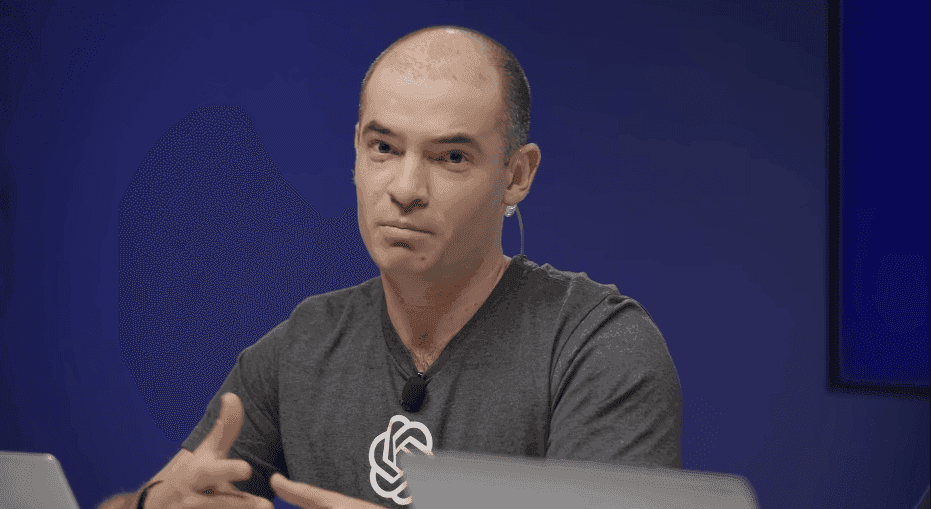
.Ilya Sutskever brings unmatched credentials to SSI. He co-authored and co-created AlexNet alongside Alex Krizhevsky and Geoffrey Hinton, proving that GPU scaling and deep neural networks could work together effectively. That foundational work set the groundwork for today's generative AI development
1
. Before founding SSI, Sutskever headed OpenAI's now-defunct Superalignment team and was instrumental in creating the technology behind ChatGPT's breakthrough launch in 20222
.
Source: SiliconANGLE
Sutskever was among the first AI researchers to grasp scaling laws, which showed that large language models became more capable with more data and computing power
2
. However, in November, he suggested that returns from that approach were diminishing, stating that "now that compute is big, we are back to the age of research"2
. SSI has been working on a new approach to AI research that reportedly breaks with the methods underpinning large language models developed by OpenAI, Google, and Anthropic2
.The Nvidia-SSI partnership represents the latest in a series of circular financing deals between chipmakers and AI labs. Just last week, Nvidia rival AMD announced it would invest up to $5 billion in Anthropic
2
. Nvidia has previously agreed to similar large-scale investments with some of its biggest customers, including OpenAI and Mira Murati's Thinking Machines Lab2
.These deals have drawn criticism for creating mutual dependency between suppliers and startups. SSI represents the purest version of this dynamic: the company has no customers, earns no revenue, and will use Nvidia's investment exclusively to purchase and run Nvidia hardware
3
. Nvidia is also separately in talks to guarantee as much as $250 billion of financing for OpenAI data centers3
.Related Stories
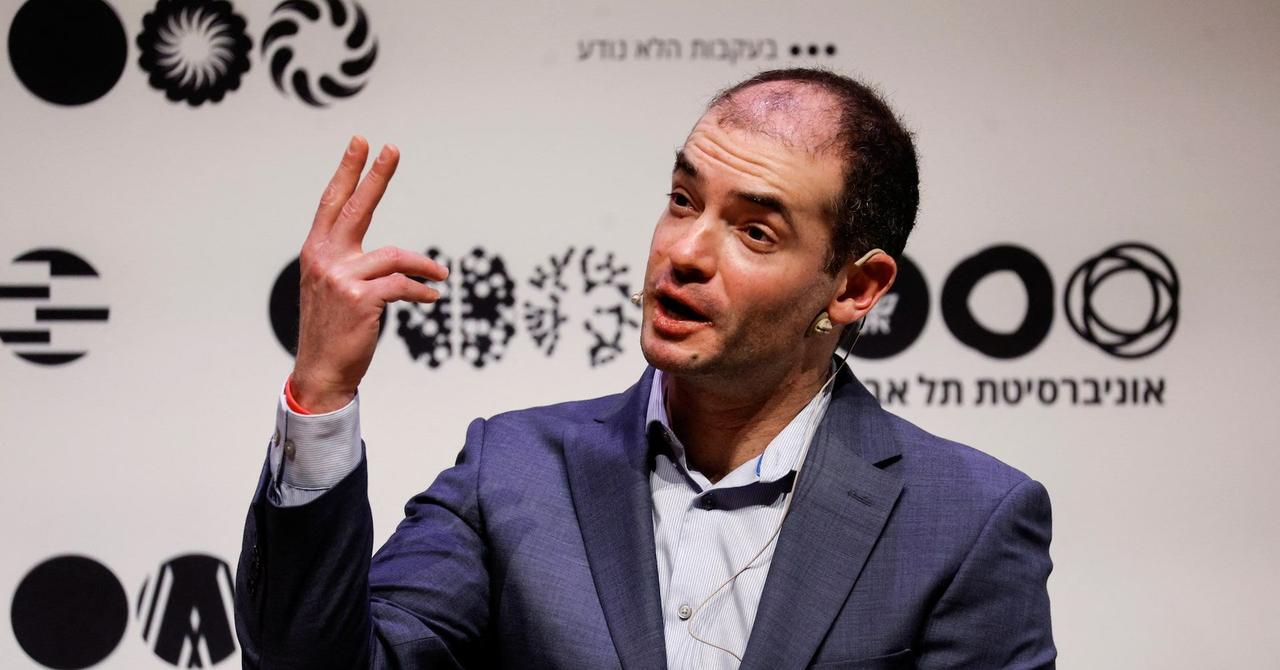
Beyond financial support, Nvidia and SSI will collaborate on advancing Nvidia's current and future compute platforms, leveraging SSI's technology and "unique insights into the future of AI"
1
. Access to the Vera Rubin platform, which reached full production this month, carries particular weight. OpenAI is deploying the same generation at scale this quarter, and supply constraints affect the entire industry3
.SSI co-founder Daniel Levy captured the significance plainly: "Deep learning happens when a small, cracked team operates a big computer. The computer just got bigger"
3
. Jensen Huang, Nvidia's chief executive, said Sutskever had already "pioneered fundamental breakthroughs at the foundation of modern AI" and expressed excitement about what SSI will discover using accelerated computing capabilities2
.The partnership raises questions about how the AI industry values research versus revenue. SSI's investors—including Andreessen Horowitz, Sequoia Capital, DST Global, Greenoaks, Lightspeed Venture Partners, GV, and Alphabet—are betting that a small team with massive compute capacity produces something competitors lack
5
. Nvidia's bet is narrower: whatever SSI discovers will run on Nvidia chips3
.Market reaction was muted. Nvidia shares fell as much as 2.3% to $202.13 on Monday, fitting a recent pattern where announcements of enormous AI spending no longer lift stock prices
3
. The question moving markets has shifted from how much companies invest in AI to how much of that money returns as revenue from outside the circular ecosystem of chipmakers and AI labs.For those watching AI development, SSI's claim that its research has reached scaling-worthy milestones is the signal to monitor. Whether the company has found "something important" that Sutskever suggested was missing from current scaling approaches remains to be seen. What's clear is that Nvidia looked before it paid, and what it saw was compelling enough to commit billions.
Summarized by
Navi
[3]
[4]
1
Technology

2
Policy and Regulation

3
Technology




