Nvidia CEO says he hates AI slop as DLSS 5 sparks fierce backlash from developers and gamers


6 Sources
6 Sources
[1]
Broken Nvidia CEO Says He Can't Stand AI Slop Either
Can't-miss innovations from the bleeding edge of science and tech The overwhelming backlash against Nvidia's new DLSS 5 feature that uses AI to yassify video games has clearly rattled CEO Jensen Huang, who's now insisting that he actually hates AI's horrible and homogenous aesthetic as much as gamers do. "I think their perspective makes sense and I can see where they're coming from, because I don't love AI slop myself," Huang said during an interview in a new episode of the Lex Fridman podcast, as quoted by Kotaku. "You know, all of the AI-generated content increasingly looks similar and they're all beautiful and so I'm empathetic towards what they're thinking." It's kind of an astonishing line for Huang to take, sincerely or not, given that his company ballooned to a near $5 trillion valuation off providing the hardware for the generative AI boom -- and the tidal wave of slop that's come with it. Here comes that inevitable conjunction, though: "But that's not what DLSS 5 is trying to do," Huang insisted. After DLSS 5 was unveiled with a video demo last week, gamers and developers from every corner of the internet retaliated by calling it "slop" and accusing it of undermining artistic intent. It was relentlessly mocked in memes and nicknamed "sloptracing," a play on Nvidia's raytracing tech for realistically simulating light. It was the rare example of gamer outrage being warranted: the feature used a generative AI model to plaster a familiar hyperreal AI sheen onto the games' graphics, making character faces look Facetuned to conform to trendy beauty standards. It even produced classic AI hallucinations, with one character given a grotesque "giga-nostril" after the feature appeared to misinterpret a facial shadow as part of his nose. Huang days later questionably struck back by calling gamers "completely wrong" -- the thrust of all ironclad arguments -- claiming that DLSS 5 doesn't take away from "artistic control." The long and short of his jargon laden defense was that the generative AI feature wasn't a post-processing filter, but anchored to the game's geometry and lighting data, which developers could fine-tune to keep in line with their aesthetic vision. His defense was seemingly undermined when Nvidia employee Jacob Freeman revealed to PC gaming YouTuber Daniel Owen that DLSS 5 only works off of 2D frame data -- not 3D lighting and geometry. Still, Huang stuck to his guns on the podcast appearance. DLSS 5 is "ground truth structure data guided," he insisted. "And so the artist determined the geometry we are completely truthful to. The geometry maintains in every single frame." "DLSS is integrated with the artist, and so it's about giving the artist the tool of AI, the tool of generative AI," Huang added. "They could decide not to use it, you know?" That they could.
[2]
'Cripple their sales, tank their stock price. Stop collaborating with them as developers': New Blood CEO on fighting against DLSS 5
DLSS 5 is contentious, to put it lightly. Though execs from the likes of Capcom and Bethesda seem on board with the new generative AI rendering tool, some of its employees didn't even know it was going to be announced (admittedly, the logistics of informing all employees does make my head spin, not to mention a legal minefield of NDAs). Then, alongside this, the announcement drew ire from many developers, with some calling it "slop" or "disrespectful to the intentional art direction of devs". I recently had the chance to pick the brains of Dave Oshry, the co-founder of indie publisher New Blood Interactive, and David Szymanski, the developer behind Dusk, Iron Lung, and Gloomwood, to get their reactions to the tech. Oshry tells me, "We as developers and players need to push back against this bullshit just like we did with NFTs and crypto games and try in vain to do with predatory micro transactions, loot boxes and battle passes." Generative AI is already a hot topic among game developers. Some fear for the ethics of models that can technically scrape whatever work they like, and others fear that their output could contribute to the mass firing of many. A lot of game developers worry that executives making decisions might not favour the quality of handmade work over the benefits of getting artificial intelligence to create assets quickly and cheaply. DLSS 5 is not making assets and instead working with premade assets to make them more photorealistic, but that fear still exists. Oshry argues, "This is fundamentally changing the way video games look based on artificial intelligence that's been trained on Instagram models and Epstein memes." "You used to have to spend hours poorly modding your games to make them look this 'cinematic', and now Nvidia is going to let you do it for free! Just kidding, it'll cost like $5,000." What Oshry is referring to here is the two RTX 5090's required to render the DLSS 5 demo that Nvidia showed off last week. Nvidia has said it will be able to run off just one GPU, but one can assume that will be a high-end one, so a rather expensive setup will likely be needed for the launch of DLSS 5 later this year. He goes on to argue, "At this rate, why make game art at all? Why not just draw some shapes and colours and let AI generate what it thinks it should look like?" Last week, Oshry tweeted, alongside other critiques of DLSS 5, "We need to push back harder against it", so I asked what that looks like for developers and gamers. "The only thing we can do besides calling them out on it and making them feel bad is voting with our wallets. Cripple their sales, tank their stock price. Stop collaborating with them as developers. Then maybe they'll think about going back to giving us what we want." Oshry does clarify that he has "no dog in this fight other than being a PC gamer". He notes that New Blood makes retro indie games, and Amid Evil is the only game it has put DLSS and RTX in and "it was a huge pain in the ass, arguably made the game look worse, and didn't get us any extra sales. But it was a fun experiment and Nvidia sent us some free GPUs for our trouble. Yippie." Oshry notes Nvidia's constant role on the cutting edge and how products 3DVision and Nvidia Shield weren't massive hits in the industry. He calls PhysX (which is only sort of supported on RTX 50-series graphics) "costly but it sure was cool as hell watching concrete pillars dynamically explode into pieces during shootouts in Mafia 2." As far as newer tech is concerned, he says RTX and Path Tracing are very costly bits of tech, though they make Cyberpunk 2077 look good. He does argue, though, that the jury's still out on frame generation. Catching up with Szymanski, he tells me he agrees with everything said by Dave (including how cool PhysX was) but notes that, "even if we set aside all (relevant and valid) concerns about artistic intent and generative AI itself, the lighting and contrast it adds (or removes, in some parts) makes scenes look less realistic and believable." "It especially sucks seeing it showcased in Resident Evil: Requiem," he notes, "a game that exemplifies quality and passion in AAA game design. Seeing Grace and Leon getting run through the slop filter as a 'victory lap' definitely feels like insult and injury combined into one." A common refutation of criticism of DLSS 5 is that it's optional, but Szymanski argues it's not actually that optional. "You mean optional like upscaling? You mean optional like temporal AA? Optional like realtime GI? Optional like any number of 'optional' features that anyone who has played a AAA game in the past half decade can tell you aren't really optional, because games are now built to lean on those technologies." Szymanski tells me that DLSS, TAA, and ray tracing are paying off, but at the cost of clarity, accessibility, and playability."While I'm not a graphics tech expert, I'm still not convinced that they've solved many problems that didn't already have solutions" The debate around DLSS 5 is currently being had by game developers, with Jean Pierre Kellams, a lead producer over at Epic Games, saying, "If that was shown as a next-gen hardware reveal and not AI you guys would be going nuts." Kellams argues that Grace Ashcroft from Resident Evil Requiem looks better with DLSS 5: "Her skin shader has much better subsurface scattering (she doesn't have the Japanese game character perfect skin). Her lips actually have creases now. Her ear stud is now catching light properly." Even Kingdom Come: Deliverance 2's director has recently argued, "This is just a little uncanny beginning. No way haters will stop this. It's way more than a soap opera effect every TV has when you turn motion smoothing on." DLSS 5 seems to be less smart than we initially thought, too. Jacob Freeman, GeForce Evangelist, describes it as taking a "2D frame plus motion vectors as input", which makes it pretty similar to applying an AI filter over the top of the game. It running in real-time is still impressive, but it brings into question the developer's ability to play with said tools. Szymanski feels gamers have been paying more and more for "lateral movements in rendering", and DLSS 5 represents a boiling point for it. "Nobody wants a fucking glorified autocorrect painting over the work of actual human beings making actual art." He tells me that all he (and most gamers) want are games at a consistent frame rate with a good resolution, strong art design and consistent lighting "on hardware that doesn't require us to remortgage our house, using technology that doesn't necessitate turning the world into a Mad Max wasteland." Importantly, both Oshry and Szymanski feel the public element of the criticism against Nvidia is important. Szymanski says, "I don't know if DLSS5 is going to be here to stay or not, but it's heartening to at least see so many of us in agreement" "Hopefully if we're all loud and insistent enough, and we throw the weight of our wallets around, companies like Nvidia will eventually get the message." "That or this will simply be the newest in a long line of features that indie developers don't have to use, and the indie and AA scenes will continue to provide a wild variety of visual styles that don't require thousands of dollars in hardware to render."
[3]
Kingdom Come: Deliverance 2 director defends DLSS 5: 'No way haters will stop this'
Nvidia's DLSS 5 hit the gaming public to much controversy -- including from us here at PC Gamer. In one corner, you've got folks who are just seeing it as a very fancy filter analogous to AI upscaling, in the other, you've got Instagram filter Grace Ashcroft trotted out as a proud advancement of technology rather than an uncanny kneecap to creative intent. The latest defender of the tech, Daniel Vávra, also happens to've been the director of Kingdom Come: Deliverance 2 -- though he's now currently taking a step back from development studio Warhorse to focus on a film. The former creative director wrote on X (thanks, PCGamesN): "I can imagine in the future devs will be able to train this tech for [a] particular art style or specific people faces, and it might replace expensive raytracing etc. This is just a little uncanny beginning. No way haters will stop this. It's way more than a soap opera effect every TV has when you turn motion smoothing on." Vávra's a controversial figure, having been vocally in support of Gamergate back in 2015, rallying against "social justice warriors", and making some tasteless jokes about the first game's mostly-white cast. That's in contrast to KCD2, which seemed purposefully adverse to culture war nonsense. It featured gay romance and a more diverse setting with proportionate representation -- exhaustion that Vávra, to his credit, echoes with appropriate disdain. But he's also pro-Musk and called Canada an Orwellian country recently. So, er. Basically, given his propensity for opinionated posting, it doesn't surprise me that he's hiked up his gambeson to wade into this topic, and has, in fact, talked with a sort of resigned acceptance about AI before. As I noted in our group opinion piece on the stuff, I'm deeply cynical of the tech -- partially just because of pattern recognition, most every AI promise has fallen flat, why not this one -- but also because that garish, ghoulish, uncanny trailer was put forward by Nvidia. And as much as the company wants you to believe it's not into AI slop, its out-of-touch understanding as to what is and isn't acceptable to its audiences strikes me more than enough cause for scepticism. I can see a small window where it might be useful -- I'm certainly not complaining about AI upscaling. But DLSS 5 is clearly more than that, and I just can't see a future in which this tech becomes widely adopted and is, as Vávra implies, fine-tuned by devs to avoid overriding the artstyle. It's just naive -- executives will try to use this tech to cut important corners, as they have with almost every other piece of AI technology before now. That's if it even can be used that way: Our hardware writer, Dave James, was one of the tech's initial defenders amongst our crew -- but as he's observed last week, DLSS 5 seems increasingly like something developers can't even theoretically fine-tune: "The more we hear about Nvidia's DLSS 5 feature, the worse it seems to get."
[4]
Kingdom Come Deliverance Lead Stans For DLSS 5's Slop Filter
Daniel Vávra leaps to the defense of the despised Nvidia tech, says it's just the 'uncanny beginning' As the broader games industry comes together in condemnation of Nvidia's DLSS 5 AI-slopificator technology, one man is brave enough to step forward and say something against the grain, to puff out his chest and speak up for the little billionaires. And that man is Daniel Vávra, one-time GamerGater and co-founder of Kingdom Come: Deliverance 2 studio Warhorse. He sees this leap forward for technology as a replacement for the expense of raytracingâ€"you know, once it gets over its initial struggles. Because sometimes you just have to believe. "I can imagine in the future devs will be able to train this tech for particular art style or specific people faces and it might replace expensive raytracing etc.," says the Czech game director. That really ought to be genAI's catchphraseâ€""I can imagine in the future"â€"given its purported benefits haven't yet trickled down into the present. Vávra suggests this is the case for DLSS 5, too, despite Nvidia CEO Jensen Huang recently declaring the new version of its upscaling tech could already allow developers to maintain bespoke designs and artistic intent. He was adamant it wasn't simply redrawing a 2D view of a game's assets as if being passed through a TikTok beauty filter. That framing was later undercut by the company's own messaging. But what if that wasn't the case? What if DLSS 5 was something different and better and good?! Just imagine that future. According to Vávra, the tech is just having "a little uncanny beginning," much like how the generic, clumsily plagiarized writing of ChatGPT, or the sheen-faced, weird-eyed, object-impermanence of any number of genAI video engines, are just simply working through their difficult toddler years. It's all about to be incredible, and what a time that will be to live through. Although I'll tell you what: try telling that to the haters! The ones trying to stop us from being able to live in this AI-crafted nirvana. What about them? "No way haters will stop this," says Vávra. Phew! "It's way more than a soap opera effect every tv has when you turn motion smoothing on." God, yes, that! He's right! Well, he's wrong, as in he says the opposite of what's true, but it's correct about the awful soap opera effect, isn't it? When something shot on celluloid at 24 frames per second is interpolated by your TV, rendering it looking like it was shot on camcorder on the set of Days of Our Lives. It's a peculiar instinct to want to aggressively stan for something everyone else has already reasonably been grossed out by. Especially when DLSS was one of those rare moments when AI tech provides a functional use that allows people to play games at higher fidelity on less powerful machines without this ridiculous update. It seems reasonably likely that level-headed ongoing development of DLSS could see such code continue to incrementally improve, allowing developers to create ever-more impressive-looking games without a massive hardware cost for players, and all without the need for genAI drivel redrawing the frames to make every game look like a Facebook ad. Vávra joins the esteemed company of Mike Ybarra, who recently told Crimson Desert developers Pearl Abyss to "man up" after the studio apologized for having littered the game with crappy genAI art, in what will presumably soon become a super-team of avoidable games developers standing up for the billionaires who've gambled their entire companies on technology that cannot and will not ever achieve its idiotic claims. Presumably they'll also be there to wipe away the tears when the bubble bursts in the next few years, as investors start to demand returns that cannot be created.
[5]
"No way haters will stop this": Kingdom Come: Deliverance 2 lead says AI tech like Nvidia DLSS 5 will "replace expensive raytracing" someday, and "this is just a little uncanny beginning"
Nvidia recently unveiled its upcoming DLSS 5 technology with a controversial showcase of the AI-powered "breakthrough" (as the company calls it) in visuals, and it seems Kingdom Come: Deliverance 2 lead Daniel Vávra has hope in the image-enhancing tool. Vávra, co-founder of Warhorse Studios and Kingdom Come: Deliverance director, shares his thoughts on the tech in a new online post. "I can imagine in the future devs will be able to train this tech for [a] particular art style or specific people['s] faces," he writes, "and it might replace expensive raytracing, etc." Attached is a clip of DLSS 5 in action in Starfield, shown at Nvidia's recent AI conference, with before-and-after transitions from the game. "This is just a little uncanny beginning," continues Vávra. "No way haters will stop this. It's way more than a soap opera effect every TV has when you turn motion smoothing on." Well, that's... certainly a take. The Kingdom Come: Deliverance 2 head, who is working to turn his RPG into a TV show or movie now, doesn't exactly echo the more popular sentiment across the industry here, though. Many developers have spoken out against the AI tech. From Baldur's Gate 3 to Palworld devs, folks across the industry have said "we need to push back harder" against what they dub Nvidia's "AI slop" filter. Quite a few players themselves agree, and this can be seen under Vávra's own post here. "Actually, it's exactly that; even motion smoothing got improved over the years. It's still distracting, and it never won't be," reads one such comment, arguing that the tech won't ever improve enough. "I personally don't believe that computer-generated imagery will ever pass the sniff test of the uncanny valley." Vávra, unsurprisingly, disagrees - and he responds saying as much: "You are funny. It already did." Well, I'm not sure I think so myself... but everyone's entitled to their own opinions, I suppose. DLSS 5 is likely set to launch sometime in the fall, so we've got a good few months to go yet before we see how it truly plays out. I'm not holding my breath, though. I think I've seen enough - the strange Instagram-ification of Grace from Resident Evil Requiem has been seared permanently into my brain... as have the somehow more horrifying Oblivion Remastered NPCs' faces.
[6]
'I don't love AI slop myself' says Nvidia chief Jensen Huang: 'I'm empathetic towards what [gamers] are thinking. That's just not what DLSS 5 is trying to do'
After all the furore surrounding Nvidia's DLSS 5 announcement, which was met with a mixture of curiosity around its AI capabilities and outright objection to the aesthetic changes it appears to make to existing games, CEO Jensen Huang has pushed back against the critique. Despite stating that the DLSS 5 backlash was "completely wrong" late last week, the Nvidia chief has since taken a more thoughtful tone in an appearance on the Lex Fridman podcast. When asked to explain the drama around DLSS 5, Huang said: "I think their [gamers] perspective makes sense, and I can see where they're coming from, because I don't love AI slop myself. All of the AI generated content increasingly looks similar, and they're all beautiful... so I'm empathetic towards what they're thinking. "That's just not what DLSS 5 is trying to do," Huang continued. "I showed several examples of it, but DLSS 5 is 3D conditioned, 3D guided, it's ground truth structure data guided, so the artists determine the geometry. We are completely truthful to the geometry... in every single frame. "It's conditioned by the textures, the artistry of the artists, and so every single frame it enhances, but it doesn't change anything." Hmm. One of the problems with DLSS 5's announcement has been the mixed messaging around exactly how it operates, and I'm not sure Huang's words make things clearer. Certainly, a splitting of hairs between the terms "enhance" and "change" is debatable -- and from the demos shown to date, it seems the latter is perhaps more appropriate to describe the infamous "yassified Grace." "Because the system is open, you could train your own models to determine and you could even, in the future, prompt it," Huang continues. "So you can give it even an example, and it would generate in the style of that, all consistent with the artistry... and so all of that is done for the artist so that they can create something that is more beautiful, but still in the style that they want. "I think that they [gamers] got the impression that the games are going to come out, the way games are shipped, and then we're going to post process it. That's not what DLSS is intended to do. DLSS is integrated with the artists. It's about giving the artist the tool of AI, the tool of generative AI. They could decide not to use it, you know?" I think one of the interesting things to pull out of Huang's words is the use of future tense. You could train your own models. You could, in the future, prompt it. But, as was revealed in a recent Q&A session with GeForce Evangelist Jacob Freeman, what DLSS 5 appears to be doing in the demos shown to date is essentially applying an adjustable AI filter to already-rendered 2D frames, with some motion vector data thrown into the soup. This is all really, really messy. What strikes me at this point is that the version of DLSS 5 shown to the public, and the messaging around how it operates, is still a muddle of AI terminology and odd process descriptions that, at points, seem to directly contradict each other. And while Huang seems more empathetic towards the gamers' concerns, it does seem like what we've been shown to date is a very early version of something that, on a conceptual level, doesn't seem to have clearly defined parameters. I guess all there is to do now is to wait for more demonstrations, technical deep dives, and really anything that gives us a clearer bead on what our AI-enhanced gaming future will actually look like. May you live in interesting times, as the old proverb goes.
Share
Share
Copy Link
Nvidia's DLSS 5 technology has ignited a firestorm across the gaming industry, with developers calling it disrespectful AI slop that undermines artistic integrity. CEO Jensen Huang now claims he shares their distaste for AI-generated content, even as his company's $5 trillion valuation stems from the generative AI boom. The controversy reveals a deepening divide over AI's role in video games.
Nvidia CEO Jensen Huang Claims He Hates AI Slop Too
Nvidia CEO Jensen Huang has found himself in an awkward position, insisting he shares gamers' distaste for AI slop even as his company pushes DLSS 5, a feature that has drawn fierce industry criticism. During an appearance on the Lex Fridman podcast, Huang stated, "I don't love AI slop myself. You know, all of the AI-generated content increasingly looks similar and they're all beautiful and so I'm empathetic towards what they're thinking," according to
Kotaku
1
. The statement comes as Nvidia's valuation approaches $5 trillion, built largely on providing hardware for the generative AI boom that has flooded the internet with homogenous content. After insisting he understands concerns about AI-generated aesthetics, Huang quickly pivoted: "But that's not what DLSS 5 is trying to do." He claimed the technology is "ground truth structure data guided" and maintains complete fidelity to artists' geometry choices, arguing that developers retain full artistic integrity and control over the tool1
.
Source: PC Gamer
Game Developers Call DLSS 5 Disrespectful AI Slop Filter
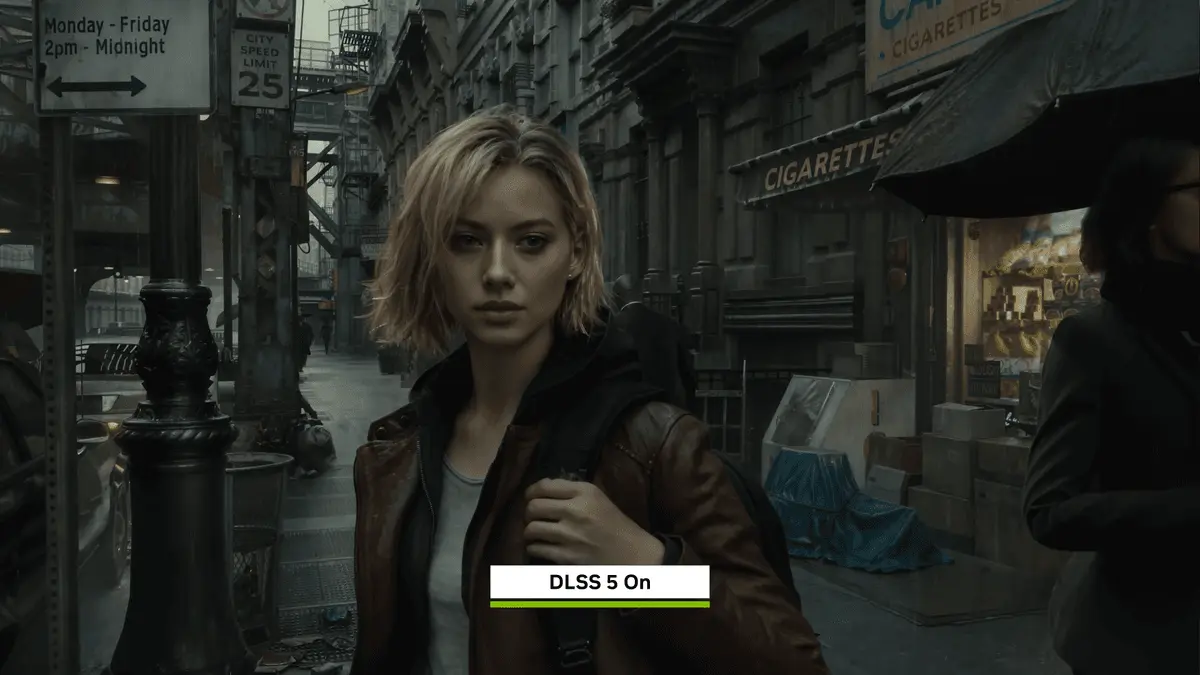
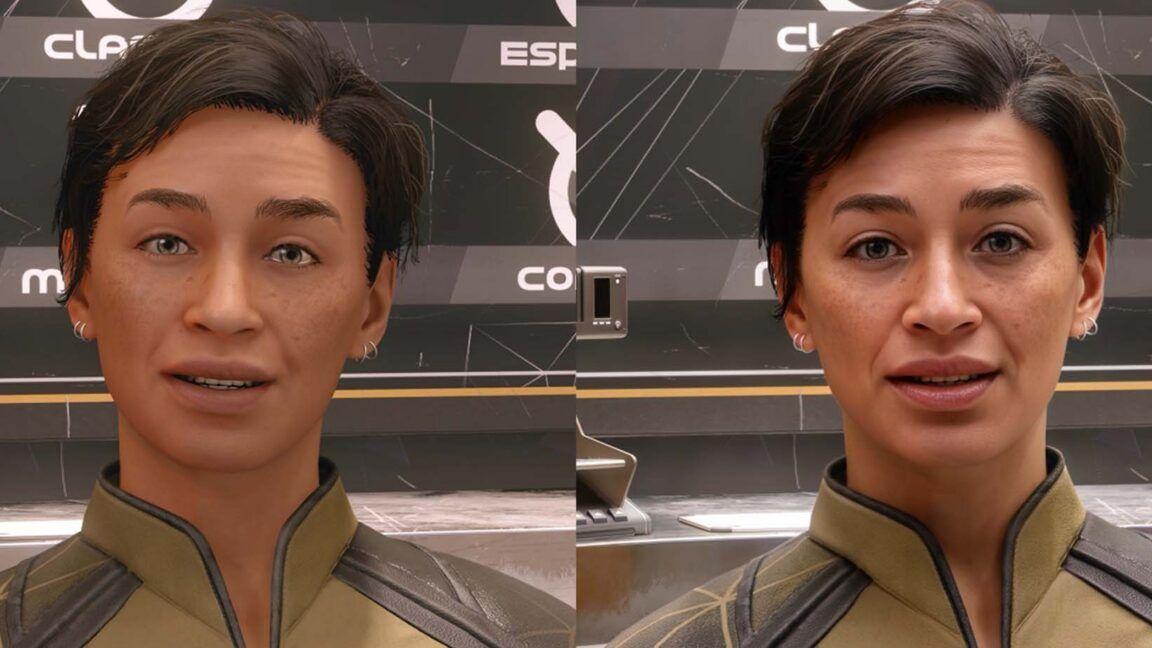
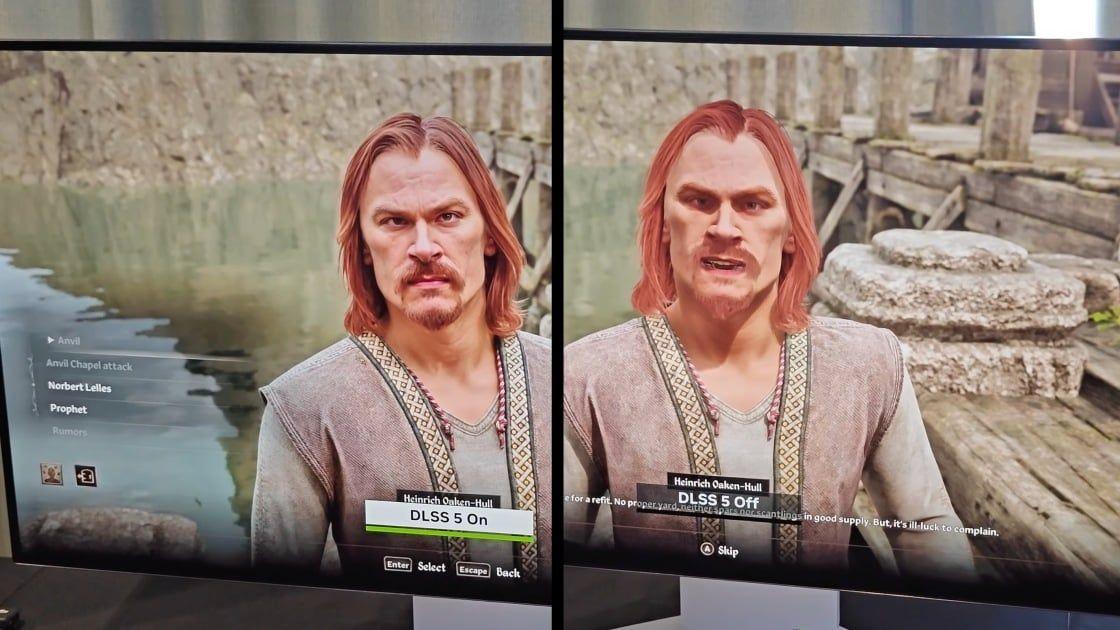
The backlash against DLSS 5 has united game developers across the industry in rare consensus. When Nvidia unveiled the AI upscaling technology last week with video demonstrations, gamers and developers immediately labeled it "slop" and accused it of undermining artistic intent. The feature applies a generative AI model that adds a hyperreal sheen to graphics, making character faces appear Facetuned to conform to trendy beauty standards
1
. Dave Oshry, co-founder of indie publisher New Blood Interactive, told PC Gamer, "We as developers and players need to push back against this bullshit just like we did with NFTs and crypto games." He argued that "this is fundamentally changing the way video games look based on artificial intelligence that's been trained on Instagram models"2
. David Szymanski, developer behind Dusk and Iron Lung, noted that the technology makes scenes "look less realistic and believable," particularly criticizing its showcase in Resident Evil: Requiem as feeling like "insult and injury combined into one"2
.
Source: PC Gamer
DLSS 5 Produces AI Hallucinations and Distorts Art Style
The controversy intensified when demonstrations revealed DLSS 5 producing classic AI hallucinations. One character was given a grotesque "giga-nostril" after the feature misinterpreted a facial shadow as part of his nose
1
. The technology was relentlessly mocked online with memes and nicknamed "sloptracing," a play on Nvidia's raytracing tech for realistically simulating light. Oshry questioned the implications: "At this rate, why make game art at all? Why not just draw some shapes and colours and let AI generate what it thinks it should look like?"2
. Szymanski challenged the notion that DLSS 5 is truly optional, arguing, "You mean optional like upscaling? You mean optional like temporal AA? Optional like any number of 'optional' features that anyone who has played a AAA game in the past half decade can tell you aren't really optional, because games are now built to lean on those technologies"2
.Technical Claims Undermined by Nvidia Employee Revelation
Huang's defense of DLSS 5 faced a significant setback when Nvidia employee Jacob Freeman revealed to PC gaming YouTuber Daniel Owen that the technology only works off 2D frame data, not the 3D lighting and geometry Huang had claimed
1
. This revelation contradicted Huang's assertion that DLSS 5 is anchored to game geometry and lighting data that developers can fine-tune. Despite this, Huang maintained his position during the podcast appearance, insisting the feature gives artists "the tool of AI, the tool of generative AI" and that "they could decide not to use it"1
. The technical limitations raise questions about whether developers can actually fine-tune the filter to avoid overriding their intended art style, as some defenders of the technology have suggested.Related Stories

Industry Divide Emerges Over AI Technology Adoption
While most developers have condemned DLSS 5, some industry figures have defended it. Daniel Vávra, former creative director of Kingdom Come: Deliverance 2, wrote on X that "in the future devs will be able to train this tech for [a] particular art style or specific people faces, and it might replace expensive raytracing." He dismissed concerns, stating, "This is just a little uncanny beginning. No way haters will stop this"
3
4
5
. However, even initial defenders have grown skeptical. PC Gamer hardware writer Dave James, who initially defended the technology, observed last week that "the more we hear about Nvidia's DLSS 5 feature, the worse it seems to get"3
. The controversy highlights broader concerns about generative AI in game development, with many developers fearing that executives might prioritize cheap AI-generated assets over handmade quality work.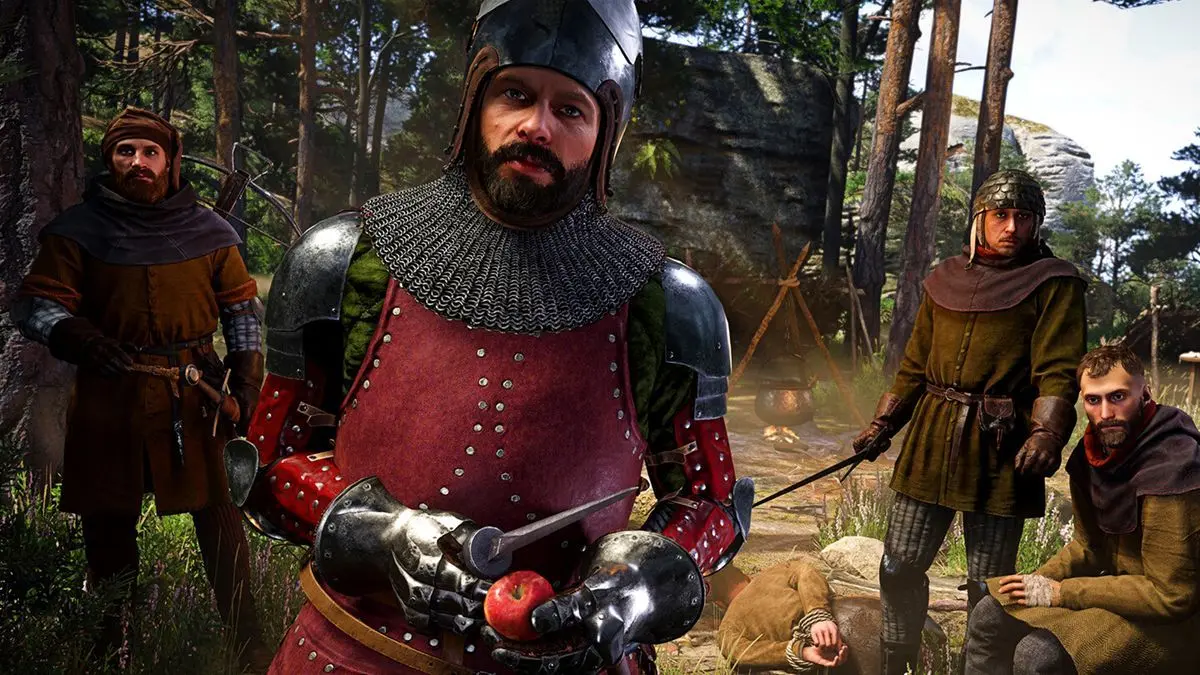
Source: GamesRadar
What Developers and Players Can Do Next
Oshry outlined a clear strategy for pushing back: "The only thing we can do besides calling them out on it and making them feel bad is voting with our wallets. Cripple their sales, tank their stock price. Stop collaborating with them as developers. Then maybe they'll think about going back to giving us what we want"
2
. The DLSS 5 demo shown at Nvidia's AI conference required two RTX 5090 GPUs, though the company stated it will run on a single high-end GPU when it launches later this year2
. For gamers and developers watching this space, the key question remains whether Nvidia will respond to the widespread criticism by significantly revising the technology before its fall release, or whether this marks another instance of AI promises falling flat despite corporate insistence otherwise.References
Summarized by

Navi
Related Stories
Nvidia's DLSS 5 faces fierce backlash as gamers and developers reject generative AI overhaul
17 Mar 2026•Technology
NVIDIA DLSS 5 brings Hollywood-level AI graphics to gaming this fall amid controversy
17 Mar 2026•Technology
AI in Video Games Triggers Player Backlash as Developers Navigate Quality vs Cost Savings
19 Feb 2026•Entertainment and Society

Recent Highlights
1
OpenAI shuts down Sora video app after six months, ending Disney's $1 billion investment deal
Technology

2
AI-Generated Val Kilmer to Posthumously Appear in As Deep as the Grave After His Death
Entertainment and Society

3
Supermicro Co-Founder Indicted in $2.5 Billion Nvidia AI Chip Smuggling Scheme to China
Policy and Regulation

Recent Highlights
Today's Top Stories




Your Daily Dose of Curated AI News
Don’t drown in AI news. We cut through the noise - filtering, ranking and summarizing the most important AI news, breakthroughs and research daily. Spend less time searching for the latest in AI and get straight to action.

