Nvidia Explores Partnership with South Korean AI Chip Designer Rebellions Worth $2.3bn


3 Sources
[1]
Nvidia is in talks with chip designer Rebellions
Jensen Huang met the Rebellions chief executive in Santa Clara this week to discuss a partnership, an investment or an acquisition. It would be Nvidia's fourth deal of this shape in a year, and the first one left Groq worth $3.5bn after a $20bn licence. Nvidia is in early talks with the Korean AI
[2]
Nvidia and Korea's Rebellions reportedly hold partnership talks
Nvidia has poured more than $63bn in investments into other companies. Nvidia and South Korean chipmaker Rebellions are in talks for a partnership that could result in an investment or an acquisition, Bloomberg News has reported. Talks are in early stages and may not result in a deal, sources told
[3]
Nvidia explores potential partnership or acquisition with Rebellions
Nvidia is in preliminary discussions with South Korean AI chip designer Rebellions regarding a potential deal that could range from a technical partnership to an outright acquisition, according to Bloomberg. These talks come shortly after Rebellions' Chief Financial Officer announced the company's
Share
Copy Link
Nvidia CEO Jensen Huang met with Rebellions co-founder at the company's Santa Clara headquarters this week to discuss a potential partnership, investment, or acquisition. The South Korean AI chip designer, valued at $2.3bn, specializes in neural processing units for AI inference workloads and has raised $850mn from SK Hynix, Samsung Ventures, and Arm.
Nvidia Explores Fourth Major Deal in Under a Year
Nvidia is in preliminary discussions with Rebellions, a South Korean AI chip designer, about a potential technical partnership, investment, or outright acquisition
1
2
. Jensen Huang met with Rebellions co-founder and CEO Sunghyun Park at Nvidia's Santa Clara headquarters this week to explore various options3
. The talks remain in early stages and may not produce a final agreement. This would mark Nvidia's fourth arrangement of this nature in under a year, following a pattern where the chipmaking giant buys access to rival chip and model designs rather than acquiring companies outright1
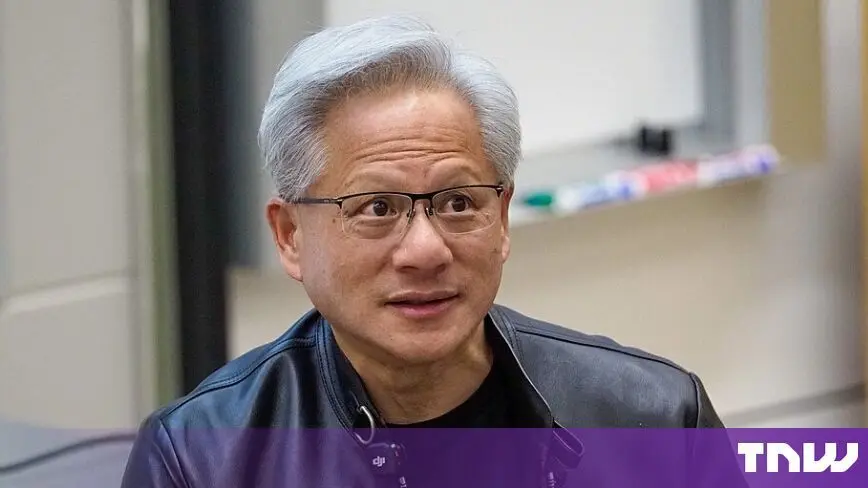
.
Source: The Next Web
What Makes Rebellions an Attractive Target
Founded in 2020 and based in Bundang, south of Seoul, Rebellions specializes in designing neural processing units for data centers, specifically tuned for AI inference rather than training
1
. AI inference workloads involve executing trained AI models against real-world data at scale, requiring less compute per query than training but vastly more in total3
. The company has raised approximately $850mn from notable backers including SK Hynix, Samsung Ventures, and Arm, along with direct investment from the Korean government2
. Its most recent valuation stands at around $2.3bn1
.Rebellions has been shipping products for three years. Its Atom and Atom Max NPUs entered mass production in 2023, with customers in Japan, Saudi Arabia, and the United States deploying them
1
. The company merged with Sapeon Korea in 2024, a chip business SK Telecom had spun out in 2016, and partnered with Marvell on AI hardware for sovereign AI projects1
.Nvidia's Established Template for Strategic Deals
The structure being discussed mirrors Nvidia's recent approach: buy a licence, hire the engineers, take a stake, and leave the company standing
1
. Nvidia paid Groq $20bn for a nonexclusive licence and absorbed most of its engineering talent while Groq continued operating its cloud business independently1
2
. The company repeated this pattern with Poolside AI, agreeing to pay $6bn for its model factory and hiring 109 staff members1
. Nvidia has poured more than $63bn in investments into other companies, with its portfolio majorly consisting of Intel and SpaceX2
.
Source: Silicon Republic
The Economics Behind Inference Chip Acquisitions
Nvidia already sells an inference product after turning the Groq licence into its own chip. The company unveiled the Nvidia Groq 3 language processing unit at GTC in March, announcing plans to add a new LPU architecture annually alongside its GPU cadence
1
. The chip ships in the second half of this year in liquid-cooled racks holding 256 LPUs, with 128GB of on-chip memory and 640 terabytes per second of scale-up bandwidth1
.Ian Buck, who runs Nvidia's data centre business, acknowledged the trade-offs at GTC: "The LPU is optimized strictly for that extreme low-latency token generation, offering token rates in the thousands of tokens per second. The trade-off, of course, is that you need many chips in order to get that kind of performance. And the economics, or the tokens per second per chip, is actually quite low"
1
. Rebellions designs the same class of part, meaning Nvidia would be licensing a second inference architecture after productising the first1
.Regulatory Hurdles and Strategic Complications
Any potential transaction faces significant regulatory scrutiny from multiple jurisdictions. Nvidia's dominant position in the AI chip market means the U.S. Department of Justice would closely examine the deal for antitrust concerns
3
. The licence-and-hire structure Nvidia has employed sidesteps the review a direct purchase would trigger1
.South Korean regulators present a second challenge. Seoul treats advanced semiconductors as strategic national assets, and Samsung and SK Hynix work closely with the government on investment projects
1
. The Korean government holds a financial stake in Rebellions, adding another layer of complexity to any potential deal3
.Related Stories

IPO Plans Add Urgency to Discussions
The timing of these Nvidia partnership talks is particularly significant. On August 19, Rebellions CFO Sungkyue Shin indicated the company is actively preparing for an IPO, targeting a listing on South Korea's main stock exchange as a top priority
3
. Bloomberg reported in March that Rebellions had appointed JPMorgan Chase as the global lead underwriter for its offering, with plans to go public in late 2026 or early 20273
. This timeline suggests Rebellions may be exploring multiple strategic options simultaneously.What the Groq Precedent Reveals
The Groq case offers insights into potential outcomes. After Nvidia valued the licence at $20bn, Groq raised $650mn for what remained of the company. This month, Groq closed $350mn at a $3.5bn valuation, with Nvidia joining the round
1
. The valuation fell by nearly half at that round2
. A company Nvidia paid $20bn to license is now worth $3.5bn as a going concern1
. This trajectory raises questions about how Nvidia's deal-making strategy impacts the long-term value of partner companies and whether similar dynamics might affect Rebellions.References
Summarized by

Navi
[1]
[2]
Related Stories
Rebellions raises $400 million at $2.34 billion valuation as AI chip startup eyes US expansion
30 Mar 2026•Technology

South Korean AI Chip Makers Rebellions and Sapeon Agree to Merge, Challenging Nvidia's Dominance
18 Aug 2024

Nvidia in Talks to Acquire Reflection AI, Signaling Major Shift in AI Model Competition
13 Oct 2026•Business and Economy

Recent Highlights



Recent Highlights
Today's Top Stories



Don’t drown in AI news. We cut through the noise - filtering, ranking and summarizing the most important AI news, breakthroughs and research daily. Follow topics that matter to you and stay ahead.


