8 Sources
[1]
Nvidia, SK Group unveil $500 billion-plus AI data centers initiative, memory partnership
SAN FRANCISCO, July 24 (Reuters) - Nvidia (NVDA.O), opens new tab and South Korea's SK Group on Friday unveiled a more than $500 billion AI initiative spanning large-scale AI data centers and next-generation memory, Nvidia said. The initiative includes a long-term partnership with SK Hynix (000660.KS), opens new tab to secure next-generation memory supply for Nvidia and jointly develop high-bandwidth memory for AI training, AI agents and physical AI applications. As part of the initiative, SK Telecom (017670.KS), opens new tab plans to build a 2-gigawatt AI data center powered by Nvidia's Vera Rubin chips and SK Hynix's HBM4 high-bandwidth memory, with the first facility due to come online in 2027, Nvidia added. Separately, Nvidia said it, Naver (035420.KS), opens new tab and Brookfield plan to expand Naver's AI data center in South Korea. Reporting by Stephen Nellis in San Francisco and Heekyong Yang and Jack Kim in Seoul; Editing by Chris Reese Our Standards: The Thomson Reuters Trust Principles., opens new tab
[2]
Nvidia locks down memory supply from SK Hynix as part of $500 billion AI deal
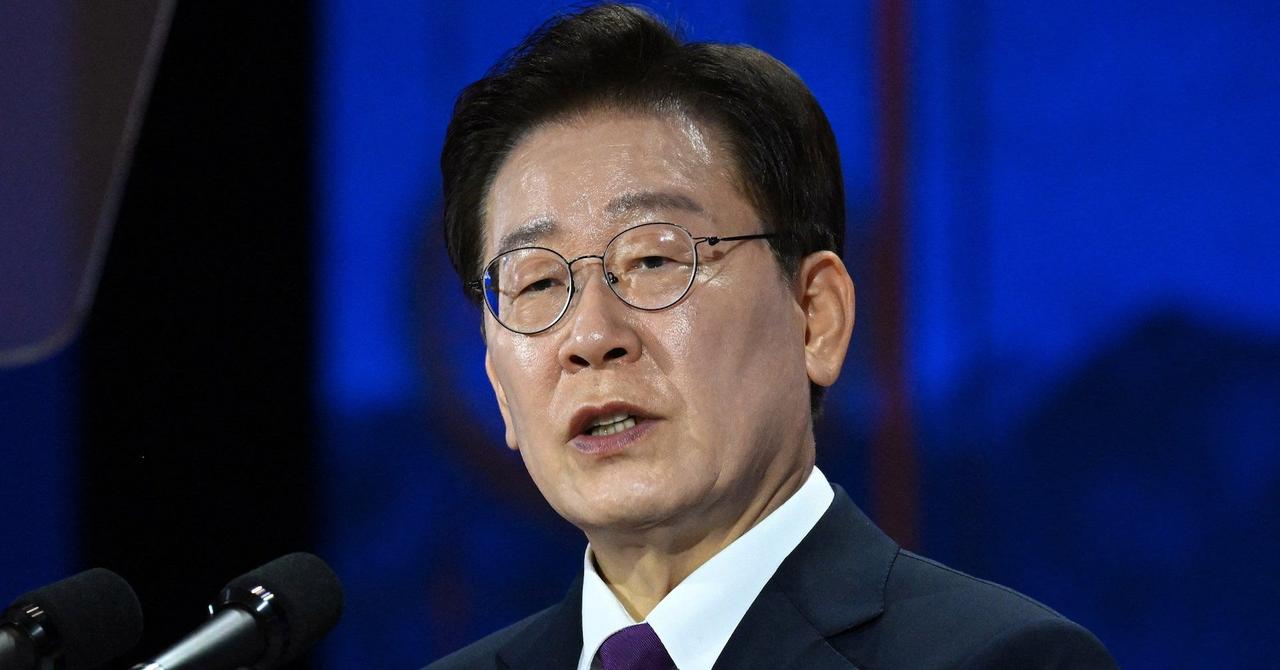
Nvidia said it's secured AI memory supply from South Korea's SK Hynix, as the chipmaker tries to lock in a key component for its advanced processors and systems. The agreement, announced late Friday in San Francisco, could be worth $500 billion over a number of years, and includes the construction of large-scale data centers expected to come online in 2027, Nvidia said. SK Hynix affiliate SK Telecom will build a cloud business using Nvidia's Vera Rubin systems. Nvidia said it's targeting enough capacity to require 2 gigawatts of power, which indicates a massive buildout with hundreds of thousands of graphics processing units. Nvidia is aggressively securing supply of high-bandwidth memory, which is essential for its GPUs and systems, as the AI boom has created a global memory shortage. SK Hynix is the leader in HBM production, according to analysts. "The expansion will include a co-develop opportunity for us on the next-generation SK Hynix AI memory, and this will help us secure a stable supply of HBM memory," Raj Mirpuri, Nvidia enterprise vice president, said on a call with reporters. The agreement is also a sign that massive AI infrastructure buildouts are moving beyond a handful of hyperscalers, with foreign governments and massive conglomerates starting to get involved. The deal was announced at an AI summit in San Francisco with South Korean officials including President Lee Jae Myung. Nvidia also said Friday that it would invest $1 billion into Naver, a Korean cloud company building data centers around its GPUs. Nvidia said the project would provide an opportunity for potential customers in South Korea and around the world to secure AI computing capacity before the 200 megawatts of capacity is completed. SK Hynix, South Korea's second most valuable company, listed on the Nasdaq earlier this month as part of an effort to finance infrastructure developments.
[3]
Nvidia invests $1 billion in Naver and strikes $500 billion deal with SK Group
Nvidia is investing $1 billion in Naver and building a $500 billion commercial partnership with SK Group spanning data centers and memory chips Nvidia will invest $1 billion in South Korean internet company Naver to help finance an AI data center under construction in South Korea, the chipmaker announced late Friday. The funding will allow Naver to more than triple the size of the facility from 55 megawatts to 200 megawatts, with US private equity firm Brookfield agreeing to a nonbinding term sheet to fund up to $9 billion for the project. The site will run on Nvidia's AI computing hardware. Separately, Nvidia announced a long-term commercial partnership with SK Group that it described as worth more than $500 billion. The figure includes money Nvidia will spend buying memory chips from SK Hynix, the world's largest supplier of high-bandwidth memory, as well as purchases by SK Group of Nvidia's supercomputers. SK Telecom will build more than 2 gigawatts of AI data centers on the Korean Peninsula, with the first facility due to open next year. The announcements coincide with a visit to Silicon Valley by South Korean President Lee Jae Myung, and additional tech deals between Korean and American companies are reportedly in the works. Nvidia CEO Jensen Huang told Bloomberg Television that South Korea is in a "golden age," pointing to the country's booming semiconductor and industrial businesses as reasons to invest. Nvidia will also help SK Hynix design future high-bandwidth memory chips, an effort to guarantee access to the component that remains in short supply because of the global buildout of AI data centers. The Korea deals are the latest in a year-long investment spree in which Nvidia has committed more than $40 billion to AI equity positions, including $30 billion in OpenAI. Earlier this week the chipmaker signed a separate agreement with Amkor Technology to bolster chip packaging, and it recently completed a trip to Japan that included deals with Toyota and Japanese robotics firms. Critics have described the pattern as circular financing, in which Nvidia invests in companies that then buy its hardware, a structure the chipmaker has replicated with data center operators, neoclouds, and now sovereign AI partners. For South Korea, the deals represent a bet that its semiconductor industry can remain central to the AI buildout even as geopolitical tensions reshape chip supply chains. Samsung and SK Hynix are the only two companies in the world capable of producing the advanced memory chips that Nvidia's processors require, and locking in a design partnership with Nvidia gives SK Hynix a structural advantage over its rival. Huang has argued that every country should create its own sovereign AI capability, and South Korea, with its chipmaking expertise and abundant engineering talent, is among the best positioned to do so.
[4]
Nvidia, SK Group Unveil $500 Billion-Plus AI Data Centers Initiative, Memory Partnership
SAN FRANCISCO, July 24 (Reuters) - Nvidia and South Korea's SK Group on Friday unveiled a more than $500 billion AI initiative spanning large-scale AI data centers and next-generation memory, Nvidia said. The initiative includes a long-term partnership with SK Hynix to secure next-generation memory supply for Nvidia and jointly develop high-bandwidth memory for AI training, AI agents and physical AI applications. As part of the initiative, SK Telecom plans to build a 2-gigawatt AI data center powered by Nvidia's Vera Rubin chips and SK Hynix's HBM4 high-bandwidth memory, with the first facility due to come online in 2027, Nvidia added. Separately, Nvidia said it, Naver and Brookfield plan to expand Naver's AI data center in South Korea. (Reporting by Stephen Nellis in San Francisco and Heekyong Yang and Jack Kim in Seoul; Editing by Chris Reese)
[5]
Nvidia, SK Group unveil $500 billion-plus AI data centres initiative, memory partnership
As part of the initiative, SK Telecom plans to build a 2-gigawatt AI data centre powered by Nvidia's Vera Rubin chips and SK Hynix's HBM4 high-bandwidth memory, with the first facility due to come online in 2027, Nvidia added. Nvidia and South Korea's SK Group on Friday unveiled a more than $500 billion AI initiative spanning large-scale AI data centres and next-generation memory, Nvidia said. The initiative includes a long-term partnership with SK Hynix to secure next-generation memory supply for Nvidia and jointly develop high-bandwidth memory for AI training, AI agents and physical AI applications. As part of the initiative, SK Telecom plans to build a 2-gigawatt AI data centre powered by Nvidia's Vera Rubin chips and SK Hynix's HBM4 high-bandwidth memory, with the first facility due to come online in 2027, Nvidia added. Separately, Nvidia said it, Naver and Brookfield plan to expand Naver's AI data centre in South Korea.
[6]
Nvidia just locked down deal that changes AI race
South Korean President Lee Jae Myung flew to San Francisco on July 24 for a summit with the most powerful names in artificial intelligence. Jensen Huang was there. Sam Altman was there. The heads of Samsung, SK Group, Hyundai Motor and Naver flew in. By the end of the day, roughly $950 billion in new AI agreements had been signed, and South Korea had positioned itself as the country most central to the next phase of the buildout. Nvidia (NVDA) is not slowing down its global hunt for AI infrastructure partners. The chipmaker has spent much of 2026 signing deals across Asia, the Middle East and Europe to secure the chips, memory and power it needs to keep building AI systems. On July 24, that hunt landed squarely on South Korea, with a cluster of new agreements announced within hours of each other. Nvidia, SK Hynix seal $500 billion memory deal Nvidia said on July 24 that it has locked down AI memory supply from SK Hynix, South Korea's second most valuable company, CNBC reported. The agreement, unveiled late that evening in San Francisco, could be worth $500 billion over a number of years, and it includes large-scale data centers expected to come online in 2027. SK Hynix affiliate SK Telecom will build a cloud business using Nvidia's Vera Rubin systems as part of the deal. Nvidia said it is targeting enough capacity to require 2 gigawatts of power, a figure that points to a buildout involving hundreds of thousands of graphics processing units working together. "The expansion will include a co-develop opportunity for us on the next-generation SK Hynix AI memory, and this will help us secure a stable supply of HBM memory," Raj Mirpuri, Nvidia's enterprise vice president, told reporters on a call. High bandwidth memory, known as HBM, sits directly next to AI chips and feeds them data fast enough to keep expensive processors from sitting idle. SK Hynix (SKHY) has built its recent momentum on exactly that product. The company ranked first globally in HBM revenue with a 56.4% share in the first quarter of 2026. Its Nasdaq debut showed first-quarter revenue reaching 52.58 trillion won, roughly $34.5 billion, up 198% from a year earlier, with the stock now trading under the ticker SKHY, as TheStreet reported. Samsung, Broadcom ink separate $200 billion pact A second, unrelated deal landed the same day. Samsung Electronics said it signed a memorandum of understanding with chip designer Broadcom to expand their collaboration across memory and foundry technologies. The agreement, worth an estimated $200 billion, is meant to help support the next generation of AI infrastructure, Reuters reported. The timing is notable given Broadcom's growing footprint inside the AI supply chain. The company already builds custom silicon for Google's TPU program. Adding Samsung's memory and foundry capacity gives Broadcom another lever to pull as demand for custom AI silicon keeps climbing. For Samsung, the deal is part of a broader push to close the gap with SK Hynix in HBM production while also rebuilding its contract manufacturing business. Samsung has also been courting AI labs directly, following a pattern in which memory makers are moving beyond simply supplying parts and into designing the systems that use them. Naver, Hyundai deals widen Korea's AI reach Nvidia's South Korea push was not limited to memory chips. The company said on July 24 it would invest $1 billion into Naver, a Korean cloud company building data centers around Nvidia's GPUs, with the project intended to triple the facility size and provide 200 megawatts of AI computing capacity. Nvidia chief executive Jensen Huang told the gathering that the SK Group partnerships alone represented more than $500 billion in combined business, though he did not detail how that figure was calculated, according to the Korea Herald. "The SK Group and I are announcing today that our two companies will enter into business partnerships that will represent over $500 billion of business together," Huang said during a meeting with President Lee in San Francisco. Huang also said Nvidia would work with Hyundai Motor Group on autonomous vehicles and robotic systems, extending the day's announcements beyond data centers and semiconductors into transportation. The comments suggest Nvidia is treating South Korea as a testing ground for AI applications well outside its traditional chip business. The deals mark a shift in how AI infrastructure gets financed. What used to be the province of a handful of U.S. hyperscalers now involves foreign governments and industrial conglomerates writing checks at a similar scale. What the deals mean for chip investors The memory market that underpins all of these deals remains a three-way race. Samsung Electronics leads with a 38% share of the broader DRAM market, followed by SK Hynix at 29% and Micron at 22%, according to Counterpoint Research data cited in a recent fund manager interview, as TheStreet reported. Every one of those three now has direct exposure to Nvidia's expanding supply chain. Analysts have been warning for months that memory demand is outpacing supply, and the announcements on July 24 only add to that pressure. BofA has pointed to the same dynamic as a reason memory prices could climb across DRAM, NAND and HBM products alike. For U.S. investors without direct access to Samsung shares, SK Hynix's new Nasdaq listing and Micron remain the two clearest ways to track the trade. Both are now tied more tightly than ever to decisions being made inside Nvidia's San Francisco headquarters. The Arena Media Brands, LLC THESTREET is a registered trademark of TheStreet, Inc. This story was originally published July 26, 2026 at 2:07 PM.
[7]
SK Group and NVIDIA Expand Strategic Partnership Across AI Factories and Next-Generation Memory
SK Group and NVIDIA announced plans for a $500-billion-plus comprehensive partnership to establish AI infrastructure serving the surging demand for global compute. SK Telecom to build 2-gigawatt NVIDIA Vera Rubin DSX AI Factory to serve global compute demand. This cloud will use the NVIDIA DSX platform and deploy NVIDIA Vera Rubin accelerated computing powered by SK hynix HBM4, with the first AI factory planned to come online in 2027. It will be built on the NVIDIA DSX full-stack AI factory architecture, which integrates NVIDIA accelerated computing, systems, software and partner technologies to deliver the lowest token cost at maximum energy efficiency. The two companies will codevelop and optimize next-generation AI memory solutions, including HBM, to meet evolving infrastructure demands ranging from large language model training to agentic AI and physical AI.
[8]
Nvidia, SK Group unveil $500 billion-plus AI data centers initiative, memory partnership
SAN FRANCISCO, July 24 (Reuters) - Nvidia and South Korea's SK Group on Friday unveiled a more than $500 billion AI initiative spanning large-scale AI data centers and next-generation memory, Nvidia said. The initiative includes a long-term partnership with SK Hynix to secure next-generation memory supply for Nvidia and jointly develop high-bandwidth memory for AI training, AI agents and physical AI applications. As part of the initiative, SK Telecom plans to build a 2-gigawatt AI data center powered by Nvidia's Vera Rubin chips and SK Hynix's HBM4 high-bandwidth memory, with the first facility due to come online in 2027, Nvidia added. Separately, Nvidia said it, Naver and Brookfield plan to expand Naver's AI data center in South Korea. (Reporting by Stephen Nellis in San Francisco and Heekyong Yang and Jack Kim in Seoul; Editing by Chris Reese)
Share
Copy Link
Nvidia has locked in a massive $500 billion partnership with South Korea's SK Group to secure high-bandwidth memory supply and build large-scale AI data centers. SK Telecom will construct a 2-gigawatt facility using Nvidia's Vera Rubin chips and SK Hynix's HBM4 memory, with operations starting in 2027. Separately, Nvidia is investing $1 billion in Naver to expand AI infrastructure in South Korea.
Nvidia and South Korea's SK Group unveiled a massive $500 billion AI deal on Friday, marking one of the industry's largest commitments to AI infrastructure and memory supply
1
. The large-scale AI data centers initiative spans multiple years and includes a long-term partnership with SK Hynix, the world's largest supplier of high-bandwidth memory, to jointly develop next-generation memory solutions for AI training, agentic AI, and physical AI applications2
.
Source: ET
The announcement came during an AI summit in San Francisco attended by South Korean President Lee Jae Myung, signaling the strategic importance both nations place on AI development
2
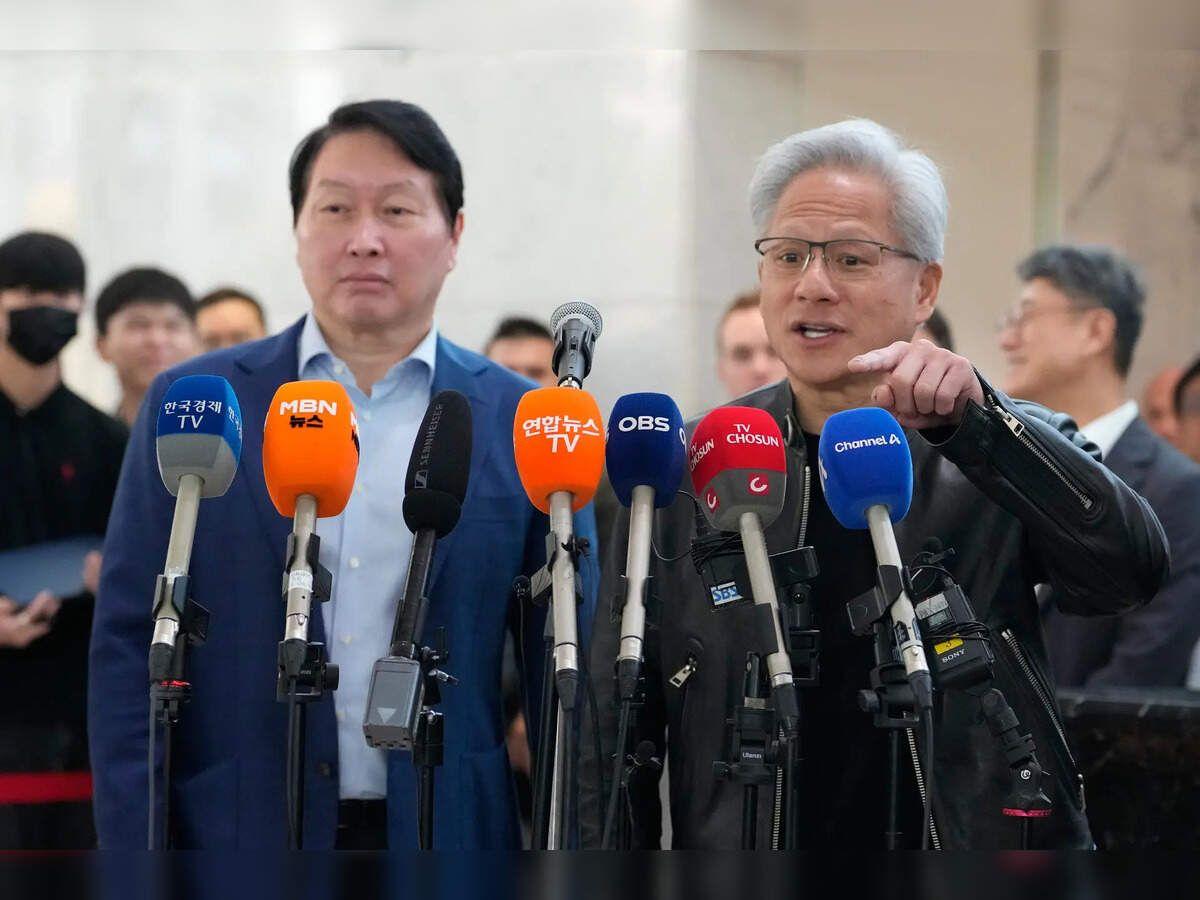
. Nvidia CEO Jensen Huang told Bloomberg Television that South Korea is in a "golden age," citing the country's semiconductor firms and industrial capabilities as key reasons to invest3
.As part of the memory supply agreement, SK Telecom plans to construct AI data centers requiring 2 gigawatts of power on the Korean Peninsula, with the first facility scheduled to come online in 2027
1
. These facilities will run on Nvidia Vera Rubin chips paired with SK Hynix's HBM4 high-bandwidth memory, indicating a buildout that could house hundreds of thousands of graphics processing units2
.Raj Mirpuri, Nvidia's enterprise vice president, explained the strategic value: "The expansion will include a co-develop opportunity for us on the next-generation SK Hynix AI memory, and this will help us secure a stable supply of HBM memory"
2
. This collaboration addresses the global memory shortage created by the AI boom, with Nvidia aggressively locking in supply of the critical component essential for its GPUs and systems.Separately, Nvidia announced a $1 billion investment in Naver, a South Korean internet and cloud company building AI data centers around Nvidia's GPUs
3
. The funding will enable Naver to more than triple its facility size from 55 megawatts to 200 megawatts, with Brookfield, a US private equity firm, agreeing to a nonbinding term sheet to fund up to $9 billion for the project3
. This expansion will provide opportunities for potential customers in South Korea and globally to secure AI computing capacity before the facility is completed2
.Related Stories
The deal signals that massive AI infrastructure buildouts are expanding beyond a handful of hyperscalers, with foreign governments and major conglomerates becoming directly involved
2
. For South Korea, the partnership represents a strategic bet that its semiconductor industry can remain central to global AI supply chains even as geopolitical tensions reshape chip manufacturing3
.
Source: Reuters
Samsung and SK Hynix are the only two companies worldwide capable of producing the advanced memory chips that Nvidia's processors require, giving them a structural advantage in the AI era
3
. The design partnership with SK Hynix positions the company ahead of its rival Samsung in the race for sovereign AI capabilities. Huang has consistently argued that every country should develop its own sovereign AI infrastructure, and South Korea's chipmaking expertise and engineering talent make it particularly well-positioned to execute this vision3
.The Korea deals continue Nvidia's year-long investment spree, with the chipmaker committing more than $40 billion to AI equity positions, including $30 billion in OpenAI
3
. Critics have described this pattern as circular financing, where Nvidia invests in companies that subsequently purchase its hardware—a structure replicated with data center operators, neoclouds, and now sovereign AI partners3
. However, for Nvidia, securing memory supply remains critical as demand for AI infrastructure continues to outpace production capacity across the industry.🟡agnet_ai, and physical AI applications2
.Summarized by
Navi
[4]
02 Jun 2026•Technology

23 Jul 2026•Business and Economy

31 Oct 2025•Business and Economy

1
Technology

2
Technology

3
Policy and Regulation