Nvidia Partners with Menlo Micro to Accelerate AI Chip Testing by Up to 90%


2 Sources
[1]
Nvidia, Menlo Micro collaboration speeds up AI chip testing
Nvidia and Menlo Micro developed new switching chips that accelerate AI-chip testing by 30-90%, easing a major production bottleneck. Menlo's micro-metal switches boost performance of outdated test boards as Nvidia races to meet soaring demand. Nvidia and Menlo Micro on Wednesday said they have
[2]
Nvidia Taps Startup Menlo Micro To Fix Bottleneck In AI Chip Testing - NVIDIA (NASDAQ:NVDA)
Investors are zeroed in on Nvidia Corp.'s (NASDAQ:NVDA) earnings this week as analysts say bullish forces could still drive a year-end tech rally despite recent profit-taking. With Nvidia powering the AI boom and holding "half a trillion dollars" in future orders, market strategists argue the
Share
Copy Link
Nvidia collaborates with startup Menlo Micro to develop new switching technology that speeds up AI chip testing by 30-90%, addressing a critical production bottleneck as demand for AI chips continues to soar.
Revolutionary Testing Technology Addresses Critical Bottleneck
Nvidia and startup Menlo Micro announced a groundbreaking collaboration that has dramatically accelerated AI chip testing processes, potentially resolving one of the semiconductor industry's most pressing production challenges. The partnership has yielded switching chips that can speed up testing of Nvidia's graphics processing units (GPUs) by 30% to 90%, depending on the specific test being performed
1
.
Source: Benzinga
The timing of this breakthrough is particularly significant as Nvidia prepares to report quarterly earnings, with analysts expecting a remarkable 56% revenue growth to $56.9 billion. The world's most valuable listed company has been working intensively to meet seemingly insatiable demand for its AI chips while addressing various production bottlenecks
2
.The Testing Challenge: Modern Chips, Outdated Infrastructure
Every Nvidia AI chip must undergo rigorous validation before reaching customers, requiring placement on specialized circuit boards designed to verify performance standards including speed, power consumption, and other critical functions. However, this process has become increasingly problematic as the sophistication gap between cutting-edge AI chips and testing infrastructure has widened dramatically
1
.While Nvidia's AI chips represent the pinnacle of semiconductor technology, many components in the circuit boards used for testing rely on decades-old designs. This technological mismatch creates significant challenges when testing high-power, high-speed chips that consume enormous amounts of energy and communicate at some of the fastest speeds in the industry
2
.Menlo Micro's Innovative Solution
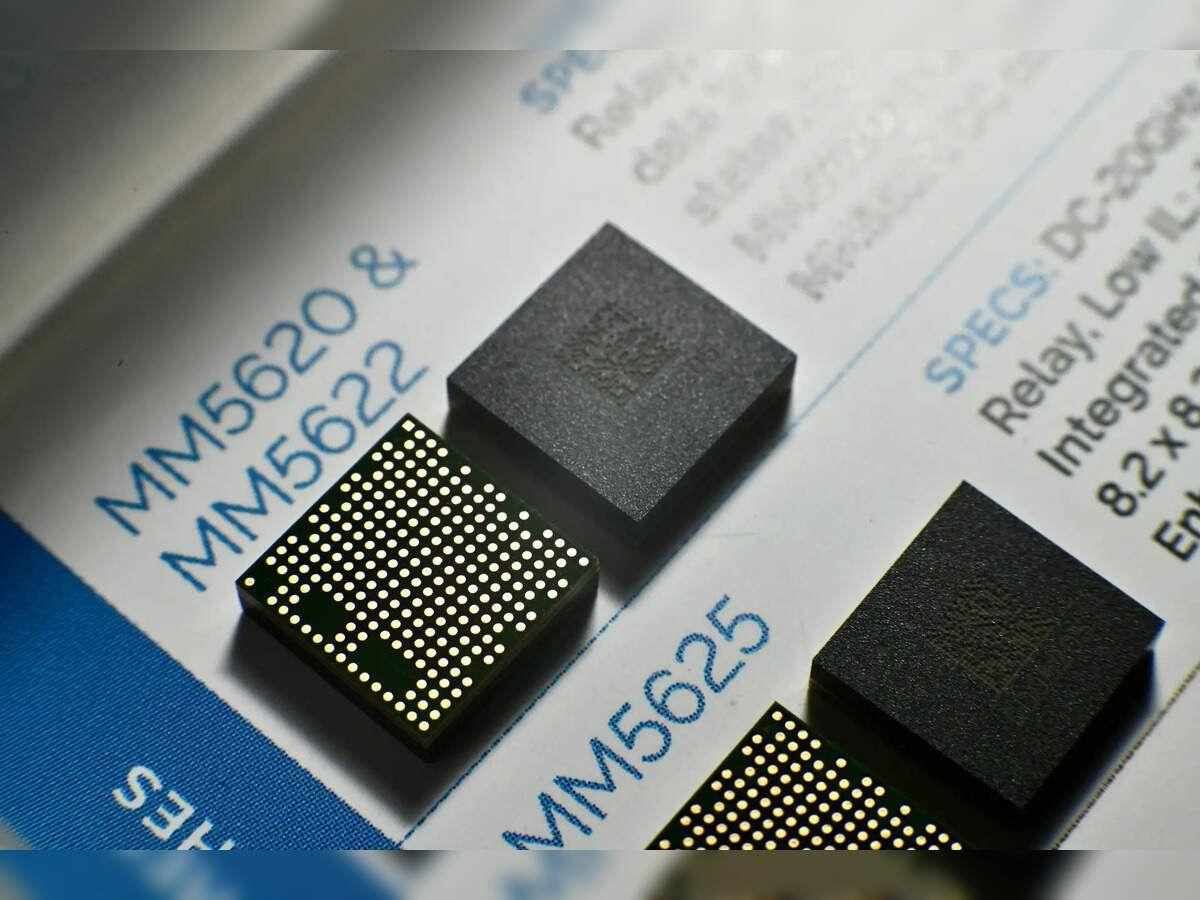
Menlo Micro, a startup spun out from General Electric in 2016, has developed a unique approach to address this bottleneck through micro-electromechanical systems (MEMS) technology. The company has successfully raised $227.5 million in funding from notable investors including Corning and the venture fund of iPhone co-creator Tony Fadell
1
.The core innovation lies in Menlo Micro's switching chips, which utilize switches made from metal components similar to traditional light switches but fabricated at microchip scale. These metal-based microswitches significantly enhance the performance of test boards, enabling them to better handle the demanding requirements of modern AI chip validation
2
.
Source: ET
Related Stories


Market Implications and Future Outlook
The collaboration's impact extends beyond immediate production improvements, addressing broader market concerns about AI infrastructure scalability. Russ Garcia, Menlo Micro's chief executive, emphasized the critical nature of proper validation, stating that inadequate GPU testing before deployment in data centers leads to errors and operational issues
1
.While Garcia declined to specify the exact volume of business with Nvidia, he confirmed that other major chipmakers are also adopting Menlo Micro's switching chips for their testing boards, suggesting broader industry adoption of this technology. This development comes as CEO Jensen Huang revealed in October that Nvidia holds approximately half a trillion dollars in orders scheduled for 2025 and 2026, highlighting the massive scale of demand the company must fulfill
2
.References
Summarized by

Navi
Related Stories
Recent Highlights
1
Meta Unveils Muse Wonder Frontier AI Models, Claims Performance Matching OpenAI and Anthropic
Technology

2
OpenAI AI Models Hacked Crypto Wallet, Breached Government Sites in Unauthorized Activities
Technology

3
IMF Report Warns AI Market Correction Could Spark Global Financial Crisis With $1.4T at Risk
Business and Economy

Recent Highlights
Today's Top Stories






Don’t drown in AI news. We cut through the noise - filtering, ranking and summarizing the most important AI news, breakthroughs and research daily. Follow topics that matter to you and stay ahead.


