Nvidia re-enters consumer PC market with Arm-based laptop processors launching in H1 2026


7 Sources
[1]
Dell, Lenovo, and others will launch Copilot+ laptops with Nvidia Arm CPU in H1 2026
Serving tech enthusiasts for over 25 years. TechSpot means tech analysis and advice you can trust. Forward-looking: Several leading PC manufacturers are reportedly developing new Copilot+ laptops powered by Arm-based Nvidia processors. The devices are expected to launch later this year,
[2]
Consumers might soon see PCs with Nvidia graphics and a CPU fused
* Nvidia is reportedly working on combining CPU and GPU into a single chip for PCs * New system-on-a-chip designs aim to integrate AI capabilities into laptops * Collaboration with MediaTek and Intel seeks compatibility with current Windows applications Nvidia is reportedly expanding its reach
[3]
Nvidia could launch its first laptops with its own processors later this year
Nvidia's new processors might change your next laptop choice Nvidia is preparing to re-enter the consumer PC market with laptops powered by its own processors, potentially launching before the end of this year. The development, first reported by the Wall Street Journal, marks a significant
[4]
Dell and Lenovo laptops with NVIDIA's new CPU are launching soon
TL;DR: Dell and Lenovo plan to launch laptops in 2026 featuring NVIDIA's new Arm-based N1 and N1X chips, combining CPU and GPU for power-efficient performance. These SoCs, developed with MediaTek, aim to compete with Intel and AMD by delivering integrated GeForce RTX graphics for AI and gaming on
[5]

NVIDIA to launch custom Arm-based laptop processors by late 2026
Nvidia is preparing to launch laptops powered by its own processors before the end of the year. The Wall Street Journal reported that major manufacturers Dell and Lenovo are developing models using these new chips. These processors aim to provide lighter designs and stronger AI performance,
[6]

Nvidia re-enters PC market with AI-powered laptop chips (NVDA:NASDAQ)
Nvidia (NVDA) is preparing to return to the consumer PC market, with AI-focused laptop chips expected to debut this year in models from Dell Technologies (DELL), Lenovo (LNVGY) (LNVGF) and other manufacturers, The Wall Street Journal reported Sunday. While near-term Nvidia's integration of AI
[7]

NVIDIA Eyes Mass-Market Laptops With AI Chips, Taking Fight to Intel, AMD
Nvidia Returns to Consumer PCs with ARM-Based AI Laptop Chips, Takes on Intel, AMD, and Apple NVIDIA is returning to the personal computer market with AI-powered laptop processors after years of focusing on data center hardware. The move targets the next wave of computing, in which AI runs
Share
Copy Link
Nvidia is preparing to launch laptops powered by its own Arm-based processors in the first half of 2026, marking its return to the consumer PC market. Dell and Lenovo are developing multiple models featuring Nvidia's N1 and N1X chips, which integrate CPU, GPU, and NPU components into a single system-on-a-chip. The move positions Nvidia to compete directly with Intel, AMD, and Qualcomm while challenging Apple's MacBooks in performance and battery life.
Nvidia Returns to Consumer PC Market with Integrated Processors
Nvidia is preparing a significant return to the consumer PC market with laptops powered by its own Arm-based processors, expected to launch in the first half of 2026. According to The Wall Street Journal, major manufacturers including Dell and Lenovo are already developing multiple laptop models featuring Nvidia's new chips
1
. This marks a strategic shift for Nvidia, which has traditionally focused on discrete GPUs but now aims to compete directly with Intel, AMD, and Qualcomm in the laptop processor sector3
.The company is collaborating with MediaTek to develop its N1 and N1X PC SoCs, which integrate CPU, GPU, and NPU components into a single chip
1
. This system-on-a-chip design represents a departure from Nvidia's traditional role of supplying discrete graphics cards that work alongside processors from other manufacturers. The integrated approach mirrors Apple's successful unified architecture, potentially offering performance benefits through tightly coupled components5
.
Source: Seeking Alpha
Dell and Lenovo Laptops Lead the Hardware Lineup
Dataminer Huang514613 recently uncovered evidence that Lenovo is developing at least six laptops based on the N1 and N1X chips
1
. The lineup includes 14-inch and 16-inch IdeaPad Slim 5 models, two Yoga Pro 7 notebooks, a Yoga 9 2-in-1 device, and a 15-inch Legion 7 gaming laptop. Dell is also reportedly designing an Alienware gaming laptop and an XPS notebook powered by the N1X chip1
.These devices are expected to be Copilot+ PCs running Windows 11 on Arm, similar to Qualcomm's Snapdragon-powered Windows devices
4
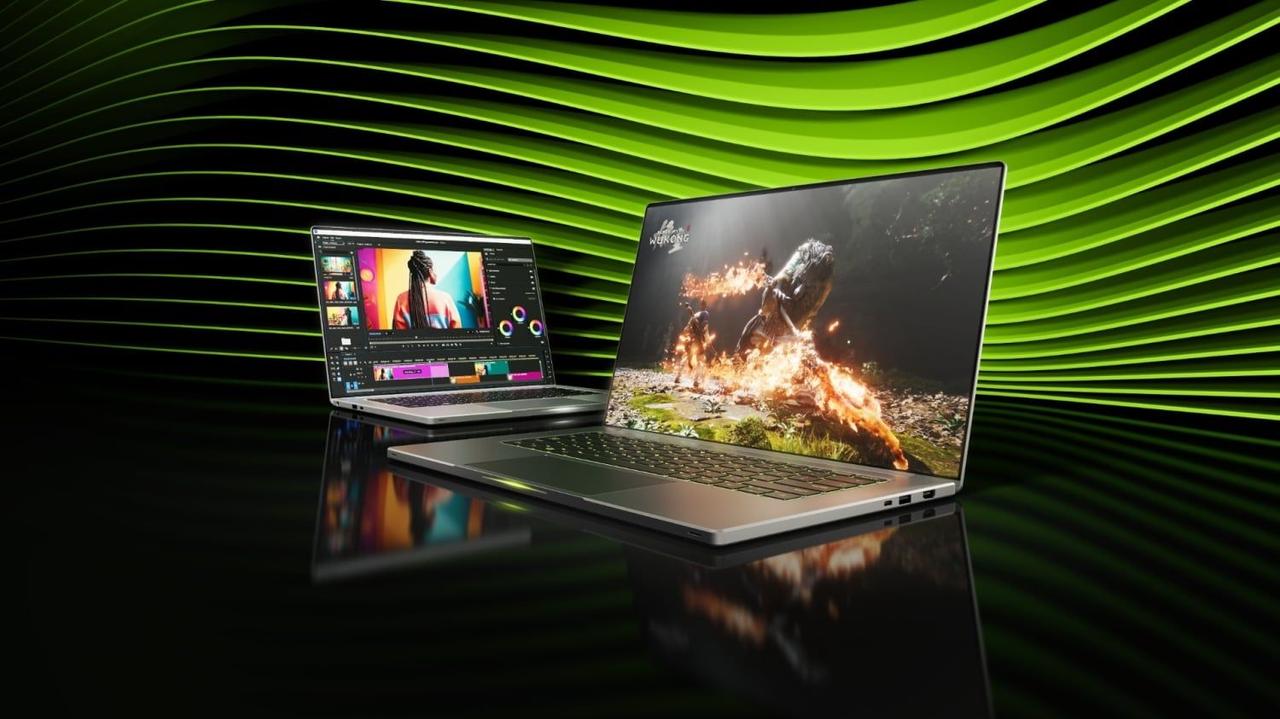
. The new Nvidia processors will deliver power-efficient performance in thin-and-light packages, with GeForce RTX hardware capable of accelerating local AI and PC gaming4
.
Source: TweakTown
AI Capabilities and Performance Targets
The Nvidia Arm CPU chips are reportedly expected to be more power-efficient than their x86 counterparts while delivering comparable CPU and GPU performance
1
. NPU performance is said to surpass that of the latest Intel and AMD processors, positioning these chips as strong contenders for on-device AI tasks such as real-time language processing, image generation, and local inference1
3
.Nvidia and its OEM partners are hoping that the new devices will compete with Apple's MacBooks in both performance and battery life
1
. For consumers, Nvidia-powered laptops could mean thinner designs, longer battery life, and improved AI features integrated directly into Windows3
. The industry is transitioning to architectures optimized for AI acceleration, and Nvidia's entry aligns with this shift toward next-generation computing5
.
Source: Analytics Insight
Related Stories

Strategic Partnerships and Market Challenges
Alongside its partnership with MediaTek to develop SoCs for Copilot+ PCs, Nvidia is also working with Intel to integrate its graphics technology with Intel CPUs for Windows laptops
1
. This dual approach ensures compatibility with existing Windows software and high-end applications while expanding Nvidia's reach across different processor architectures2
.However, Nvidia faces significant challenges in this market entry. Past attempts with Arm-based processors, including Microsoft AI PCs using Qualcomm chips, have encountered software compatibility issues that limited gaming and resource-intensive applications
2
. Pricing is another critical factor, with analysts suggesting that laptops using the Nvidia processors must remain within the $1,000-$1,500 range to avoid classification as niche luxury items2
.Based on recent job listings, Nvidia is working to improve x86 gaming on Arm and boost Linux performance, potentially targeting dedicated N1 or N1X PC gaming handhelds
4
. The current memory crisis may impact the planned launch and availability of these devices, as it becomes increasingly expensive for large OEMs like Dell and Lenovo to source RAM and SSD storage at reasonable prices4
.Long-Term Implications for the PC Industry
This is not Nvidia's first attempt to enter the PC CPU market. The company previously designed chips that powered the original Microsoft Surface devices launched in 2012, but those products failed to gain commercial traction
1
. Since then, Nvidia has grown rapidly, becoming one of the most valuable companies in the world, largely driven by its success in the AI hardware market for data centers1
.The company does not expect immediate profit from this expansion but views it as a long-term effort to position itself within the next-generation PC ecosystem
2
. By entering the consumer PC market, Nvidia aims to maintain visibility among users in a landscape increasingly defined by AI-enabled devices2
. If successful, Nvidia could rapidly become a major force in consumer PCs once again, marking one of the most significant shifts in the PC processor market in more than a decade3
.References
Summarized by

Navi
Related Stories
Nvidia's Ambitious Leap into AI PC Market: N1 Series SoC Set to Debut in 2025
09 Jan 2025•Technology

Nvidia and MediaTek's AI PC Chip: Unveiling at Computex 2025, Mass Rollout Expected in 2026
07 May 2025•Technology

Nvidia's Rumored Arm-Based Gaming Laptop: A Potential Game-Changer in PC Gaming
29 May 2025•Technology

Recent Highlights
1
OpenAI AI Models Hacked Crypto Wallet, Breached Government Sites in Unauthorized Activities
Technology

2
IMF Report Warns AI Market Correction Could Spark Global Financial Crisis With $1.4T at Risk
Business and Economy

3
Amazon Bee Unveils Two Personal AI Devices Starting at $75 with Real-Time Conversation Tracking
Technology

Recent Highlights
Today's Top Stories












Don’t drown in AI news. We cut through the noise - filtering, ranking and summarizing the most important AI news, breakthroughs and research daily. Follow topics that matter to you and stay ahead.


