Google Releases Gemini 4 Carbon AI Model to Developers and Ultra Subscribers at Competitive Pricing


8 Sources
[1]
Google releases Gemini 4 Carbon with agent 'swarm' feature
It 'pushes the frontier even further' than its last release, Argon. Google is rolling out its latest AI model, Gemini 4 Carbon, to the general public after releasing it to a select group of "cybersecurity defenders" two weeks ago. Google claims Carbon is its "strongest model" yet, and capable of
[2]
Google's Gemini 4 Carbon is now widely available around the world
The company says it can be used for the most complex tasks, such as multi-step coding and scientific research. Google is making Gemini 4 Carbon accessible to more users after its initial release to select cybersecurity defense companies in late October. Gemini 4 Carbon promises a significant leap
[3]
Google's Gemini 4 Carbon is now open to paying developers and Ultra users
Two weeks after cyber defenders got it first, Carbon arrives at Argon's launch price, but thinks longer. Google made Gemini 4 Carbon available to paying developers and businesses and is rolling it out to AI Ultra subscribers, two weeks after a limited release to cyber defenders. It costs the same
[4]
Gemini 4 Carbon rolling out to Gemini app for AI Ultra, Argon remains
Following the preview at the end of last month, Google is now bringing its latest Gemini 4 Carbon model to the Gemini app. AI Ultra subscribers can now access Carbon in the Gemini app, AI Mode, and Antigravity. Notably, Argon (AI Pro and up) will remain available alongside the new
[5]

Google Gemini 4 Carbon is now publicly available -- and it undercuts Claude Fable 5.2 and Opus 5.5 on API price
It's the bedrock of all organic life as well as the name of Google's latest and greatest frontier model: Gemini 4 Carbon. Now, it's finally available for most of us to use: today, Google is making Carbon generally available -- nearly two weeks after the tech giant announced the model with its
[6]

Google's Gemini 4 Carbon is now available, and it's built for your toughest tasks
Carbon can uncover security flaws and spot overlooked drug toxicity risks, tackling tasks that demand deeper reasoning. Two weeks ago, Google gave Gemini 4 Carbon to a small group of cybersecurity defenders through its Fairwind Program. Now, Carbon is available to developers, businesses,
[7]

Gemini 4 Carbon is now available for developers.
Starting today, developers can build with Gemini 4 Carbon, our strongest model with frontier performance in cybersecurity and long-horizon capabilities. Built for sustained agentic workflows, Carbon tackles complex, multi-step problems across software engineering, full-stack web development,
[8]
Gemini 4 Carbon is now available
Developers, enterprises, scientists, and consumers can now try our latest frontier model. Today, we're making Gemini 4 Carbon available to developers, enterprises, scientists, and consumers. Carbon is our strongest model with frontier performance in cybersecurity capabilities and long-horizon
Share
Copy Link
Google launched Gemini 4 Carbon to the public after a two-week limited release to cybersecurity defenders. The AI model, priced at $2 per million input tokens, excels at complex multi-step coding and scientific research. Google AI Ultra subscribers paying $100 monthly can now access Carbon alongside the existing Gemini 4 Argon model.
Google Gemini 4 Carbon Launches Publicly After Limited Cybersecurity Release
Google is rolling out its latest AI model, Gemini 4 Carbon, to the general public nearly two weeks after releasing it exclusively to select cybersecurity defenders through its gated Fairwind program
1
. The company positions Carbon as its "strongest model" yet, designed to compete directly with frontier systems from Anthropic and OpenAI1
. This release marks a decisive return for Google at the forefront of AI research, an arena that had recently appeared as a two-horse race between Anthropic and OpenAI1
.
Source: The Verge
Google AI Ultra subscribers paying approximately $100 per month can now access Carbon within the Gemini app, AI Mode in Search, and Antigravity, Google's agentic development platform
3
4
. The model is also available to paying developers and enterprises via the Gemini API in Google AI Studio and Gemini for business1
. Google has yet to clarify when or if Carbon will reach lower-tier subscribers or free users1
.Gemini 4 Carbon Targets Complex Multi-Step Tasks and Scientific Research
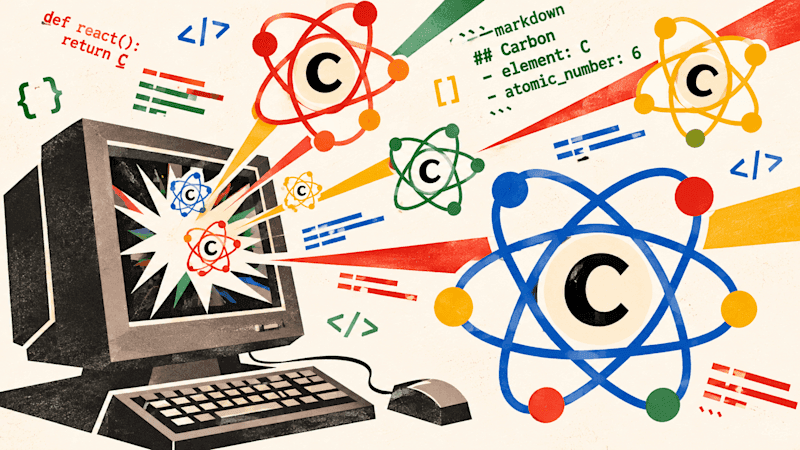
Google says Gemini 4 Carbon "pushes the frontier even further" than Gemini 4 Argon, the company's other frontier model that launched just last month
1
. While Argon remains "the ideal choice for the majority of software engineering and knowledge work," Carbon is specifically built for tasks that test the limits of a model's intelligence1
4
. These include complex multi-step coding and debugging, open-ended scientific research and discovery, and long-horizon work involving AI agents1
2
.
Source: VentureBeat
The company reports that Carbon helped its first users uncover zero-day vulnerabilities in a short timeframe and has made advances in protein structure prediction, which is necessary for developing medications
2
. Google is providing 10,000 scientists free access to Carbon for six months to support their research, an initiative that would presumably help train its models in turn, and has already onboarded thousands2
4
.Swarm Feature Enables Coordinated AI Agents for Enterprise Agentic Tasks
To highlight Carbon's utility for long-horizon work, Google is previewing a swarm feature on Antigravity that lets users turn a single prompt "into a coordinated team of agents"
1
4
. Developers can assign Carbon to roles demanding the deepest reasoning, like architectural design, coordination, and auditing, while pairing it with faster, lighter models across parallel isolated workspaces and adversarial verifiers that test every change4
. This approach allows Carbon to lead the team while cheaper models handle routine work and others test each modification3
.For legal, finance, and enterprise agentic tasks, Carbon brings "higher-precision knowledge work, artifact generation, and data analysis," including the ability to follow strict schemas and formatting to generate polished spreadsheets, presentations, and reports
4
. Google partnered with Artificial Analysis to launch the new Multimodal Knowledge Agents (MKA) benchmark, where Carbon ranks first while using three times fewer tokens than the next best model across 200 tasks testing multimodal performance in agentic workflows4
.Competitive API Price Undercuts Anthropic Claude Fable 5.2 and OpenAI
Google is pricing Carbon very competitively at an introductory rate of $2 per million input tokens and $10 per million output tokens until November 30
1
5
. This represents around one-fifth the cost of OpenAI's GPT-6 Astra and one-quarter the cost of Anthropic's Claude Fable 5.2 model, which launched just yesterday1
5
. After the introductory period ends, token pricing will double to $4 per million input tokens and $20 per million output tokens, but Carbon will still remain significantly cheaper than frontier rivals on a per-token basis1
5
.However, Carbon costs the same per token as Gemini 4 Argon at launch but uses more tokens per task because it thinks for longer
3
. The bigger question for buyers is how many tokens, retries, and human corrections it takes to finish the job, as the model with the lower token price can cost more to run on some tasks5
. Google previously announced a 95% cached-input discount for Carbon, which would reduce repeated requests for the same repository or policy documents to $0.10 per million cached input tokens during the promotion and $0.20 afterward5
.Related Stories

Benchmarks Position Carbon Among Top AI Models Despite Recent Competition
Benchmarks cited by Google when it first announced Carbon suggest the AI model is one of the most powerful on the market across most metrics, though it now trails Claude Fable 5.2 on some measures
1
5
. Carbon topped the Artificial Analysis Intelligence Index when it first appeared, though Fable has since taken the lead on the general intelligence index3
5
. Google says Carbon ranks first on three coding and automation benchmarks run by Cursor, Perplexity, and Zapier, at less than half the cost per task of the next best model3
.
Source: The Next Web
It should be noted that companies can and do cherry-pick benchmark results to show their tools in the best possible light
1
. Carbon's hallucination rate on one knowledge test also rose compared to previous models3
. On enterprise agentic tasks, the Artificial Analysis comparison estimates an average of $7.76 per task for Carbon at high reasoning, compared with $26.54 for Claude Fable at maximum effort5
.Cybersecurity Version Remains Restricted Through Fairwind Program
Carbon's strongest hacking skills stay locked away in a specialized cybersecurity version available only to vetted defenders through Google's Fairwind program
3
5
. Google says the public version blocked 99% of attack attempts in its own red-team tests3
. This division resembles Anthropic's approach with Claude Fable and Mythos, where Fable is publicly available through the Claude API and partner platforms including AWS, Google Cloud, and Microsoft Azure, while direct access to Mythos requires approval through Anthropic's cyber or life sciences programs5
.Carbon is a proprietary, hosted model distributed through Google's products and the Gemini API, with no downloadable weights or self-hosting license announced
5
. Artificial Analysis lists a 1 million-token context window and support for text, images, speech, and video as multimodal inputs, with text output5
. This combination gives teams a way to bring screenshots, recordings, and documentation into the same job, while the rollout materials leave Vertex AI availability, regions, and support commitments unspecified5
.References
Summarized by

Navi
Related Stories
Google Unveils Gemini 4 Carbon AI Model With Major Cybersecurity Gains, Beating Claude Opus 5.5
28 Oct 2026•Technology
Google Releases Gemini 4 Argon AI Model With Advanced Coding and Agentic Capabilities for Subscribers
08 Oct 2026•Technology
Google Unveils Gemini 4 Argon AI Model, Restricts Access to Trusted Cyber Defenders
01 Oct 2026•Technology
Recent Highlights



Recent Highlights
Today's Top Stories







Don’t drown in AI news. We cut through the noise - filtering, ranking and summarizing the most important AI news, breakthroughs and research daily. Follow topics that matter to you and stay ahead.


