Nvidia's $20B Groq Deal Hit With Lawsuit Alleging Stockholders Were Shortchanged


4 Sources
[1]
Nvidia's $20bn licensing deal with Groq faces lawsuit from jilted engineers
Nvidia's $20bn licensing deal with Groq fleeced employees who were left out of the transaction, according to a lawsuit filed by two engineers who owned shares in the start-up. The legal complaint filed on Friday in a Delaware corporate law court alleges that Groq's board improperly sold the
[2]
Nvidia's $20 billion Groq deal faces lawsuit alleging startup's stockholders were shortchanged
* Former Groq engineers Joshua Rubin and Benjamin Serebrin allege Nvidia's $20 billion deal with the startup "squeezed out" stockholders. * The lawsuit alleges Groq's board approved the transaction without a required stockholder vote and the board's "conflicted choice" cost stockholders "billions
[3]
Ex-Groq engineers sue board over $20B Nvidia asset deal
The lawsuit, filed in Delaware, claims the board sold assets to Nvidia without a required stockholder vote or any process to maximize value Two former Groq engineers filed a lawsuit against the AI chip startup's board of directors, alleging that its $20 billion deal with Nvidia $NVDA squeezed out
[4]
Nvidia's $20bn deal with Groq challenged in court
The $20bn licensing deal between Nvidia and Groq is the subject of a lawsuit filed by two engineers and shareholders of the artificial intelligence company, according to the Financial Times. Benjamin Serebrin and Joshua Rubin accuse Groq's board of improperly giving up major technology assets and
Share
Copy Link
Two former Groq engineers filed a lawsuit against the AI chip startup's board, claiming Nvidia's $20 billion licensing deal improperly sold core assets and top talent while shortchanging stockholders. The case alleges the board bypassed required stockholder votes and failed to maximize shareholder value in the transaction.

Former Engineers Challenge Nvidia Groq Deal Structure
Two former Groq engineers, Benjamin Serebrin and Joshua Rubin, filed a lawsuit in Delaware's Court of Chancery alleging that the AI chip startup's board improperly structured its $20 billion licensing deal with Nvidia, leaving stockholders with significantly less value than they deserved
1
2
. The legal complaint, filed on October 2, claims the board sold Groq's core AI technology assets and top employees to the $5 trillion tech titan while consigning those left behind to a "hollowed-out shell"1
. Both plaintiffs held stock in the company despite leaving before the deal was announced in December2
.The lawsuit alleges that Groq's board was riven with conflicts of interest and failed to observe its legal obligation to secure the best price and structure for all shareholders
1
. According to the filing, the board did not allow some stockholders to vote on the transaction, bypassing the stockholder vote that Delaware corporate law requires3
. The plaintiffs argue this "conflicted choice" cost stockholders "billions of dollars"2
.How the $20 Billion Licensing Deal Was Structured
The Nvidia Groq deal involved a complex structure that allocated $17 billion toward what Nvidia labeled a "non-exclusive" license, with proceeds shared among all backers
1
3
. A separate $3 billion pool of restricted stock units was created specifically for certain engineers who joined Nvidia, including Groq founder and board member Jonathan Ross, a former Google executive1
. This arrangement meant that approximately 150 to 200 Groq engineers transitioned to Nvidia employment as part of the deal2
3
.The lawsuit contends that common stockholders were cashed out at undervalued company assets prices while Ross and other top Groq employees were allowed to "take a discount on those shares and be paid separately for following the AI technology to Nvidia"
1
. In an email to employees around the time the deal was announced, Nvidia CEO Jensen Huang explained that the agreement would expand Nvidia's capabilities by integrating Groq's low-latency processors into the Nvidia AI factory architecture2
. Huang emphasized that while Nvidia was adding talented employees and licensing Groq's IP, it was not acquiring Groq as a company2
.Allegations of Conflicts of Interest and Undervaluation
The plaintiffs claim that four "conflicted funds" sitting on Groq's board—BlackRock, Social Capital, Infinitum, and Disruptive—engineered the transaction to profit by remaining affiliated with the surviving Groq entity
1
. These investment funds whose representatives sat on Groq's board were positioned to receive windfall returns from the arrangement, according to the lawsuit3
. The funds themselves are not named as defendants in the case1
.A critical issue raised in the lawsuit concerns shareholder value maximization. The final payout to shortchanged stockholders did not account for the future upside in Groq's AI inference technology and synergies with Nvidia, the plaintiffs argue
1
4
. This claim gained credibility when Nvidia later joined a funding round that valued the remaining Groq at $3.5 billion—well above the price at which shareholders were bought out—as the company pivoted entirely to AI cloud computing and dropped its chip design efforts1
. The consequence of not acquiring Groq in full led to the $17 billion license payment being treated as taxable income for the startup, an outcome the plaintiffs further criticized1
.Related Stories
Broader Implications for Acqui-Hires in the AI Industry
This case represents uncharted legal territory in Delaware corporate law. The plaintiffs acknowledged that their arguments that acqui-hires are subject to traditional M&A rules had no precedent in case law, writing "No Delaware decision has directly answered the question this case raises"
1
. Delaware law requires that change-of-control transactions face strict review of the sales process and ultimate transaction terms1
.Blockbuster acqui-hires have become a relatively recent phenomenon in Silicon Valley, with companies including Meta, Microsoft, and Google pursuing them to seek an edge in the AI wars without risking competition regulators blocking a full acquisition
1
. The Nvidia Groq deal has drawn condemnation from Democrats, with Senators Elizabeth Warren, Richard Blumenthal, and Ron Wyden stating earlier this year that "acqui-hires appear to be designed to evade antitrust scrutiny and risk further consolidating the Big Tech industry"1
. In September, The New York Times reported that the US Department of Justice was probing the deal, while US FTC chair Andrew Ferguson said the agency will review whether deals are being structured to escape merger review1
.Company Responses and Technology Development
Groq has vigorously rejected the allegations. A company spokesperson told CNBC that "our licensing agreement with Nvidia delivered exceptional value for Groq, our investors, and our employees" and called the Groq lawsuit "meritless," stating the company would "vigorously defend ourselves against it"
2
4
. Nvidia declined to comment on the lawsuit1
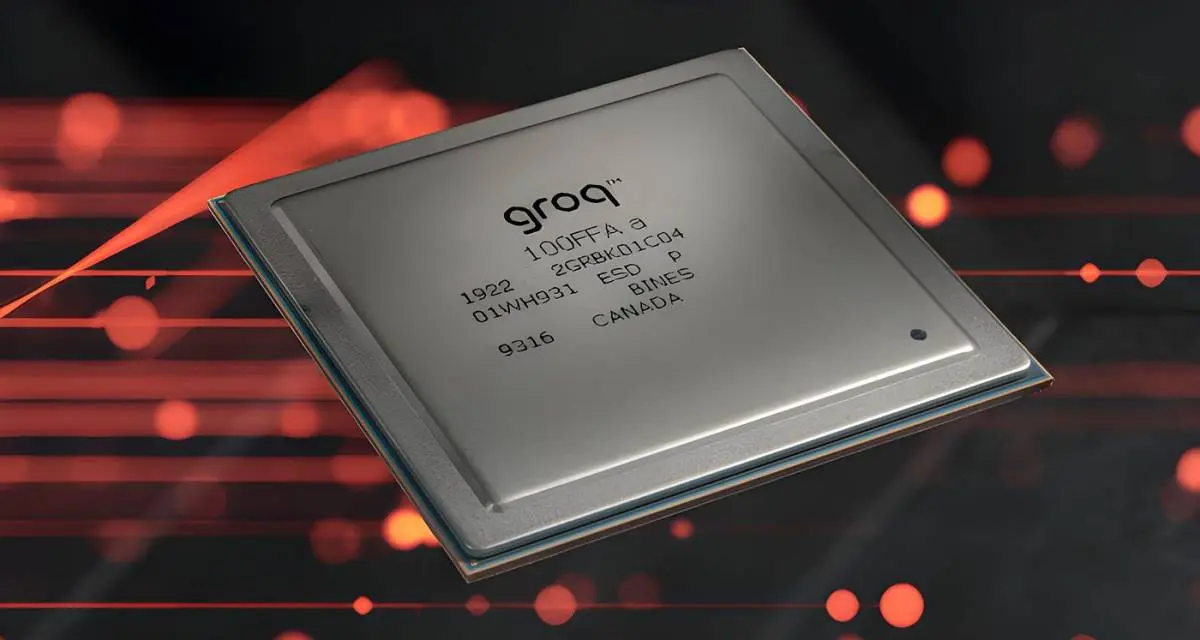
.Despite the legal challenges, the AI chip startup's board and Nvidia have moved forward with commercializing Groq's technology. In March, Nvidia unveiled its first new chip based on Groq's AI technology, which entered full production in August
1
. The Groq 3 LPX inference chip, built on the acquired technology, is designed to accelerate the decode phase of AI inference and is packaged into racks of 256 individual units on Nvidia's Vera Rubin platform3
. Groq has maintained that it remains a standalone company and has brought in roughly $1 billion in new funding since June, a round that included participation from Nvidia2
3
.Groq had developed a so-called "language processing unit" chip, or LPU, which it claimed was capable of running some AI models faster and more efficiently than Nvidia's market-leading graphics processing units
1
. This AI hardware sector innovation formed the core of what Nvidia licensed, positioning the technology as a key component of its expanding AI infrastructure offerings in the competitive AI technology landscape.References
Summarized by

Navi
[2]
[4]
Related Stories
DOJ Investigates Nvidia's $20B Groq Deal for Dodging Antitrust Review
10 Sept 2026•Policy and Regulation

Groq seeks $650 million rebuild after Nvidia's $20 billion deal stripped its top engineering talent
28 May 2026•Startups
Nvidia drops $20 billion on AI chip startup Groq in largest acquisition ever
24 Dec 2025•Business and Economy
Recent Highlights



Recent Highlights
Today's Top Stories



Don’t drown in AI news. We cut through the noise - filtering, ranking and summarizing the most important AI news, breakthroughs and research daily. Follow topics that matter to you and stay ahead.


