9 Sources
[1]
This is the Microsoft Surface Laptop Ultra with Nvidia RTX Spark
Once upon a time, Microsoft had to write off $900 million betting an Arm-based Nvidia chip could power its first flagship Windows portable, the original Microsoft Surface. But today, it's trying again. Microsoft and Nvidia have just announced the Surface Laptop Ultra, a computer with a new Arm-based Nvidia chip at its core. There's a lot we don't know about the 15-inch Surface Laptop Ultra, such as its final specs or the foggiest idea of what it might cost. But Microsoft is promising it's the most powerful Surface, period: "This is the most powerful thing we've ever made," Microsoft Surface boss Andrew Hill replies, when we ask how it stacks up. It features Nvidia's new RTX Spark "superchip," which is roughly the same processor the company already sold in its DGX Spark mini-PC for AI developers, but now optimized to work with Windows 11 instead. That chip has up to 20 CPU cores, 6,144 GPU cores and 128GB of unified memory, though some versions will be sold with as few as 16GB -- Nvidia told journalists in briefings that the RTX Spark family will eventually expand to reach a range of prices. In addition to that chip, which should offer the typical "all-day battery life," roughly RTX 5070 laptop level graphics, and up to 1 petaflop of AI compute, the Surface Laptop will have a 15-inch mini-LED touchscreen at 262 pixels per inch. Microsoft says it's "the brightest display we've ever shipped" with 2,000 nits of peak HDR brightness, and that it the largest haptic trackpad that Microsoft has ever shipped on a Surface. It'll come in dark grey and silver, and should weigh under 4.5 pounds. Ports include USB-C, USB-A, HDMI, and a full-size SD card slot and headphone jack, though Microsoft isn't saying what speeds or versions we're getting from any of them yet. (It looks like we're getting three USB-C ports?) Instead of those concrete details, its blog post is amusingly filled with statements like these: The Surface Laptop Ultra won't be the only machine coming this fall with Nvidia's new chips, but Microsoft is intimately involved in the success of the other RTX Spark laptops and mini-PCs as well. Microsoft and Nvidia say they've been working together for years to get Windows ready for Arm devices like these, and for the RTX Spark specifically. You can hear more about that in our full RTX Spark story, and in Microsoft's blog post where it talks about some of the specific tweaks it's made to take advantage of the RTX Spark, and the developers who've been convinced to support Windows on Arm.
[2]
Here's Why Microsoft Is Betting on the Nvidia RTX Spark-Powered Surface Laptop Ultra
John has been a tech journalist for 30+ years covering PC hardware -- from the 386SX to 64-core CPUs -- as an editor, a writer, and a columnist. Alongside Nvidia's keynote at Computex, Microsoft announced a new Surface PC -- the Surface Laptop Ultra -- which will feature Nvidia's new RTX Spark superchip. Slated to launch this fall, the Surface Laptop Ultra bridges the gap between thin-and-light ultraportables and beefy workstation laptops, offering the template for a new consumer category that can drive a full petaflop of AI-ready compute power. It's the next phase of evolution for AI PCs, combining Copilot+ features with the raw muscle to power on-device AI models and agents. At Computex, to learn more, I sat down with Microsoft's Poonam Mor Sigroha, corporate vice president for Windows silicon and systems integration; Brett Ostrum, corporate vice president for Surface; and Robyn McLaughlin, Senior Director, Surface Product. Our interview is lightly edited for clarity. An Agentic AI Platform John Burek: RTX Spark looks like it will first be an AI agentic-dominant platform. Is there anything you would say that, in a couple of years, a mainstream consumer would be looking at RTX Spark for? What do you see in terms of the roadmap that was presented by Nvidia CEO Jensen Huang, and also your vision for this two years, three years, four years down the road? Poonam Mor Sigroha: I believe when we think of mainstream, we think of that being a very different class of devices than what we're introducing today. These devices are primarily focused on developers, people who want to run AI agents locally. In a few years from now, as things start to shift, maybe many of these capabilities will be available downstream. But because there is so much change and shift that's happening across the industry, that's really hard to predict. JB: In terms of the unified memory modules that we're seeing with these initial RTX Spark machines, the cost of memory these days is obviously a concern for every industry that it touches. Is there a world in which these systems are not reliant on, say, 128GB or 64GB of memory in their initial iterations, or is that memory crunch likely to touch these machines? PS: These devices will be available in different memory configurations. It's just that those devices will have different sets of capabilities. JB: Is there any reason we could not see an RTX Spark in the near term in, say, a smaller laptop with a 13-inch or 14-inch screen? Is it just the thermal issues that led to this initial model having a larger screen? PS: I would say we did a lot of work to understand our customer base, and we designed these devices for that customer base, and we believe these screen sizes are more an indication of that than just the thermal capability. JB: So they want a larger screen, they want something that's typeable, and it's probably their main machine? PS: They want something portable, but also powerful, and something that gives them enough real estate from a screen perspective. Surface Laptop Ultra: Connectivity Contrasts JB: In terms of the connectivity on this machine, can you elaborate a little bit on the choices of ports and use cases? Brett Ostrum: Obviously, USB-C for connectivity and charging. HDMI, because a lot of the workflows and the setups facilitate that. Full-size USB-A for legacy devices, so there are no dongles required. And an SD card slot, because it just makes it easier to get information on and off. JB: I'm actually surprised by the HDMI, because you can do DisplayPort over USB-C. BO: We get a lot of requests for HDMI. JB: In terms of the touchpad, did you set out to make a much larger pad, or were you like, "Hey, we've got this much space left over, and we might as well make it as big as we can?" BO: We are constantly looking at usability, aesthetics, and functionality, and so this is a case where we had the space, so we made it bigger. It is 30% bigger to really showcase advanced haptics. JB: Can you actually elaborate a little more on the haptics? Is it an OS-level thing that app developers can take advantage of? BO: So it is in the hardware, in the OS, and then independent software vendors (ISVs) can also support it. Robyn McLaughlin: Affinity by Canva, DaVinci Resolve, Concept, Kindle...those are some that I have off the top of my head. Some of those are video editing. Some of them are drawing. Maybe you're selecting a different color, or if you're video editing, it's going to be when you get to a certain point. It's also evolving all the time. We're working with a ton more partners to try to evolve that. RTX Spark: About the Chip JB: OK, so we haven't talked too much in detail about the actual chip. BO: RTX Spark is an incredibly powerful chip, but for us to get the maximum performance out of it, we had to start all the way from the very beginning with how we were going to deal with thermals. We tried to make the motherboard as small as possible to maximize the size of the fans. That is all about how we maximize the performance peak for the RTX Spark and the endurance of that silicon and the solution for the customer. From the silicon that runs this machine, but also all the way through the entire design cycle, we are trying to maximize what the device is capable of. JB: It's interesting looking at it in person for the first time. It's very similar to previous Surfaces in a lot of ways, but the inside is completely engineered for this chip. It's not just retrofitting a chip into the chassis. BO: We have best-in-class keyboards; we hang on to that. We've shipped haptic trackpads before. We've experimented with a design like this, and it turns out that it's a very good solution to be able to get air to come in through the sides while it feels good, and it makes it look thin. So, it's a great example of how engineering and design partner together to come up with a solution that works across the board. The Display and Audio JB: In terms of the display, is mini LED a first for the Surface line? BO: It's a first for us. JB: Anything about the audio? BO: The audio pipeline will process audio that is outside the range that you can hear, and so we stopped processing audio that is outside the audible range. That ends up adding battery life, and that lets us add a brighter display with a high refresh rate that customers want. It's part of the overall balance of what the system is capable of. JB: What about the onboard camera? Is anything special happening there? BO: I look forward to the benchmarks comparing this camera to the Apple MacBook Pro.
[3]
Microsoft Surface Laptop Ultra weilds Nvidia's RTX Spark superchip with 128GB of RAM, 20 Arm CPU cores, and a Blackwell GPU -- 15-inch mini-LED PixelSense Ultra display rounds out the powerful package
Microsoft has just announced the Surface Laptop Ultra, powered by Nvidia's latest RTX Spark Superchip for laptops and desktop PCs, at Computex 2026. Claimed to be the most powerful Surface laptop device yet, the new Surface Laptop Ultra is essentially Microsoft's answer to the current-gen MacBook Pro. The company has positioned the notebook primarily for AI development but also for creators and developers who seek powerful performance in a portable package. Made in collaboration with Nvidia, the Surface Laptop Ultra will be one of the first devices featuring the RTX Spark Superchip. Nvidia's new Windows on Arm platform is claimed to be more powerful and capable than any other on the market featuring 20 Arm CPU cores, a Blackwell GPU with 6144 CUDA cores, 128GB of unified LPDDR5X RAM, and up to 300 GB/s of memory bandwidth. The CPU and GPU are interconnected using NVLink C2C, while the large pool of unified memory can be dynamically allocated between the CPU and GPU. Offering up to 1 petaflop of AI compute, the RTX Spark is capable of running up to 120B parameter models locally. As for the device itself, the new Surface Laptop Ultra will feature a 15-inch mini-LED PixelSense Ultra display with a resolution of 2880 x 1920, offering 262 pixels per inch. Microsoft claims that it can reach up to 2,000 nits of peak HDR brightness, which should be excellent for creators on the go. It also features a large haptic touchpad along with a good selection of ports, including HDMI, USB-C, USB-A, SD card reader, and a headphone jack. Weighing under just 4.5 pounds, it will be available in Platinum (silver) and Nightfall (black) color options. Microsoft claims all-day battery life on the laptop and an optimized internal layout with dual-fans to maintain proper thermals for sustained performance. The new Microsoft Surface Laptop Ultra is expected to arrive later this year, with final pricing and availability to be announced closer to launch. With the ongoing RAM-apocalypse, it seems like a smart move by Microsoft to adopt Nvidia's new Arm platform with unified memory. Beyond reducing the need for large pools of dedicated system and graphics memory, the architecture should also help improve efficiency and enable larger AI models to run locally without relying heavily on cloud resources. If Nvidia's performance claims hold up in real-world workloads, the Surface Laptop Ultra could emerge as one of the most compelling Windows alternatives to Apple's MacBook Pro for AI developers, content creators, and power users alike.
[4]
Microsoft's Nvidia RTX Spark-powered Surface Laptop Ultra will push Windows on Arm further than ever
* The Surface Laptop Ultra has been revealed with Nvidia's Arm-based RTX Spark chip and up to 128GB unified memory. * The laptop features a 15-inch mini-LED PixelSense Ultra display, a large haptic touchpad, all-day battery, and weighs 4.5lbs. * The RTX Spark is optimized for Windows and several specific apps, including Adobe, Copilot, Epic, and more. The laptop will release this fall, but pricing hasn't been confirmed yet. Following months of reports and a coordinated tease earlier this week, Microsoft has officially revealed the Surface Laptop Ultra, a new high-end laptop powered by Nvidia's long-rumored Arm-based RTX Spark chip. If this chip is coming out of nowhere for you, it's worth noting that it was known as the N1 and N1X in rumors leading up to its official reveal. Microsoft says the laptop's powerful chip features Blackwell RTX cores, power-efficient cores, and up to 128GB of unified memory, supporting up to 1 petaflop of AI compute power, and that it emphasizes sustained performance per watt, allowing it to stay cool under intense workloads (specific core numbers for the RTX Spark featured in the Surface Laptop Ultra haven't been confirmed yet, unfortunately). Other notable hardware specs include a 15-inch mini-LED PixelSense Ultra touchscreen display with up to 2,000-nit peak HDR brightness (262ppi). Additionally, the Surface Laptop Ultra features an expansive haptic touchpad that's larger than anything in the Surface line before, "all-day battery," and a weight of 4.5lbs (slightly heavier than the current 15-inch Surface Laptop). Ports include 3 USB-C ports, a USB-A port, an SD card slot, an HDMI port, and a 3.5mm headphone jack (it's unclear how fast its USB ports are). Colors include a black-like Nightfall and a silver-looking Platinum. Microsoft hasn't revealed the Surface Laptop Ultra's full technical specs yet, but this story will be updated as more information becomes available. The tech giant says that the Surface Laptop Ultra's RTX Spark chip has been optimized for Windows with developer and creator workloads in mind, and lists several key apps that have been optimized for the chip through Nvidia's and Microsoft's ongoing partnership with app developers, including Adobe's suite, Affinity, Claude Code, GitHub Copilot, the Xbox app, the Epic App, and more. In its press release, Microsoft emphasizes that it designed the Surface Laptop Ultra "from the inside out," stating that "Mechanical, electrical, thermal, acoustic, materials, industrial design, and software engineers" worked on the high-end laptop from day one to create a laptop that embodies the following statement: "Nothing wasted. Everything intentional." The Surface Laptop Ultra looks a lot like the current Surface Laptop More laptops that feature Nvidia's RTX Spark chip are definitely on the way The Surface Laptop Ultra looks very similar to the recently revealed 15-inch Surface Laptop for business (8th-generation), including its squared-off sides and minimized bezels. It's worth noting that Microsoft used Nvidia's Arm-powered Tegra chip for its original Surface RT tablet back in 2012, before eventually partnering more closely with Qualcomm on its Surface-related Arm efforts several years later, a partnership that continues today. Alongside the Surface Laptop Ultra, companies like Asus, Dell, HP, and Lenovo will launch products featuring Nvidia's new RTX Spark chip. Microsoft says the Surface Laptop Ultra is scheduled to release this coming fall, and states that pricing will be available closer to its release. Microsoft has been significantly adjusting its strategy for Surface products over the last few years. The company killed off the Surface Book, the Surface Hub touchscreen, the Surface Duo, and even the Surface Laptop Studio. Windows on Arm has been improving leaps and bounds over the past couple of years thanks to the foundational work completed by Microsoft and Qualcomm with its Snapdragon X series of chips. With the Surface Laptop Ultra, it's clear that Microsoft is confident in what Nvidia is bringing to the ecosystem, and an additional chipmaker entering the fray will almost certainly push Windows on Arm adoption and compatibility further than before.
[5]
Microsoft introduces Surface Laptop Ultra with Nvidia's RTX Spark chip inside
The Surface Laptop Ultra is what happens when Microsoft stops playing it safe. This story is part of our coverage of Computex, the world's biggest computing conference. Updated less than 3 minutes ago Microsoft just announced the Surface Laptop Ultra, and if you've been following our coverage of the NVIDIA RTX Spark chip, you already know the kind of firepower we're talking about here. The Surface Laptop Ultra is the most powerful laptop Microsoft has ever built. It pairs NVIDIA's Blackwell RTX GPU with up to 128GB of unified memory, full CUDA support, and 1 petaflop of AI compute. As we covered when RTX Spark launched, that is enough to run 120-billion-parameter AI models entirely on the device, without sending a single byte to the cloud. Recommended Videos The unified memory is worth paying attention to. Instead of splitting RAM between your CPU and GPU, the system dynamically allocates it wherever your workload needs it most. That means AI creation, 3D rendering, and multi-model workflows can all run simultaneously without stepping on each other. Apple MacBooks have been benefiting from this unified architecture for years, and finally, Windows users will be able to enjoy it too. Who is this laptop for? Microsoft is clearly positioning this laptop for developers, creators, and AI builders who push their machines to the limit. Think massive 3D scenes, long compile cycles, and local models that would bring regular laptops to a crawling halt. Other features of the laptop include a 15-inch mini-LED PixelSense Ultra display that goes up to 2,000 nits of peak HDR brightness at 262 pixels per inch, which is the brightest display Microsoft has ever shipped. The haptic touchpad is also the largest ever on a Surface, and the port selection covers HDMI, USB-C, USB-A, SD card, and a headphone jack, so no hunting for dongles. What about battery life? Microsoft says the Surface Laptop Ultra offers all-day battery life, which is impressive given the raw power inside. The ultra-efficient CPU architecture is doing a lot of work here to keep things running without draining the battery in an hour. The laptop comes in Platinum and Nightfall finishes and will be available later this year. Pricing has not been announced yet. But seeing how Microsoft has significantly raised the prices of its existing Surface laptops, expect these laptops to burn a serious hole in your wallet.
[6]
Microsoft Surface Laptop Ultra Debuts with RTX Spark and Mini LED
Microsoft has announced the Surface Laptop Ultra, a new flagship notebook designed around NVIDIA's recently introduced RTX Spark platform. The system becomes the most powerful Surface laptop unveiled to date and serves as one of the first major devices built around NVIDIA's entry into the Windows Arm processor market. At the core of the Surface Laptop Ultra is NVIDIA's RTX Spark processor, which combines a 20-core Grace Arm CPU with an integrated Blackwell GPU featuring 6,144 CUDA cores. While that CUDA core count matches the GeForce RTX 5070 desktop graphics card on paper, the mobile implementation operates within a significantly lower power envelope and targets a different performance segment. The platform is paired with up to 128GB of unified LPDDR5X memory, allowing both CPU and GPU to access the same memory pool directly. Microsoft is positioning the Surface Laptop Ultra as a premium AI-capable notebook aimed at creators, professionals, and advanced users. The unified memory architecture and Blackwell graphics platform are designed to accelerate AI workloads, content creation applications, local inference tasks, and GPU-assisted productivity software. With NVIDIA heavily promoting RTX Spark as an AI-first platform, the Surface Laptop Ultra is expected to play a central role in showcasing those capabilities. The display is another key component of the announcement. Microsoft has introduced a new 15-inch Mini LED panel that reportedly reaches a peak HDR brightness of 2,000 nits. According to the company, this makes it the brightest display ever integrated into a Surface laptop. Mini LED technology should also provide improved contrast performance, more effective local dimming, and enhanced HDR image quality compared to traditional LCD implementations. Microsoft additionally highlights a redesigned input experience. The company states that the Surface Laptop Ultra incorporates the largest touchpad ever used in a Surface notebook. While precise dimensions have not yet been disclosed, the larger touch surface suggests an emphasis on productivity and creator-focused workflows. Despite the powerful hardware configuration, Microsoft claims the notebook remains relatively lightweight. The company lists a weight below 2 kilograms, helping maintain portability while accommodating a significantly more capable processor and graphics subsystem than previous Surface laptops. Connectivity includes HDMI, USB Type-C, USB Type-A, an SD card reader, and a standard headphone jack. This selection covers many common workstation and creator requirements without immediately requiring external adapters or docking stations. However, a substantial portion of the specification sheet remains undisclosed. Microsoft has not revealed battery capacity, storage configurations, display refresh rate, cooling architecture, wireless networking details, or official performance metrics. Pricing and launch timing also remain unknown.
[7]
Microsoft introduces powerhouse Surface Laptop Ultra with NVIDIA RTX Spark
Microsoft has introduced the Surface Laptop Ultra, the latest iteration of its Surface line, featuring NVIDIA's RTX Spark system-on-a-chip, aimed at power users and designed to compete with Apple's MacBook Pro. Andrew Hill, Microsoft's Corporate Vice President of Surface, described the device as "the most powerful thing we've ever made." The Surface Laptop Ultra incorporates NVIDIA's RTX Spark, which includes 6,144 Blackwell GPU cores and 20 Arm CPU cores. NVIDIA claims the chip provides 1 petaflop of AI performance and similar graphics performance to its RTX 5070 laptop GPU, with power consumption ranging from single digits to 80W. Structurally, the Surface Laptop Ultra boasts a 15-inch MiniLED Ultra display, capable of achieving up to 2,000 nits of peak HDR brightness. It features the largest trackpad Microsoft has ever built and multiple connectivity options, including USB A, USB C, HDMI, and a full-sized card reader. The device weighs under 4.5 pounds and will be available in black and dark silver. Brett Ostrum, Microsoft's CVP, stated that the laptop is intended to "push" boundaries and enable users to achieve what was previously considered impossible. While aimed at users seeking enhanced performance, the new model streamlines design, moving away from the unconventional features of earlier Surface models. Microsoft has announced that the Surface Laptop Ultra will be released in the fall, but specific pricing details have not yet been disclosed.
[8]
Microsoft Surface Laptop Ultra with Nvidia RTX Spark is coming for the MacBook Pro
Microsoft has announced the Surface Laptop Ultra, which is the most powerful Surface device yet. The new best laptop from the Windows-maker also happens to be the most powerful "thing" Microsoft has ever made. That's thanks to the Nvidia RTX Spark chipset chosen to power the thing. The new silicon is Nvidia's effort to muscle in on the traditional territory of Intel, AMD and Qualcomm, rather than settle for providing the best graphics chips. The new top-end chip was announced at Computex is the Windows-friendly version of the GB10 chip. It has 20 CPU cores based on ARM architecture, 6144 CUDA cores and supports up to 128GB of unified memory. The GPUs will be based on the Blackwell platform that powers the Nvidia 5000 series graphics cards. Whether it's creativity, software coding, or AI uses, this thing will handle anything Surface users will throw at it. "We built Surface Laptop Ultra to meet that work without flinching," Microsoft said in the announcement. The Windows-maker added that the "unified memory allows the pool of RAM to be dynamically allocated wherever your workloads need it most across CPU and GPU, so AI creation, 3D rendering and multi-model workflows run simultaneously, with 1 petaflop of AI compute, capable of running up to 120B parameter models locally. No walls. No compromises." Furthermore in a briefing with reporters, Andrew Hill, Microsoft's Corporate VP of Surface said: "This is the most powerful thing we've ever made" (via Engadget). The new MacBook Pro rival has a 15-inch mini-LED PixelSense Ultra touchscreen with 2,000 nits of peak brightness, which is the brightest display Microsoft has ever deployed. Pixel density is 262ppi. Microsoft says the Surface Laptop Ultra has the largest trackpad yet and plenty of ports, including: HDMI, USB-C, USB-A, SD card, headphone. That's satisfying. Microsoft says these are the ports creators demand. The company says, in quite dramatic terms: Surface Laptop Ultra was purpose-built for world makers, in a partnership between Windows, Surface and NVIDIA that approached every challenge with the same intention and the same standard. A machine like this should not sit still. It should be pushed. Taken to the edge. Used to make real what others call impossible. It belongs in the hands of world makers. Get a Surface Laptop Ultra "later this year" and become a world maker. It'll be available in two colours Platinum and Nightfall.
[9]
Microsoft Surface Laptop Ultra with 15'' mini-LED touch display, NVIDIA Blackwell RTX GPU announced
Microsoft has announced the upcoming release of the Surface Laptop Ultra, a high-performance device designed specifically for developers, AI builders, and creators who require massive computing power. Developed in close partnership with NVIDIA, the laptop is engineered from the ground up to handle demanding local workloads, including 3D rendering, large-scale software compilation, and complex artificial intelligence models. Technical Specifications and Architecture The Surface Laptop Ultra is positioned as the most powerful Surface device to date. It introduces a specialized architecture tailored for high-throughput computing, bridging the gap between portable workstations and desktop-class performance. Silicon and Processing Power The device is the first in the Surface lineup to integrate an NVIDIA Blackwell RTX GPU, featuring full CUDA support. This hardware configuration delivers up to 1 petaflop of AI compute, which enables the system to run artificial intelligence models with up to 120 billion parameters locally. Unified Memory Architecture To eliminate traditional data bottlenecks between the processor and graphics card, the Surface Laptop Ultra utilizes a unified memory architecture: * Capacity: Configurable up to 128GB of unified memory. * Functionality: The system dynamically allocates the RAM pool between the CPU and GPU based on real-time workload demands. * Use Case: This allows for the simultaneous execution of multi-model AI workflows, heavy 3D rendering, and background compilations without performance degradation. Thermal Efficiency and Design Microsoft emphasizes an "inside-out" engineering approach for the Surface Laptop Ultra, co-developed by mechanical, electrical, thermal, acoustic, and software engineers. The internal architecture is optimized to manage the heat generated by the Blackwell GPU and high-efficiency CPU while maintaining quiet operation. Despite its high power output, the device is designed for mobility, offering precise, lightweight chassis construction and all-day battery life to support extended workloads away from a power source. Display and Interface Features The external hardware is tailored toward precise creative and technical work, highlighted by a premium display and an expanded interface selection. Connectivity and Sustainability Moving away from minimalist port configurations that require external adapters, the Surface Laptop Ultra includes a comprehensive selection of built-in I/O ports designed for professional workflows: * HDMI * USB-C * USB-A * SD Card Slot * 3.5mm Headphone Jack Microsoft states that the design philosophy balances structural durability and peak performance with repairability, ensuring the machine's longevity matches its hardware capabilities. Software Optimization and Availability The hardware is deeply integrated with Windows and optimized specifically for RTX Spark, ensuring that software developers and AI creators can leverage the full capabilities of the hardware ecosystem out of the box. The Surface Laptop Ultra is scheduled for official release later this year. Pricing and specific regional availability have not yet been disclosed. Brett Ostrum, corporate vice president of Surface at Microsoft, said: Surface has always exemplified the best of what a Windows PC can be. With Surface Laptop Ultra, we're bringing that focus to creators, developers and engineers who need serious performance in a device that is thoughtfully designed, portable and deeply connected to the Windows tools and platform they count on. Our work with NVIDIA will deliver a Surface built for the way ambitious work gets done.
Share
Copy Link
Microsoft announced the Surface Laptop Ultra at Computex, featuring Nvidia's Arm-based RTX Spark superchip with up to 128GB unified memory and 1 petaflop of AI compute. Designed for developers and creators, this high-performance portable computer marks Microsoft's most powerful Surface yet, capable of running 120-billion-parameter AI models locally without cloud dependency.
Microsoft and Nvidia unveiled the Microsoft Surface Laptop Ultra at Computex, marking a significant shift in the company's approach to high-performance portable computers
1
. This collaboration echoes Microsoft's original Surface attempt over a decade ago, when the company wrote off $900 million on an Arm-based Nvidia chip1
. This time, the stakes are different. The Surface Laptop Ultra features Nvidia's RTX Spark, a processor already proven in the DGX Spark mini-PC for AI developers but now optimized for Windows 111
.
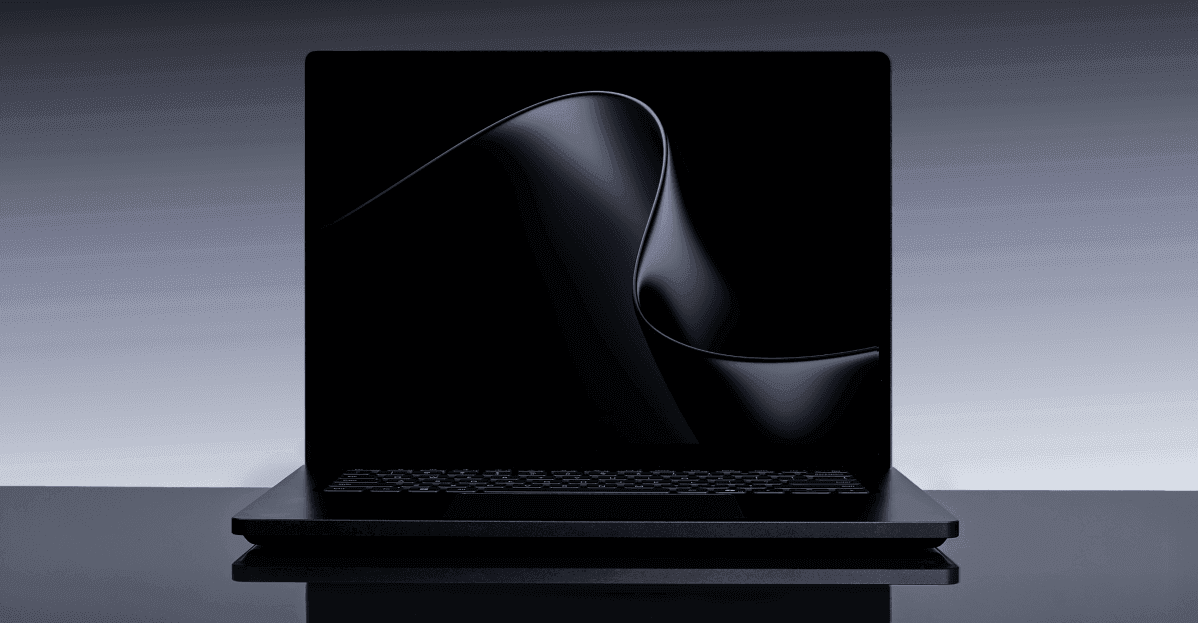
Source: The Verge
Microsoft Surface boss Andrew Hill described it simply: "This is the most powerful thing we've ever made"
1
. The device bridges the gap between ultraportables and workstation laptops, targeting AI development and creator workflows that demand substantial on-device AI models2
.The Nvidia RTX Spark packs up to 20 Arm CPU cores, a Blackwell GPU with 6,144 CUDA cores, and 128GB of unified memory with up to 300 GB/s of memory bandwidth
3
. The CPU and GPU connect via NVLink C2C, allowing dynamic memory allocation between components3
. This architecture delivers roughly RTX 5070 laptop-level graphics and up to 1 petaflop of AI compute1
.The unified memory architecture mirrors what Apple has deployed in MacBooks for years, finally bringing this efficiency to Windows on Arm
5
. Instead of splitting RAM between CPU and GPU, the system allocates resources dynamically based on workload demands, enabling AI creation, 3D rendering, and multi-model workflows to run simultaneously5
.
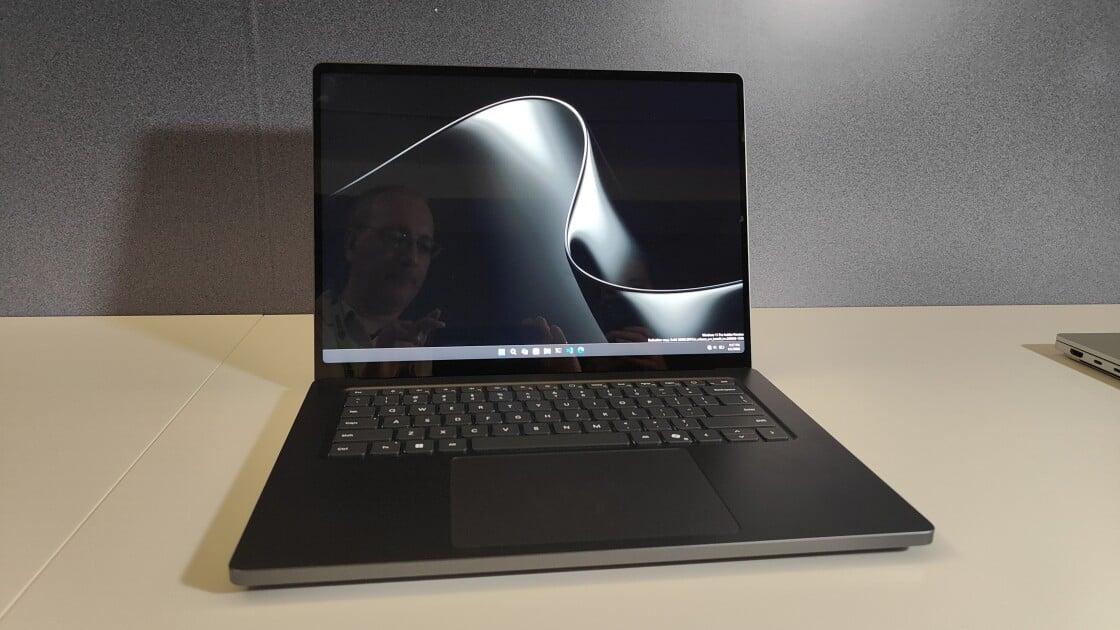
Source: PC Magazine
Nvidia told journalists that the RTX Spark family will eventually expand to reach different price points, with some versions offering as few as 16GB of memory
1
. The chip can run up to 120-billion-parameter models entirely on-device without sending data to the cloud3
.The 15-inch mini-LED PixelSense Ultra display delivers 2,880 x 1,920 resolution at 262 pixels per inch
3
. Microsoft claims it reaches 2,000 nits of peak HDR brightness, making it the brightest display the company has ever shipped1
5
.The laptop features Microsoft's largest haptic trackpad ever on a Surface, which is 30% bigger than previous models
2
. The haptic trackpad integrates at the hardware and OS level, with independent software vendors including Affinity by Canva, DaVinci Resolve, Concept, and Kindle already supporting advanced haptics2
. Weighing under 4.5 pounds, the device comes in Platinum silver and Nightfall black finishes3
4
.Port selection includes three USB-C ports, USB-A, HDMI, a full-size SD card slot, and a headphone jack, though Microsoft hasn't specified speeds or versions yet
1
4
. Brett Ostrum, Microsoft's corporate vice president for Surface, explained the connectivity choices: "HDMI, because a lot of the workflows and the setups facilitate that. Full-size USB-A for legacy devices, so there are no dongles required"2
.Related Stories
Microsoft and Nvidia have collaborated for years to prepare Windows on Arm for devices like the Surface Laptop Ultra
1
. The RTX Spark has been optimized for Windows with developer and creator workloads in mind4
. Key applications already optimized include the Adobe suite, Affinity, Claude Code, GitHub Copilot, the Xbox app, and the Epic App4
.Poonam Mor Sigroha, Microsoft's corporate vice president for Windows silicon and systems integration, clarified the target audience: "These devices are primarily focused on developers, people who want to run AI agents locally"
2
. When asked about mainstream adoption, she noted that capabilities might eventually move downstream, but the rapid industry changes make predictions difficult2
.Microsoft designed the Surface Laptop Ultra "from the inside out," with mechanical, electrical, thermal, acoustic, materials, industrial design, and software engineers working from day one
4
. The company made the motherboard as small as possible to maximize thermal management, incorporating dual fans to maintain sustained performance under intense workloads2
3
.The Surface Laptop Ultra positions itself as Microsoft's answer to the current-generation MacBook Pro
3
. Microsoft promises all-day battery life despite the AI compute power inside, leveraging the ultra-efficient CPU architecture1
5
.
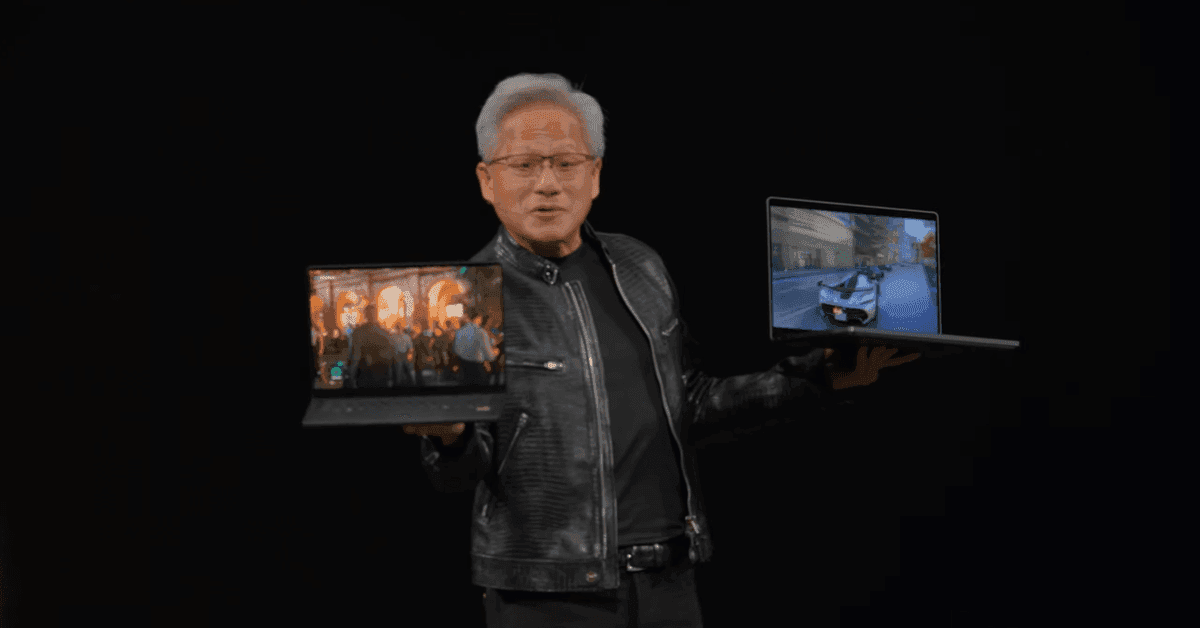
Source: XDA-Developers
With the ongoing memory supply constraints, Microsoft's adoption of Nvidia's Arm platform with unified memory appears strategic
3
. The architecture reduces the need for separate system and graphics memory pools while improving efficiency and enabling larger AI models to run locally without heavy cloud reliance3
.Companies including Asus, Dell, HP, and Lenovo will also launch products featuring the RTX Spark chip
4
. The Surface Laptop Ultra will launch this fall, though Microsoft hasn't announced pricing4
5
. Given Microsoft's recent price increases across Surface products, expectations point toward premium pricing5
.Summarized by
Navi
[4]
26 May 2026•Technology

04 Jun 2026•Technology

07 May 2025•Technology

1
Startups

2
Policy and Regulation

3
Policy and Regulation