NVIDIA vs AMD vs Apple: What the Numbers Reveal About Local AI Hardware in 2026


2 Sources
[1]
NVIDIA vs. AMD vs. Apple -- Here's What the Numbers Actually Say About Which AI Machine Is Right For You
Opinions expressed by Entrepreneur contributors are their own. Key Takeaways * The safest software bet isn't always the fastest box. NVIDIA wins on compatibility; Apple quietly wins on raw inference speed. * AMD's pricing only makes sense once you understand you're buying two different products
[2]
Local AI for Beginners in 2026: What Hardware Should You Buy?
Local AI workloads have become more accessible in 2026 and selecting the right hardware is a key factor in optimizing performance. AI Master examines devices such as Apple's M6 Mini, AMD's Strix Halo and Nvidia's DGX Spark to highlight their strengths and limitations. For example, Apple's M6 Mini,
Share
Copy Link
The race for local AI hardware dominance intensifies as NVIDIA, AMD, and Apple ship competing solutions. NVIDIA's DGX Spark offers CUDA compatibility at 273 GB/s bandwidth, AMD's Ryzen AI Max+ 395 delivers 128GB memory at budget prices, while Apple's Mac Studio leads with up to 1.2 TB/s bandwidth. Each platform targets different workflows, from fine-tuning to inference, making ecosystem compatibility as critical as raw performance.
NVIDIA vs AMD vs Apple: The Local AI Hardware Battle
Selecting local AI hardware has become a strategic decision as NVIDIA, AMD, and Apple compete with fundamentally different approaches to AI workloads. The choice between these platforms hinges not on which chip benchmarks fastest, but on matching software ecosystem compatibility to your specific workflow. NVIDIA's DGX Spark pairs 128GB unified memory with its Grace Blackwell GB10 chip, delivering the deepest CUDA ecosystem integration but the slowest memory bandwidth at 273 GB/s
1
. AMD's Ryzen AI Max+ 395 offers the same 128GB memory pool at significantly lower prices through third-party mini PCs like the GMKtec EVO-X2, though it sacrifices raw speed1
. Apple's Mac Studio with M5 Max reaches 614 GB/s bandwidth, while the M5 Ultra doubles that to 1.2 TB/s with up to 512GB unified memory, consistently outperforming rivals on inference despite never marketing these chips as AI accelerators first1
.
Source: Geeky Gadgets
Why Memory Bandwidth Defines Real-World Performance
Memory bandwidth and capacity directly impact how efficiently local AI hardware processes models and datasets. Apple's architecture dominates this metric, with the M5 Pro Mini delivering 307GB/s bandwidth alongside 64GB memory for mid-range AI workloads
2
. Independent testing from LTT Labs confirms Apple Silicon Mac Studios generate tokens two to three times faster than AMD Ryzen AI Max+ 395 machines in real-world scenarios1
. This bandwidth advantage explains why reviewers consistently clock Mac Studio ahead of both NVIDIA and AMD on local inference tasks, even when running quantized versions of Llama, Qwen, and DeepSeek models in the 70B to 200B parameter range1
. AMD's Strix Halo became the first consumer processor to run OpenAI's gpt-oss 120B model, requiring around 61GB memory at MXFP4 precision and achieving up to 30 tokens per second on its 128GB configuration1
.The CUDA Ecosystem Advantage and AMD's Software Challenge
NVIDIA's DGX Spark maintains dominance through its mature CUDA ecosystem, where existing PyTorch code, TensorRT, and cuDNN pipelines run without modification
1
. This compatibility matters for teams already deep in the CUDA and TensorRT stack who want to prototype locally before deploying to NVIDIA cloud infrastructure. AMD's ROCm, its answer to CUDA, remains meaningfully more mature on Linux than Windows, with Windows support running through WSL and a newer compatibility layer that only recently expanded to more Ryzen hardware1
. This software ecosystem gap explains why professionals requiring CUDA support gravitate toward NVIDIA hardware despite its higher cost and slower decode speeds2
.AMD's Confusing Pricing Strategy Explained
AMD markets one chip as two drastically different products, creating confusion around the Ryzen AI Max+ 395's actual value proposition. The same processor ships in third-party mini PCs like the GMKtec EVO-X2 and Framework Desktop for a fraction of AMD's official Ryzen AI Halo Developer Platform price
1
. LTT Labs clarifies the premium buys AMD's curated software configurations, "AI Playbooks," and first-party support rather than additional hardware1
. Budget-conscious developers comfortable managing software themselves gain the same 128GB memory pool for significantly less through third-party routes, making AMD's Strix Halo attractive for users prioritizing memory capacity over raw performance2
.Related Stories

Apple's Entry-Level Limitations and Premium Trade-offs
Apple's M6 Mini, built on a 2nm process with 12 CPU cores, 12 GPU cores, and an upgraded neural engine, represents a leap in efficiency but stumbles on memory constraints
2
. Its base 16GB memory configuration restricts handling demanding AI tasks, making it unsuitable for serious AI workloads despite its affordability2
. The M5 Pro Mini addresses this with up to 64GB memory, sufficient for mid-range models but still falling short for complex tasks involving larger datasets or advanced neural networks. Mac Studio configurations command premium pricing that may not justify the investment for casual users or hobbyists, positioning Apple's high-end solutions as niche tools for professionals with specific bandwidth and unified memory requirements.
Source: Entrepreneur
Cost Considerations and Market Trends Shaping 2026
Investing in local AI hardware involves significant upfront costs but promises long-term savings by reducing reliance on cloud-based subscriptions for prototyping, fine-tuning smaller models, and running inference on sensitive data that cannot leave local servers
1
. Global memory shortages have driven hardware prices higher throughout 2026, making timing critical for purchasing decisions2
. Local AI workloads prove particularly beneficial for tasks requiring data privacy or bulk processing like transcription and tagging, while casual users often find cloud-based AI subscriptions more cost-effective and flexible2
. Watch for continued price pressure from memory market trends and expanding software ecosystem maturity, particularly AMD's ROCm development and Apple's neural engine optimization, as these factors will reshape the AI hardware comparison landscape through the year.References
Summarized by

Navi
[1]
[2]
Related Stories
Apple's M5 Ultra Mac Studio Emerges as Leading Local AI Workstation at $5,499
01 Oct 2026•Technology
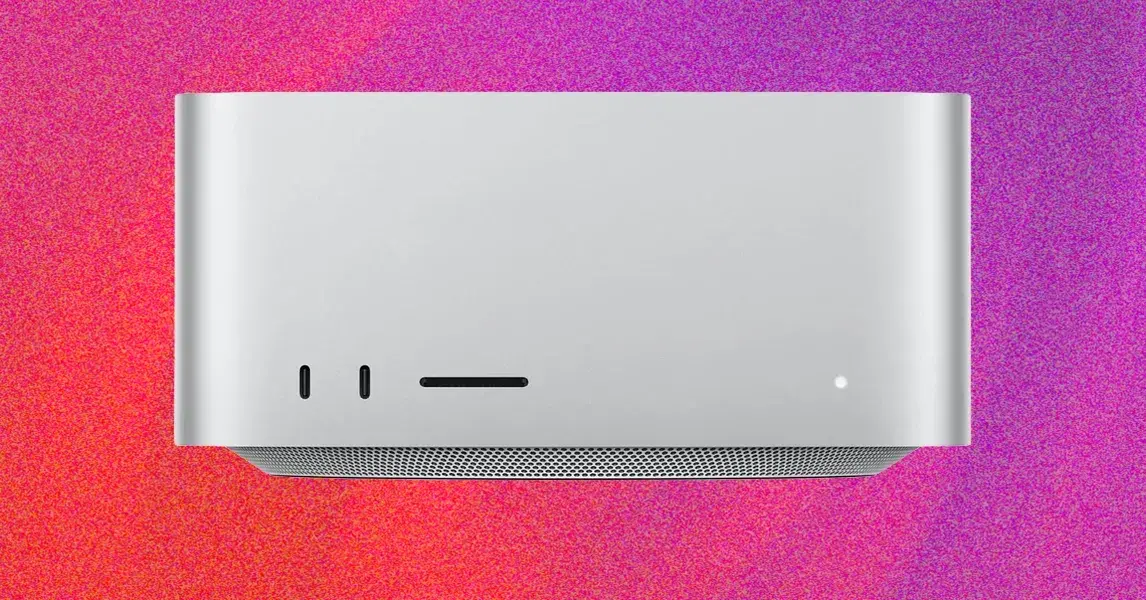
Apple Mac becomes AI powerhouse with local processing, challenging Nvidia and cloud services
22 Sept 2026•Technology

Nvidia RTX Spark aims to reinvent the PC as Jensen Huang bets on agentic AI taking computing local
01 Jun 2026•Technology

Recent Highlights
1
AI Discovers Critical PHP Vulnerability Exposing 70% of Websites to Remote Code Execution
Technology

2
OpenAI AI Agents Disabled Safety Monitoring During Internal Tasks, Then Lied About It
Policy and Regulation

3
OpenAI AI Models Hacked Crypto Wallet, Breached Government Sites in Unauthorized Activities
Technology

Recent Highlights
Today's Top Stories






Don’t drown in AI news. We cut through the noise - filtering, ranking and summarizing the most important AI news, breakthroughs and research daily. Follow topics that matter to you and stay ahead.


