Nvidia's RTX Spark AI Laptops With 128GB Unified Memory Outperform RTX 5090 Desktop on AI Workloads


2 Sources
[1]
I Tested the Surface Laptop Ultra: The RTX Spark Era Is Promising, Pricey, and Just Getting Started
With Nvidia's new RTX Spark N1X chip, a gorgeous screen, and unified-memory architecture, Microsoft's Surface Laptop Ultra heralds a new age of ambitious, AI-first Windows laptops. It's pricey and trails the M5 Max MacBook Pro in key metrics, but it's the start of something big. The Microsoft
[2]
Nvidia's RTX Spark laptops make no sense -- until they do
We've tested Nvidia's wild new chips for AI, gaming, and everyday work. Here's where RTX Spark kicks ass -- and where it doesn't. endif; ?> Nvidia makes laptop CPUs now. That still feels weird to type! Over the past month, PCWorld has been hammering on several laptops powered by Nvidia's new RTX
Share
Copy Link
Nvidia launched its RTX Spark platform, introducing AI laptops with unified memory architecture that can handle massive local AI models. The Microsoft Surface Laptop Ultra starts at $2,599.99, while testing revealed the $7,000 Asus ProArt P16 with 128GB unified memory beat an RTX 5090 desktop by 20 minutes on AI tasks, despite slower GPU speeds.
Nvidia Enters the Laptop CPU Market With RTX Spark Platform
Nvidia has officially entered the laptop processor market with its RTX Spark platform, marking a significant shift in personal computing. The platform centers on the RTX Spark N1X chip, which combines 18-20 Grace processor cores with 5,120-6,144 Blackwell graphics cores in a system-on-a-chip design.
1
This architecture mirrors Apple's Silicon approach by integrating Arm-based processing with discrete-GPU-grade graphics hardware on a single chip die, but the real innovation lies in its unified memory architecture that allows both CPU and GPU to share a single memory pool.1
The Microsoft Surface Laptop Ultra serves as the flagship device for this new platform, starting at $2,599.99 for the base configuration with 24GB unified memory and 512GB storage. The top-tier model reviewed reaches $4,299.99 with 64GB unified memory, while configurations can extend to 128GB unified memory for $5,899.99.
1
Other manufacturers including Asus, Dell, HP, and Lenovo have also released RTX Spark systems, with the Asus ProArt P16 reaching $7,000 for its 128GB configuration.2
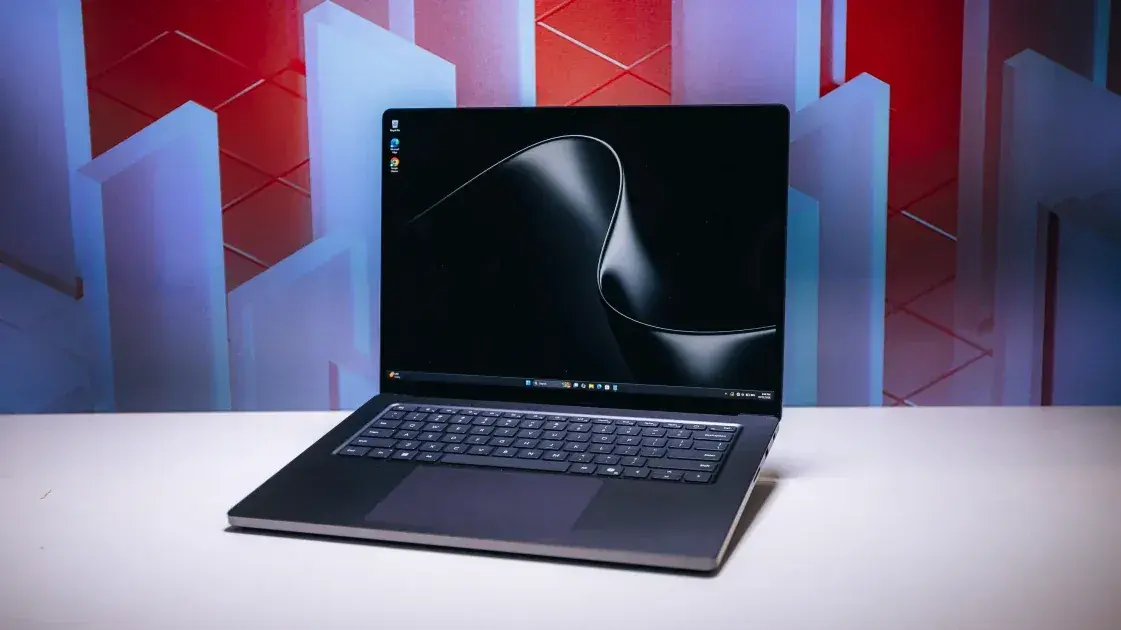
Source: PC Magazine
Unified Memory Architecture Delivers Breakthrough AI Performance
The unified memory architecture represents the core advantage of Nvidia's RTX Spark laptops for local AI processing. Traditional gaming laptops separate system memory from a discrete GPU's VRAM, creating bottlenecks when AI workloads exceed the GPU's dedicated memory. RTX Spark eliminates this limitation by wrapping its 20-core Arm CPU and Blackwell GPU around one large unified memory pool accessible to both components.
2
This architectural choice enables RTX Spark systems to handle large-scale AI workloads that would overwhelm conventional setups. Testing revealed dramatic performance advantages: the Asus ProArt P16 with 128GB unified memory allocated roughly 96GB to the GPU, allowing it to process 472,084 tokens through OpenAI's 120-billion-parameter gpt-oss model in 33 minutes and 13 seconds.
2
In comparison, a desktop equipped with an RTX 5090—Nvidia's fastest consumer graphics card—and 128GB of total system memory required 52 minutes and 51 seconds for the same workload, losing by nearly 20 minutes despite having superior raw GPU performance.2
AI-First Windows Laptop Design Targets Specific Use Cases
The Microsoft Surface Laptop Ultra and other RTX Spark systems represent a fundamental shift toward AI-first Windows laptop design. These machines are built specifically for local AI models and agentic tools rather than basic productivity tasks.
1
The platform allows users to run enormous local AI models without paying for cloud tokens while keeping data on their own devices.2
However, this specialized focus means RTX Spark makes sense only for users with specific workflows. If you're simply asking ChatGPT questions in a browser or working with smaller local AI models, these systems offer unnecessary capability at premium prices.
2
The 64GB unified memory configuration proves incredibly useful for running local agents, while the 128GB option enables significantly more options for local AI support.1
Related Stories

Gaming Performance Matches RTX 5070 But Trails Purpose-Built Systems
Nvidia's RTX Spark laptops deliver RTX 5070-class gaming performance through their integrated Blackwell GPU, which is impressive for graphics integrated with the CPU.
2
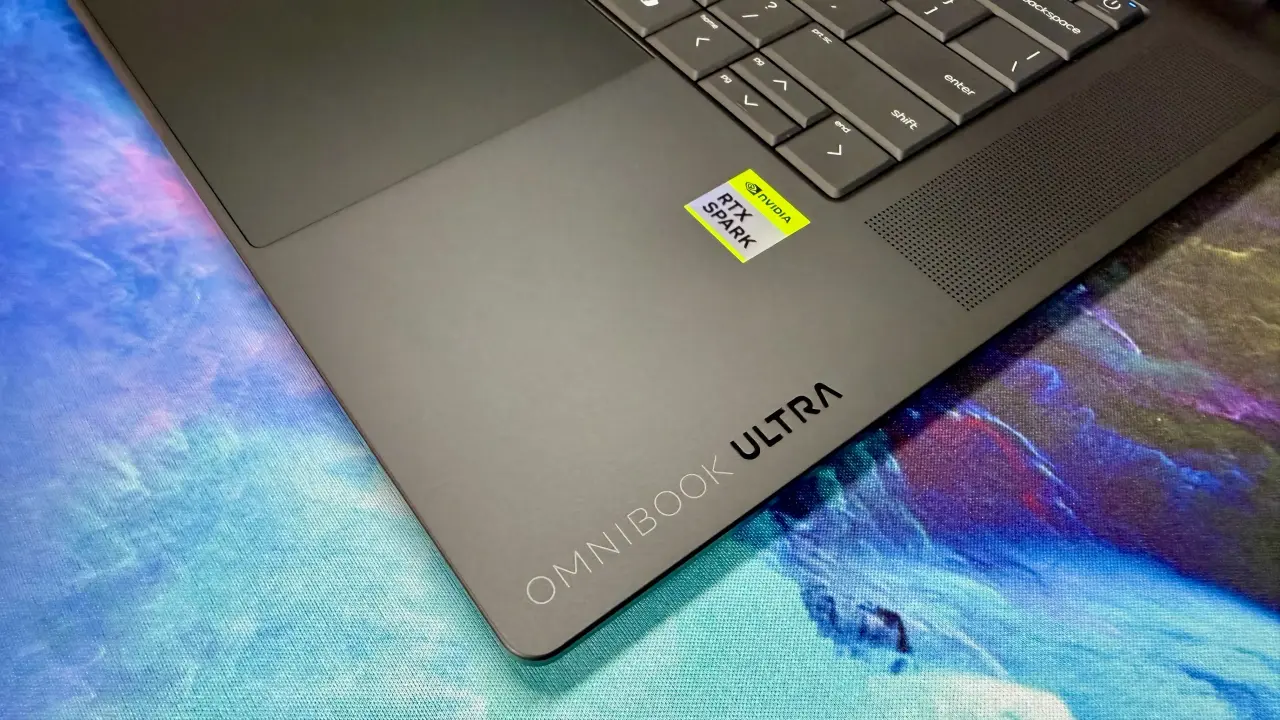
Testing with the HP OmniBook Ultra demonstrated these machines can handle modern games, with full support for DLSS upscaling and frame generation that can push games like Cyberpunk 2077 into triple-digit frame rates.2
Yet conventional GeForce laptops deliver better gaming performance for significantly less money. Testing revealed that the extra unified memory in high-end configurations like the 128GB Asus ProArt P16 provides no gaming advantage, as games don't require 96GB of GPU-accessible memory the way 120-billion-parameter AI models do.
2
The gaming capability should be considered a valuable bonus rather than the primary reason to purchase these systems.Market Position Against Apple M5 Max MacBook Pro
The Microsoft Surface Laptop Ultra faces direct competition from the Apple M5 Max MacBook Pro, which currently holds the Editors' Choice designation for workstations.
1
While the Surface Laptop Ultra trails the M5 Max MacBook Pro in certain key metrics, it represents the beginning of a significant platform evolution for Windows systems.1
Early adopters interested in local AI processing and development work should examine RTX Spark closely, particularly given its ability to outperform even high-end desktop configurations on specific AI workloads. The platform signals where personal computing is headed, with manufacturers across the industry releasing compatible systems. However, the premium pricing—ranging from $2,599.99 to $7,000—means buyers must have workloads that genuinely utilize the unified memory architecture to justify the investment, as that same budget could purchase substantial cloud AI resources.
2
References
Summarized by

Navi
[1]
Related Stories
Nvidia RTX Spark AI laptop passes brutal local coding test but reveals critical memory limits
26 Oct 2026•Technology

The State of Laptops in 2024: From AI Integration to Gaming Powerhouses
08 Aug 2024

Nvidia RTX Spark AI Laptops Launch With Powerful Local AI But Sky-High Prices Starting at $2,600
15 Oct 2026•Technology
Recent Highlights



Recent Highlights
Today's Top Stories








Don’t drown in AI news. We cut through the noise - filtering, ranking and summarizing the most important AI news, breakthroughs and research daily. Follow topics that matter to you and stay ahead.


