7 Sources
[1]
The vibes are off at OpenAI
OpenAI is in a relatively precarious position. The company is and has been a funding behemoth -- just over a week ago, it closed $122 billion in funding at a post-money valuation of $852 billion. It's potentially planning for an IPO later this year. ChatGPT's longtime lead in consumer-facing AI led it to name-brand status akin to "Kleenex" for tissues. But in recent months, a slew of executive reshufflings, discontinued projects, and other news has raised questions about how stable the company really is -- and how long it may be able to stay on top. OpenAI's current batch of public controversies started early in the year. At the end of February, the company agreed to an apparently expansive Pentagon contract that its competitor Anthropic had refused to sign out of concerns about autonomous weapons and domestic mass surveillance. The move created controversy both internally and externally, and even CEO Sam Altman acknowledged OpenAI had come off as "opportunistic and sloppy." Then came the product announcements. Last month, OpenAI unexpectedly announced it would discontinue Sora, an AI video-generation app that it had planned to roll into ChatGPT. It exited its Disney partnership so rapidly that the companies had reportedly been working together just 30 minutes before Disney found out about the shutdown. The company said it was shelving long-gestating plans for the ability to sext with ChatGPT last month as well. "We cannot miss this moment because we are distracted by side quests," OpenAI's Simo reportedly told employees last month, as the company announced it would pivot to focusing on enterprise and coding tools. Even its once-heralded Stargate data center project may have largely stalled. Just last Friday, the company announced a laundry list of changes to its C-suite. Fidji Simo, OpenAI's CEO of AGI deployment -- who was until recently the company's CEO of applications -- is stepping away from her role "for the next several weeks" due to medical leave, with company president Greg Brockman stepping in to run the product organization and run its super app initiative. CMO Kate Rouch decided to depart to focus on her health. Brad Lightcap decided to leave his role as OpenAI's COO to instead start a role "focused on special projects" and reporting directly to Altman. At the start of this week, a piece in The New Yorker expanded on years of reports of Altman potentially misleading OpenAI's board, former company executives, and even contemporaries in roles he held before co-founding OpenAI. And later this month, OpenAI is scheduled to defend itself in a potentially nasty court battle with cofounder Elon Musk, whose suit against the company has already revealed extensive internal communications from its early days. The barrage of recent changes, and headlines, have seemed to leave the company reeling -- and looking to control its narrative. Last week OpenAI announced that it was acquiring TBPN, the online viral news show. Simo wrote that it made the deal to "help create a space for a real, constructive conversation about the changes AI creates -- with builders and people using the technology at the center." She wrote, "As I've been thinking about the future of how we communicate at OpenAI, one thing that's become clear is that the standard communications playbook just doesn't apply to us." OpenAI is vulnerable, especially as it nears its potential IPO. As investors pour in billions of dollars, all eyes are on its balance sheet. CFO Sarah Friar has reportedly expressed concerns that the company isn't ready to go public as soon as Altman desires. There's never been more pressure to generate revenue. In the past, Altman hadn't expressed much concern about when and how OpenAI would turn a profit; in 2024, reports suggested that the company didn't expect to do so until 2029. At OpenAI's annual Dev Day in October, Altman told reporters, "Obviously, someday we have to be very profitable, and we're confident and patient that we will get there." But he appeared defensive later that same month on a podcast appearance, when host Brad Gerstner told him "The single biggest question I've heard all week, and hanging over the market, is 'How can a company with $13 billion in revenue make $1.4 trillion in spend commitments? You've heard the criticism, Sam." Altman interrupted to respond, "First of all, we're doing well more revenue than that. Second of all, Brad, if you want to sell your shares, I'll find you a buyer. I just... Enough." And in December, Altman reportedly announced that the company was declaring a "code red" amid competition to ChatGPT. As the pressure builds to square OpenAI's revenue with its nearly unprecedented spending, the company is looking to put its compute behind projects with the highest profit potential.It's attempting to catch up to leading rival Anthropic's current popularity in coding, while also facing significant competition from Google, since Gemini is well-integrated within Google's ecosystem of apps and tools. It's possible the company will find a way to pull ahead -- but things may not be going as smoothly as Altman hopes.
[2]
OpenAI Tells Investors It Has Computing Advantage Over Anthropic
OpenAI told investors this week that its early push to dramatically increase computing resources gives it a key advantage over Anthropic PBC at a moment when its longtime rival is gaining ground and mulling a potential public offering. The ChatGPT maker said it has outpaced Anthropic by "rapidly and consistently" adding computing capacity to support wider adoption of its software, according to a note the company sent to some of its investors after Anthropic announced a more powerful AI model called Mythos. The ambitious infrastructure build-out, criticized by some as too costly, has enabled OpenAI to better keep pace with rising demand for AI products, the memo states. "That gap matters because compute is now a product constraint," OpenAI said in the note, which was viewed by Bloomberg News. OpenAI declined to comment. Anthropic, founded by former OpenAI employees, has struggled at times in recent months to keep its services online amid a surge in demand fueled by new product offerings and public support over its standoff with the Pentagon. In its note to investors, OpenAI cites a report from analyst Ben Thompson, who authors the Stratechery blog, suggesting computing constraints may have impacted Anthropic's decision to limit the release of Mythos to select partners. OpenAI said it had 1.9 gigawatts of computing capacity available in 2025, triple from the year prior. (A gigawatt is enough to power roughly 750,000 US homes.) The company expects that amount to grow to the "low-double-digit range" next year and reach roughly 30 gigawatts by 2030. By comparison, OpenAI estimates Anthropic ended 2025 with 1.4 gigawatts and will have between 7 and 8 gigawatts of capacity next year. "Even at the high end of that range, our ramp is materially ahead and widening," OpenAI said in the memo. Get the Tech Newsletter bundle. Get the Tech Newsletter bundle. Get the Tech Newsletter bundle. Bloomberg's subscriber-only tech newsletters, and full access to all the articles they feature. Bloomberg's subscriber-only tech newsletters, and full access to all the articles they feature. Bloomberg's subscriber-only tech newsletters, and full access to all the articles they feature. Plus Signed UpPlus Sign UpPlus Sign Up By continuing, I agree to the Privacy Policy and Terms of Service. In recent months, Anthropic has increased investments in physical infrastructure for its AI services, including committing to spend $50 billion to build data centers in the US. More recently, Anthropic expanded a strategic collaboration with Broadcom Inc. and Alphabet Inc.'s Google to access about 3.5 gigawatts of computing power beginning in 2027. And Anthropic has a diversified mix of suppliers, working with the three major cloud providers: Google, Microsoft Corp. and Amazon.com Inc. In response to a request for comment, Anthropic directed Bloomberg News to an earlier statement from Chief Financial Officer Krishna Rao on the deal with Broadcom and Google. "This groundbreaking partnership with Google and Broadcom is a continuation of our disciplined approach to scaling infrastructure," Rao said. "We are making our most significant compute commitment to date to keep pace with this unprecedented growth." In the past, Anthropic has generally taken a more conservative approach to spending than OpenAI, which plans to spend about $600 billion on data centers and chips by 2030. OpenAI recently raised $122 billion in funding to help pay for those commitments. Still, the company has faced skepticism over the pace of its outlays, given it does not expect to be profitable for years. On Thursday, OpenAI said it would pause a planned infrastructure project in the UK, citing energy costs. "We as a company try to manage as responsibly as we can," Anthropic Chief Executive Officer Dario Amodei said in an interview late last year about his firm's spending plans. "And then I think there are some players who are YOLO-ing," he added, using an abbreviation that means "you only live once." In the investor memo, OpenAI characterized Amodei as miscalculating the market's appetite for more AI products. "In hindsight," the company said, "that caution looks less like discipline and more like underestimating how fast demand would arrive."
[3]
OpenAI's Latest Thing It's Bragging About Is Actually Kind of Sad
Can't-miss innovations from the bleeding edge of science and tech Despite promising to allocate hundreds of billions of dollars for the build out of enormous data centers, the AI industry has struggled to keep up with its lofty ambitions. According to recent reporting by Bloomberg and Ed Zitron, roughly half the data centers slated to open in the United States are either being delayed or canceled outright. Massive electric component shortages and soaring costs have slowed the infrastructure boom to a trickle, frustrating tech leaders. In the resulting morass, every AI player has been making big claims to try to keep the hype train going. But OpenAI in particular has turned braggadocio into an art form, and its latest boast is ringing a bit sad: in a memo obtained by Bloomberg, the company boasted that it's planning to have 30 gigawatts worth of compute -- enough to power over 22 million US households -- by 2030, while its rival Anthropic is only planning for seven to eight gigawatts by the end of 2027. To put those numbers into perspective, OpenAI had just 1.9 gigawatts of computing capacity in 2025, while Anthropic had 1.4 gigawatts. "Even at the high end of that range, our ramp is materially ahead and widening," OpenAI's memo reads. The ChatGPT maker also argued that it was outpacing Anthropic by "rapidly and consistently" adding computing capacity. "That gap matters because compute is now a product constraint," the memo reads. In other words, OpenAI's big brag isn't some amazing new technical breakthrough, perhaps one that could achieve impressive AI with far less computing power. Instead, it's just that it's building mountains of data centers to overwhelm the competition through brute force. The timing of OpenAI's memo is telling. It was sent out just after Anthropic showed off its latest AI model, Claude Mythos, which its staffers allege is too powerful and therefore too much of a risk to cybersecurity to be released in full. In a statement to Bloomberg, Anthropic struck back at OpenAI, pointing to a recent deal the company had struck with Broadcom and Google as part of "our disciplined approach to scaling infrastructure." "We are making our most significant compute commitment to date to keep pace with this unprecedented growth," the statement reads. OpenAI, on the other hand, has been far more brash in its plans to dominate the industry, claiming it will spend a whopping $600 billion on AI infrastructure through 2030 -- which, it's worth noting, is less than half of what it originally promised to spend. It's a precarious point of inflection for the Sam Altman-led company. As the walls continue to close in and investors become increasingly antsy ahead of its rumored blockbuster IPO, OpenAI has consolidated its plans to pursue many of the same goals as Anthropic. The central premise: the more compute, the more powerful the AI. "Each new generation of infrastructure lets us train more capable models, making every token more intelligent than the one before," OpenAI wrote in its memo. "At the same time, algorithmic gains and hardware improvements reduce the cost to serve each token, lowering the cost per unit of intelligence."
[4]
Why Does It Suddenly Feel Like OpenAI Is Melting Down Into Disaster?
Can't-miss innovations from the bleeding edge of science and tech OpenAI is gearing up for a potential IPO later this year at a staggering valuation of up to $1 trillion -- a meteoric rise from a mere $29 billion in January 2023, months after launching ChatGPT. Just under three and a half years after its watershed moment, OpenAI seems almost unrecognizable. This year, in particular, has been a rude awakening for the Sam Altman-led company, with a string of bad news and controversies raising some hard-to-ignore questions about its long-term viability and ability to keep up with increasingly steep competition. Kicking off a bruising year was OpenAI diving in to snap up a lucrative Department of Defense contract in late February after Anthropic walked away from the table. The latter company's CEO, Dario Amadei, made it clear that its AI models shouldn't be used for mass surveillance of Americans and autonomous weapon systems -- a principled stand that the Pentagon refused to agree to. It was a PR disaster on OpenAI's part. Altman later admitted that the move "looked opportunistic and sloppy," but the damage had already been done. The eyebrow-raising deal triggered a mass exodus with uninstall rates of ChatGPT spiking overnight and making Anthropic look incredible by comparison -- at the exact moment that its models have been pulling decisively ahead among programmers. Less than a month later, OpenAI announced it was killing its text-to-video AI app, Sora, an "unholy abomination" that was riddled with copyright infringing material and mindless AI slop. As the Wall Street Journal reported at the time, the company was desperately looking to free up computing resources to power its next-generation models -- another implicit admission that Anthropic is starting to eat its lunch. Even worse, the decision blindsided Disney, which had just signed a $1 billion contract with OpenAI in December. According to Reuters, executives from both companies had met to discuss a project linked to Sora mere 30 minutes before news emerged that the app was getting shanked, once again highlighting how incredibly messy things have become behind the scenes. Meanwhile, OpenAI executives are racing to contain a financial bloodbath. While the company claims it will reach $100 billion in just advertising revenue by 2030, its current financial predicament should have anybody take that figure with a massive grain of salt. Spending is still vastly outpacing the company's relatively meager revenue, despite OpenAI revising its $1.4 trillion infrastructure commitments through 2030 to $600 billion in February -- less than half of what it had originally planned to spend. And OpenAI's CEO of applications, Fidji Simo, who's led the charge in trying to cut the fat and refocus the company on coding and enterprise, unexpectedly announced earlier this month that she would be going on medical leave. The company's chief marketing officer Kate Rouch had also announced she would be stepping down to focus on her health and recover from cancer. Capping off a tumultuous couple of months, a lengthy investigative piece from The New Yorker summarized the precarious situation OpenAI finds itself in, with tech insiders painting an unflattering picture of OpenAI CEO Sam Altman as a relentless liar and master manipulator who lacks technical knowledge in both programming and machine learning expertise. In short, it doesn't take much to see a company in distress, which grabbed and early lead but whose business decisions simply aren't landing. With an IPO on the horizon, all signs point toward OpenAI desperately trying to scrounge together a less heart attack-inducing balance sheet to show investors, who are already primed to expect the worst. "I think there's a small but real chance [Sam Altman is] eventually remembered as a Bernie Madoff- or Sam Bankman-Fried-level scammer," one senior exec at Microsoft told The New Yorker.
[5]
OpenAI Leaders At Odds Over IPO Plans | PYMNTS.com
By completing this form, you agree to receive marketing communications from PYMNTS and to the sharing of your information with our sponsor, if applicable, in accordance with our Privacy Policy and Terms and Conditions. According to a report Sunday (April 5) by The Information, CEO Sam Altman has said he wants the IPO to happen as soon as the fourth quarter, even though the artificial intelligence (AI) startup will spend upwards of $200 billion before it begins to generate cash. Meanwhile, Chief Financial Officer Sarah Friar has suggested in-house that the company may not be ready to go public this year, a source who spoke with her told the news outlet. This source said that Friar has also voiced concerns about OpenAI's financial exposure related to steep spending on computing infrastructure. The report also notes some tension behind the scenes at OpenAI, with sources saying that Altman had excluded Friar from conversations with investors and from meetings that involved important financial decisions. Last year, the report added, Friar began reporting to Fidji Simo, the former Instacart chief executive who had been named the CEO of OpenAI's applications business. The Information report includes a statement from both executives, which says: "We are fully aligned that durable access to compute is at the core of OpenAI's strategy and a key differentiator as we scale. We have both been directly involved in every consequential compute decision over the past year plus." The statement added that OpenAI's recent $122 billion funding round "locks in the capacity to scale compute aggressively and positions us to become the core infrastructure layer for AI." Meanwhile, a report Sunday by the Wall Street Journal (WSJ) examines the "Achilles heel" facing both OpenAI and rival Anthropic as they prepare to go public: the high cost of training new AI models. According to that report, OpenAI anticipates it will spend $121 billion on computing power for AI research in 2028. This means the company expects to burn through $85 billion that year even after nearly doubling sales from the previous year. Losses of this scale, the WSJ added, would surpass those of almost any public company on record. Training costs are so high, the report said, that both startups use two measures of profitability: one with training costs, one without. Using the latter metric, OpenAI is on pace to realize a small pre-tax operating profit this year. Using the former, OpenAI won't break even until the 2030s, the report said. An OpenAI spokesperson told the WSJ the company prioritizes growth over profits, and could reduce spending on training but expects a robust return on investment.
[6]
OpenAI IPO: CFO Sarah Friar Raises Concerns Over Sam Altman's Plans
She thinks the organisational and procedural work required and the risks emanating from spending commitments may thwart an IPO in 2026 Every time Sam Altman pitches something big, the markets sit up and take notice. In recent times, the OpenAI boss has said and done a few things that appeared to be directly related to an upcoming IPO in 2026. However, his CFO Sarah Friar has now voiced serious concerns over risks and challenges of such a move. Reports of Sarah Friar's concerns was broken by The Information yesterday. It quoted Friar as having told colleagues earlier this year that she wasn't sure that the ChatGPT-maker would be ready for an IPO in 2026. The organisational and procedural work required and the risks emanating from spending commitments may thwart the move. From Altman's point of view, the IPO would arrive as early as the fourth quarter of 2026 and OpenAI already has elaborate plans to spend over $600 billion in the next five years to achieve its business goals. From Friar's point of view, her challenge related to OpenAI's plans to infuse massive amount of money for obtaining AI servers in the coming years, given the slowing down of revenue growth from its customers. This statement is contrary to what OpenAI said in a recent post of hitting $2 billion monthly revenues. These numbers were part of the post that announced OpenAI's most recent $122 billion fundraise at a post-money valuation of $852 billion. "Within a year of launching ChatGPT, we reached $1B in revenue. By the end of 2024 we were generating $1B per quarter. We are now generating $2B in revenue per month." "At this stage, we are growing revenue four times faster than the companies who defined the Internet and mobile eras, including Alphabet and Meta," the post said. Which makes us wonder whether CFO Sarah Friar and CEO Sam Altman were looking at different books while throwing out numbers. In fact, Friar wasn't sure if there would be an IPO in 2026 itself. Her concerns were largely around OpenAI's aggressive spending plans, specifically of its large commitments to secure computing infrastructure. The reports indicated that Friar was concerned about the company's project cash burn, which could go beyond $200 billion before it can achieve positive cash flow. Which leaves questions about the $600 billion it has committed over the next five years towards cloud server capacity and inference power. She also called out the spending plans, given that a substantial part of the recently secured funding is coming from Amazon and Nvidia - both key suppliers of cloud and chip infrastructure to OpenAI. According to the CFO, this overlap among the three players creates a potentially risky capital structure. Amidst these reports of incongruence in the views of the CEO and the CFO comes new reports of internal friction between the two divisions with the CEO's office leaving out the money managers out of major financial discussions. The Information claimed that one such high-level meeting involved a major investor on the topic of server investment. On top of these reports, there are some that indicate that Friar's reporting line has been shifted from Altman to Fidji Simo, the CEO of Applications at OpenAI. In spite of these reports, both the executives have publicly maintained an "all is well" approach around the company's broader strategy and goals. Barely days before these reports around Friar's apprehensions over IPO preparation broke, a significant transition within the leadership suite of OpenAI also came up. Last Friday it was confirmed that Chief Operating Officer Brad Lightcap has a new role, heading special projects and reporting to Altman. There were two other changes as well. Chief Marketing Officer Kate Rouch and the above-mentioned Fidji Simo proceeded on medical leave, raising questions around how the company would handle this period of structural volatility leading up to an IPO. Reports quoting company sources suggest that these changes at the top level are signals towards an intensified focus on special projects within OpenAI. No, we aren't referring to the "side projects" that Fidji Simo had called out while announcing the shutting down of Sora recently. This time round, the company insiders believe that special projects would work to connect with private equity firms to scale the company's enterprise software sales, an area where OpenAI has lots of catching up to do in the wake of arch-rival Anthropic's considerable lead on this path. Post this shift, some of Lightcap's duties would be shifted over to the newly appointed Chief Revenue Officer Denise Dresser. Of course, there is also the single "Super App" project that Fidji Simo had highlighted during her recent blog post. This is OpenAI's attempt to integrate the chatbot with coding and browsing tools. Suffice to say that most of these activities are directly connected to the proposed IPO, especially in the light of reports that arch rival Anthropic too is eyeing a 2026 approach to retail investors. In this context, investors continue to be wary around the health and stability of the leadership teams during the lead-up to an IPO.
[7]
OpenAI CFO says company not ready for 2026 IPO, Sam Altman continues to push
Dependence on partners like Microsoft, Amazon, and NVIDIA adds complexity. OpenAI is pushing hard to build the core systems for its next generation of AI, but tensions inside the company are starting to show. A recent report says top leaders at OpenAI disagree on when the company should go public. This lack of agreement is also shaping quiet decisions about money and long term planning. The report adds that Sarah Friar, the chief financial officer, supports a slower approach. She thinks that the IPO might have to wait beyond 2026. The divergent views highlight that despite the progress, some major considerations on timelines and funding are still undecided within OpenAI. Leaders are still discussing the risks, benefits, and market situation. The concern raised by Friar is rooted in preparation as according to her taking a company public requires more than strong growth. It needs stable systems, clear reporting structures, and strict compliance with regulations. According to a report shared by The Information, she feels that much of this work is still in progress, and rushing could create risks later. Also read: Oppo F33 Pro and Oppo F33 launch date leaked: Check expected specs and price At the same time, OpenAI is spending heavily to build its future. The company is investing large amounts in computing infrastructure, which is essential for training and running advanced AI systems. Estimates suggest that its total cash burn could go beyond $200 billion before it reaches a stage of steady profit. Moreover, it is important to note that OpenAI plans to invest more than $600 billion in five years in cloud resources. This shows the nature of competition within the artificial intelligence market, yet sustainability remains uncertain. The second concern is the way in which OpenAI will finance itself since the majority of the $122 billion fundraising round will involve its partners such as Amazon and NVIDIA. These companies are not just investors but also suppliers, which could make financial decisions more complex. Also read: Apple iPhone 17 Pro Max price drop: Get over Rs 10,400 discount, here is how Furthermore, the company's strong link with Microsoft is also under focus as while the partnership has helped OpenAI grow, any disruption could directly affect its operations. Reports also suggest that Friar was not included in some key financial meetings. In a notable shift, she now reports to Fidji Simo instead of directly to Altman.
Share
Copy Link
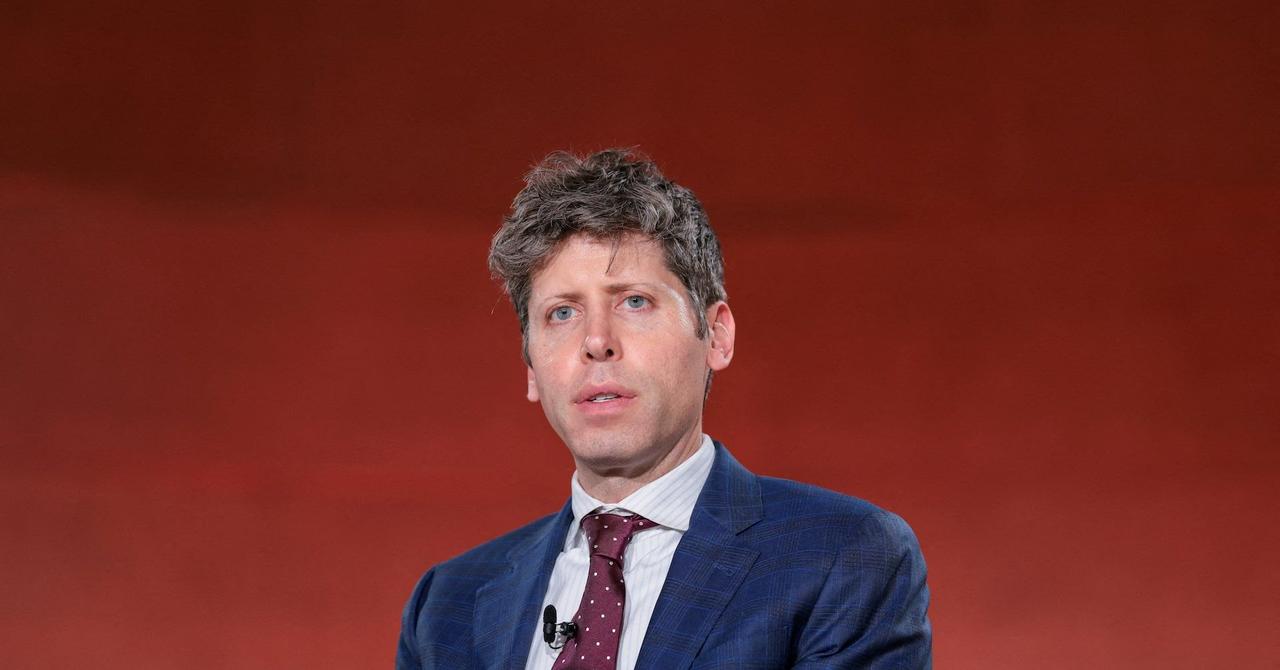
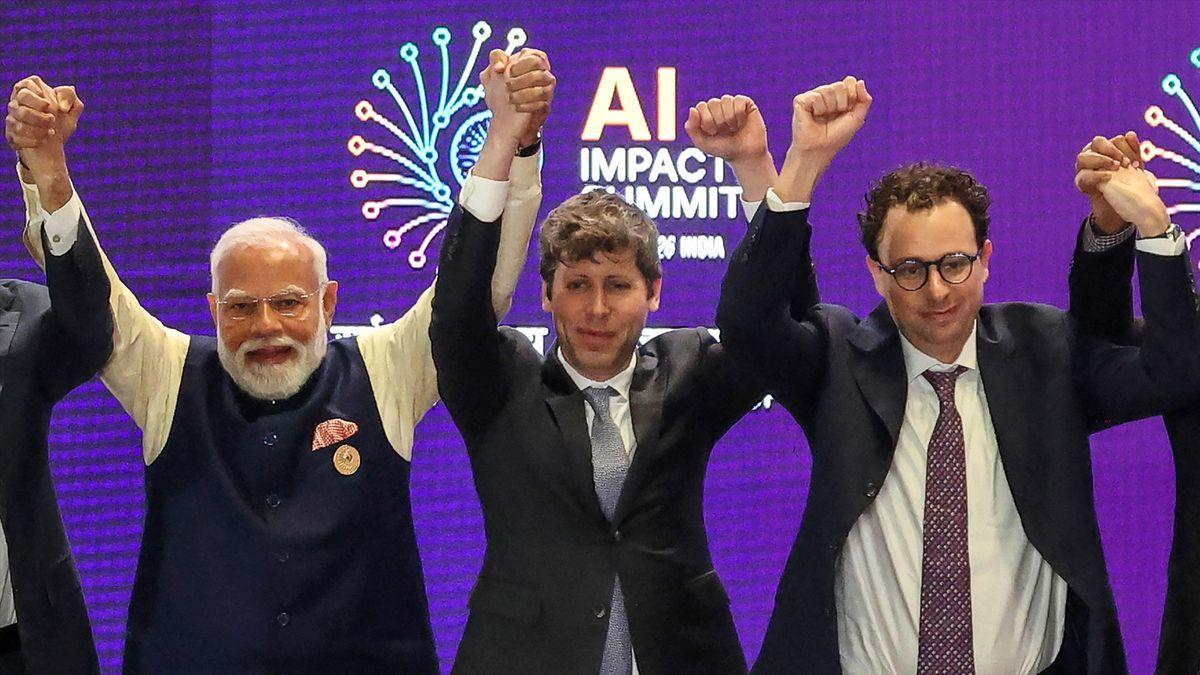
OpenAI is racing toward a potential IPO at an $852 billion valuation, but internal tensions are mounting. CEO Sam Altman wants to go public by Q4, while CFO Sarah Friar warns the company isn't ready. Executive departures, discontinued projects like Sora, and a bitter compute war with Anthropic reveal a company struggling to balance astronomical spending with revenue generation.
OpenAI is preparing for a potential IPO later this year at a post-money valuation of $852 billion, following a recent $122 billion funding round
1
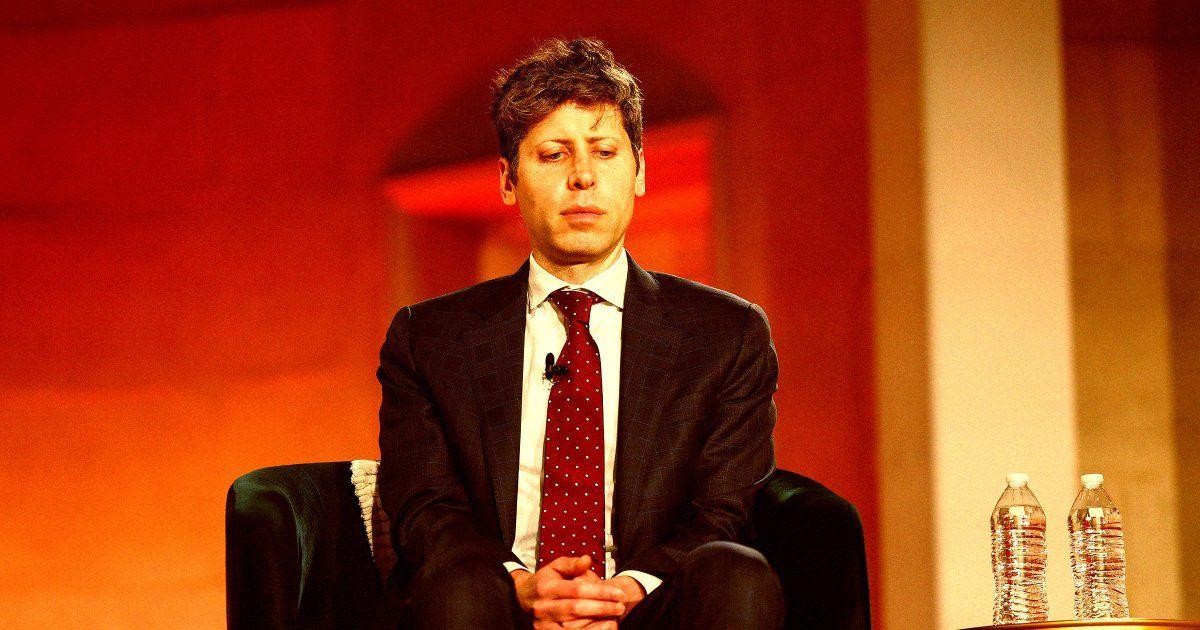
. But behind the scenes, Sam Altman and CFO Sarah Friar are at odds over timing. Altman wants the company public by the fourth quarter, even though OpenAI will spend upwards of $200 billion before generating positive cash flow5
. Friar has voiced concerns internally that the company may not be ready this year, citing financial exposure from steep spending on computing infrastructure5
. Sources indicate Altman has excluded Friar from key investor conversations and financial decisions, adding strain to an already tense environment5
.
Source: Futurism
The internal turmoil extends beyond the C-suite disagreement. Fidji Simo, OpenAI's CEO of AGI deployment and former applications chief, stepped away on medical leave for several weeks, with company president Greg Brockman assuming her responsibilities
1
. CMO Kate Rouch departed to focus on her health and cancer recovery, while COO Brad Lightcap left his operational role to work on special projects reporting directly to Altman1
4
. These executive reshuffles come as OpenAI attempts to pivot from consumer products to enterprise and coding tools, with Simo reportedly telling employees the company cannot "miss this moment because we are distracted by side quests"1
.
Source: The Verge
OpenAI's year began with a public relations disaster when it accepted a Pentagon contract that Anthropic had refused over concerns about autonomous weapons and domestic mass surveillance
1
4
. Altman acknowledged the move "looked opportunistic and sloppy," but the damage was done, with ChatGPT uninstall rates spiking overnight4
. In March, OpenAI abruptly discontinued Sora, its AI video-generation app, blindsiding Disney just 30 minutes after the companies had been working together on a project1
4
. The company also shelved plans for intimate ChatGPT features and potentially stalled the Stargate data center project1
.As AI industry competition heats up, OpenAI sent investors a memo claiming a computing advantage over Anthropic. The company stated it had 1.9 gigawatts of computing capacity in 2025, compared to Anthropic's 1.4 gigawatts
2
3
. OpenAI projects reaching 30 gigawatts by 2030, while estimating Anthropic will have only seven to eight gigawatts by late 20272
3
. "That gap matters because compute is now a product constraint," the memo stated2
. However, the boast came immediately after Anthropic unveiled Claude Mythos, its most powerful AI model yet2
3
.

Source: CXOToday
Related Stories
OpenAI plans to spend about $600 billion on data centers and chips by 2030, down from an initial $1.4 trillion commitment
2
4
. The company anticipates spending $121 billion on computing power for AI research in 2028 alone, burning through $85 billion that year even after nearly doubling revenue from the previous year5
. OpenAI doesn't expect to be profitable until 2029 at the earliest, with some estimates pushing break-even into the 2030s1
5
. When confronted about the disconnect between revenue and spending commitments, Altman grew defensive, telling podcast host Brad Gerstner: "if you want to sell your shares, I'll find you a buyer"1
.The clash between aggressive AI infrastructure investment and financial sustainability will define OpenAI's trajectory. The company's memo to investors emphasized that "each new generation of infrastructure lets us train more capable models, making every token more intelligent than the one before"
3
. Yet Anthropic CFO Krishna Rao characterized his company's approach as "disciplined," contrasting with what Anthropic CEO Dario Amodei called players who are "YOLO-ing"2
. OpenAI countered that Amodei's caution "looks less like discipline and more like underestimating how fast demand would arrive"2
. With competition from Google, Microsoft, and Anthropic intensifying, OpenAI faces pressure to demonstrate that massive compute spending translates to market dominance. A New Yorker investigation and an upcoming court battle with Elon Musk add further scrutiny1
4
. One Microsoft senior executive told The New Yorker there's "a small but real chance" Altman is "eventually remembered as a Bernie Madoff- or Sam Bankman-Fried-level scammer"4
.Summarized by
Navi
[1]
Today•Business and Economy

23 Mar 2026•Business and Economy

19 Jan 2026•Business and Economy

1
Technology

2
Policy and Regulation

3
Science and Research